“You know how there’s that one pretty important rule in filmmaking, don’t show the camera in the shot? Know what doesn’t give a damn about that rule? Mirrors.”
This quote is from a fascinating video essay I recently watched on YouTube (cited below) that explains the plethora of techniques filmmakers use to execute the “impossible”; that is, to record mirror shots without showing the camera’s reflection. Some of these innovative techniques include superimposing and/or splicing shots in post, filming with blue and/or green screens (as utilized in CGI and VFX), and even using duplicated sets and casts to create the illusion of a mirror shot. With equal parts creative vision and technical competency, skilled filmmakers are able to successfully choreograph impressive shots that seem impossible to the untrained eye.
Whether the effect used is practical or visual, the overarching goal is to remedy the “problem” of the exposed camera, which threatens to break the fourth wall and ruin the viewer’s immersive experience. Generally, viewers do not want to be reminded that they’re watching a film by the film itself, nor do they want to see evidence of its production; it’s no fun to see a failed magic trick, after all. In low budget or rushed productions, you might spot the occasional reflection of a camera in the final cut. Here, the camera’s visible presence is considered accidental and indicative of the filmmakers’ inexperience or negligence. In other words, today’s industry standard is to keep the camera hidden, and any exceptions will likely harm the film’s quality.
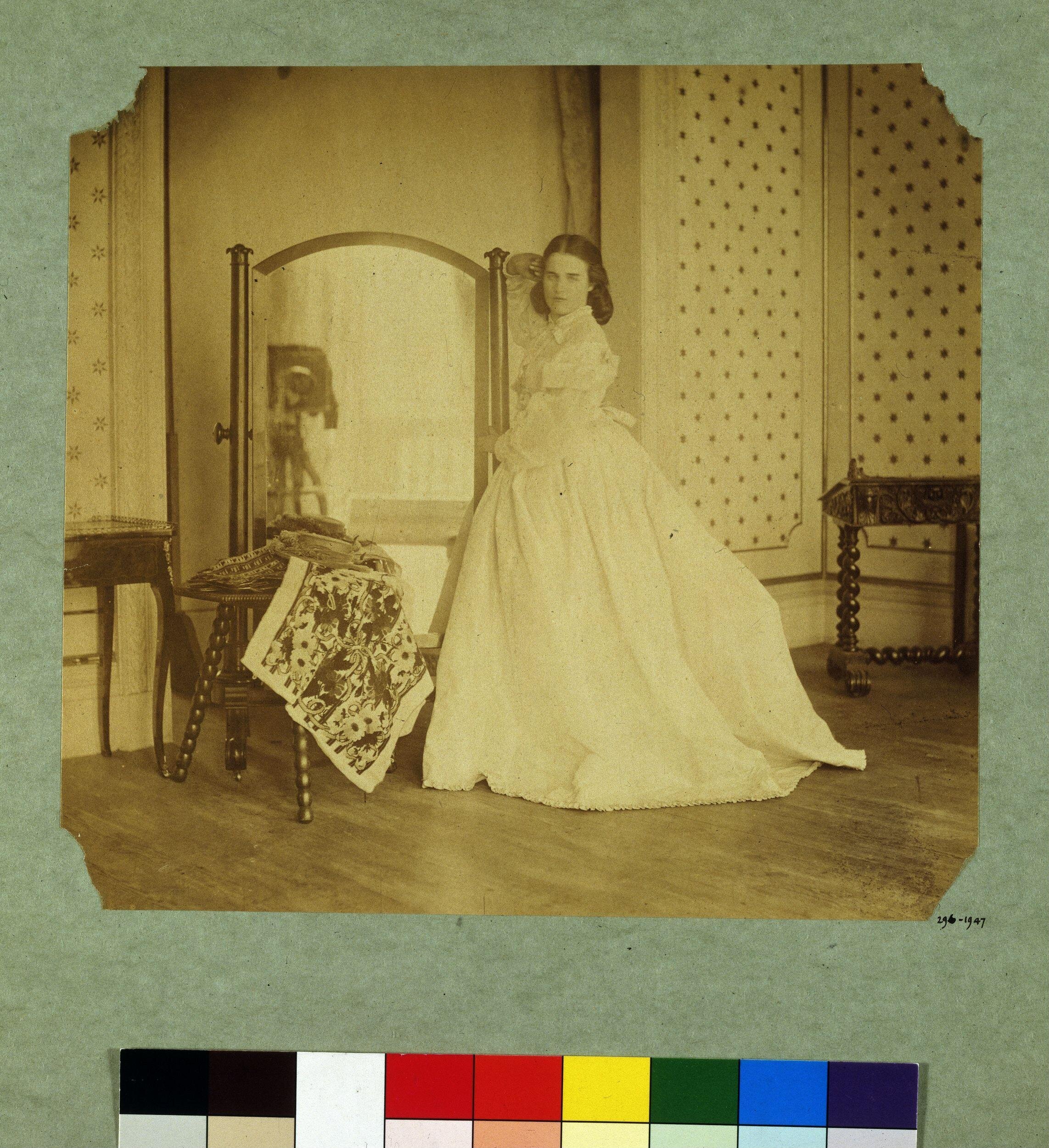
Figure 1. Clementina Maude, 5 Princes Gardens, photographed by Lady Clementina Hawarden (1822-65). Sepia photograph, mounted on green card. South Kensington, London, c. 1862-63.
This modern conception is precisely what makes this specific portrait by Victorian photographer Lady Clementina Hawarden (Figure 1) so intriguing to me. A pioneer of experimental photography, Hawarden often utilized mirrors as devices to “extend the space or to show two views of her subject… [so that] the viewer is left to ponder how much of the image is a construction and how much is a reality” (Close 185). Consistent with many of the other photographs in Hawarden’s portfolio, this portrait captures one of her adolescent daughters in what appears to be an intimate bedroom space. Any semblance of privacy, however, is interrupted by the camera’s reflection in the full-length mirror to the subject’s left. The camera’s invasive, voyeuristic presence within this personal feminine space is further augmented by the subject’s judgmental stare back into the camera lens, as if to ask “why are you looking at me?”
Considering Hawarden’s keen eye for composition, backgrounds, and props, it is reasonable to assume that this was a purposeful artistic decision rather than a mistake. As a result, an interesting phenomenon occurs where the viewer and the subject are acutely aware of the other’s presence as well as the process through which their viewing is made possible (i.e. through photography), effectively demystifying the immersive experience of visual media. But unlike in film, its deliberate employment here works to the photo’s advantage. In this experimental photograph, Hawarden successfully curates a scene layered with different forms of “looking” wherein an intrusive presence is rendered visible in an aesthetically compelling, thought-provoking way. Although photography and film are separate mediums, I feel that there is merit in examining how creators across history have honed and challenged the limits of their craft in technical/artistic ways.
Works Cited
“How Filmmakers Make Cameras Disappear | Mirrors in Movies.” Youtube, uploaded by Paul E.T.. 13 January 2021, https://www.youtube.com/watch?v=VASwKZAUVSo.
Close, Susan. “Gender, Space and Photography: Reading the Interiors of Clementina Hawarden.” Design Principles & Practice: An International Journal, vol. 5, no. 1, Jan. 2011, pp. 181–89. EBSCOhost, https://doi.org/10.18848/1833-1874/CGP/v05i01/38004.


 Victorian Visual Culture
This is such a great analysis! I really liked how you explored the artistic intentions of the photographers, and how specific choices, such as placement, persons, and objects in the photo, have different impacts on the overall message of the photo. Great post!
By: evaallii on November 28, 2023
at 5:24 pm
I agree with Eva that this analysis of mirrors in film and photography is terrific! The use of film production knowledge allows you to open up intriguing questions about the appearance (or conversely invisibility) of the camera in photographs. You develop a powerful reading of Hawarden’s photo and the ways in which the unexpected appearance of the camera creates a complex matrix of looking.
By: amartinmhc on December 23, 2023
at 5:46 pm