The development of the celebrity by the means of photography is fascinating, especially in comparison to the modern day representation of celebrities. Paparazzi as a career based upon the exploitation of another’s image for the sole sake of distributing the personal lives of celebrities could be an entirely different post, but I wanted to explore the British royal family’s representation in media. From our class at the beginning of the semester showing a carte de visite of the Princess of Wales, I have thought about the purposeful and sometimes accidental examples of photography of the British royal family.
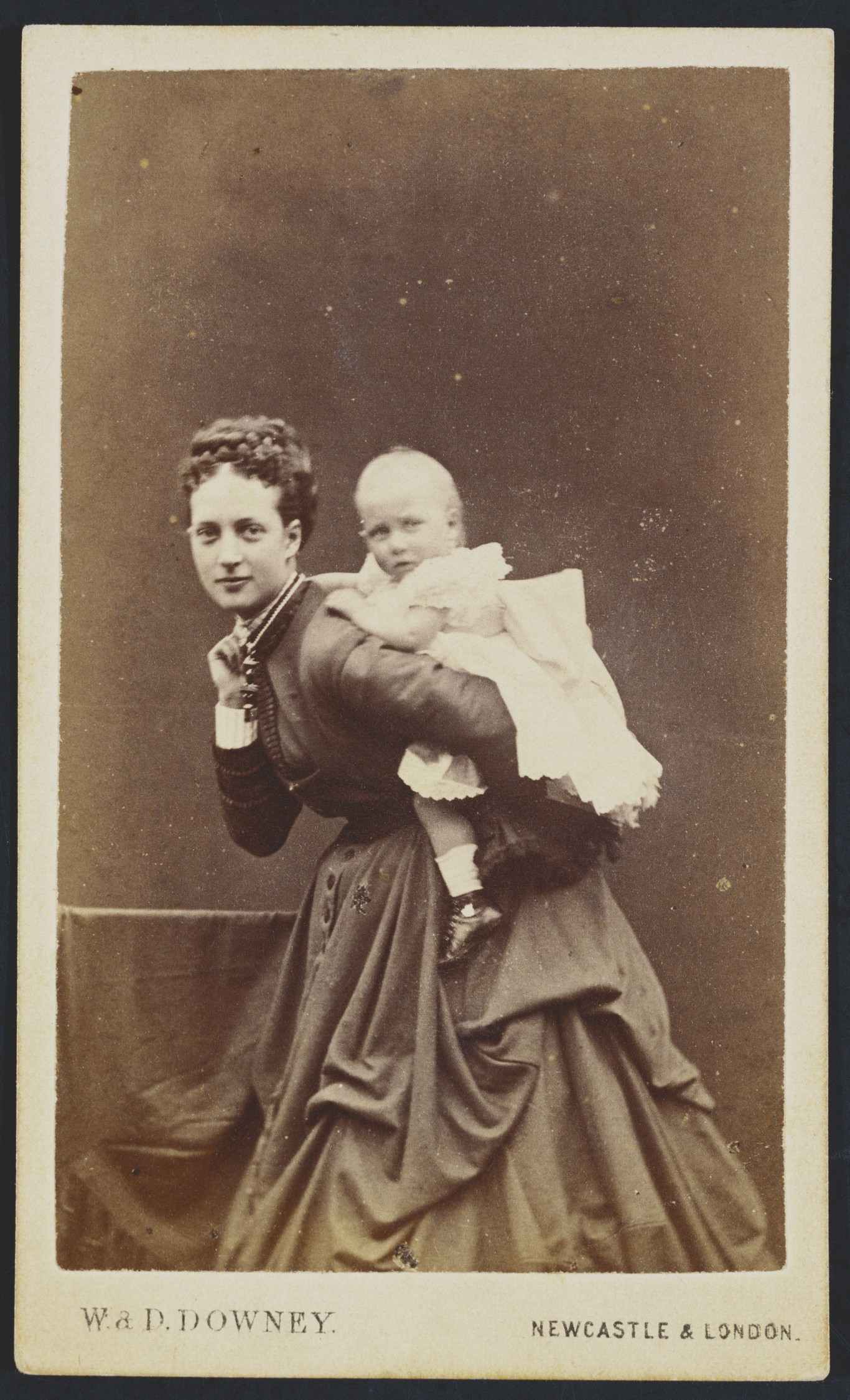
Photographed by W & D Downey.
The image above of the Princess of Wales allows the public an exclusive insight into the royal family, allowing them to create an image to portray to the public. Instead of being seen as a royal with privilege the public would never be able to obtain, the princess is dressed more modestly, without the opulence that they possess such as jewels and more extravagant clothing. With her child on her back, she can be seen as a mother, something that will be relatable the very people who will buy the image and support the monarchy as legitimate.

The modern day representation of the British royal family is seen most notably in the Netflix show The Crown. Even as it has faced backlash for taking liberties and not reminding the audience that the show is a fictional tv show. Even so, for a majority of viewers, the show has led to a broader audience to understand the recent history of the British royal family, offering a sympathetic presentation of the family while still allowing room for critique.
The ability to control how one is represented has only decreased over time, as represented by the two examples of visual media of the British royal family. While the family has an agreement with the British press, their ability to guide the media to see only what they wish the public to view is not an ability they have control over. This cannot be discussed without bringing up the consequences of such a lack of control. The death of Princess Diana as the cause of paparazzi trying to get a photo of her with her boyfriend resulted in what most would cite as the modern day decline of the public’s opinion of the royal family.
The decline of the ability to control one’s image is the ultimate difference between the beginning of the royal family’s visual representation and what can be seen today. They can no longer hide their opulence and make the public sympathize with the shared understanding of motherhood as more information is made accessible and the stark differences between the two classes become more apparent than one is able to ignore.
Works Cited
“New Character Posters for Season 5 of “the Crown” Show “a House Divided.”” TODAY.com, 18 Oct. 2022, http://www.today.com/popculture/tv/new-character-posters-netflix-season-5-crown-show-house-divided-rcna52695. Accessed 11 Dec. 2023.
“W & D Downey (Active 1855-1941) – Queen Alexandra When Princess of Wales (1844-1925) with Her Daughter Princess Louise (1867-1931).” Www.rct.uk, http://www.rct.uk/collection/2927796/queen-alexandra-when-princess-of-wales-1844-1925-with-her-daughter-princess. Accessed 6 Dec. 2023.


 Victorian Visual Culture
This is great! I actually did a post on the same topic a few weeks ago. I think it is really interesting how a family’s history can be documented, shared, and exposed in so many ways, and the impacts it can have.
By: evaallii on December 11, 2023
at 3:31 pm
Yes, it is so interesting that we have a series of posts on this topic! You get at an aspect of royal visual culture that I have been pondering since reading Eva’s great post — the degree to which the royal family cultivates their celebrity image and how they in fact lose control of publicity and their own representation. I find your suggestion here that changes in technology have decreased their control to be a convincing one!
By: amartinmhc on December 23, 2023
at 7:35 pm