

Via https://www.vintag.es/2016/06/vintage-fashion-in-autochrome-stunning.html?m=1.
In the early 1900s, the Lumiere brothers (likely a familiar name due to their influence on cinema) invented an early form of color photography. The science behind it was complex and it was certainly not convenient to produce the plates necessary to take photos in color, but the effect is astonishing even to modern eyes. I recall the first time I encountered an autochrome photograph while looking through images of Edwardian fashion; at the time, I was ignorant to the existence of early color photography and it was unlike anything I had seen from the period. The effect of autochrome is much dreamier than anything our modern processes of colorizing antique photos can achieve, so my interest was immediately piqued. They’re ethereal and luminescent in a way that would now be quite hard to replicate without digital filtering, which gives them a special quality.


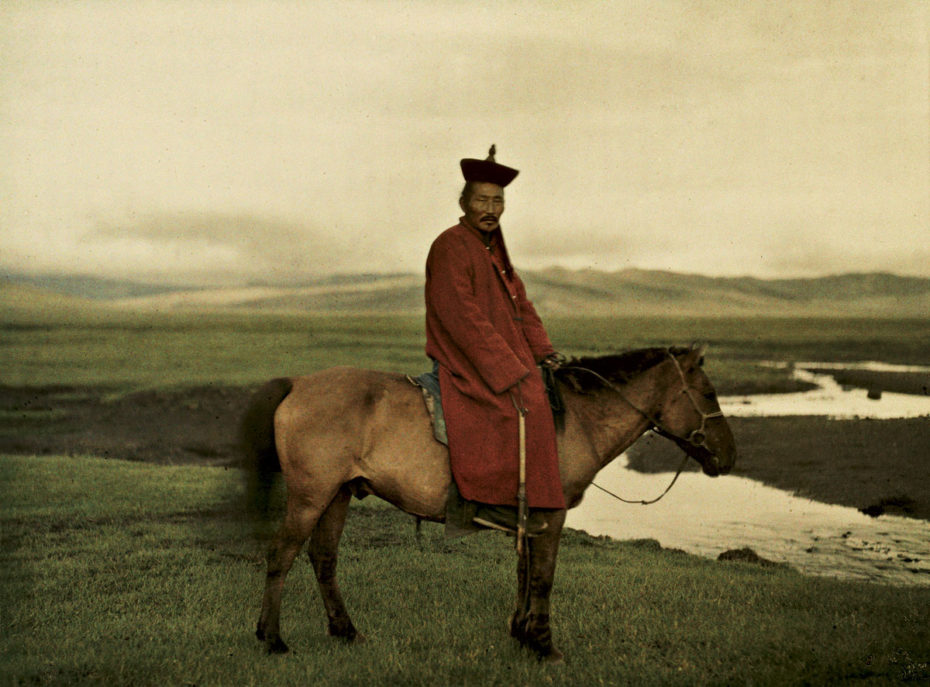
Via https://www.messynessychic.com/2019/02/22/its-about-time-we-reinvented-the-autochrome.
I initially began looking into autochromes as a research resource for studying dress history; there’s something so very intriguing about getting to look at the real colors of garments we usually can only see 1) in black and white or 2) in their current 100+ year old state. But all manner of subjects were captured with this technology, as it required no special device and could be used with regular cameras.

Via https://www.vintag.es/2016/06/vintage-fashion-in-autochrome-stunning.html?m=1.
The above photo is one of my favorite fashion-related autochromes I found while I was initially using them for fashion research. It’s simple, and not particularly artistically notable, but it is so natural and casually taken that I could easily be fooled this is a modern woman dressing in period attire. In these cases, I certainly understand the claim to the “real” that people felt photography had, as I feel almost as though I’m there, looking in at a scene more than a century ago.

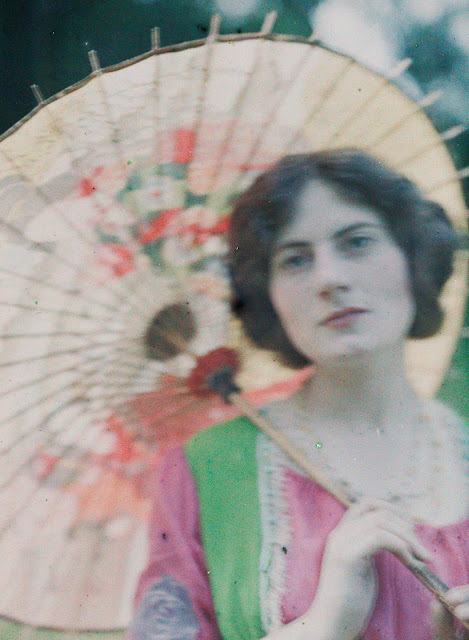

By John Cimon Warburg (1909, 1909, and 1915), via https://www.vintag.es/2016/08/john-cimon-warburg-and-his-atmospheric.html#more.
These autochromes by John Cimon Warburg display the beautiful hues captured by the technology. The simultaneously muted and lurid colors are stunning, and — literally! — recolor the way we envision the Edwardian era. Below is an image of an autochrome diascope viewer to give an idea of how people could look at these images, since they are now so rarely exhibited due to their sensitivity.

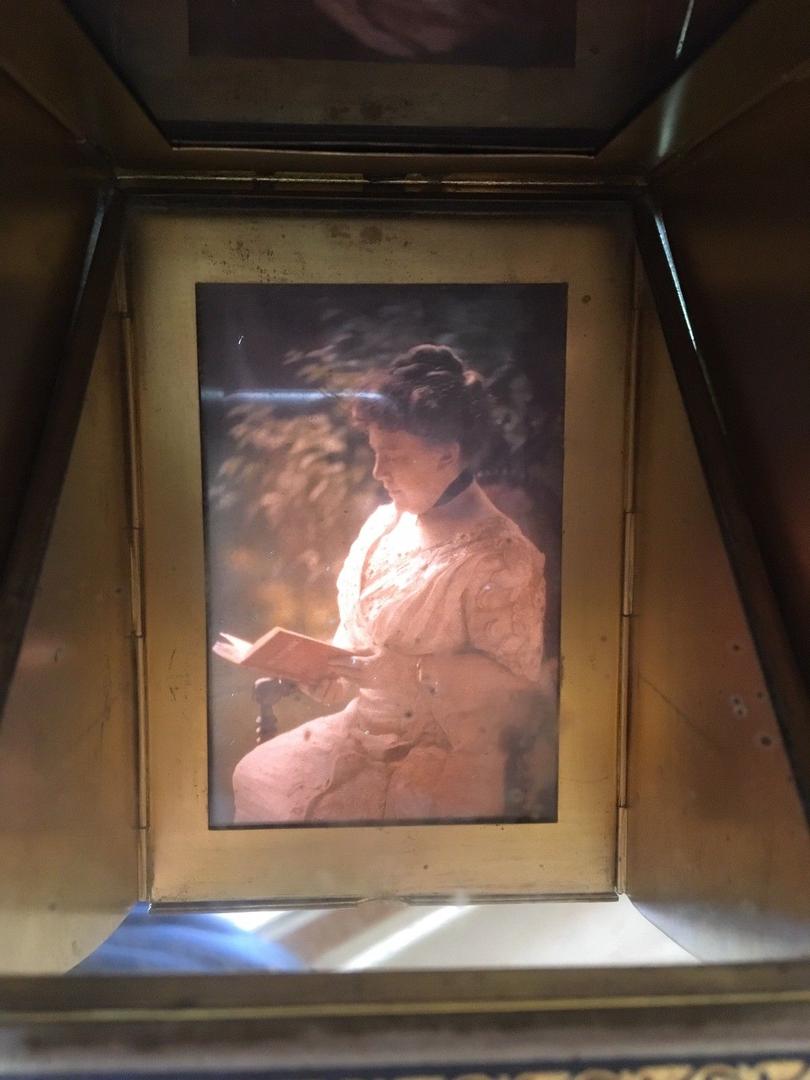
Via https://www.worthpoint.com/worthopedia/early-henry-havelock-pierce-1896091865
Further reading or images here, here, and here.
Images sourced from the following sites:
- https://www.gracenuth.com/blog/hazydreamofautochrome
- https://www.messynessychic.com/2019/02/22/its-about-time-we-reinvented-the-autochrome/?utm_source=drip&utm_medium=email&utm_campaign=Weekend+Conversation+Starters&utm_content=Weekend+Conversation+Starters
- https://www.vintag.es/2016/08/john-cimon-warburg-and-his-atmospheric.html#more
- https://www.vintag.es/2016/06/vintage-fashion-in-autochrome-stunning.html?m=1
 Victorian Visual Culture
An illuminating exploration of early color photography, Cat. You provide beautiful descriptions of the effects of this technology. To me, these photographs have quite a “painterly” quality as well!
By: amartinmhc on December 24, 2023
at 10:01 am