There’s a really interesting case in the Massachusetts Supreme Court right now about a set of daguerrotypes that Harvard owns. The images show two enslaved people and were taken on a South Carolina plantation in the 1850s as part of a Harvard experiment to photographically document racial categories. A descendent of the people pictured is suing for the right to own their ancestors’ image. The case has set off a debate over who owns a photograph, the creator or the subject? Does that relationship change when the photo was taken without consent? It’s also made complicated by the fact that daguerrotypes are their own one-of-a-kind artifacts rather than just abstract reproducible images. I found this incredibly interesting, especially in light of our class conversation yesterday about the famine images. Anyone who’s curious, here’s the link to the Washington Post article where I first learned about it: https://www.washingtonpost.com/opinions/2021/11/10/harvard-photos-renty-delia-taylor-zealy-daguerreotypes/
Harvard’s Daguerrotype Debate
Posted in Uncategorized | Tags: african american, photography, portraits, portraiture
Lackluster Care Toward Women’s Health 
Victorian advertisements were nearly always targeted at women, as highlighted in Lori Anne Loeb’s work, Consuming Women: Advertising and Victorian Women. While this author does highlight a multitude of ploys in order to entice women to open their wallets, she does not highlight many of the lethal side effects of some of the more malicious, newfangled contraptions. For example, Pears soap still sits proudly on pharmacy shelves, however there is a noticeable lack of advertisements for vibrant, green wallpaper, the kind of shade that can only be achieved with arsenic. Product safety regulations were not the only issue, as middle-class homes were essentially fully modernized death traps. Gas lamps prone to explosion, bathtubs that could boil you alive, and arsenic in make-up were just a few of the hidden murderers. Centuries later, ignorance towards women’s health is still all too common in society where their lives are systematically risked by governments and private companies alike.

The documentary “Hidden Killers in the Victorian Home” is part of a running BBC documentary series headlined by Dr. Suzanne Lipscomb. The majority of examples I am about to use only came to my attention due to her diligent research. I have done additional investigating, but it would feel incorrect not to acknowledge the influential role she has played in forming my intellectual landscape regarding this issue. She highlights that with the invention of celluloid, the result of an early attempt at manufacturing plastic, came unforeseen side effects. This new material, both cheap and sturdy, can be molded and dyed to resemble more expensive materials, such as ivory and tortoiseshell. Yet, it has another quality that was far less useful, it is unfathomably flammable. Women who wore celluloid hair combs and stood too close to heat sources, such as gas lamps, would often die of the burns inflicted by their accessories spontaneously combusting (Little). Perhaps even more threatening were the chemicals released into the home by the inevitable deterioration of celluloid, which were also prone to catching flame. While men were not immune to being harmed by this phenomenon, women were at far greater risk due to the amount of time spent in the home and the number of feminine accessories made from celluloid.
There were other dangers to which women were particularly vulnerable, but these were built into the structure of the home. Stairs are still a danger today, but the Victorians were able to craft them to be even more perilous. The main staircase of the house was relatively safe, the stairs having banisters, being evenly spaced, and not too far apart. However, the same care was not given to the servants’ stairs. It is difficult to make a mode of transportation more deadly than a staircase that is uneven, bumpy, poorly lit, and incredibly steep. When added with the fact that female servants would often be traversing these deathtraps carrying trays and navigating layers of heavy clothing, they were even more prone to falling than their male counterparts. This common practice displays not just a lackluster care for the safety of women, but also for the working class, a pervasive theme in both Victorian and modern culture.

Stairs at Craigdarroch Castle (from their official Facebook page)
Currently, women still face threats from persistent systemic factors. It is disturbingly common for those products marketed toward women to be later revealed as toxic. Some feminine care products, normally advertised in a manner that cater to female stereotypes, can be harmful to women’s health. By portraying the female reproductive system as naturally “unclean,” a market has been created based on artificial demand. Scented menstrual products, while not dangerous, can frequently irritate the sensitive tissues with which they come into contact. Douching has a similar backstory and is actually dangerous, potentially affecting the chemical balance with “pelvic inflammatory disease, bacterial vaginosis, cervical cancer, low birth weight, preterm birth, HIV transmission, sexually transmitted diseases, ectopic pregnancy, recurrent vulvovaginal candidiasis, and infertility” (NCBI). Those in Black and Latine communities are especially at risk, as they have been shown to use such products at a higher rate than white consumers due to communal norms around personal hygiene. Despite this, such products are incredibly accessible, with 31% of 15-19 year olds regularly douching (NCBI). However, like many epidemics involving the female reproductive system, it remains largely unaddressed.
A similar problem has recently entered the public consciousness. Ask most women, and they will be able to tell you a harrowing story of when their medical concerns were not taken seriously. This ranges from minor incidents, such as ignoring when a patient is going to faint, to much more serious issues that can result in permanent, physical damage. Research on the subject of women being gaslit by medical professionals has shown a variety of general factors contribute to this phenomenon. For example, women are far less vocal about their pain than men due to societal norms surrounding the latter not wanting to be a burden. Women are frequently told that the pain is simply of their own imagining. While this is generally an incorrect assumption, it should not matter if the pain is caused due to mental struggles, it is still real suffering. This difficulty extends from just doctors’ offices to medical research. Heart disease is the lead killer of women in America, yet despite how the symptoms manifest differently in men and women, women comprise only one third of clinical trial participants, with one third of studies even differing their results by sex (Westervelt).
It is easy to scoff at the Victorians for their deadly inventions and under regulated consumer products, but how much have we really changed? Considering that the Victorian era was seeing the evolution of new contraptions and fields of study, they actually could have endangered far more individuals. The government at the time was surprisingly quick to issue consumer protection regulations, such as the Arsenic Act of 1851, which restricted the sale and use of the element. Meanwhile, in the modern age, though certain hygiene practices have been known to be dangerous for at least thirty years, they are still encouraged by advertisements. The feminine form is still seen as something that must fundamentally be fixed and altered to fit society’s requirements, no matter the financial or human cost. At least the Victorians had the decency to regulate the market to protect their citizens, a scenario which is unlikely to happen in the modern era.
Aral, S O et al. “Vaginal douching among women of reproductive age in the United States: 1988.” American Journal of Public Health vol. 82,2 (1992): 210-4. https://pubmed.ncbi.nlm.nih.gov/1739149/
Lipscomb, Suzanne. “Hidden Killers in the Victorian Home.” BBC. 2013. https://www.youtube.com/watch?v=Fru5Q-6p9lk
Little, Becky. “Killer Clothing Was All the Rage In the 19th Century.” National Geographic. 2016. https://www.nationalgeographic.com/culture/article/dress-hat-fashion-clothing-mercury-arsenic-poison-history
Sales of Arsenic Regulation Act of 1851. , c. 31. Available at: https://www.legislation.gov.uk/ukpga/1851/13/section/IV/enacted
Westervelt, Amy. “The medical research gender gap: how excluding women from clinical trials is hurting our health.” The Guardian. 2015. https://www.theguardian.com/lifeandstyle/2015/apr/30/fda-clinical-trials-gender-gap-epa-nih-institute-of-medicine-cardiovascular-disease
Posted in Uncategorized
Review – Hortense Parker Day Celebration “Rewind and Reconnect” 10/28/21
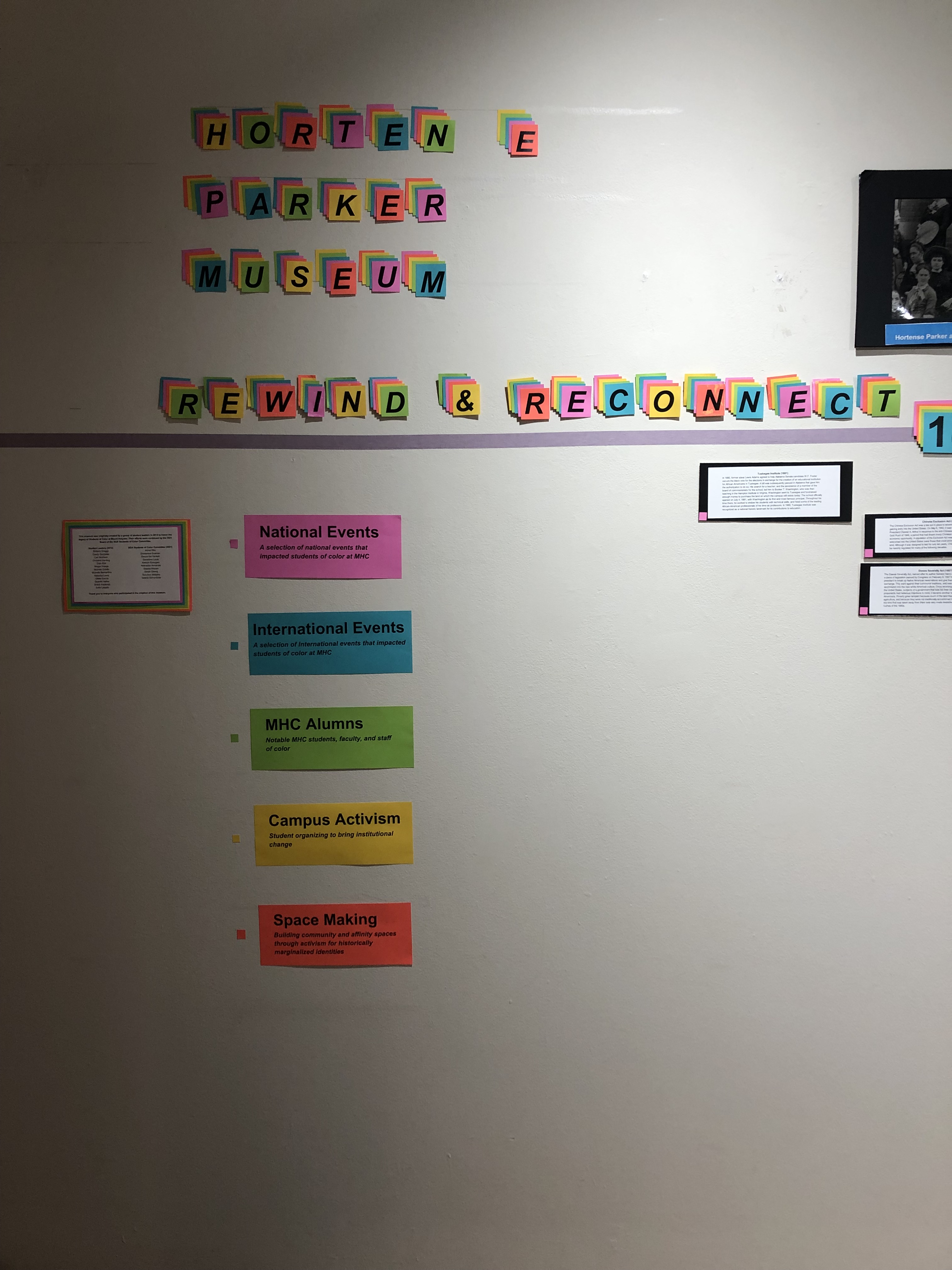
The 12th annual Hortense Parker Celebration was held on Thursday, Oct. 28, from 7-9 p.m. in the Great Room. The event was organized by the SGA Students of Color Committee, the Division of Student Life, the Office of Community and Belonging, the Office of Diversity and Inclusion, the Weissman Center for Leadership, the Alumni Associations, and the Office of Advancement. At the event the “Hortense Parker Museum … Rewind and Reconnect” exhibit was unveiled in the Blanchard Student Art Gallery in lieu of the usual Hortense Parker Essay Contest. The museum was on display until Nov. 4th.
The Hortense Parker Day Celebration was first organized in 2009 by Ahyoung An `09 and Camila Curtis-Contreras `09 to celebrate and raise awareness of the history, struggles, and achievements of women of color at Mount Holyoke. This year’s event was titled “Rewind and Reconnect” and was in conjunction with a museum put together by the Students of Color Committee. The event featured keynote speaker Zakiya Collier, Digital Archivist at the Schomburg Center for Research in Black Culture. Also featured was alumni speaker Christine Harding `16
The celebration began with an opening remark about the theme “Rewind and Reconnect” from Co-Chair of the Students of Color Committee Valeria Serna-Solis. The Committee chose the theme because many students are connecting with campus for the first time and have not had an in-person Hortense Parker Day Celebration. Also, for many students this is their first in-person celebration since their first year, said Serna-Solis.
I think this theme really resonated with me. The last in-person event I attended was a journalism workshop with Gary Younge that I went to for my Intro to English class just a few days before we got kicked off of campus. Although I am a Junior, living on campus again for the first time since March 2020 and beginning to attend in-person events does feel like I am connecting with campus all over again. I think the theme did a really good job at acknowledging this feeling.
Serna-Solis then introduced President of the College Sonya Stephens for her remarks. Stephens shared that she looks forward to the Hortense Parker Celebration each year and thanked the Students of Color Committee for their work in organizing the event.
Ewura Esi Yankah then introduced Vice-President for Equity and Inclusion Kijua Sanders-McMurtry to give a brief history of who Hortense Parker was. Hortense Parker was the first known student of color to graduate from Mount Holyoke. Parker graduated from Mount Holyoke with the class of 1883. She was the daughter of an active abolitionist and former slave who bought his freedom in 1845. Parker’s father encouraged her to receive an education, she began studying at a school in Ohio, but was unhappy and transferred to Mount Holyoke. At Mount Holyoke Parker was known for her musical ability and was frequently asked to play the piano for students and faculty. She married shortly after graduation and taught music at schools in Missouri, New York, and Indiana before her death in 1983.
Following Sanders-McMurtry, SGA President Lasya Priya Rao Jarugumilli made remarks.
“When I sat down to write this speech, I found myself writing my full name which I don’t do often. I often shorten my full name. Just because my name is difficult to pronounce does not mean it is not worth pronouncing. I encourage you to think about your name and demand that it be pronounced correctly just like every other Emma, Mark, or Sarah,” Jarugumilli said.
After Jarugumilli’s remarks, the event featured a dance performance from Jhumka. I enjoyed this performance. It was a change of pace from the previous speakers. All of the dancers were dancing full out. This was their first performance since March 2020 and you could just see how happy they all were to be performing again.
Natasha Almanzar then introduced alumna speaker Christine Harding ’16. Harding is one of the students who took part in the creation of the “Hortense Parker Museum” in 2014 and is the first SGA Students of Color Committee chair. Harding said this year’s theme connected her to the “Past, Present, Future and You” Hortense Parker Day in 2014, which students used resources from to create this year’s exhibit.
I think this was the part of the event that I enjoyed the most. I enjoyed how Harding spoke of her time at Mount Holyoke. Harding shared that when the museum was first created, campus was going through a transition period. In March 2014 a student of color was wrongfully arrested by campus police. Following this event, the MoHonest movement was created. These events really galvanized students of color on campus, said Harding. This portion of the remark was very informative. Harding provided a good background for the museum from 2014, which the students this year used to create the museum that was on display. Harding also spoke of legacy and activism. She reminded students that although Mount Holyoke encourages us all to leave as leaders and changemakers, that is not the only thing we have to do. Our legacy could be about being a caring friend or a good roommate. I felt that this was good advice. I also think I enjoyed this part of the event so much because I always enjoy seeing what alums are able to do with their Mount Holyoke education. Harding is leading a very successful life after graduation.
Achol Otto, secretary of the Students of Color Committee, introduced keynote speaker Zakiya Collier.
Collier is a digital archivist at the Schomburg Center for Research in Black Culture. She explained that she uses web archiving tools to expand the nature of the Schomburg Center’s archival collections to reflect 21st-century Black life and experiences.
The part I found most dynamic about the keynote was the Q&A section that followed. Students asked questions ranging from Collier’s thoughts on the difference between curation and archiving, and how to collect history while remaining in the present. When asked how she would imagine life without digital collections documenting the history of people of color, Collier answered that she wouldn’t want to. “Being able to experience your history is an untouchable experience — one that I think many people of color go without, which is why my work is so important to me,” Collier said. “I think if I had to imagine it I would document it through dances, smell, or food. Although, food is not allowed in the archive.”
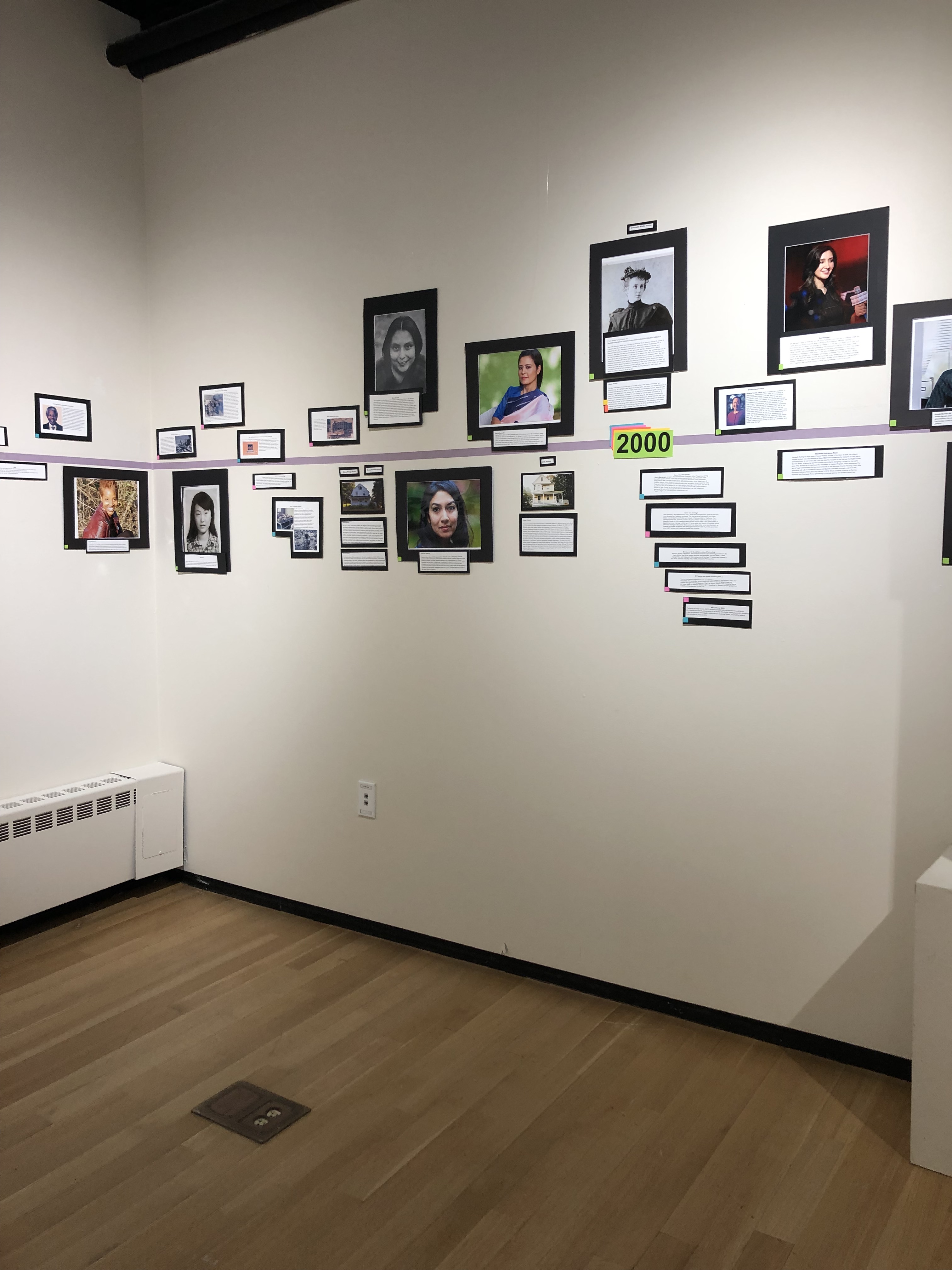
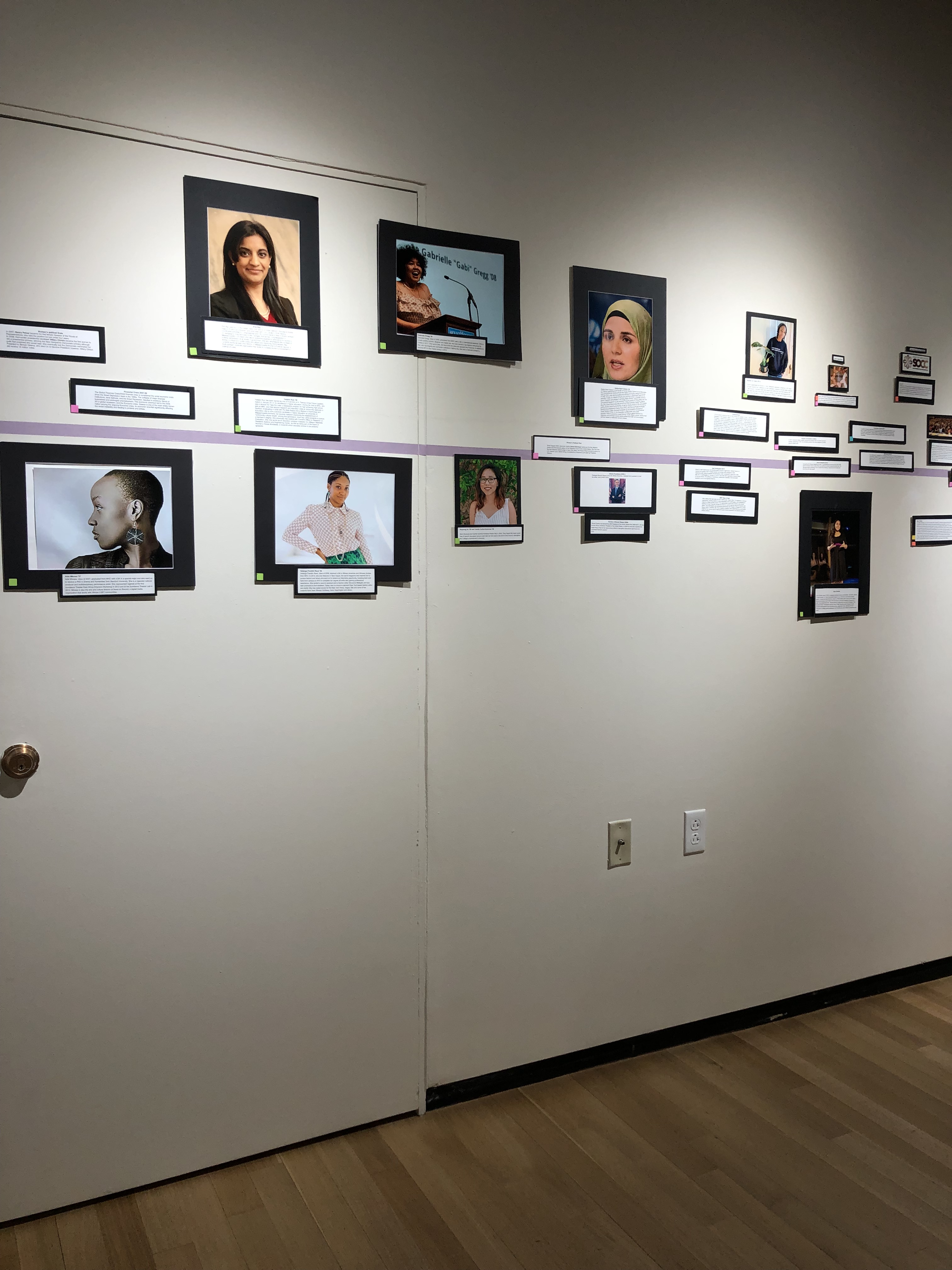
The event concluded with Kelechi Ezeugwu Co-Chair of the Students of Color Committee inviting us into the Unity Center for a Dessert Reception and for the unveiling of the museum. I think the museum was a good representation of visual culture. The museum was arranged in a timeline around the Student Art Gallery, the timeline overlapped with major national events, international events, campus activism, and the opening of the various cultural centers on campus. The timeline was mainly marked with photos and biographies of when various students of color made history or attended Mount Holyoke. I found the bios underneath to be so well researched, the entire museum was well researched and clearly took a lot of time and effort.
I felt this was a very good event. The alum and keynote speaker were both engaging. The Q&A sessions that followed were dynamic and I learned a lot from them. The Jhumka performance was phenomenal. The museum was so well executed, you could see all of the hard work that was put into it. I think this was a good event to attend as my first in-person event since March 2020.

Posted in Uncategorized
Meow-Wolf: Convergence Station, 9/17/21
Over fall break, I went to a mind-numbing psychedelic art museum that had just opened on September 17 in Denver, Colorado. It was the third permanent location opened by Meow-Wolf, an arts and entertainment company based out of Santa Fe that creates multimedia, immersive installations, designed to transport the audience to alternate dimensions of the human imagination and form a collective psyche through ‘trippy’ storytelling.
I thought this seemed a little “out there”. But my boyfriend was thrilled by the premier and convinced myself and some friends to join. The building was intriguing; a six-story, all white complex just off the highway into Denver, similar to the Flatiron building in New York except unrelated to surrounding architecture. It’s a mysterious and surreal sight looming alone against the sky, plains, and city, and as I would discover, an equally strange place.
Standing in line for security, I noticed posted signs warning video surveillance. Upon entry, you agreed to the future use of footage of yourself, specifically not for security purposes. Rather, as part of an ongoing social study for the “research purposes” of the company. Entering the imposing building as part of an ongoing social experiment set the unavoidable impression of being studied, like a lab-rat at the start of a maze.
With clean white surfaces and high ceilings, the lobby had the minimalist and sanitized appearance of a medical or scientific laboratory. The visual impression is juxtaposed by the club-like aural atmosphere, loud house music guides flashing displays on TV screens mounted around the walls. Milling among the other museum-goers, I couldn’t differentiate between those who were entering an exiting; everyone appeared a bit confused.
With no clear indication of where to begin, we followed a group of people who appeared just as rudderless as we felt, gravitating toward one of the elevators for imminent blast-off. The upwards ascension was a departure from the last naturally lit, rational space I would navigate for the remainder of the trip. Four main floors are intended to be explored at your own pace, though it’s difficult to specifically place yourself due to the slanted, winding, and dark passageways connecting rooms. Imagery and soundscape shift to reflect the changing themes, which the narration describe as the “convergence” of four “worlds”.
Cellular and molecular movement parallel outer space; star clusters in pools of water, rocket ships in the middle of forests with mitochondrial interiors, the continuous musical rhythm that shifts between the clicking and beeping of a machine to gurgles and beats like the sounds inside of a human body.
Every multiverse is defined by a central display occupying the most spacious room on each floor. Such as a towering neon palace, styled similarly to the iconic silhouette of Disney’s Magic Kingdom castle, but beneath the star speckled night sky of the domed ceiling rather than against the flat eternal blue on screen.
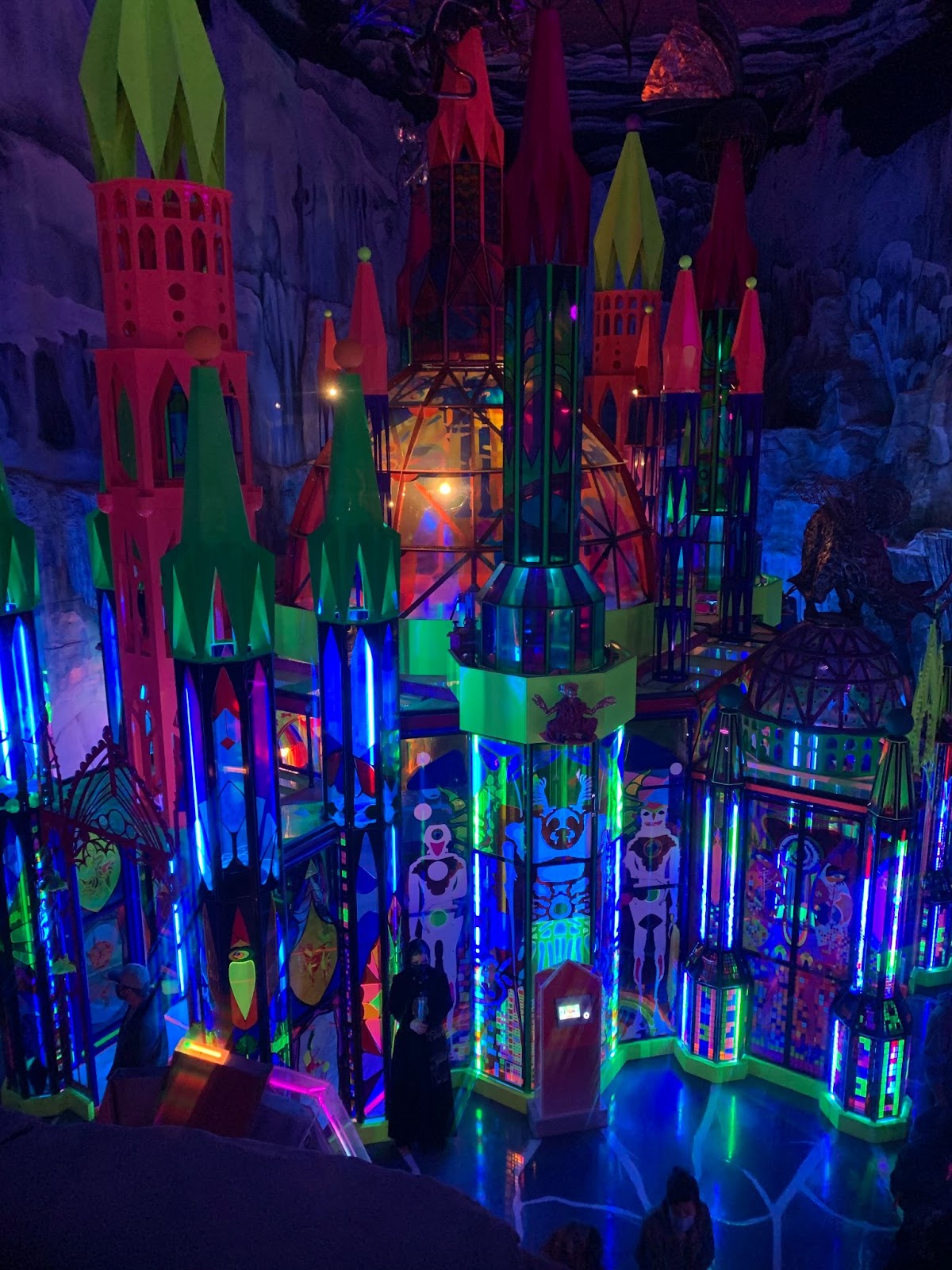
The visual spectacle of the palace evoked a childish awe, like going to a carnival at night when you are small, and the world seems excitingly enormous and bright.
Another central room was a busy neighborhood, apparently the sanitation district of a once prosperous, and now grimy fluorescent city. One hallway featured a long wall of washing machines mid-cycle, like an active and technicolor laundromat.The churning contents ranged from recognizable designer brand clothes, to mop-heads, marbles, cotton balls, and simply garbage, swirling barbie heads and plastic bags, tinsel or toilet-paper rolls. All subject to the cyclical and illuminated rhythm of the machine.
My favorite room was separated from the electronic music and strobe-style lighting of others, a woodland of warm twinkling lights emanating sounds of bubbling streams and the patter of falling leaves. A forest canopy shaped the space with ribbed walls like treebark or the gills of a mushroom. Tiny amongst an interwoven ecosystem, human scale was distorted in the colossal ecosystem. Visitors wandered through slowly, discovering small walkable enclaves in holes like those of a tree through which only a chipmunk may normally fit.
Miniature windows allow voyeuristic access to displays too tiny for active engagement. Like a broken down tin-man propped in an abandoned backyard, or the infinitized through mirrors English garden making its own small planet, or an endless tunnel of pastel cotton balls.
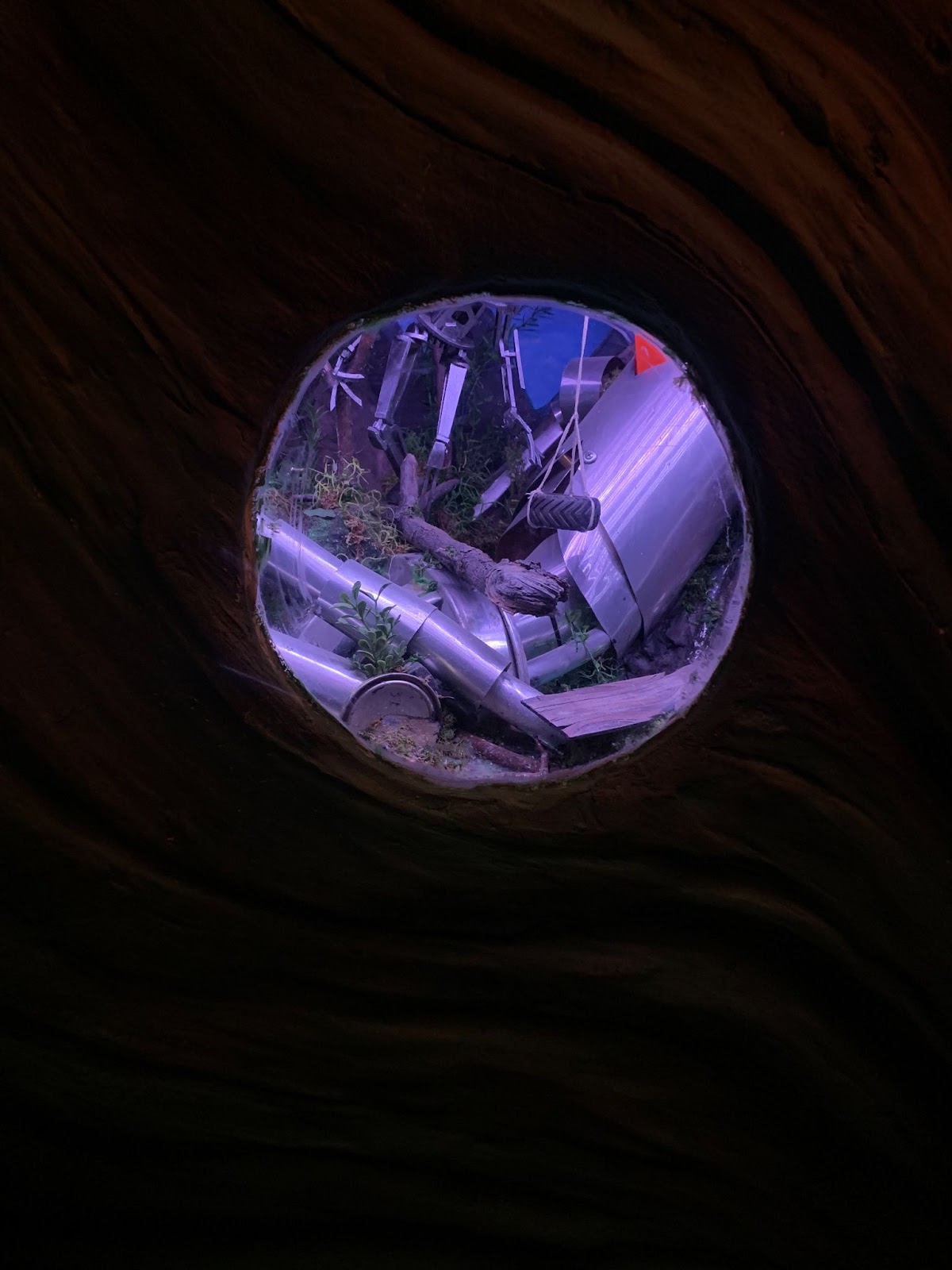
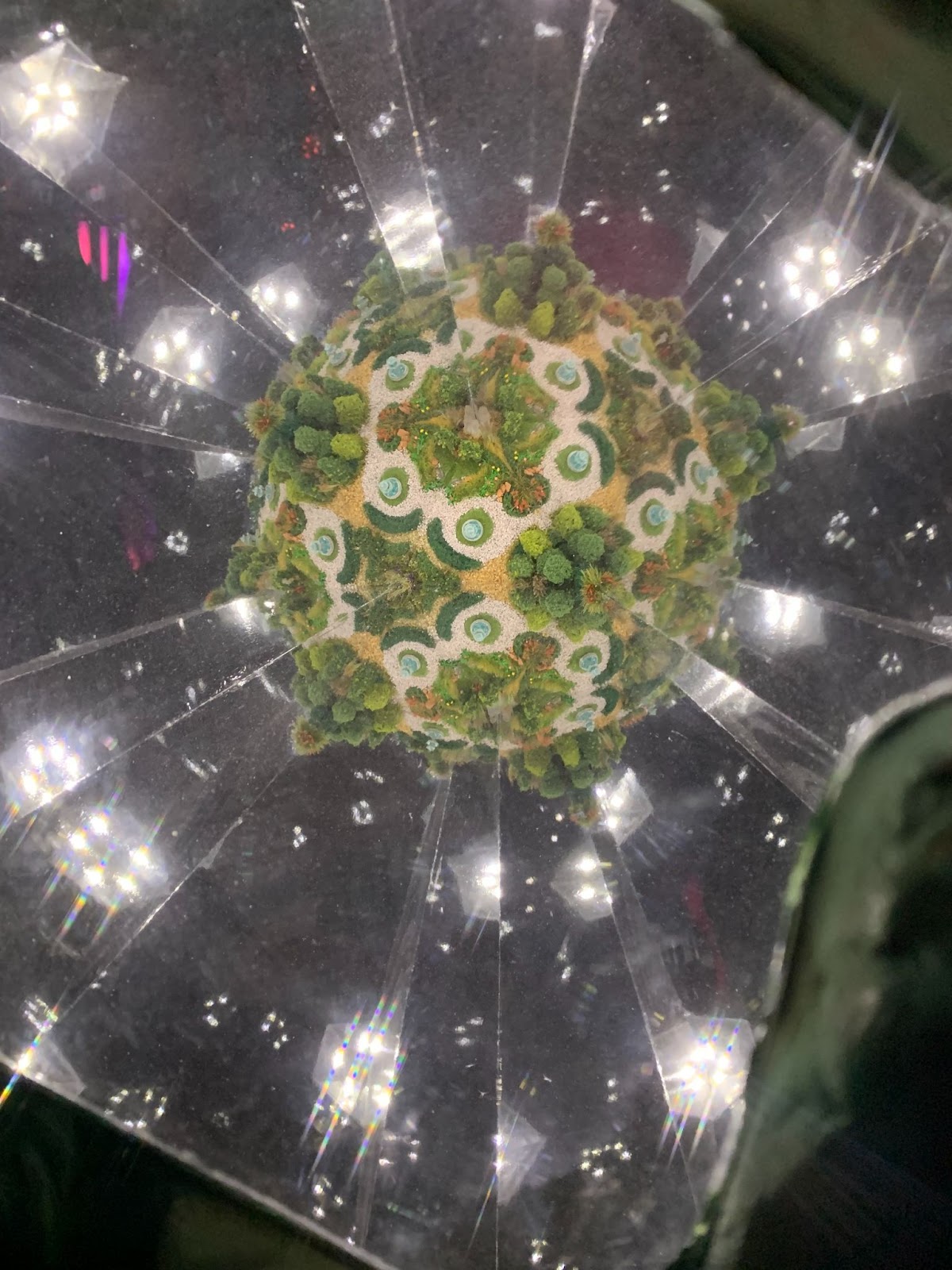

Simultaneously observer and observed, you become subject to an omniscient surveillance, both fictively implied through obvious artistic mediums or more sternly through a camera lens.
Absence of rational order reverts the participant to following lights and sounds, textures along the walls or just the motion of others. The spectacle purposefully launches a sensory overload that becomes stupefying; after a point I repeatedly found myself standing dumbly in the middle of a space, jaw-dropped, head back, and arms hanging limply at my sides.
Chaudhury’s explanation of the phantasmagoric, which: “floods tthe senses and strives to construct patterns of wholeness, unity, and surface harmony in order to numb the body to reality”(Chaudhury, 92) seemed a fitting explanation for the zombie-like state of petrification due to overstimulation, which is the intended product of the exhibit.
Despite its aesthetic appeal, Meow-Wolf takes advantage of a shadowy side of popular culture thriving on doubt, suspicion, and paranoia. Appealing to returning visitors, it sells the chance of a higher truth and order that I don’t think any exhibit by a small collective can possibly deliver. While escape through ego deflation is appealing, I was glad to leave
For 45$ a piece, we journeyed through an information overload of consumerism, technology, waste, and surveillance, that reduced the psyche to a foreign visitor on a strange planet. I would not recommend Meow-Wolf to everyone, nor would I join the cultish crowd of avid-returners who are determined to fully map each secret of the installation. While visually fascinating, the art collective’s spectacle is more immersive entertainment than contemplative experience, and I’m curious about how their popularity and expansion has effected their dedication to art. Their first two installations are in Northern New Mexico and Southern Nevada, and I wonder if those desert locations are less corporate than this new one in Denver.
The pleasurable and fun while also slightly heart-pounding, disorienting, and at points nauseating journey lasted almost five hours. It set an apt precedent for our class conversations about phantasmagoria, and an interesting follow up for our discussions of surveillance. I’m glad to have entered the realm of paranoia and phantasmagoria, imagined to extremes by a small artist collective, and glad to have departed back into a world where sensory flooding hopefully never reaches such extreme heights.
Works Cited:
Zahid Chaudhary “Anaesthesis and Violence: A Colonial History of Shock” from Afterimage of Empire
Posted in REVIEWS -- Events and Exhibits
Victorian Gender Politics in Indian Portraiture
The way women and men were posed in portraiture during the Victorian Era was informed by the gender politics of the time. The poses of the subjects of Victorian portrait photography are discussed in Audrey Linkman’s “The Victorians: Photographic Portraits,” where she states that poses were “intended to assist in the idealization of the sitter.” These “idealizations” were informed by the Victorian gender roles the subjects were expected to fulfill. Because of the influence of the British Raj in India, these overtly gendered displays can also be seen in Indian portraiture throughout the 19th century.
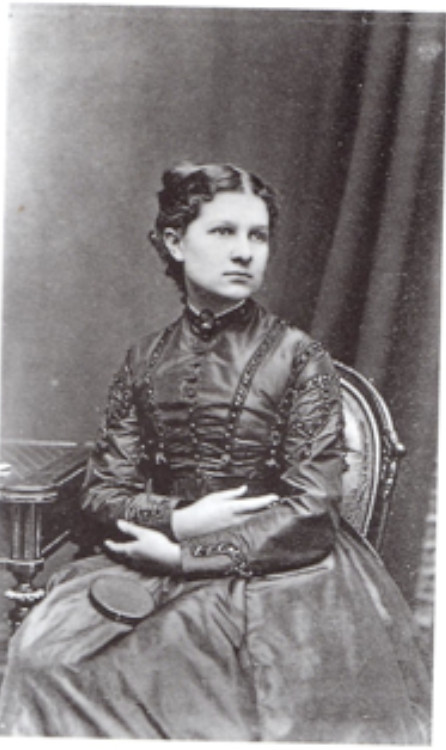
Linkman goes on to say that “the pose of a lady should not have that boldness of action which you would give a man, but be modest and retiring, the arms describing gentle curves, and the feet never apart.” As demonstrated through this passage and in the picture below, women were often pictured looking off to the side with folded hands in a non-threatening, demure manner, in accordance with their role in Victorian society. These postures emphasized their portrayal as the submissive members of society they were expected to be.
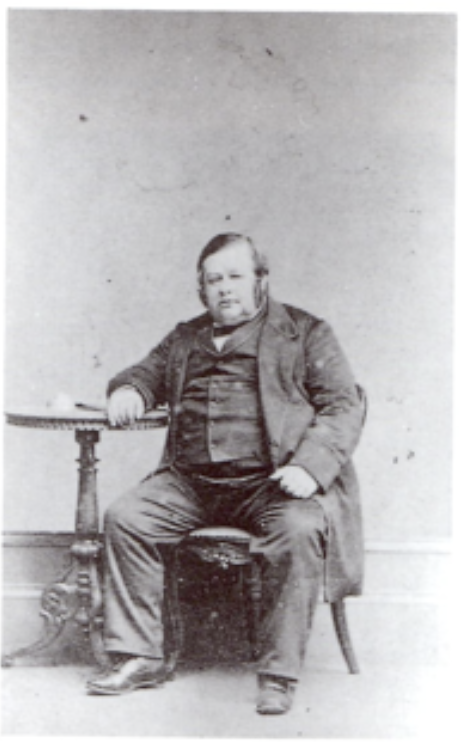
On the other hand, Victorian men were given more freedom, with a wider range of poses and props which Linkman says allowed them to “assert their […] dominance and authority.” In the example above, the subject has his feet set wide apart and his elbow resting on the table next to him. The amount of space he takes up, with the stance of his feet and his elbow draped possessively over the table next to him, emphasizes his place in a society where men held power and authority.
During the period of British colonialism, portraiture became a way for the British Raj to subtly enforce their rule and ideals on Indians. Regional Indian royalty would be photographed in Westernized clothing, with backgrounds and props that reflected the British Empire. Similarly, although some cultural gender roles were established in India, Indian portraiture in this time period also reflected the same gender politics that were at play in Victorian England. The posing of Indian men and women, usually royalty, was overtly gendered.

The portrait above is a painted photograph of a Princess of Rajkot by an unidentified artist in the early 1900s. In a side by side comparison with the English woman portrayed above, one can immediately see similarities in the posture. Although the Princess’ arms are spread, with one holding a basket of flowers and one resting on the bench for support, she is still looking off to the side in a demure, non-threatening manner. The positioning of her arms do allow her to take up a little more space than the folded arms of the English woman pictured above, but compared to the men her legs and posture are still narrow and meek.
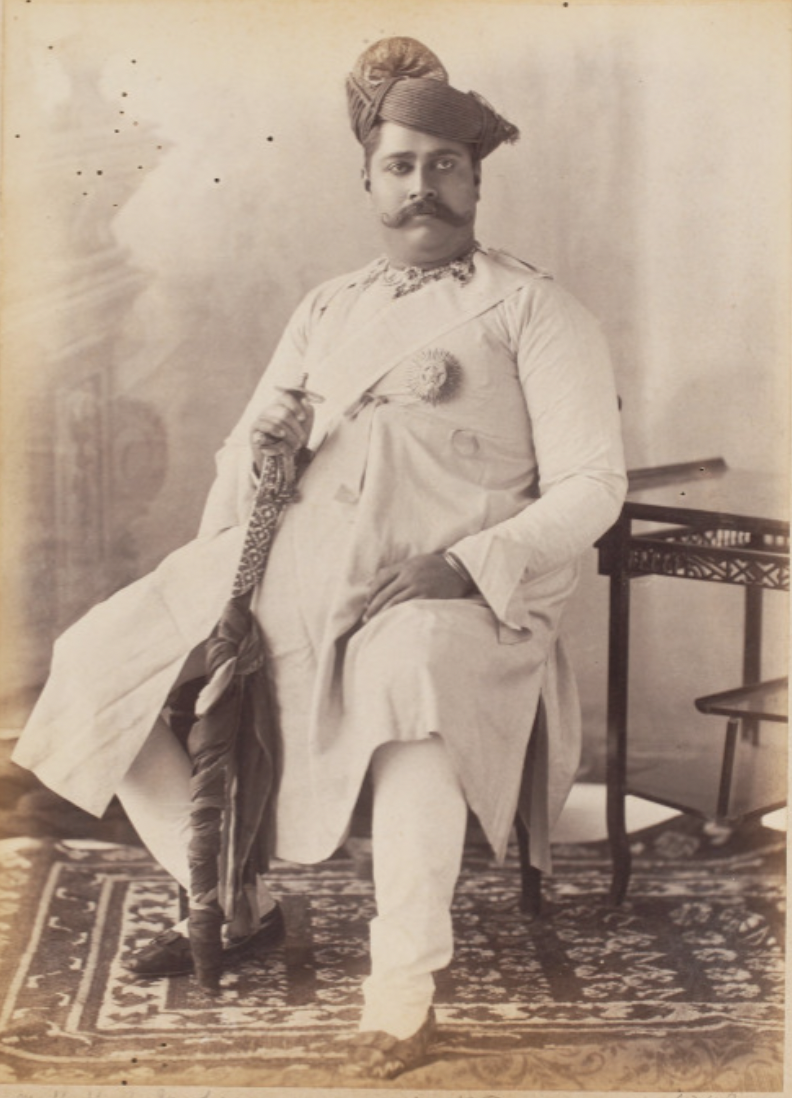
The picture above is a portrait photograph of the then-Maharaja of Indore, Shivaji Rao Holkar, taken by Bourne and Shepherd (one of the oldest established photographic businesses in the world) in the late 19th century. The Maharaja is posed in a manner that is very similar to the English man above. His legs are in the same wide stance, allowing him to assert his dominance. His left arm rests on his thigh in the same reassured manner. His gaze is direct enough to show his power (although not direct enough to be seen as threatening towards the British). While his left hand does not rest on a table, he does hold a sword with it. The sword not only serves as a prop to show his power, but it also stands in stark contrast with the flower basket that the Princess of Rajkot is pictured with. These props overtly display the gender roles that the Princess and Maharaja are expected to play, as the sword brings about imagery of war, dominance, conquest, and power, while the flower basket is harmless, pretty, and decorative.
Indian portraits such as these show the influence of the British Raj on the gender politics of portraiture in India, specifically when it came to posing. This can especially be seen when the portraits are put in direct contrast with English ones. By portraying Indian royals in poses that reflected Victorian British beliefs and therefore suggesting that the royals themselves had welcomed these beliefs, the British were able to use these pictures encourage Indians to accept British rule and the ideologies of the British Empire.
Posted in Uncategorized
Historical Parallels: Irish Famine in the 19th Century and Famine Today
Content Warning: Discussion of famine
Last class we talked about the history of famine in Ireland and its representation in visual culture and literature. In class, we talked about whether the famine was a natural occurrence or a human-made one. We settled on the answer that it is both. I also raised the idea that, when leaning into the idea that famine is human-made, it is similar to the climate crisis we are facing today. Diverging on this idea slightly, I’d like to examine how the Great Hunger is similar to or different from famines that are taking place today.
To begin, the specific Irish Famine I will be discussing in this blog post is The Great Hunger, an event so significant in Irish history that there is a museum which captures the famine located at Quinnipiac University in Connecticut. According to Ireland’s Great Hunger Museum, the famine (1845-1852) was caused by a fungus which destroyed potato crops across the country and eventually resulted in “death for many of those who were already living precariously at subsistence level, and emigration for those who had the resources to flee disease, death and poverty” (“Learn About”). Moreover, “despite a short-term, cyclical depression, the resources of the United Kingdom could have either completely or largely mitigated the consequences of consecutive years of potato blight in Ireland” (“Learn About”). Despite the neglect of the UK government, the Irish were not completely alone – they received international aid from many sources, including: Calcutta, Bombay, Boston, The Society of Friends, The British Relief Association, The Choctaw Nation, American and British Jewish synagogues, and “Churches of all denominations” (“Learn About”). For a more detailed history, I highly recommend going to the museum’s page: “Learn About the Great Hunger.”
From this abbreviated history, I ask: How do the famines of today compare to the Great Hunger in terms of causes, effects, and responses?
According to the World Food Programme (WFP), Yemen and South Sudan face the highest risk of famine, though it notes that “acute hunger is set to rise steeply in most world regions, from the Middle East to Latin America and the Caribbean” with 41 million people in danger of facing famine (“Fighting Famine”). Several factors are leading to a greater number of people grappling with hunger, including: conflict, climate change, inequality, and the consequences of the COVID-19 pandemic (“Fighting Famine”).
It is here that we see our first similarity: famine is a consequence of human actions, in this case conflict, while in Ireland’s case it is arguably perpetuated by humans, as Ireland’s Great Hunger Museum notes that the UK government failed to use its resources to help the country (“Learn About”). Additionally, humans helped to spread the fungus which destroyed Ireland’s potato crops by transporting it on a Belgian ship (“Learn About”), like we discussed in class.
Another similarity which The Great Hunger and the famines today share is the act of emigration/migration. While many Irish citizens were forced to emigrate to avoid the effects of famine (“Learn About”), the WFP notes that “[h]unger levels worsen when conflict drives large numbers of people from their homes, their land and their jobs” (“Fighting Famine”). Famine can be both a cause for leaving one’s home as well as a result of leaving, in situations like that which the WFP describes.
Another interesting parallel, the financing of the WFP’s work on famine and starvation today bears resemblance to the response to the Great Hunger. The WFP emphasizes its need for funding, telling visitors to its web page about famine: “[w]e work around the clock to avert famine, but urgently need US $6.6 billion to do this” (“Fighting Famine”). The WFP notes that it “has no independent source of funds” and therefore relies on governments, corporations, and individuals to finance its efforts (“Funding and Donors”). The finance model of the WFP is reminiscent of the international response to the Great Hunger discussed earlier, as it depends on donations to provide relief.
The WFP is not the only organization working to fight famine – Oxfam also undertakes this work. Similarly to the WFP, “Oxfam America relies almost entirely on funding from individual donors, foundations, and corporations” (“General FAQs”). Moreover, both the WFP and Oxfam are working on preventative measures in relation to famine. Oxfam is trying to prevent famine through promoting good sanitation practices, helping communities access potable water, giving people the tools to grow their own crops, and providing food when necessary, as well as holding governments accountable (Hufstader). Learn about the similar efforts of the WFP here.
The WFP and Oxfam are not small organizations: the WFP is tied to the United Nations (“Who We”) and Oxfam has been operating on an international basis since the mid 20th century (“General FAQs”). Yet, we see that the response to a famine which ended 169 years ago in Ireland bears resemblance to the way famine is being addressed today. There is a heavy reliance on donation-based financial aid. While I am not expert on the subject, I do find myself asking: why is there still such a considerable dependence on donations to combat famine? What do I propose we do instead? I have no idea.
Instead, I wish to acknowledge the parallels between the past and the present. The Great Hunger and the countries facing famine today are situationally similar in that major responses to these crises come, or came, in the form of international donations. Moreover, they are both closely tied to emigration, as either a cause or a consequence of famine. The most consequential connection, however, is that both the famine of yesterday and those threatening today carry a devastating human toll: over 1 million people died during the Great Hunger in Ireland (“Learn About”) and today “[t]housands of people are already dying of hunger” (“Fighting Famine”).
I would also like to note some loose ends in my research. Famine is a large topic, and one that cannot be entirely addressed in a blog post. In this post I have not necessarily addressed every single significant response to famine that exists, just a few of those that come up with a Google search. A more well-rounded comparison would center on government responses, as well as evaluate the practices and outcomes of WFP and Oxfam efforts. It would also include a more in-depth explanation of the Great Hunger. Needless to say, this blog post skims the surface and I’d love to hear what others have to add to this discussion.
Works Cited
“Fighting Famine.” World Food Programme, 2021, https://www.wfp.org/fight-famine.
“Funding and Donors.” World Food Programme, 2021,
https://www.wfp.org/funding-and-donors.
“General FAQs.” Oxfam, 2021, https://www.oxfamamerica.org/about-us/contact-us/faqs/.
Hufstader, Chris. “What is Famine? Causes and Effects and how to Stop it.” Oxfam, 14 May,
2020, https://www.oxfamamerica.org/explore/stories/what-is-famine-and-how-can-we-stop-it/.
“Learn About the Great Hunger.” Ireland’s Great Hunger Museum, 2019,
https://www.ighm.org/learn.html.
“Who We Are.” World Food Programme, 2021, https://www.wfp.org/who-we-are.
Posted in Uncategorized | Tags: famine, history, Irish Potato Famine
Victorian Visual Culture at The Skinner Museum
Hi everyone. This isn’t an official post but I found something on campus yesterday that I thought was really cool and wanted to share with you. As Molly mentioned in her excellent review of Comedy Plus Tragedy this is a big year for the Skinner Museum. For those of you who haven’t been to the museum yet, it’s just a five minute walk off campus. Sadly it isn’t open to the public because of COVID but classes can still visit and students interested in research can contact the museum directly for access. Yesterday, there was a special 75th Anniversary tour there where they highlighted some key pieces in the collection and then let visitors roam wherever they wanted. I was surprised to find some amazing examples of Victorian visual culture!
In the back room which is set up as a study/library, there are at least nine prints of The Great Exhibition. I recognized several of them from articles we’d read in class but some were new to me. I thought this was especially interested because the way Joseph Skinner collected and arranged his museum follows a similar logic as The Great Exhibition. Objects are arranged by type and occasionally by country. There’s a mix of every kind of everyday object from almost every continent. As with the Exhibition, nothing is for sale and yet it’s displayed as valuable and makes you wonder about the price. Please excuse the poor phone-camera quality photo I got of the prints. They’re all available to view on the MHCAM website if you look in “Search the Collection”

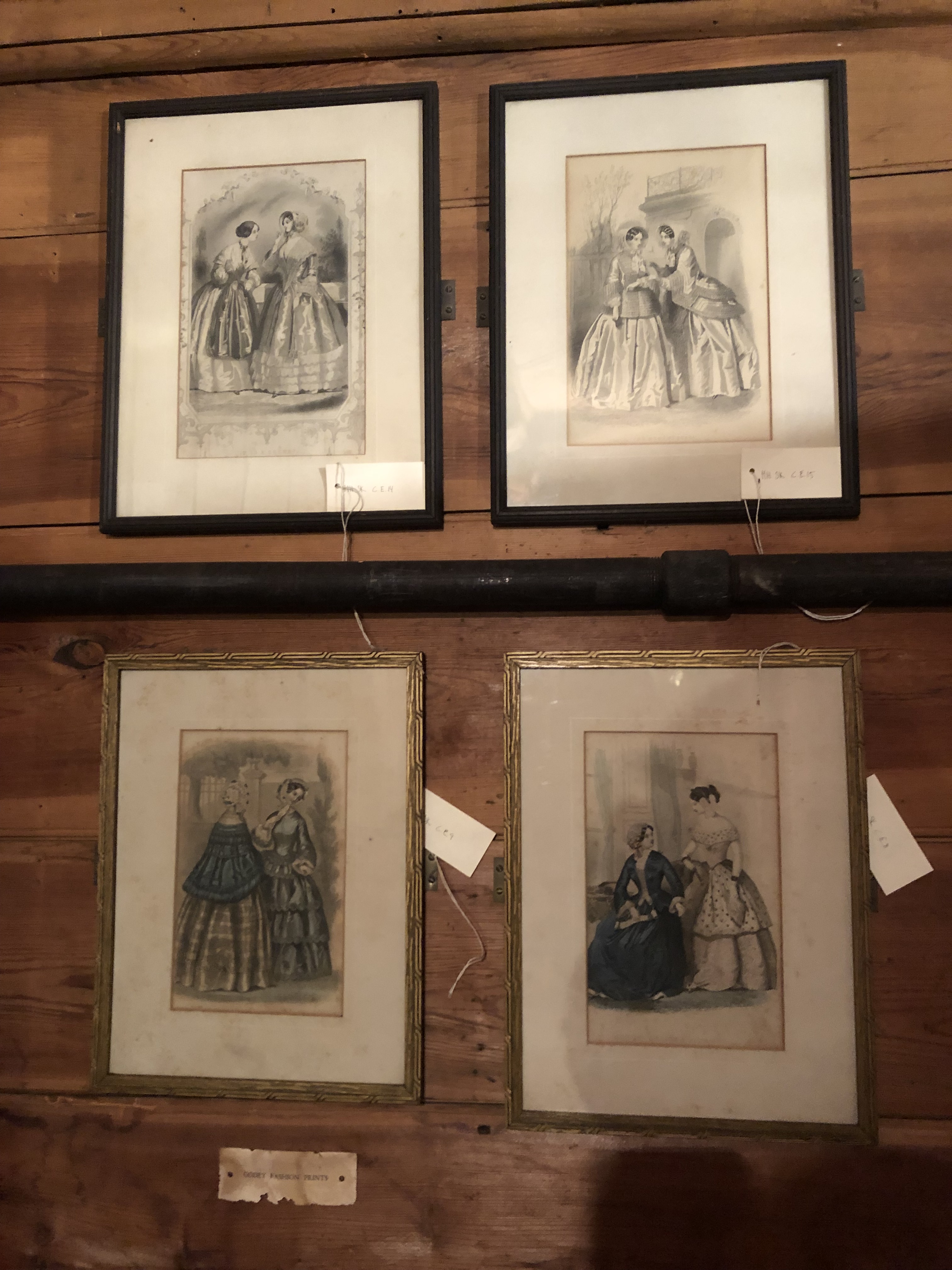
I also went down to the basement (it’s as creepy as it sounds; there’s a collection of antique baby carriages that look so haunted). On the wall near the stairs there’s a set of four mid-19th century fashion plates. Next to them is a cartoon titled “Sailors on Shore” which appears to be from around the same time. I couldn’t make out the text of the cartoon so I’m not sure exactly what it’s meant to satirize but the way the figures are drawn reminded me of the article on Irish political cartoon styles.
The museum staff admitted that they don’t know a lot about the origin of every object. Most of their research right now is focused on tracing the origins of the Native American artifacts in the collection and trying to return them to the communities they came from. All of the Victorian visual culture objects I mentioned don’t have a clear background. Without more research they can only speculate on how and why Skinner acquired them. But the curators are very open to student research about any of the objects in the museum and happy to facilitate any study.

Posted in Uncategorized
Review: Lenka Clayton’s Comedy Plus Tragedy
Lenka Clayton visited Mount Holyoke College on Thursday, October 28th to deliver a lecture entitled “My Grandmother Lived to be a Hundred Years Old.” Born in England and based in Pittsburgh, Clayton examines daily objects anew through philosophical and humorous means. Her work has been displayed at the MET, and her current exhibition at the MHC art museum marks the 75th anniversary of the Joseph Allen Skinner Museum. In this talk, she discussed some of her past projects as well as her current MHC exhibition, Comedy Plus Tragedy.
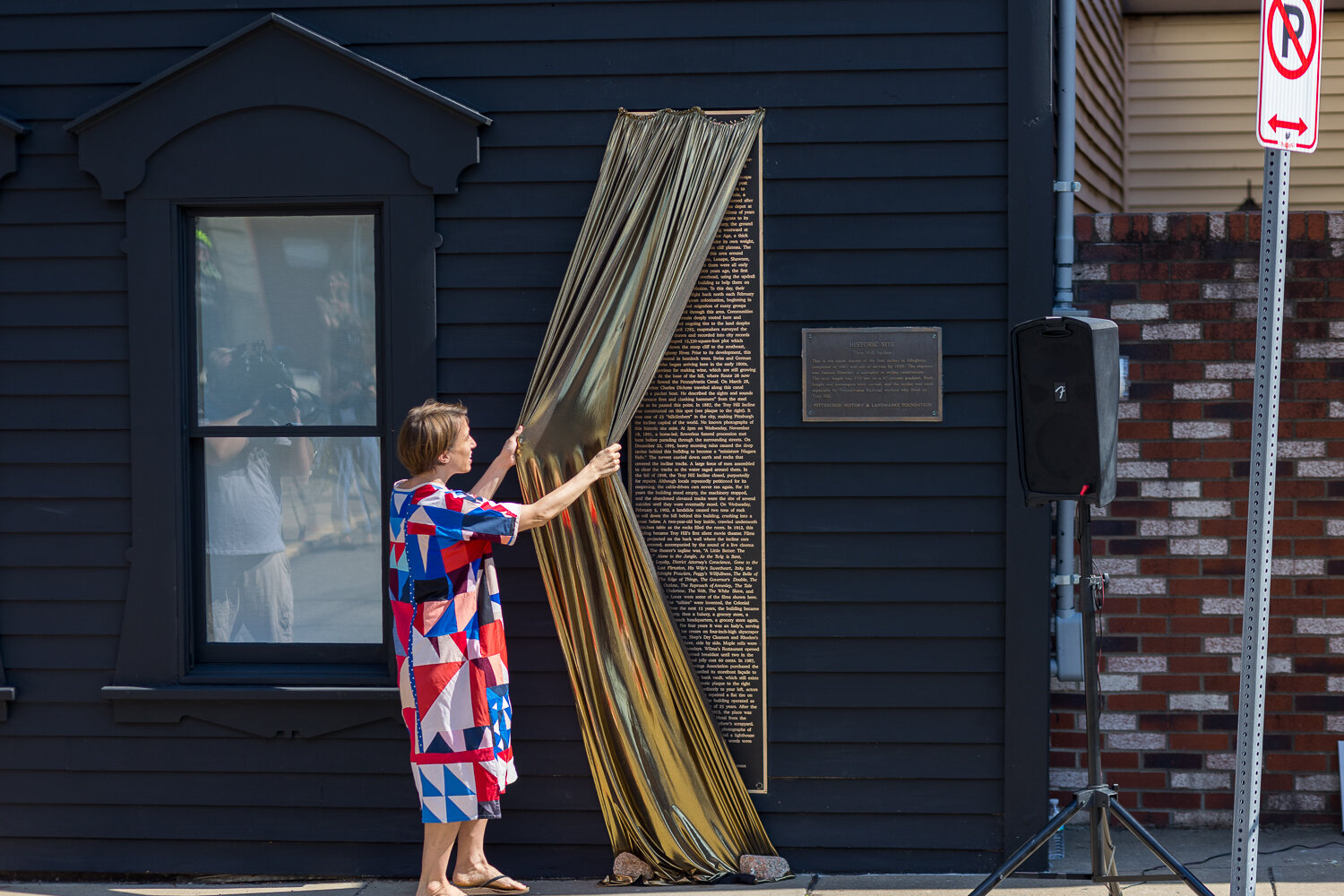
MHCAM Director Tricia Paik opened the lecture. She acknowledged the Indigenous land that the art museum is built on, and also mentioned the colonialist approach to collecting that was common in Skinner’s time. This acknowledgement of the past was not only respectful and important, but is similar to the way in which Clayton approaches her work. Many of Clayton’s projects center hidden histories. Her piece Historic Site (2021) takes the form of a plaque on her studio in Pittsburgh. In collaboration with Phillip Andrew Lewis, Clayton sought to uncover extraordinary hidden human stories, and the work reads as a vivid, comprehensive chronicle of the history of the land on which she now lives and works. With a scope of hundreds of millions of years, it’s an incredibly clever deviation from the conventional historic plaque template and is a model for a respectful, in-depth acknowledgment of the history of the land on which we reside. Here is a link to a PDF of the plaque text, as provided on Clayton’s website:
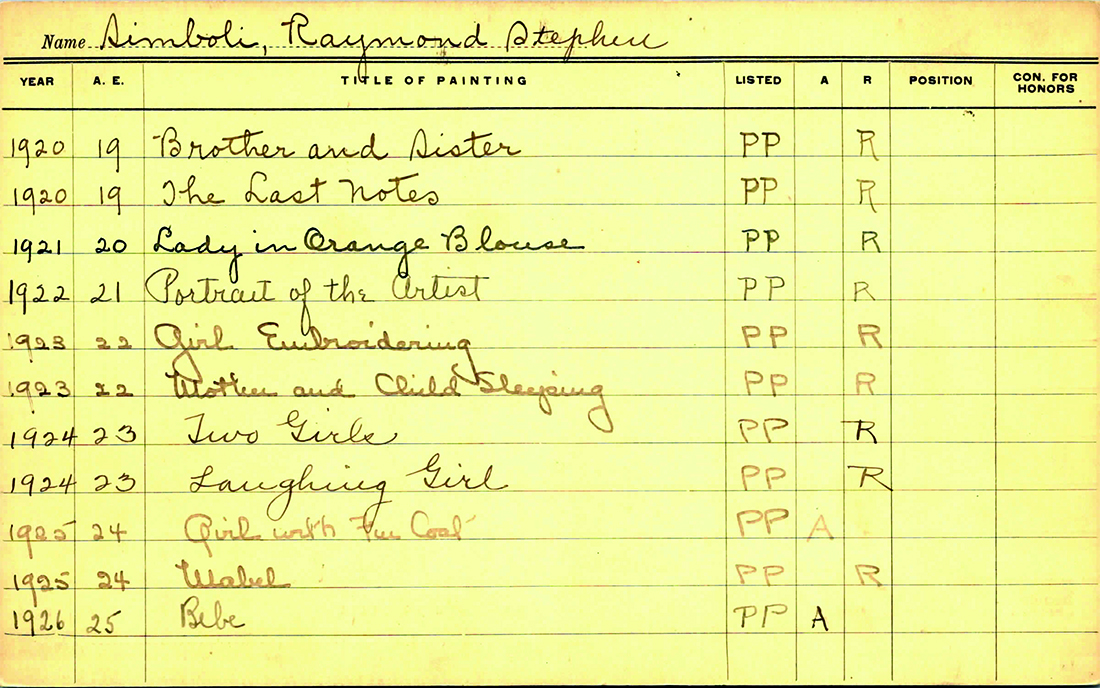
Clayton also talked about her exhibition at Carnegie International in Pittsburg, 2018: Fruit and Other Things. Carnegie International started in 1898 with an open call for submissions, and works were selected by a jury. They kept intricate records of every submitted work, including rejected ones. However, the records are simply categorical in nature – they include artist names, dates of submissions, and titles of submitted works. But how intriguing it is to read the title of a visual work that has and will never be seen. Clayton and Jon Rubin compiled a list of the 10,632 rejected titles and on each day of the 57th Carnegie International, visitors had the opportunity to take a handwritten card with one of these titles home, to use however they liked. Clayton said that she will sometimes check local Zillow listings in Pittsburg and see those cards hung in people’s homes. The full list can be found here:
https://www.fruitandotherthings.com/the-list
Clayton referred to these lost artworks as “things people thought were worth looking at, that were never seen.” This incredible line made me think about photography and how it has evolved. By the 1870’s, advancements in photographic technology had already made photos so affordable that in The Burden of Representation: Essays on Photographies and Histories, John Tagg referred to it as the “era of throwaway images.” Photographs had become “so common as to be unremarkable… they were items of passing interest with no residual value, to be consumed and thrown away” (56). How accurately that describes photography today. There are many physical copies of photographs that were taken before the digital age that are considered meaningless to anyone but the subjects or their loved ones. Now, many of us have a bounty of beautiful images on our devices that will never be displayed in a museum (they can be on Instagram, however). But to harken back to the “era of throwaway images,” today we are able to take infinite photographs. Many of us have hundreds and thousands that are meaningless even to ourselves. Think about the decillions of photographs that have been taken in the past and the billions more that are taken everyday. How many photographs do you have on your devices that you would not consider worthy to be shown? I have countless photos that are of little value to even myself – a photo of my breakfast on some random day, or a selfie I took on the bus just to check if my bangs looked alright.
Clayton ended her lecture by talking about her exhibition at the Mount Holyoke College Art museum, Comedy Plus Tragedy. Starting three years ago, Clayton began to visit the Skinner Collection, and in her words, “met the objects one at a time.” Among the items that piqued her interest include the eggs of an extinct hen and a single brick from the house in which Louis IV died. Clayton said that her process in working with the collection was trying to move from not knowing, to knowing. Many of the objects are difficult to make sense of because they’ve been removed from their original contexts. We experience the objects in the Skinner museum as they are now – in a quiet, sheltered afterlife. There’s dinnerware that is no longer used, armor that will never be worn. It could be said that some of the objects have lost their value – a key to a jail cell is useless sitting in a museum. But Clayton has made something special and new out of random, unrelated objects. She illuminates these objects’ vibrant pasts, even when those pasts are unknown, and encourages us to think of them beyond their current state.
One piece, entitled Four Invisible Things, spotlights the remnants of objects that are no longer with us. These include a 134 year old piece of Skinner’s wedding cake eaten by mice (so just an empty box), a label that says “Rough Diamonds,” (that were stolen, so there’s nothing there), a flag that is much too large and fragile to ever be opened again, and the pedestal on which an exploded cannonball used to rest. I appreciate that Clayton has highlighted these objects. They are lost and inaccessible, and could easily have been forgotten. But here they’ve been given a new life. How many material objects have been and continue to be abandoned, devalued, forgotten? How many objects end up in landfills, never again to be used or seen? There are so many “things” that once served a function, or had value to an individual, that will be lost to time simply because they have an imperfection, or have lost their functionality. Clayton implores us to rethink our evaluation of objects and their implicit value (or lack thereof), and acknowledges that we can still have a meaningful interaction with an object that is no longer with us.

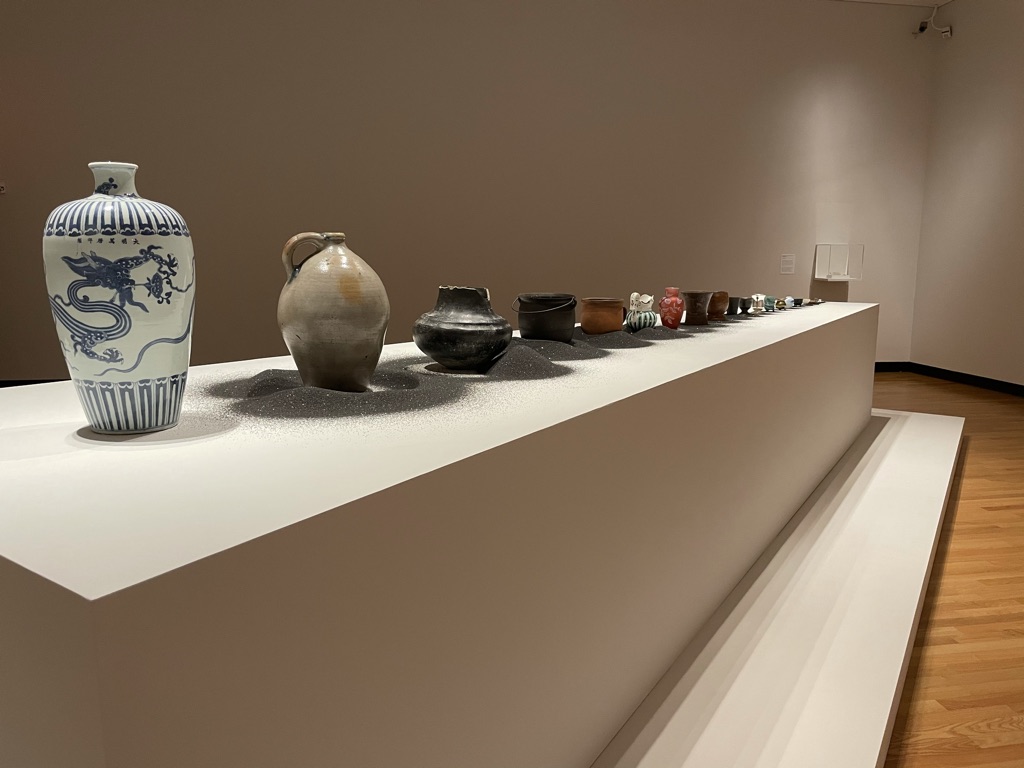
Another piece in the exhibition, Remainder, features a sequence of vessels from four different continents, separated by four centuries. They are all connected by having the shared utility of being a vessel, but otherwise their design, size, and exact usages vary. This piece reminds me of the way in which our examination of a wide range of photographs in this course has given them a unique afterlife. Professor Martin has taken all of these unrelated images – sometimes the only thing they have in common is the fact that they’re 19th century photographs – and woven them together to make an intriguing study on Victorian visual culture.
Works Cited:
Clayton, Lenka. “Historic Site.” Lenka Clayton, http://www.lenkaclayton.com/historic-site.
Fruit and Other Things. Carnegie International, 2018, https://www.fruitandotherthings.com/home. Accessed 2 November 2021.
Tagg, John. “Essays on Photographies and Histories.” The Burden of Representation.
Posted in REVIEWS -- Events and Exhibits
Review: “Sisters and the Arts” Plenary Lecture by Devoney Looser
On October 16th I had the chance to attend the plenary lecture for the Jane Austen Society of North America’s Annual General Meeting. The lecture, entitled “Sisters and the Arts” and delivered by Devoney Looser, looked at the tradition of eighteenth and nineteenth century families of artists and writers who often worked together or inspired each other. While Jane Austen was the only novelist in her family, her older sister Cassandra was an accomplished, and often overlooked, artist.
Only one confirmed and undisputed image of Jane Austen’s face survives today. Unlike almost every other member of her immediate family, she never had a professional portrait or silhouette done. She achieved some success in her lifetime but it wasn’t until after her death that acclaim for her books rose to the point where readers wanted to see and know the author. Since then, the portrait of her face has been the subject of constant debate, study and reworking. I found all of this fascinating in regards to the cult of the celebrity author and the desire for image that so irritated Dickens later in the century. However, Looser glossed over the history of the image, which she feels has already been widely discussed, in favor of looking at the artist.
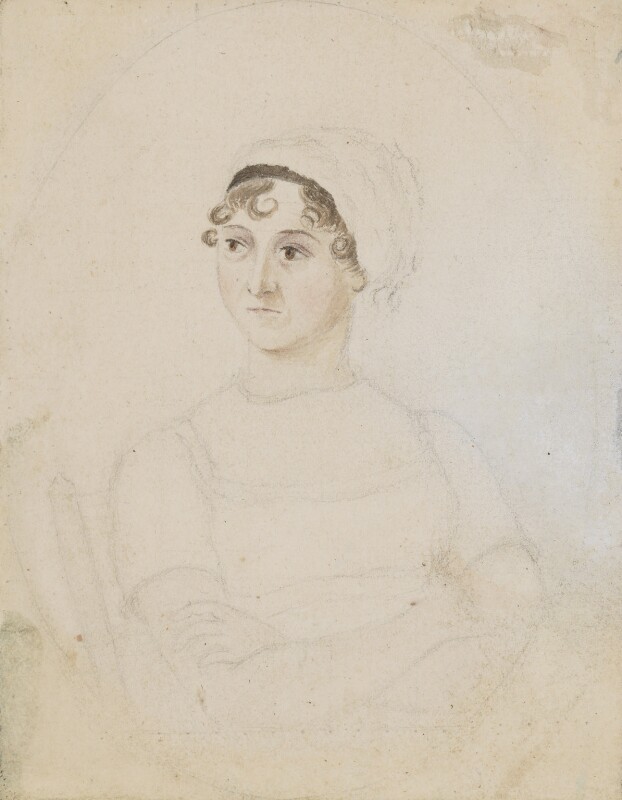
Cassandra created this now-famous image of Jane in 1810 using pencil and watercolor. Historically, this image has faced criticism from both literary and artistic scholars. Most agree that it isn’t “good” in an artistic sense and some say it fails to accurately capture anything about the author. After all, Cassandra Austen wasn’t a professional artist and while she might have received lessons from a private tutor, she never enrolled in a formal art school. Portraiture was one of many drawing room arts for upper and middle class women at the time. This work has rarely been counted as art as all and relegated to being amateurish or the product of boredom.
However, Looser rightly pointed out that this view of women’s work as “unartistic” reinforces the same male-elitist biases that have been in place since the picture’s creation, and long before. The overall theme of the conference was “Jane Austen and the Arts” and other lectures celebrated such traditionally femenine and therefore “unartistic” arts as cooking and embroidery. In keeping with this theme, Looser seeks to establish Cassandra as an artist in her own right and an artistic collaborator with her sister. In fact, the two did collaborate on a History of England that Jane wrote in her teens and which Cassandra illustrated. Throughout their lives, the sisters were partners in domestic labor and looked to each other for sources of inspiration. The prevalence of sisters and sisterhood in Austen’s novels attests to this.
This lecture made me reconsider the earlier part of our class where we talked about early, pre-photographic portraiture. Of course the oiling paintings of the aristocracy are valuable visual records. However, Looser pointed out that most middle class families in the emerging nineteenth century relied on women to serve as visual historians. Whatever the scholarly opinion of Cassandra’s art, literary historians and Austen readers are indebted to her for creating our lasting understanding of Jane’s image.
From Cassandra as an artist, Looser shifted to other Austen siblings. Two of Janes’ brothers, Charles and Frank, served in the navy and both learned to sketch during that time, often illustrating the letters they sent home. This is where visual arts intersects with other scholarship that Looser has been doing recently into the Austen family’s relation to transatlantic slavery. While Looser admitted this diverged slightly from the “Sisters and the Arts” promised by the title, it was nonetheless important and informed scholarship regarding Austen.
Jane’s family was more involved in transatlantic slavery than the cheerful, all-white casts of BBC adaptations would have you believe. Her father invested heavily in a Caribbean plantation, the proceeds of which may well have funded Jane’s childhood education, even the paper and desk she later wrote on. In the navy, her brother Charles was in charge of an anti-slavery mission to capture Spanish slave ships entering the Carribean. However, Looser suggested that it remains unclear how personally he took the anti-slavery message. He notably let a Spanish captain escape unpunished when the captain asked to visit his sick wife. Charles placed total faith in a “white gentleman’s agreement” without reconsidering the repercussions for justice.
I was pleased to finally hear a lecturer address the legacy of slavery in Austen’s novels directly, something that was largely lacking from other lectures at the conference. In consuming nineteenth century art or literature, no matter how distanced it may at first seem from topics of imperialism and empire, those practices shaped every aspect of British life. The fact that this came at the end of a lecture devoted to portraiture practices within England, rather than receiving its own lecture, highlights the immense amount of work needed to continue raising awareness. Still, I think Looser effectively united different cultural sources related to Austen while not losing sight of their cultural context.
In the concluding question and answer section, an audience member pointed out that the JASNA monthly publication had done a special issue on Austen and race last year. Looser acknowledged the value of this but, like Chatterjee, Christoff and Wong, Looser said that real progress would be when every issue contained material that explored the legacy of imperialism and transatlantic slavery in nineteenth century literature.
Looser, Devoney. “Sisters and the Arts”. Plenary Lecture, JASNA Annual General Meeting, October 16, 2021. Chicago
Posted in Uncategorized | Tags: portraiture, review
REVIEW- “Remembering When Americans Picnicked in Cemeteries”
The article “Remembering When Americans Picnicked in Cemeteries” published in Gastro Obscura, a site that dives deep into the histories and peculiarities of foods and the rituals that follow them, investigates the now-taboo practice of gathering in cemeteries for leisure; although not strictly an exhibit, the use of photographs throughout the article create a feeling of walking through a museum and reading the captions. What would now be considered not only strange but also inconsiderate and potentially illegal was a fairly natural occurrence in Victorian America as people responded to the severe lack of public spaces. Cemeteries provided a lush and well-kept space and participants in this tradition were not turned off by the overt morbidity of eating amongst graves because death was treated quite differently in this period than in modernity: there was a deep respect for the dead and a connection with them that transcended the boundaries of life.
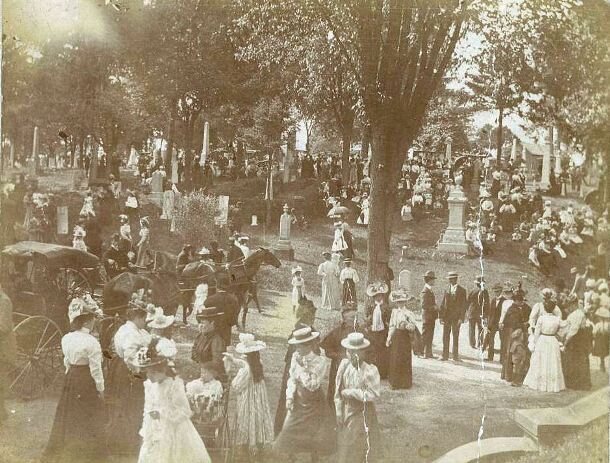
Jonathan Kendall, the writer of the article, emphasizes that “death was a constant visitor for many families, and in cemeteries, people could “talk”…with family and friends, both living and deceased” which is accompanied by a photograph taken from a slightly high angle looking over throngs of people in Victorian America socializing and sitting among the graves (Kendall). I would be interested in how divisions in class and gender in this period were reflected in the practice of picnicking in cemeteries because I can imagine that the luxury of being able to ‘go out to eat,’ so to speak, was only awarded to people of a certain status; the fashion in the photograph does signify to us that the practice was generally enjoyed by those of the upper class, as well as the presence of children which indicates access to healthcare. Nevertheless, Kendall connects the eating-amongst-graves ritual with other historical trends, specifically the rural cemetery movement that saw cemeteries became less bleak and more beautified which, in turn, provides some historical evidence for being compelled to eat with the dead.
One of the more interesting photographs from the article is one of a woman leaning against a tombstone eating and reading a book. She is in the foreground and the photograph is taken in such a way that creates a tunneled vision of the background which highlights a movement between space; this is characteristic of what Dickens has shown us about how movement is intrinsically linked to the privilege of a certain social status. Once again, I would have appreciated it if Kendall gave more historical context and dove deeper into what these photographs tell us about Victorian society, particularly about food choices and access to food. However, Kendall includes the the primary accounts of experiences picnicking in a cemetery which significantly bolster his writings by making it much clearer how people in this time period perceived this ritual: Kendall cites a man who in 1884 gave an explanation for why he and his family picnicked in a cemetery, saying “We are going to keep Thanksgivin’ with our father as [though he] was a live and hearty this day as [as] last year” (Kendall). Kendall also includes the parallels of this tradition to modernity but does not go into much detail so while the exhibitive nature of the article succeeds in providing some historical context and interesting details of a peculiar tradition of the Victorian era, it would have been more effective if Kendall narrowed the scope of the article to the significances of it and elaborated further on the historical evidence he introduces.
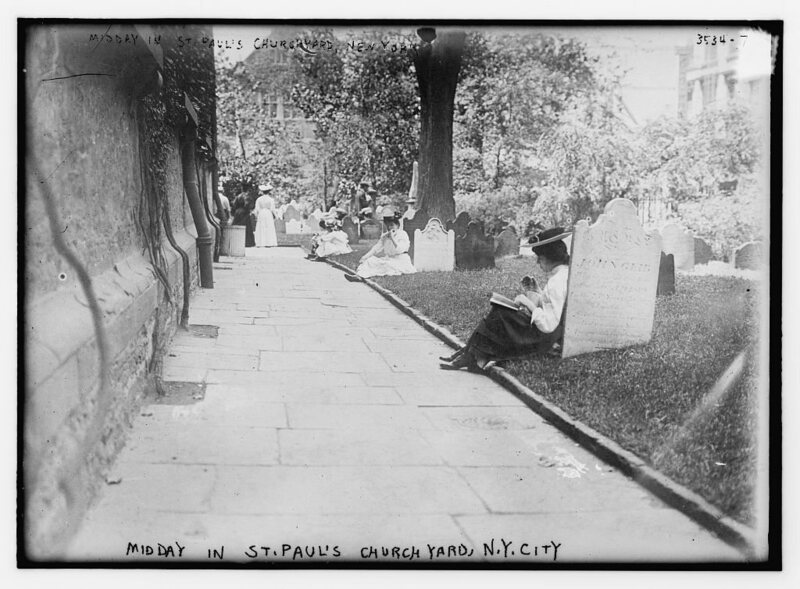
Gastro Obscura publishes lots of articles outlining the peculiarities of food/food traditions and the articles tend to rely heavily on photography and illustrations; this article is no different except I found it to not sufficiently analyze the included photography which made the photography some of its possibility for exploration and critique. The article is a part of a series currently being published on Atlas Obscura (in which Gastro Obscura is a subsection) called “Grave Week” where the site is releasing several articles that seek to showcase peculiar cultural and historical traditions related to cemeteries and graves, culminating with a final article on the Friday before Halloween. In this regard, the article is read in a context related to a holiday, one that is associated with joviality; by including this article with the others implicitly related to Halloween, it negates some of its more serious implications about gender and class. Of course, levity in something interesting like picnicking in a cemetery is certainly important but I found myself wishing the article to be more substantial on its own. The author utilizes hyperlinks as references for his explanations of the tradition and clicking on them reveals that his resources are reproduced images of newspaper articles from the Library of Congress; by relying on hyperlinks, Kendall employs primary sources in a way that requires the reader to go to the site which minimizes the credibility of his statements. The newspaper articles referenced provide more context for the evidence mentioned in Kendall’s article and, more notably, it provides a concrete date for the primary accounts which is important to consider when discussing leisure activities such as picnicking in a cemetery.
The article “Remembering When Americans Picnicked in Cemeteries” published in Gastro Obscura is an intriguing report of a peculiar tradition that originated in Victorian America. Although certainly fascinating, especially with the use of photography to illustrate the concept, it lacked a sincere amount of substance and analysis in order to make it something worth studying.
Kendall, Jonathan. “Remembering When Americans Picnicked in Cemeteries.” Gastro Obscura, Atlas Obscura, 15 Oct. 2021, http://www.atlasobscura.com/articles/picnic-in-cemeteries-america?utm_source=Gastro%2BObscura%2BWeekly%2BE-mail&utm_campaign=a9a1c817bc-GASTRO_EMAIL_CAMPAIGN_2021_10_19&utm_medium=email&utm_term=0_2418498528-a9a1c817bc-75492862&mc_cid=a9a1c817bc&mc_eid=ed00602dfd.
Posted in REVIEWS -- Events and Exhibits | Tags: photography


 Victorian Visual Culture