Posted by: graceoddity | November 6, 2020

Perception, Gaze, and Sensory Dimension in The Piano

(TW FOR DISCUSSION OF SEXUAL COERCION, SEXUAL ASSAULT, SUICIDE ATTEMPT)

I would like to preface this by saying that although The Piano does contain two instances of photography being used in the film’s narrative, the visuality discussed in this post will primarily be removed from a wider sense of visual culture, and will instead be on the smaller scale of visual sensation and gaze. 

The Piano is a film set in colonial New Zealand in the mid-1800s following Ada, who is psychologically mute, and her extramarital affair with local George Baines after she is sold into marriage by her father to Alisdair Stewart. She communicates via sign language, which her young daughter Flora translates, and by playing her piano, which is left on the beach with pieces of their luggage upon her arrival. (Interestingly, she talks about a man from a previous relationship as having heard her voice communicating in his head, which her husband also mentions – both become afraid of her for this as it is unnatural, disorded: perception without stimulus). 

Ada’s mutism reduces her almost purely to the visual. Her modes of communication are the only things which allow her to encroach upon the auditory sphere – her daughter, who allows her to speak, and her piano, which allows her to make music. The piano, although imperfect, is the only mode of expression which belongs wholly to Ada, and which is fully under her control, especially as her daughter becomes more rebellious. This is why the piano is so important to her, and why she enters into her deal with George Baines to exchange sexual favors to get it back.

This deal begins in the visual – at first, Baines simply wants to watch while she plays the piano. He reduces her to a visual object and, by owning the piano, he exerts control over Ada through his possession of the singular mode of expression she truly owns. However, it soon progresses as he demands more of her. His gaze, although implied to treat her as a sexual object, becomes explicitly so when he demands to lay underneath her skirts and look at her legs while she plays. At this point, he reaches out and touches her leg through a small hole in her stockings, and crosses over from solely watching to physical touch. At this point, this abusive transaction he has coerced her into progresses into sexual favors, which she appears uncomfortable with. However, after Baines gives her piano back, calls off their “deal,” and cuts off contact, Ada seeks him out for an affair of her own free will. 

The movie seems to tonally treat their relationship as a romance, and it could be argued that Ada has discovered a new freedom in this expansion into the sensory modality of touch; that like her piano, Ada’s sexual relationship with Baines affords her a multidimensionality beyond vision. Not only is she present beyond the visual, but she is in control of this sensory modality in a way that she is not of how she is perceived; perception is passive, centered in the other, and not always requited, in a way that touch, in this situation, is not. However, although Ada is technically no longer under Baines’ control, he sexually abused her in the past even if he reneged on their “deal” later and gave the piano back. Because of this sexual coercion, I struggle to speak about it in positive terms, or describe their relationship as giving any form of freedom to Ada, but she has chosen this affair in a way she did not choose the marriage she was sold into. 

Amidst this, however, Ada’s husband Alisdair enters the sensate matrix of their affair, as he spies on them through the wall and floorboards. Beyond this initial literal watching, which the viewer does not see repeated, Alisdair functions as surveillance of their relationship throughout the film; he knows of their affair, and keeps tabs on them. Even Ada’s daughter functions as a surveillant apparatus for him, reporting to Alisdair when she finds out her mother is attempting to send a message to Baines. Ada and Baines are aware of his watching, and attempt to conceal their affair for her own good.

Alisdair becomes frustrated that there is no affection of any kind in their marriage, particularly of a sexual nature. Eventually, Ada becomes intimate with him, but does not allow him to touch her – thus, at the only time he has wanted Ada to be more than a visual object, she denies him. In a similar reversal, when Alisdair attempts to rape Ada while she is unconscious, she awakes and makes eye contact, and he freezes. It is unclear what happens next due to a sudden cut after an extreme close up shot of her eyes (emphasizing her watchfulness), but he appears to stop when he realizes she can see him. In a reversal of her husband’s surveillance of her illicit acts, perception is weaponized by the woman who has been the persistent object of an oppressive gaze. 

(Here, I would also like to note that the two instances of photography I referenced earlier as being in the narrative are Alisdair’s possession of Ada’s portrait which he checks his reflection in, and a wedding portrait he makes her sit for, both of which occur at the beginning of the movie before the affair. Not necessarily relevant beyond the fact that they signify his possession her image, but amid all of our discussion of photography, I feel it would be remiss of me to not mention them).

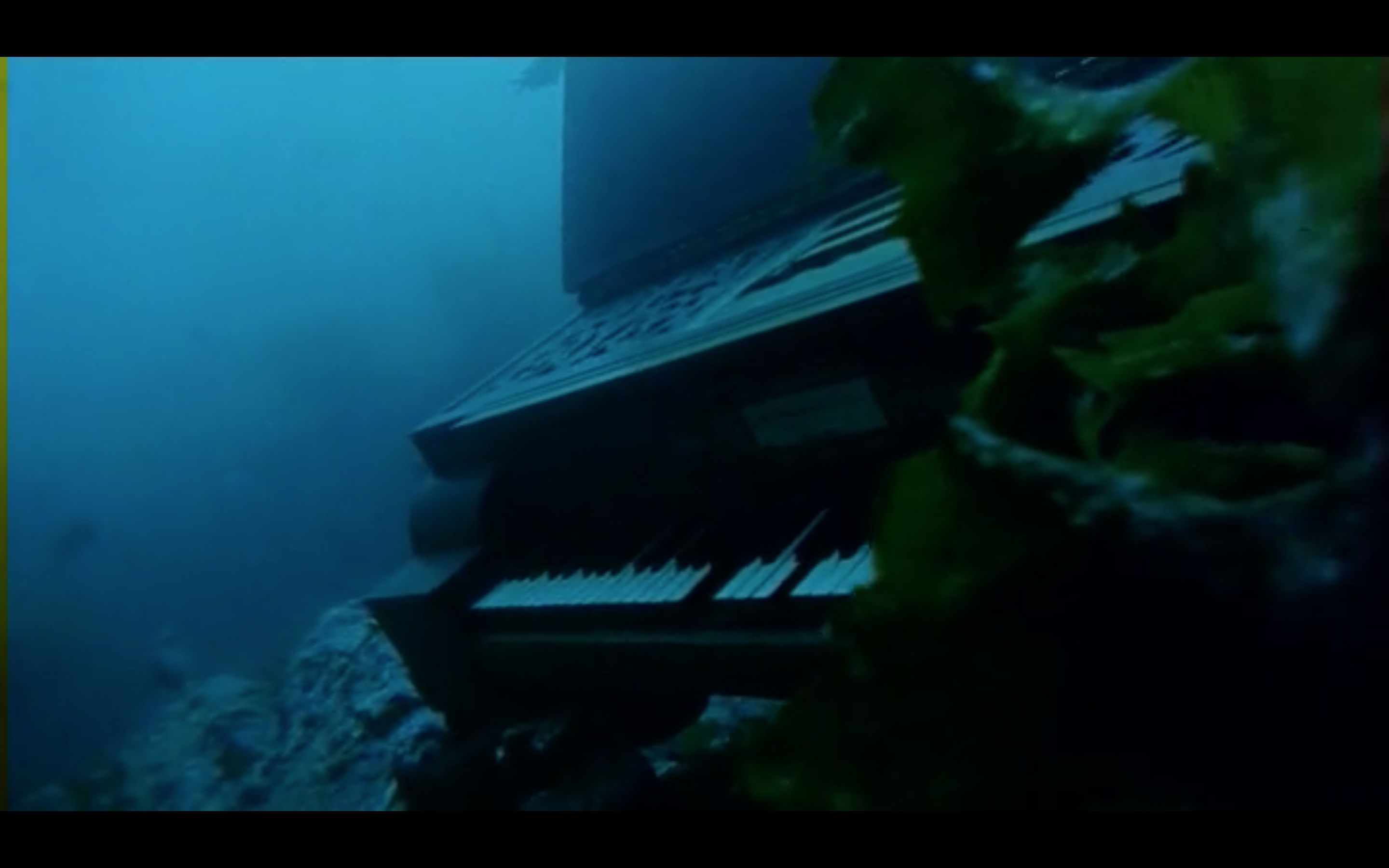
Lastly, I would like to move away from the sensory dimensions of Ada’s relationships, and talk instead about the visuality of the movie’s final image. As Ada, Flora, and Baines leave New Zealand by boat, Ada’s piano weighs the boat down. She tells them to throw it overboard, and after protest from Baines, he agrees to do so. As the piano sinks, it pulls a coiled rope from the boat; Ada steps on the rope so that it tangles around her ankle, and pulls her down with the piano. After sinking quite deep, she changes her mind about this suicide attempt, unties her leg, and swims to the surface. The piano sinks to the bottom of the ocean. Ada’s voiceover, after describing her new life with Baines, says that sometimes she thinks about her piano, and imagines herself floating above it. We see an image of the piano at the bottom of the sea, with Ada’s floating body tethered to it. The voiceover goes on to say that it is still and silent, and she imagines this at night to lull herself to sleep. This image of Ada’s body is overwhelmingly passive in its visuality, but the silence here is comforting to her instead of oppressive. This is because the visuality is wholly within her possession; the dead Ada of this still image exists only in her mind’s eye, sealed internally to be looked at, heard, perceived in any way, by no one but herself. She says: “It is a weird lullaby, and so it is: it is mine.” Ada is finally, at least in some internal sense, in possession of her own image.
Works cited:
The Piano. Directed by Jane Campion, Jan Chapman Productions/CiBy 2000, 1993.
As readers of Othello would know, the ocular proof can be badly abused. Arthur Conan Doyle’s short story “A Scandal in Bohemia” occupied by stalking, overseeing and disguising presents various visual practices that shed light on the problems in ways of seeing.
Voyeur? Prying from outside the window
The window is a nexus between the private and public spheres. Its transparency seems to expose the dweller unconscious of an outdoor observer. Standing below Holmes’ window, the dweller becomes a passive subject of Watson’s gaze: “[his] rooms were brilliantly lit, and, even as [Watson] looked up, [Watson] saw his tall spare figure pass twice in a dark silhouette against the blind.” On the next day we find Holmes outside Briony Lodge, prying into the windows of Irene Adler. The “machine” observes his subjects in the house with his “high-power lenses”. However, what he captures is no different from silhouettes, for the internal content of his subjects remains dark, solid, and therefore indecipherable. As Watson demonstrates, the brighter the surroundings, the darker the person. If the scandal of Adler and the King of Bohemia is about a private photo misplaced in public, what they would have faced a publicly practised voyeurism. As the torrent of public opinion surrounds them, their individual character is increasingly neglected and invisible and their images nailed based on an ephemeral moment in life.
Portraitist? Painting pictures in the mind
Other than spatial implications, the story also has highly visualising descriptive language. Watson meticulously and closely describes the costume of the King of Bohemia on his first arrival at 221B Baker Street, generalising the impression as “barbaric opulence”. He also deduces the King’s “strong character” from his weighty appearance. Although his description paints a thorough picture of the King, here he assumes the position no different from the coloniser who fancies the exotic as the barbaric (the characterisation of Irene Adler also has exotic undertones). The dichotomy between the visual and the mental is also underlined and confused through the King’s description of Irene Adler: “she has the face of the most beautiful of women, and the mind of the most resolute of men”. It is as if beauty is a natural inclination of women and intellect is exclusive for men. Watson and the King’s textual (re)creations of the pictures they see undergo their own biases, revealing the disparity between different mediums. As they introduce people unknown to their audience, they assume the role of a portraitist who, merges his own perspective with the image of his subject. Sometimes mental pictures are painted before proven by visual evidence. For instance, Watson says that “[the] house [of Irene Adler] was just such as I had pictured it from Sherlock Holmes’ succinct description”, and Holmes is sure about the identity of Godfrey Norton at first glance through his correspondence with former descriptions.
Disguiser? Learning the truth through writing
Watson describes Holmes’ disguise as clergyman as such: “[his] expression, his manner, his very soul seemed to vary with every fresh part that he assumed. The stage lost a fine actor, even science lost an acute reasoner, when he became a specialist in crime.” Holmes’ disguise borrows a social identity while not assuming its function and responsibility. It is a visual mimesis that relies on stereotypical traits of a certain group, which only tricks the eye. He attempts to use this strategy to finally steal the photo from Irene Adler’s house, only to find the latter more professional than him. Disguise reveals the constructiveness of identity and of reality, something that Holmes attributes to writing, through which the final truth is ironically revealed to him. In the beginning of the story, he rightly deduces the identity of the King of Bohemia through his letter. However, when he converses with the King, he is in total disbelief with writing:
[King:]“There is the writing.”
[Holmes:] “Pooh, pooh! Forgery.”
[King:]“My private note-paper.”
[Holmes:] “Stolen.”
[King:]“My own seal.”
[Holmes:] “Imitated.”
Conscious of the disguise of words, Holmes turns to the ocular proof. However, as a sophisticated disguiser, he should learn the latter’s authenticity is rather parallel to the former, instead of complementary.

Works Consulted
Primary source:
Doyle, Arthur Conan. “A Scandal in Bohemia.” Strand Magazine, July, 1891. E-version by Stanford Continuing Studies, 2016.
Secondary sources:
Colin, Williamson. “The Curious Case of Sherlock Holmes.” Hamlet Lives in Hollywood: John Barrymore and the Acting Tradition Onscreen, edited by Murray Pomerance and Steven Rybin, Edinburgh University Press, Edinburgh, 2017, pp. 35–46.
Miller, Elizabeth Carolyn. “Private and Public Eyes: Sherlock Holmes and the Invisible Woman.” Framed: The New Woman Criminal in British Culture at the Fin De Siecle, University of Michigan Press, Ann Arbor, 2008, pp. 25–69.

Posted by: Lily R | November 2, 2020

Staging a Scandal in Sherlock Holmes

In “A Scandal in Bohemia,” the concepts of truth and claim are obscured for both the characters and the reader. Individuals such as the King and Holmes engage in disguise, and the objectivity of portraiture is called into question. When the King originally tells Holmes and Watson about the portrait of Irene Adler, the detectives are unalarmed about its existence. However, when it comes to light that both Adler and the King are pictured in the photograph — and that Adler plans to use it for extortion — its seriousness is multiplied. In this short story, Sir Arthur Conan Doyle uses these moments of obscurity to build a scandal which remains largely unclear to the reader but nevertheless assumes massive importance within the text.

In order to build the suspense and elevation of this scandal, Conan Doyle begins by validating the investigative skills of Sherlock Holmes. He is propped up as a genius through his observations of Watson’s incompetent maid and the number of stairs leading to his apartment. When the King enters in disguise, therefore, the reader is already expectant that Holmes will discover his identity. I believe that Conan Doyle chose to introduce the King in disguise in order to dually prove Holmes’ skills and to align the King with trickery and deceit.

The King is implicated in the scandal with Adler in many different ways — he tells Holmes about letters, personal papers, stamps, and photographs — but the only significant form in this story is the portrait depicting both him and Adler. This is a subset of the era this story was written in, as there are now forms of technology which would work to discredit this portrait, such as Photoshop. In some ways, therefore, the scandal is staged by Adler, as she introduces importance to the form of the portrait. If Adler did not tell the King her intentions for the photograph, the scandal would not have come to light and the story would not be written.

I also think it is important to consider the individuals left outside of this story’s narrative. Holmes, being a well-propped-up and trained detective, should have reasonably considered individuals who are also intertwined with the scandal, such as the photographer and the printer. However, Conan Doyle left these individuals out of the narrative in order to better stage the drama of the short story. To the reader, oversights such as this appear relatively obvious, but the author maintains the authority to introduce (or refuse to introduce) complications such as this. In this way, Conan Doyle, is also complicit in the scandal, as his role allowed him to stage a truth claim similar to Adler’s.

Because of the way objectivity and truth are represented through portrait evidence in this story, Holmes is given power when he takes the portrait at the end. The story is framed to view him as a trustworthy protagonist, despite his failed investigation and constant deception throughout the text. If the reader’s perception came from Adler, Holmes may be viewed as the subject of a scandal himself. Because of Conan Doyle’s staging, however, Holmes is entrusted with the evidence with little consideration from surrounding characters or the reader.

This story complicates the ideas of objectivity, truth claim, and scandal by proving that trust can be manipulated depending on who stages the scene. We see this through the King’s explanation of the portrait, the consideration of the photographer and outside parties, and Conan Doyle’s own vision of Holmes as a benevolent genius.

Posted by: sataniques | November 2, 2020

The Masculinization of Dorian Gray


Preface:
Tracking the representation of Dorian Gray is an extremely daunting undertaking. Luckily, another student had done some of the heavy lifting in this blog post for the class during 2013. Meg M provides references to Dorian’s many interpretations. I am grateful for the help in the detective work of uncovering the picture, so to speak, of Dorian Gray. I am also going to be talking about femmephobia (the concept of anti-femininity, a rejection of gender expressions that could be related to femininity) in specifically gay, mostly cis, male culture and how it is replicated and reinvented throughout history and in adaptations of Dorian Gray. I am very appreciative of the concept of adaptation, and think they are valid, this is simply a study on a pattern that I have noticed throughout this multiplicity of Dorian Gray. [Content warning for some homophobic language and rhetoric about sex]

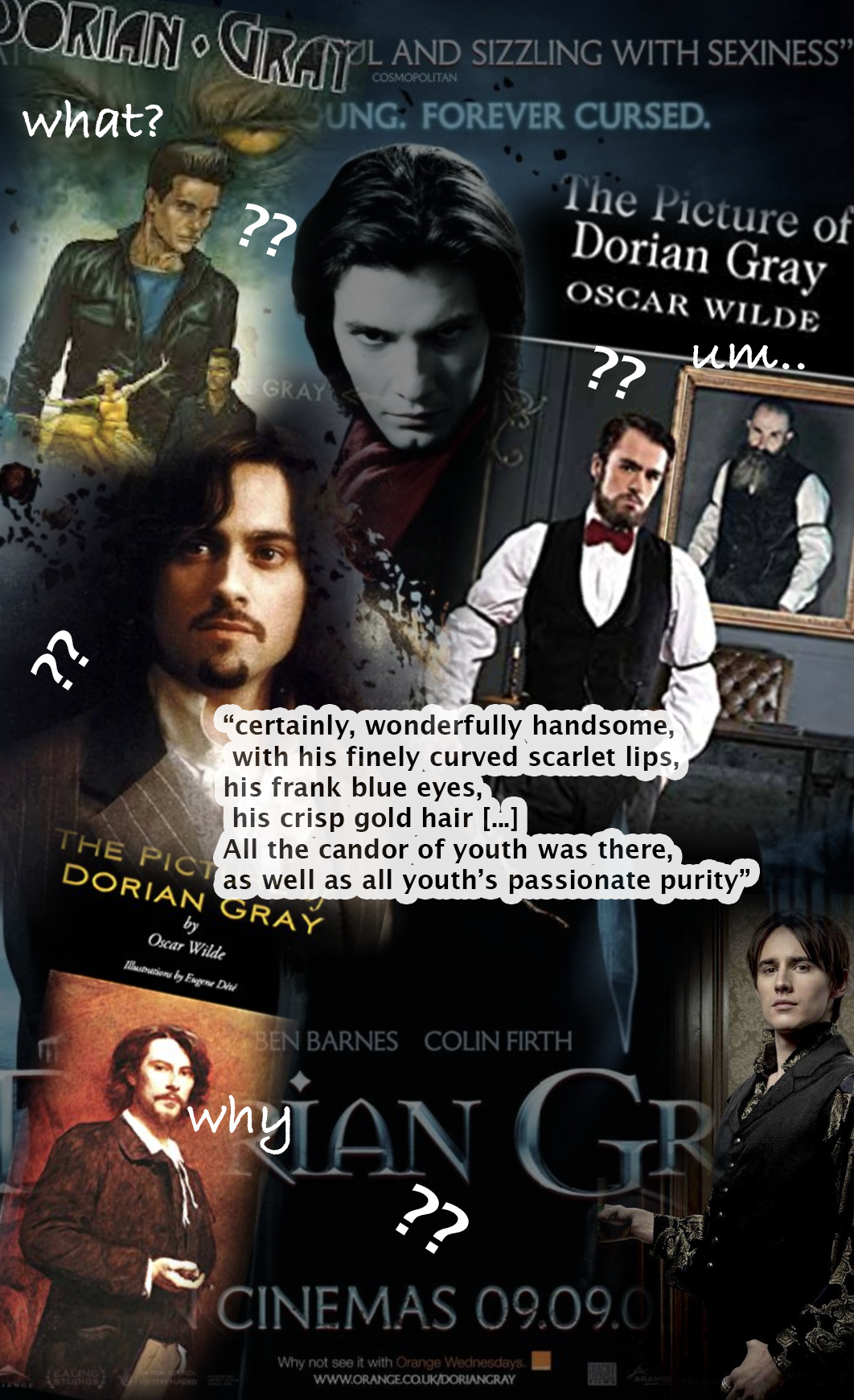
[A photo collage of many different masculine, some bearded, and angular interpretations of Dorian Gray from various media, with a quote from the book in the center and question marks placed throughout. I made this monstrosity.]

The Masculinization of Dorian Gray
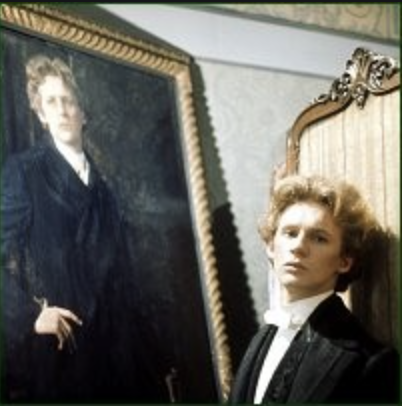
When I had first become interested in The Picture of Dorian Gray, I was at once taken with his image description in the novel. He is introduced to the reader as “certainly, wonderfully handsome, with his finely curved scarlet lips, his frank blue eyes, his crisp gold hair […] All the candor of youth was there, as well as all youth’s passionate purity” (Wilde, 19). He seemed to be a Botticelli-angel, and his softness was often written about throughout the story. Every other line saw Dorian’s bright eyes widening, his beautiful lips parting, or his youthful face lighting up. Lord Henry states that he is a “young Adonis, who looks as if he was made out of ivory and rose-leaves” (Wilde, 7). He also ends this thought with the statement, “beauty, real beauty, ends where an intellectual expression begins […] your mysterious young friend, whose name you have never told me, but whose picture really fascinates me, never thinks […] he is some brainless, beautiful creature” (Wilde, 7) which brands Dorian as, forgive me, a Victorian himbo1. It is also here that Dorian is described as having, what is societally considered, a “femininity” about him. The correlation between femininity and brainlessness requires attention that this post cannot give.

For this post, I will be exploring The Picture of Dorian Gray through a queer-theory lens2, thus revealing that the relationship Basil Hallward, Dorian Gray and Lord Henry have is an envy-ridden ménage à trois between melodramatic gays of the enlightenment. The scarlet lips, rose-leaf features and crisp golden curls all lead to Dorian: the effeminate homosexual. Which, I might add, is not a negative thing. Wilde’s description of Dorian was a positive representation of a very valid gay visuality that has been increasingly warped over time to fit the homosexual-nouveau, masc4masc style. Dorian has been continually represented instead as a “tall, dark and handsome” type on screen and stage, in comic and novel cover… Google image search will bring a barrage of dapper-Dorians but will return only a handful of angelic, soft featured femboys.

“[T]hey feared that what they had begun to view as Greek effeminacy would be a bad influence on young Roman men. This is also reflected in Cato’s complaint in Polybius’s history, wherein Cato laments that a pretty boy slave could command a higher price than fields” (Rocque, 2020)

I will pull back from Dorian for the moment to contextualize my thesis: There is a masculinity problem in gay male spaces, and I do not mean a lack of it. Gay male masculinity has been a contentious topic since ancient periods in history, notably with the quote above about Cato the Elder. It is important to focus on visuality here: some in Roman society feared the feminization of their culture based on the Greek aesthetic experiences such as philosophy, art and literature, thinking these things could lead to effeminacy of men. It should be stated that Cato the Elder was not concerned with homosexuality itself, but that a “pretty boy slave” could be of more interest to a man than the masculine art of agriculture (pastoralism). Likewise, he did not concern himself with homosexual relations but did concern himself with representations of femininity. Notably, though, Hellenistic visual masculinity was still coveted.

The relationship between Grecian, Roman and Victorian-England visuality is further explored in a passage from London and the Culture of Homosexuality, 1885-1914 by Matt Cook. He writes, “[b]oth Hellenism and pastoralism promised stability, a counter to degeneracy and a clearer idea of national identity. They heralded other spaces, including Athens, Arcadia and the English greenwood, and used the muscular body as a symbol of health, vitality, personal endeavor and self-restraint. At a time when fears about the city were focused on the degenerate, criminal, prostituted and effeminate body, these versions of corporeal perfection provided an important counter. An athletic physique could signify not only personal vitality, but also national strength and prowess” (Cook, 124). 

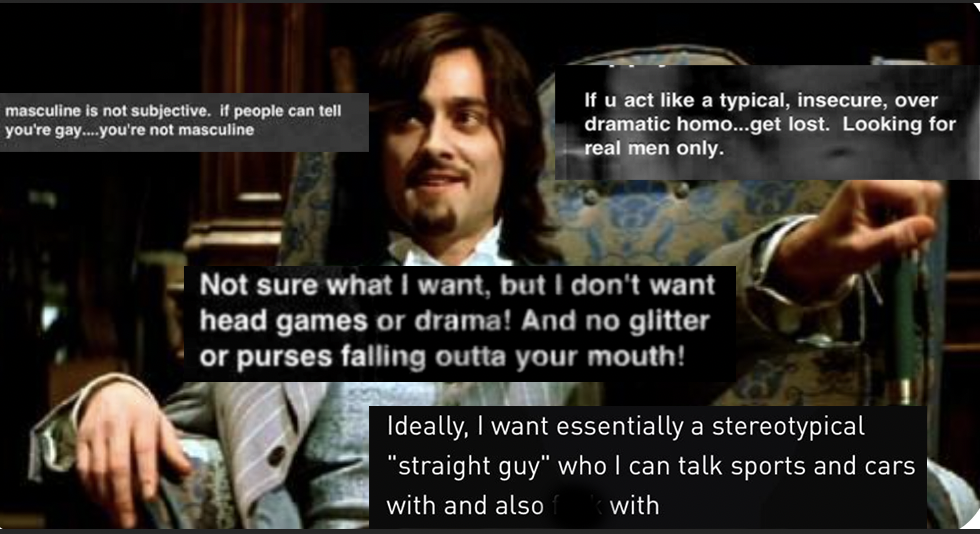
[Image of Stuart Townsend as Dorian Gray from the 2003 film League of Extraordinary Gentleman, with clips of Masc4Masc app messages superimposed over him. I created this and used the messages from this article]

Is this not representative of modern day misogynistic masculinity? That one fit bod can be so visually powerful that it strengthens a nation? The further one can get from male effeminacy, the closer one can get to heterosexual assimilation, to be taken seriously in the eyes of the majority power. I believe this is a root of femmephobia.

My curiosity with masculinizing Dorian Gray started when I came out and was faced with the phrase “masc4masc” as well as “no fats, no femmes, no asians, no trans” on various gay-apps. Being that I am not just one, but all of those adjectives, I became disillusioned and bitter about my place within gay male culture. Gay men seem to be increasingly courting the safety of heterosexual passing privilege. This is not new, however. Again, from London and the Culture of Homosexuality, 1885-1914, “[w]hilst masculinity and middle class status of the [gay] men in the case studies made them sharers in the heterosexual progressive culture, their newly consolidated inverted identity aligned them with space and a cyclical temporality[…]describe[d] as “woman’s time”” (Cook, 83).

[A photo of Peter Firth as a true-to-novel Dorian Gray in the 1976 film adaptation, standing in front of his portrait and looking into the camera. Taken from here]


So, why is Dorian Gray subjected to this? This led me to academic research on the topic and a growing need to examine the aforementioned roots of femmephobia. I started earlier than Dorian though, with Victor Hugo’s 1845 Les Miserables, and specifically, with the character of Enjolras. Similar to Dorian Gray, Enjolras has suffered masculinization over the years. Author Ellie Valsin has delved into this topic in much the same way, compiling a list of defemmed Enjolras’ throughout history [https://ellie-valsin.tumblr.com/post/127086052116/what-is-the-problem-here]. Enjolras is described in the original text as a man with “long fair lashes, blue eyes, hair flying in the wind, rosy cheeks, pure lips, and exquisite teeth” (Hugo). He is also notably blonde, uninterested in the affections of women, and has a very close “friend”, Grantaire. The physical characteristics between these two, and their subsequent “tall, dark and handsome” representations, are quite intriguing.

It is easier to disguise the homosexuality of a protagonist if they are stripped of their femininity, as is the case with Enjolras and Dorian.

However. The most important part of this blog post is here: Though the masculinized Dorian Gray tends to have dark hair and eyes, that absolutely does not mean that people of color cannot wholly represent a soft, feminine Dorian. The bigger question is: Why are interpretations of Dorian so white? This swarthy, rakish white man is replicated time and time again but there is a glaring lack of POC representation for Dorian. People of color and in particular, black gay men and women have endured involuntary masculinization as well– There are ongoing campaigns to embrace and support black male femininity on and off of the internet, so the lack of any black Dorian is glaring, especially in the face of masculinizing him.

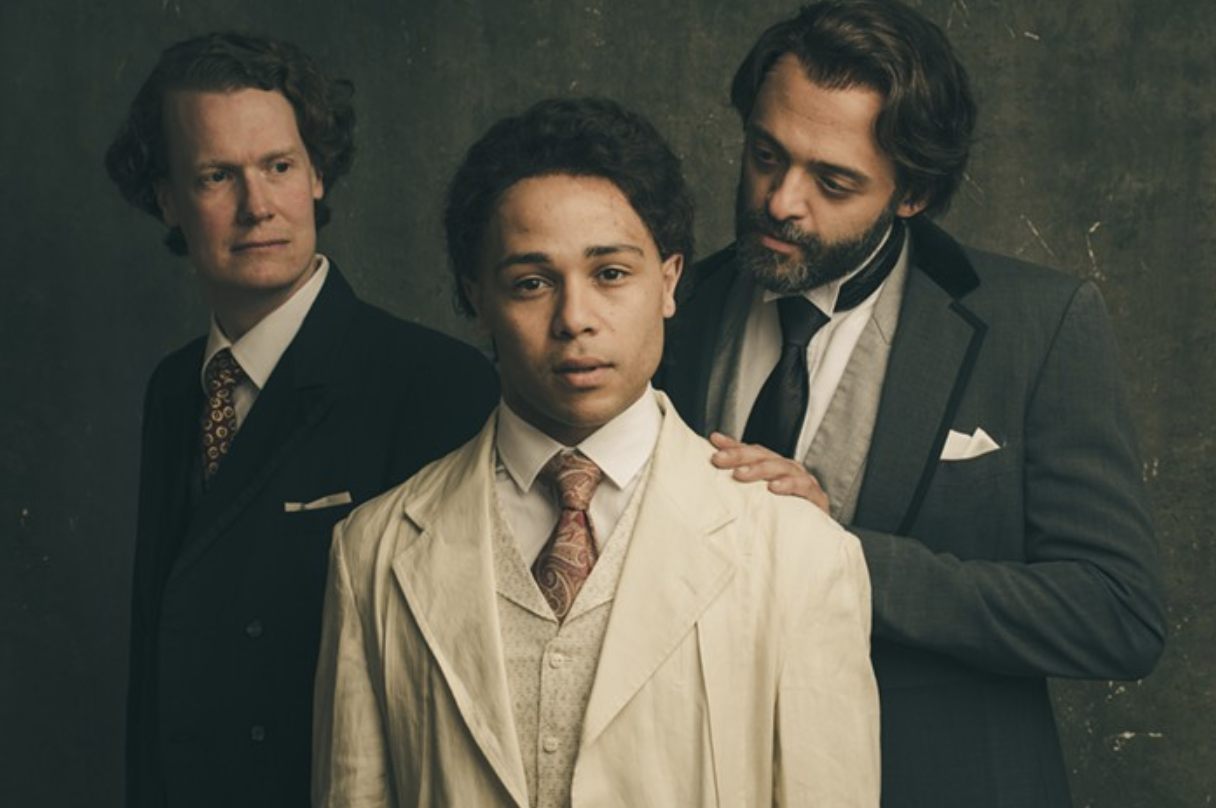
Interestingly, the single greatest representation that I have ever seen of Dorian Gray is Chip Sherman’s portrayal in Book-It theater’s The Picture of Dorian Gray. 

[A photograph of Chip Sherman as Dorian Gray from Book-It Theater’s 2018 stage production. He is a black man with delicate features, in a pristine white suit, with two other actors standing behind him. Taken from here.]

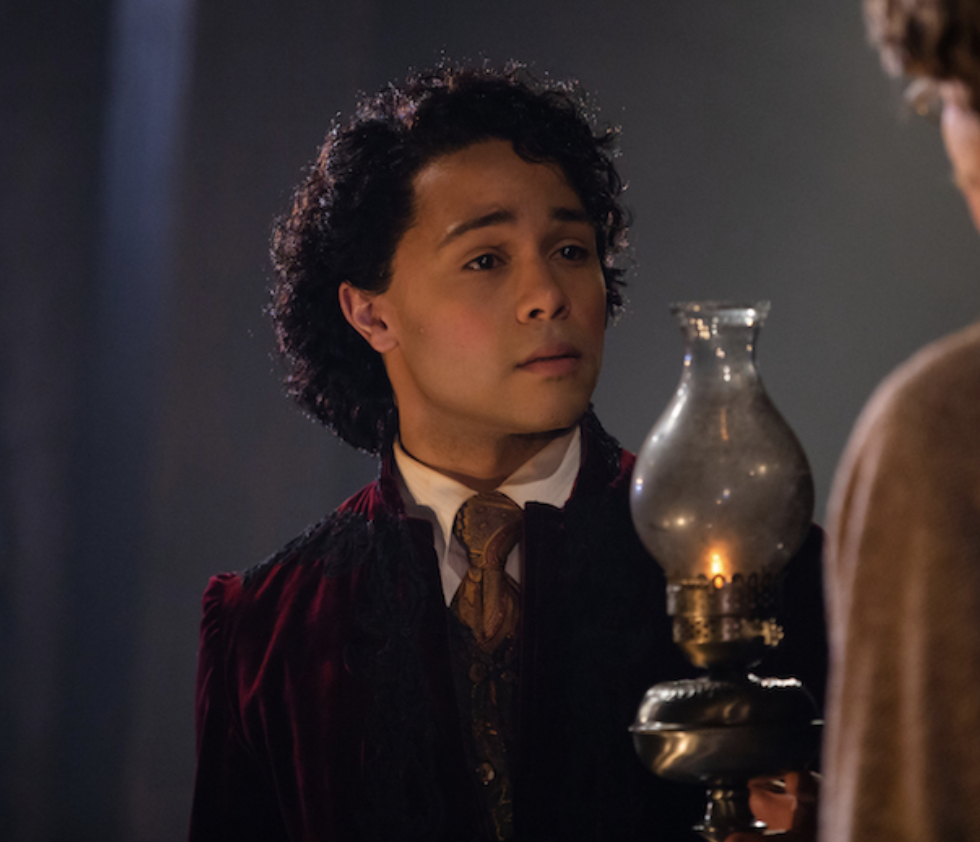
This beautiful person embodies every part of Dorian’s literary physical description absolutely. His features are soft, youthful and angelic. His hair mirrors the crisp curls and lips are rose-petal realness. Sherman is the most delicate Dorian I have seen since Peter Firth in 1976. While doing research for this post, I had originally collected a series of images from Renaissance paintings depicting angelic subjects of color to discuss my point but was greeted instead with this delightful Dorian!

[A photograph of Chip Sherman as Dorian Gray in Book-It Theater’s 2018 stage production. He is looking off-camera, showing his makeup of blushed cheeks and reddened lips. Taken from here]

Of course, as it always seems to be, the black community and actors of color are doing the heavy lifting for greatness. I have not had the pleasure to see this production, but am enamored with the visuality that is represented in these promotional photos.

Gay culture is forever changing, and as minds begin to hopefully broaden once again in relation to gay male femininity, I hope to see more soft, rosy-cheeked Dorians in the future, with pouting lips and pretty curls. Commanding the attention of the audience because of his youthful femininity, not in spite of it.

1 Himbo- A portmanteau of the words him and bimbo, is a slang term for an attractive but vacuous man.

2 Queer Theory- Textual interpretations which are presented from a queer perspective. 

Works Cited

Wilde, Oscar. The Picture of Dorian Gray. New York, Signet Classics, 1972.

Cook, Matthew. London and The Culture of Homosexuality, 1885-1914. Cambridge, Cambridge University Press, 2003.

Posted by: lilyj285 | November 2, 2020

The Politics of Photography: Ruins and Rebels

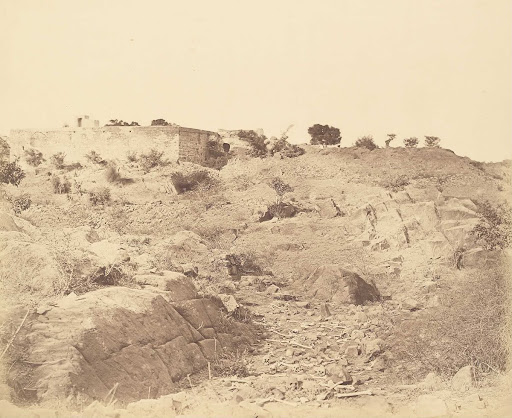
[Sammy House, Showing the Bodies of Sepoys Killed in ...
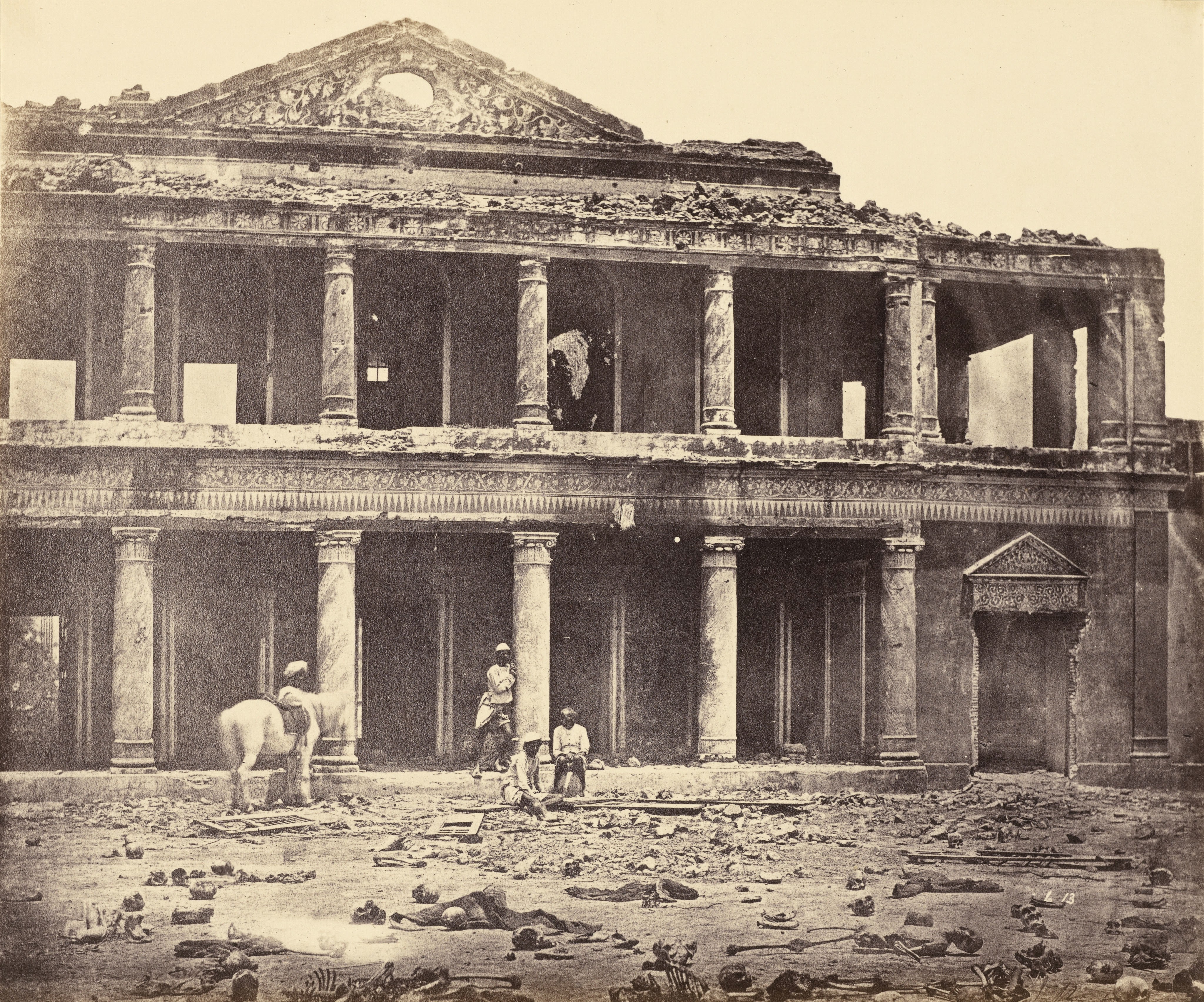
Felice Beato, The Ruins of Sammy House Surrounded by Scattered Bones of Sepoys Killed in Action, 1858. artsandculture.google.com.

One thing about ruins that we don’t always think about is the fact that they belong to a culture that, often, still exists. The term “ruins” suggests something that no longer exists as it once did; it is divorced from purpose and from whatever culture it derived from. However, this is not truly the case with such buildings and places. Whatever they are, ruins aren’t just the generalized deaths of these constructs, but photographs make them out to be this way. This is one of the problems with photography, especially staged colonial photography: it distances the viewer from the subject of the photograph, even more so when such a subject is located at exact points at which the photo appears to have a well-done “composition.” In this photograph in particular, as noticed by my fellow classmates, the skulls near the bottom are posed to be facing the camera. That makes both the creation and viewing of this photograph uncomfortably voyeuristic, though perhaps the Victorian British saw this less as discomfort and more as safety that they were so distant from such a death-marked event.

The Ruins of Sikandar Bagh Palace Showing the Skeletal ...
Felice Beato, Interior of the Sikanderbagh after the Slaughter of 2,000 Rebels, 1858. www.oldindianphotos.in.

Even when there are people present in Beato’s photos, the viewer can barely make out their faces. It is as if they are mere accomplices to the photograph, and not active participants (willing or unwilling) in it. The bodies in the picture aren’t even named, and the photo’s name, particularly the end of the title, does nothing to convey them as people: “…the Slaughter of 2000 Rebels”. These “rebels” were, are, people, even though we don’t know who they were. The use of the word “rebels” distances us from the tragedy/massacre even further. The white European layperson could easily insert themselves as the non-rebel side, and tell themselves without much convincing that it’s “good” said rebels were slaughtered, or, even if they found themselves on the rebel side, they could know that they were nowhere near the site of the massacre in Lucknow.

We have to be careful when viewing both historic and contemporary photos to ask who is telling the story, and what is their intent on telling it? Who are we in relation to the photo’s subjects? These are important questions to be able to answer, especially when action in response to the viewing is possible (like in the case of famine photography, where the British bore witness, but did nothing).

Posted by: amoru22r | November 2, 2020

Illustrated Disguise in “A Scandal in Bohemia”

The way the illustrations in Arthur Conan Doyle’s “A Scandal in Bohemia” depict disguise varies with notable differences between the disguise of the King of Bohemia and those of Sherlock Holmes. 

The King of Bohemia arrives at Baker Street disguised as Count Von Cramm, a bohemian nobleman, but is immediately exposed by Holmes’ deduction skills. The first illustration introduces Count Von Cramm, and the next shows the King after he has been found out. The only difference between the two illustrations is that in the former, the King wears a mask to be Count Von Cramm, and in the latter it only needs to be removed for him to become the King. In both pictures the King’s clothing, hair, and stature remain the same, clarifying that it has always been the same man all along.

Sherlock Holmes is depicted as tall, slim, with dark hair and a somewhat receding hairline.

However, unlike the illustrations of the King of Bohemia and his disguise, Sherlock’s disguises are drawn as entirely different people. First, the “drunken-looking groom” has a whole different face and a lighter hair color than Sherlock’s, as shown in comparison with the dark haired groom in the second image. The same goes for the “simple minded clergyman,” with white hair and a smiling, slightly aged appearance that is, again, an entirely different face. It is possible that Sherlock may have donned wigs for these disguises, but Watson doesn’t mention this. He observes only that the “drunken-looking groom” is uniquely “side-whiskered” (Conan Doyle 7), but says nothing of a wig for this disguise or for the clergyman’s. Therefore, I’m extending my analysis of these images to say that not only do they depict Sherlock’s characters with new faces, but also with new hair. 

The choice to present Sherlock’s disguises as entirely different figures suggests his aptitude for disguise. In contrast, the depiction of the King and his disguise as one in the same and as easily detectable emphasizes Sherlock’s skill in the manipulation of his own visibility and of others’ perception of his identity. The King’s disguise fails and Sherlock’s disguises succeed. 

Additionally, I’d like to consider how we find out at the end of the story that Sherlock’s disguise as the clergyman failed to convince Irene Adler. Adler trusts the appearance of the clergyman at first sight, but quickly becomes suspicious of the chaos he sparks in her home and is able to deduce that it is actually Sherlock. Furthermore, she tells us that Sherlock failed to recognize one of her disguises. He notes her disguise’s voice, saying, “I’ve heard that voice before” (Conan Doyle 13), but he cannot distinguish the identity behind it. I think it is interesting that Conan Doyle and The Strand Magazine don’t provide readers with an illustration of Irene Adler and her disguise as a “slim youth in an ulster” (13). I would think that Adler’s disguise would be drawn just as foreign and unidentifiable from herself as Sherlock’s disguises are from him, since her disguise succeeds against his eye. The writing, if not the illustration, establishes that she is a formidable opponent in this respect.

Work Cited

Conan Doyle, Arthur. “A Scandal in Bohemia.” Stanford University, 2006. 

Posted by: livcacciatore | December 18, 2018

A Review: The Joan Jonas Experience

Walking back into the little room is completely immersive. The echo and expanse of the art museum is immediately shifted to a small intimate space. Even when absolutely packed with people the draw of the projection on the wall is total. Sitting on the bench in the middle of the room is key. From here there is nothing but the screen in front of you, music comes from all around you, and you become a part of the piece.

The screen is dark and deep blue at first a strange figure in the foreground. (I learned later that this is an example of how the piece would function at Jonas’s shows, projected behind her while she performs on the stage. But for now it is just a confusing shadowed figure.) Next the scene changes completely, going from darkness and shadows to bright, bold sunlight. The perspective is strange and difficult to understand, but recognizable forms bring the piece into focus.

Two women dressed in colorful skirts and funny paper hats, and a white dog following them about can be seen exploring and playing in a beautiful pastoral landscape under a bright blue sky. The figures moves at varying paces, the video speed is consistently accelerated, causing them to move in an unnatural way. At different random moments the video is slowed, but if it’s hyper slow or just normal speed it is difficult to tell. Gentle tinkling music accompanies their actions, some kind of chimes and piano, it’s playful and light, but doesn’t seem to following any commanding rhythm. Instead it vaguely informs the emotions of the viewer while playing as freely as the women do. And the women too move about without rhyme or reason, guided by a child-like logic, that we as adults always forget. That that goes there because. Because why? Because that’s where it goes. And that’s all there is to it. This whole piece perfectly encapsulates that feeling. Things happening simply because and the viewer is swept through the action not knowing what will come next. And yet, the scene feels safe. No other subjects enter it except the two women and the dog, and the sunny day and delicate music, and bright colors, promise softness and good things, allowing the viewer to relax into the chaos of this Wonderland.

The illusion is no secret either. On the left of the screen is a camera on a tripod pointed right at us! But not at us. It takes a few moments to realize that the camera is in fact us. That the devise which is allowing us to view this moment is present in the scene. The piece is aware of itself and the viewer, but the camera doesn’t glare at you, it’s not large or central. Instead it merely acts as something grounding in an otherwise nonsensical visual. If we can see ourselves then this must be a mirror, the whole scene being acted out in front of a mirror through which we can see. At this point one is tempted to try to envision the entire set up. How is this happening? How many mirrors are there? What are all of the angels to make this possible? It’s possible to determine this, but if you’re like me, after a few moments, you remember that that’s not the point of art, and go back to enjoying the piece.

There is a moment that seems to be a kind of climax, the music becomes more frenzied and the quick movements match this energy. One of the women turns a sawhorse balanced on top of another sawhorse back and forth, the energy is elevated, the music breaks, and nothing really happens. The sawhorse is taken off the other sawhorse. This is an excellent subversion of expectation. What about this piece requires a climax? Why did the viewer suspect they might get one? This is yet another reenforcement of the piece’s lack of classical logic. But perhaps for the characters that’s what that moment was. It doesn’t really matter. The women go on playing as the dog weaves in and out of frame.

This piece is destabilizing. It subverts the viewers expectation for story and logic and shows them a nonsensical world. But at the same time, the piece is safe, it’s warm, it holds the viewer with the promise that the lack of these things aren’t a concern. The piece will provide you with the experience you’re supposed to have, for me, a nostalgic look back at childhood, exactly how it feels to be a child. And there’s something so wonderful about surrendering these expectations. To be as a child, to be completely immersed in an imaginary world, where all your rules make perfect sense. Why? Because they just do.


– On the experience of viewing Joan Jonas’s Mirror Improvisation at the Mount Holyoke Art Museum.

Posted by: simmo22hmtholyokeedu | December 18, 2018

Roger Fenton and Proto Photoshop

In our discussion of the photographs of Julia Margaret Cameron, we discussed the way she manipulated her images through darkroom processes and by scratching the plates. This got me thinking about how other early photographers altered their images.

In my research, I found out about Roger Fenton. Though he didn’t actually manipulate the photographic process, it seems he changed his images in order to convey a specific story.

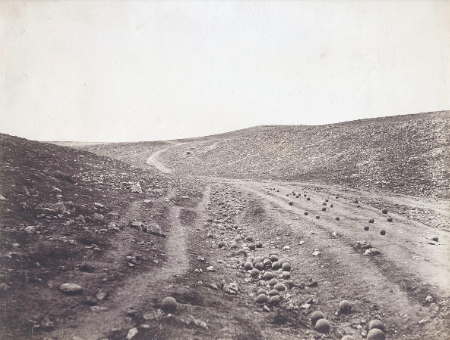
Roger Fenton was commissioned by the British government to travel to Crimea to take photographs that would reassure the public that the particularly brutal war was not a complete disaster. In February of 1855, he set out for Russia with his camera equipment. The most famous image he took there is called The Valley of the Shadow of Death, which depicts the landscape following a violent battle. Fenton himself didn’t choose this name, rather it was taken from an Alfred, Lord Tennyson poem and added to the photograph during its first exhibition. 

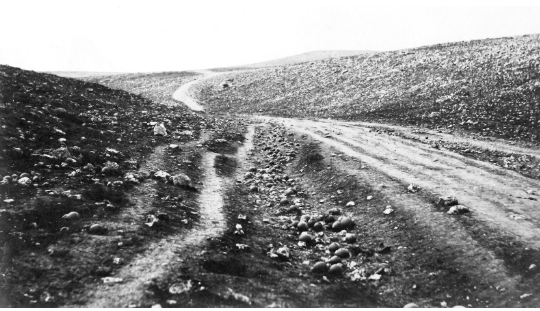
The reason that this photograph is considered manipulated is that there are two versions. In the first, there are cannonballs and shrapnel scattered over the road haphazardly. In the second, the road is clear. This has led many to the question; Which photograph is the “real” image of this valley after a battle? Because no one knows for sure which photograph was taken first, there really is no way to know for sure.

Screen Shot 2018-12-18 at 10.19.53 AM.png

Cannonballs

Screen Shot 2018-12-18 at 10.18.40 AM

 No cannonballs

What drew me to these images is the idea that even before it was really possible to manipulate photographs via modern means like photoshop, people were still messing with their images to manipulate the information conveyed. Though people in the Victorian era conceptualized photography as a medium that told the “truth,” in reality the images they were seeing were always staged in some way or another.

Sources:

Groth, Helen, “Technological Mediations and and the Public Sphere: Roger Fenton’s Crimea Exhibition and the ‘The Charge of the Light Brigade.” Victorian Literature and Culture, 30.2 (2002), pp. 553-570.

Halkyard, Stella, “Brought to Light’: Roger Fenton, Photography, and the Crimean War’, PN Review, 39.4 (2003), p. 1.

“More than Mere Photographs: The Art of Roger Fenton”, Metropolitan Museum of Art Bulletin, 56.4 (1999), pp. 24-31.

Posted by: simmo22hmtholyokeedu | December 17, 2018

Arthur Conan Doyle’s Mysticism

In my midterm paper for this class, I discussed the ways in which Irene Adler’s photograph in A Scandal in Bohemia retains an aura, despite technically being a reproducible object. As I was looking around on the internet, I found that a Benjaminian aura wasn’t the only power that Arthur Conan Doyle believed a photograph could hold. In fact, he believed that photography could capture images of folkloric beings like fairies, brownies, and other creatures.

Almost since its very inception, photography has been used to ‘prove’ the existence of the supernatural. Death, psychic, and spirit photographs are just a few examples of this phenomenon. This is because to many Victorian minds, photography embodied the liminal space between science and magic. It is at once a highly scientific process, and yet captures something ephemeral. Furthermore, increased availability of photography to the general public coincided with a rise of mysticism in British culture, thus leading many to combine the two. Therefore, the idea that fairies could be photographed would not have been completely alien to British audiences during the late Victorian era and at the turn of the century.

In 1920, rumors began to circulate about the existence of images taken by two young girls named Elsie Wright and Frances Griffiths that appeared to show the girls sitting next to a few dancing fairies. I won’t go more in depth into the photographs themselves, as there are a few other posts on this blog about them (I recommend reading those as well!). Instead, what I was interested in was how the author of the Sherlock Holmes stories, in which the titular character is highly logical, analytical, and pragmatic, was so swept up in these fairy photographs.

Unsurprisingly, not everyone believed Frances and Elsie’s claims that the photographs really were images of fairies in the wild. Arthur Conan Doyle likewise faced major backlash in the press, with a famous cartoon showing him being looked down upon by a scowling Sherlock Holmes (which unfortunately I couldn’t find on the internet).

I just thought this anecdote was pretty interesting, given that Arthur Conan Doyle’s legacy is so tied to Sherlock Holmes’s deduction and rationalism. It’s funny to think that, even in 1920 when photography had been around for over eighty years, it’s exact powers were still being debated, even by public figures like Conan Doyle.


Sources:

McGillis, Roderick, Review of Fairies in Nineteenth Century Art and Literature, by Nicola Brown, Victorian Studies, 45.3 (2003), pp. 571-573.

Owen, Alex. ‘Borderland Forms: Arthur Conan Doyle, Albion’s Daughters, and the Politics of the Cottingley Fairies’, History Workshop, 38 (1994), pp. 48-55.

Sanderson, S. F.,  ‘The Cottingley Fairy Photographs: A Reappraisal of the Evidence’, Folklore, 84.2 (1973), pp. 89-103.

Posted by: acheever19 | December 14, 2018

A Review: “Becoming a Woman in the Age of Enlightenment”

Smith College Museum of Art Review:

Recently, I visited Smith College’s Fall Exhibition: Becoming a Woman in the Age of Enlightenment. This collection included French art from the Horvitz Collection and played on Simone de Beauvoir’s iconic statement in The Second Sex that “one is not born, but becomes a woman.” The art embodied this sense of “becoming” by traversing the many modes of existing and aging in 18th century France and beyond.

Prior to my visit I assumed that the period collection would yield a static answer to the question of how one can define a woman. Instead, the exhibit categorized womanhood into nine themed aspects of women’s lives: The Fair Sex, Women in Training, What’s Love Got To Do With It?, Married with Children, Dressing the Part, Aging Gracefully, Pleasurable Pursuits, Private Pleasures, and Work. Your physical movement around the gallery space becomes a pilgrimage, from young aristocratic girlhood into womanhood and marriage. Yet, assumptions of the comfort zone are complicated with art that challenges Enlightenment aesthetics, social hierarchies, and matters of the female body.

The second section “Women in Training” reminded me of our class discussions on the transition from girlhood to womanhood. The paintings in this part of the collection are inspired by a quote from Rousseau’s Émile: “Observe a little girl spending the day around her doll, constantly changing its clothes… She awaits the moment when she will be her own doll.” Thus, childhood for a young girl constitutes a stage of training, as girls were taught to embody virtue, beauty, and self-restraint and domestic skills respective to her social class. Determining the age of these children was difficult because their representations emphasized maturity in dress and posture. 

As you walk down the light blue outer walls (contrasted by the royal blue interior walls), the girls grow up and play transforms into intimacy.  Etienne Charles Leguay’s “Two Seated Ladies” speaks to the romantic friendships that developed between women while Jean Simon Fournier’s “The Desired Letter” uses narrative play to capture the art of courting. In it, a maid receives a letter from a suitor behind her mistress’ back while helping her dress and it leaves us wondering whether the letter is for the lady or her maid. The love letter is a theme in French literature and art and represents the precariousness of love. Yet, as you continue to walk along the wall of paintings, love is solidified into marriage. This “becoming” suggests a temporal quality to this journey of marriage, motherhood, and sometimes loss.

My favorite “chapter” of the collection, however, was next: “Aging Gracefully.” Set on the furthermost wall from the entry doors, the art explored the “impossible contradiction” of what it means to age well, pulling from accounts of what this “virile age” entailed–some thinkers believed that by forty years old, a woman could not fulfill her two raisons d’être of pleasing men and bearing children, effectively ceasing to be a woman. Yet, the women depicted in the paintings on this wall refused to render themselves invisible.

In Pierre-Hubert Subleyras’ painting of Anne-Marie Zina Durand de Lironcourt (1747), one of his favorite patrons,  Lironcourt looks out with ease and confidence–she leans on her elbow and delicately holds her finger to her cheek, as if she is considering something beyond the frame. I like how composed and regal she is depicted in comparison to some of the other paintings of this chapter, which then proceed to deconstruct aged beauty into its respective stages–a woman tweezing and rouging, gray hair settling in, and gazes of defiance and exhaustion. However, this chapter could benefit from more paintings that depict what aging looks and feels like for the French working class.

Another favorite “chapter” was the hidden alcove on Pleasurable Pursuits, so hidden that I almost missed it. It was an unexpected mini collection of drawings selected from a much larger portfolio of Claude-Louis Desrais’ drawings. These drawings sit in a glass viewing case, shrouded by a sapphire cloth with gold fringes with a disclaimer above. To see them, the viewer must lift the curtain–an act that transforms the act of looking at pornographic images into an intentional, knowing thing and captures the illicit nature of hidden art through concealment and exposure. The drawings included a bearded man with an erection, acts of flogging, a woman receiving an enema, and a couple having sex on a swing, all images that eschew conventional sexual restraints. While I wasn’t really sure how to interpret or read any of these images because I’m unfamiliar with illicit art of the era and its viewership, this chapter of the collection drove home the idea that the rest of the art in the exhibit is not all-encapsulating of Enlightenment pursuits–it chooses to capture some things and leave others out and sometimes you have to hunt for the hidden interiors of past life.

This entire collection frames “becoming” as a cultural force and enables scholars of art to examine the hegemony of womanhood and femininity throughout the many aspects of a woman’s life. It raises questions of “who decides” and how scientific and philosophical thought shaped the way women were defined. In turn, the male artists of the time also created and upheld aesthetic standards for women and children. Reading these art pieces gives life to a mediation of artist and subject, where both of them share in this “becoming.”

Ultimately, this exhibit has a lot to explore but for maximum potential would best be paired with another collection in Smith College’s Museum. The very small “Girl Culture” photographic collection upstairs employs a modern lens at the ways American popular culture has fueled an obsession with appearances and is presented in conversation with the Horvitz’ “Becoming a Woman” collection (even though separated by stairs). In any visit to the museum, these two exhibits together can enable discourse on how the painted woman differs from a photographed one and how the body has become a canvas, a “palimpsest on which many of our culture’s conflicting messages about femininity are written and rewritten.”

**Note: I wasn’t allowed to take pictures of the art in this exhibit. My apologies for not having any graphics! But if you would like to visit, the exhibit is up until the beginning of January 2019.**

« Newer Posts - Older Posts »

Categories