Posted by: Marisca Pichette | September 21, 2018

Performance and Reading by Ronaldo V Wilson, September 19, 2018, 7:00 pm

Ronaldo V Wilson’s event centred around a performance of the self, in the whole and in parts. He began by displaying images he had taken in the morning, where masks are positioned on a stone wall by Upper Lake. These photographs are staged, just as Victorian photography is staged, conscious of positioning and light. However, unlike Victorian photography, which takes place in the closed world of a studio, Wilson’s photographs make use of the natural world, while at the same time presenting images that jar with nature: the masks. One is animalistic, an eagle with bright orange plumage. Another is human, a silicone face occupying an uncanny valley between familiar humanity and imitation. It lies on the stone, crumpled,  the eye slots vacant. The final mask is neither animal nor human, but an angular, blackened Other. This image of the black man, the black figure set against the natural landscape, is a motif that comes to vivid life when Wilson begins reading his poems aloud.

His poems focus on the idea of Lucy, an alternate persona he has created using the human mask of a white woman. In the course of his reading and performance, he shows several videos where he is wearing the masks. First, the eagle mask as he dances with the rising sun. Here, again, the light of dawn is prevalent, shining over the roof of Kendall. The effect produces a kind of dichotomy, between the masked man dancing, his face covered and his identity hidden, and the sunlight breaking over the scene, straining to reveal what hides behind the mask. These details draw my attention back to Victorian photography, with both its posturing and the underlying fear of the starkness of a camera lens, threatening to highlight every detail and imperfection on the subject, laying them bare to mechanical scrutiny. Wilson cements this relationship when he idly quips that he cannot hide his stomach from the camera, he cannot edit it out. Though the videos and photos are constructed, the details of his body are as they appear in real life, and cannot be concealed from the unrelenting gaze of the video.

Following this first video, Wilson projects another clip, this time of him in the Lucy mask, occupying a new persona. Through this persona he deals with race, reading poems about the black man, the black body too close to Lucy for her comfort. She struggles with the appearance of her skin, with the differences between her outward appearance and her inner thoughts: “you can see inside of me”. There is a strong tone of illusion, a fear of being watched, revealed. Wilson exists as both Lucy and the black man, occupying the space of the watcher and the watched, the interrogator and the interrogated, the scrutiniser and the scrutinised. He is divided within himself, and within his poems we witness a kind of conversation between these personas, and an ongoing tension as distance stretches and compresses.

Wilson stops the video as Lucy draws the black mask over her face. The layers of self, persona, and skin bespeak a complicated dialogue of visuality. How Lucy sees herself is complicated by how Wilson sees himself, and how, in a way, they see each other.

Toward the end of the event, Wilson shifts from video to voice, now addressing his poetry through melody. He interacts with the audience, asking a student to sing a line of his poem. He says that music and melody helped him to teach himself about blackness, and therefore access another aspect of his self. He begins to sing the poetry, unearthing a new voice through song. It is with this melodic voice that he concludes the evening, singing a duet with a recorded version of his voice. In this way, he separates himself again into two parts, the past self and the present self. Both are Wilson, but one is restricted to the recording; meanwhile, the other wears the Lucy mask. The other is in front of us, exposed, but also hiding behind a mask, a persona. Throughout the evening, I am never sure when he is improvising, and when his words are pre-planned, recited from some script committed to memory.

Wilson’s event was like nothing I have ever attended. It was loose, free to change (or perhaps only planned to seem that way). He made use of multimedia, ending with a recording of another song he sang, consisting of only a single line: “I did it”. While the song played on the screen, with a video of a Smurf figure gazing out of a window, Wilson himself danced, drawing our attention away from the surrealism of the screen and so dividing himself yet again, body separated from voice. This, too, reminded me of the silencing power of photos, immortalising an image while cutting away the person behind it.

Wilson worked consciously to express himself in almost every way, but in doing so, he caused me to consider how these disparate representations of selfhood divided him into parts: voice, body, face (sometimes masked), and writing. I was confused at times, and entertained, and even uncomfortable—but I walked away with immense respect for Ronaldo V Wilson. He put himself in the spotlight, under the weight of the camera’s lens, and under the weight of our collective gaze. He had the courage not just to present himself as he is, but also as he was—in writing, recording, and film. He donned masks, and removed them. Through his performance, he captured the diverse aspects of selfhood, and encouraged me to question my own internal disparities, and begin to prize them apart, so to better appreciate their radical identities.

In class we discussed how in his essay On Duty with Inspector Field, Dickens endows Inspector Field with “magical properties.” One of the ways Dickens depicts Field as an all-powerful agent of the law is by conveying how familiar Field is with everyone he encounters during his rounds of the city. Field, with his acute “roving eye”, shows his familiarity with the city’s criminals during a visit to a haunt of “noted thieves” (9). It behooved a detective to know who has committed crimes, the thinking being that they may do so again.

With ever expanding urban populations, it seems impossible that a detective in a sprawling city like New York or London would have the ability to be so intimately acquainted with the criminal community. In the late 19th century, years after Dickens’ nighttime sojourn with Field, an inspector in America appears to have mimicked what Field was able to do in London with the assistance of photography. In The Burden of Representation John Tagg highlights an important pivot in the use photography when he writes, “It was no longer a privilege to be pictured but the burden of a new class of the surveilled” (Tagg, 59). Detectives no longer had to depend upon memory, but draw from physical catalogue of images and descriptions of those they had arrested.

In his article, “Cheats, Swindlers and Ne’er-Do-Wells: A New York Family Album” Dan Barry describes Inspector Thomas F. Byrnes of New York City “whose legacy straddles fame and infamy” (Barry). A controversial figure, Byrnes “believed that criminals had no civil rights, considered torture to be just another investigative tool” (Barry). One of the less horrendous “investigative tool[s]” Byrnes exploited was photography: “Byrnes is perhaps most famous for enhancing and popularizing what came to be known as the Rogues’ Gallery: a collection of hundreds of photographs of criminals, along with detailed descriptions of their looks and habits, which detectives were expected to memorize.” Police could be now familiarize themselves with noted criminals without putting in years of observation or forming relationships the way Field and other inspectors had done before. The image of the gallery of criminal portraits created a  juxtaposition in my mind with the National Portrait Gallery in England. Instead of the artistoracy, however, here were images of “Lord Courtney — a.k.a. Lord Beresford, a.k.a. Sir Harry Vane of Her Majesty’s Lights — a suave British commoner who liked to swindle money from the wealthy belles he bedazzled” (Barry). Barry’s article is entertaining for the anecdotes he shares about some of the more flamboyant criminals in the gallery, whose names (“Poodle Murphy” for one) seem like characters from an old Hollywood gangster film

When Byrnes eventually became the chief of the Detective Bureau he took measures to reinvigorate the department by training the officers “how to conduct surveillance, gather intelligence, and analyze data. His cultivation of informants in every alley and dive, as well as of reporters at every newspaper, fed his growing reputation as a gifted sleuth who knew the mugs and thugs better than they knew themselves” (Barry). Here, Byrnes reminds me of Sherlock Holmes, who often calls upon a vast network of informants for assistance in his work.

One aspect of Barry’s article that I found interesting was that he frames the photographs and attendant descriptions, which survive in the form of Byrnes’ 1886 collection “Professional Criminals of America,”  as telling stories about people whose lives would have otherwise remained unknown. Barry describes the portraits as “maps of hard miles: the Irish potato famine and the Civil War, the Bowery dives and the Five Points squalor, the rough childhoods spent hawking matches and squawking the news” (Barry). While the photographs were used by Byrnes and the police as identification and surveillance, they can now function as an archive of marginalized lives and stories.


Sources:

Barry, Dan. “Cheats, Swindlers and Ne’er-Do-Wells: A New York Family Album.” Feb 09 2018. Web. ProQuest. 19 Sep. 2018.

Dickens, Charles. On Duty with Inspector Field.

Tagg, John. The Burden of Representation.


Posted by: Isabelle Kirwin | September 18, 2018

Visual Identity in “A Scandal in Bohemia”

In the 21st century, the mediated nature of a photograph or film is often considered enough reason to doubt an image’s truthfulness, and we must see something ‘with our own eyes’ in order to gauge its authenticity for ourselves – seeing is believing. This is not so in “A Scandal in Bohemia.” Sherlock Holmes seems to be the only character in the text who is able to trust his eyes, as he is trained to perceive that which others do not. He stresses the difference between his perception and others’, telling Watson “you see, but you do not observe. The distinction is quite clear” (2). This of course makes Holmes invaluable as an investigator, but he is also able to manipulate others’ perceptions of himself through his “amazing powers in the use of disguises” (7), temporarily suppressing his true identity. This tension between a person’s outside appearance and the truth of their identity is prevalent throughout the text. Holmes is not the only character to employ disguises as a method of manipulation: the King of Bohemia and Irene Adler also adjust their appearances in order to purposefully conceal their identities. But the success of these disguises – success as being the total suppression of the true self – is dependent not on the creator or wearer of the disguise, but of the perception of another party.

Watson, though less perceptive than his friend, is able to identify Holmes disguised as “a drunken-looking groom” because he was “accustomed” to Holmes’s penchant for costumes (7). It is this unique perception that allows him to see the true identity beneath a disguise that would fool others. Holmes’s unique perspective, formed through training in perceptive skills, allows him to identify the King’s true identity almost instantaneously without ever having seen him before. On the other hand, Holmes’s biases, another part of his perception, prevent him from recognizing the disguised Irene Adler. He remarks “I’ve heard that voice before” (13) when Adler greets him on the street, signaling that Holmes recognizes an anomaly in the appearance of the stranger, a tension between the appearance and the identity. Yet he cannot discover the truth for himself because of his prejudices toward the intelligence of women. His unique perception allows for this type of manipulation.

These false appearances are contrasted by the text’s belief in the utmost truth of photography. It is only when the King admits that he had been photographed with Irene Adler that Holmes realizes the gravity of the King’s situation – any other blackmail Holmes considers easy to forge. Thus, it seems that visual identities are mutable only in real-time, physical encounters. The visual identities of those in a photograph are considered more permanent, unable to be falsified or adjusted. This is the most unmediated form of seeing, and yet in this text it is considered to be less reliable than the mediated photograph as evidence. What does it mean when what you see with your eyes cannot be trusted?


Posted by: corri23j | December 22, 2015

Review: MHC Art Museum

One of the artworks I especially appreciated being able to view during our “Night at the Museum” visit was an image I first observed and discussed with my small group – a photograph entitled “Wife of the Victim,” taken in the 1940s by the photographer known as Weegee. He was infamous for being the first person to arrive at a crime scene, accident or disturbance in order to capture sensational pictures to sell to newspapers (his predictive skills coined his name – a play on “ouija”).

DP120688

What interested me was this intersection between what is considered a piece of art, documentation or commodity. When viewed in the context of the MHC art museum collection, at first my group members and I knew nothing more about the image than what was contained within the frame of the photograph, yet it did not appear to be staged or depict actors. Though it seemed to be a documentary image, we still had no qualms about categorizing it as “art.” Upon learning the photo’s true provenance, our examination of it shifted – because it was meant to be as dramatic as possible to fetch a good price and a good viewership from print media, we wondered the extent to which Weegee manipulated the framing and content of the image to increase the drama captured by the still. In my mind, knowing about this manipulation made the image even more “artful,” despite its dual role as a sort of commercial product. Perhaps this debate about the categorization of this photograph only contributes to its sense of drama.

Posted by: romola68 | December 22, 2015

Revisions and Translations

In 1891, Oscar Wilde wrote a new play, Salomé, in French, though of course his native language was English. The theme and plot of this play are Biblical, but it does not follow a Biblical script. In the original story, there is an unnamed dancer who performs prior to the beheading of John the Baptist; in Wilde’s revision, this dancer becomes the seductress Salomé, who performs the dance of the seven veils under the condition that she is given the head of John the Baptist. Once he is beheaded, she kisses the head, but in the end she is punished for her manipulations, and is crushed to death. The play was first performed in Paris in 1896; it was not allowed to be performed in Britain because of a law that prohibited Biblical subjects in plays.

The attacks on meaning are rampant for this work – not only is the Biblical story altered (and not in a way that favors the sexual woman), but the use of French is yet another veil for those wishing to read the play in English. Wilde apparently chose to write in French to produce a different sensibility, a cross-over modeled to some extent on Dante Rossetti, an English Pre-Raphaelite poet and artist who translated Dante and who favored an Italian style. Wilde then chose his lover Alfred Douglas to translate the play. Douglas, whose knowledge of French was poor, made many errors, and although others re-translated including at one point Wilde himself, the version done by Douglas is still used in some “authentic” collections of Wilde’s work.

One person who also attempted a translation was the graphic artist Aubrey Beardsley, who also illustrated an edition of the work. His drawings of Salomé are famous, but Wilde reportedly did not think that they were an appropriate match to his play, and apparently Beardsley returned the favor in that he did not like the play. It was indeed controversial, not like Wilde’s more easygoing comic English plays, and the sexual topic and his choice of translator only served to deepen the scandal associated with it. Wilde was in fact in prison for gross indecency with men when it was first performed.

Salomé, in its various forms, translations, and pictures, captures much about the relationship between art and society in Wilde’s time. There is first of all the love of the exotic, shown not only through the content of this work, but also by the fact that Wilde insisted in writing it in French. There is censorship, by both British society (which would not allow the play to be produced) and French (demonstrated by the fact that Wilde was imprisoned in France). There is interpretation, and even distortion of Biblical material, and society both embraces and critiques such changes.  But Oscar’s Wilde’s place in history appears to be more secure now – his gravesite in Paris is a popular tourist destination, where many kiss his gravestone.

Works Consulted:

Aubrey Beardsley: The Dancer’s Reward: Salomé


Posted by: shannonp11 | December 22, 2015

Night at the Museum: Monday, 16th November, 2015

While I do enjoy the solitude of roaming a museum gallery alone, taking time to stop and ponder each work, there is something about conversing about art that the solitude of browsing alone cannot rival. I always love when courses incorporate art museum visits; I find it incredibly useful to examine works of art in person, having the experience to not only experience their likenesses in a text book or on a computer screen but in really like. The art museum visit on Monday, November 16th surely did not disappoint.

Upon arrival we all gathered in the lobby, where we were soon met by Ellen and Kendra. After a brief introduction and summary of what was to be accomplished, we made our way into the gallery. To be honest, I was quite surprised at the first piece we were given. Titled The Wonderfulness of Downtown and created by Jane Hammond, the work was quite large and depicted a partial map of New York City. Straight away, we launched into a discussion of the composition of the piece, noting the almost impressionistic swirl of the water, the distortion that the conflicting perspectives presented, the inclusion of the figure in the bottom right corner, the crisscrossing lines that ran across the work. However, the aspect that the class as a whole continued to return to was the inclusion of photographs. Across the map, Hammond included snap shots, images that implied the quick, portable quality of a disposable camera. Each image ranged in content, depicting both well known views of New York City to specific, less “picturesque” views.

Upon arrival we all gathered in the lobby, where we were soon met by Ellen and Kendra. After a brief introduction and summary of what was to be accomplished, we made our way into the gallery. To be honest, I was quite surprised at the first piece we were given. Titled The Wonderfulness of Downtown and created by Jane Hammond, the work was quite large and depicted a partial map of New York City. Straight away, we launched into a discussion of the composition of the piece, noting the almost impressionistic swirl of the water, the distortion that the conflicting perspectives presented, the inclusion of the figure in the bottom right corner, the crisscrossing lines that ran across the work. However, the aspect that the class as a whole continued to return to was the inclusion of photographs. Across the map, Hammond included snap shots, images that implied the quick, portable quality of a disposable camera. Each image ranged in content, depicting both well known views of New York City to specific, less “picturesque” views.

After an engaging and in my opinion quite successful discussion about possible meanings behind this particular depiction of a well-known city, we all split off into smaller groups. In our respective groups, we discussed a selection of images that had been pre-selected. I was excited to sit down with these works, to discuss them in a smaller group setting; I also found it enjoyable to discuss the works with people that I had not really had to talk to up until that point in the semester.

Two photographs in particular that our group was given were entitled Wife of the Victim by Weegee and [Lineup photograph, Philadelphia Police Department]. The photograph of the lineup in particular reminded my group members and I of class discussions we had pertaining to the use of photography in service of the documenting criminals as well as early attempts to categorize appearance in terms of likeliness of criminal behavior. The photograph by Weegee on the other hand seemed to evoke notions of the ways in which photography can distort the real. At first glance, my fellow group members and I had trouble deciphering what was taking place in the seen, whether the woman in the seen was being dragged away by the police officers or aided by them.

Once we had spent some time discussing the works within our own groups, we reconvened to share our discoveries with the rest of the class. Amongst the other works were No World, from the series An Unpeopled Land in Uncharted Waters by Kara Walker, another work by Jane Hammond titled Four Ways to Blue, Ur-Mutter #2, from the series Ur-Mutter by Adrian Piper, and Iridescence of life #13 by Binh Danh.

I was glad to see a piece by Kara Walker amongst the group; I had received an introduction to her work through a history course I had taken sophomore year and always enjoy revisiting the compelling images. I was also quite taken by the piece by Binh Danh, a piece I had never seen before. I found it fascinating how the artist chose to print the image of the young woman onto a leaf, imbuing a sense of returning to the natural world on the part of the subject.

Once our discussion drew to a close, the class shuffled out of the gallery, still abuzz with our recent collective discussion. After a few closing remarks, we all departed for the night. Even though this night was quite a while ago at this point, I’ve carried insights I gained during this visit with me throughout the semester.

On November 12, 2015, I attended the “Aesthetic Worlds of the Romantic Heroine in Indian Painting and Poetry” lecture at Gamble Auditorium in the Mount Holyoke College Art Museum.  The lecture was given in honor of Professor Indira Peterson.  The two lecturers were Professor Allison Busch from the Middle Eastern, South Asian and African Studies Department at Columbia University and Professor Molly Emma Aitken, from the Art Department at the City College of New York.

Although the event was billed as a “an illustrated conversation” and Professor Aitken commented on the fact that the mutual research done by both professors seemed to be like “experiencing a conversation telepathically,” I honestly felt like this event was the unfortunate mash-up of two completely separate lectures.

The first lecture, given by Professor Busch, explored themes of femininity in Indian illustrated poetry.

indian illustrated poetry

Example of illustrated poetry

Busch explained how “Indian poets were great classifiers of  female figures.”  She explained the different portrayals of women from that of an innocent maiden to that of a clever lover.

The lecture had many interesting tidbits that associated the literature with the illustrated portrayals, but the connection to the second lecture seemed unclear.

The second lecture was given by Professor Aitken and focused on the hand held paintings of “the stretching heroine.”  She spoke at length on the repeated visual of “indolent female forms which serve no purpose except to be viewed as art.” The  only connection she made to the preceding lecture was the fact that although the poetry seemed to be very gynocentric, the art seemed to be painted from the point of view of the male.

This observation made me think of our discussion of the male gaze and what it means for the portrayal of the Indian female during that time.  The aesthetic nature of the female form is given priority in order to give pleasure to the predominate male gaze upon the page.

Overall, I enjoyed the two lectures separately and thought of ways to connect some of the themes to that of the class.  But, I did think that in order to have a “conversation” about the aesthetic world of the Indian heroine there needed to be more cohesion and cooperation between the two lecturers.

Posted by: shannonp11 | December 21, 2015

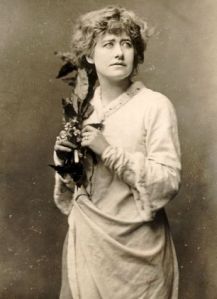
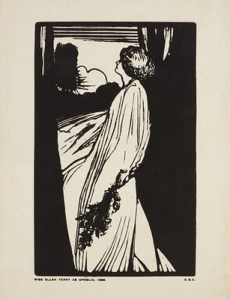
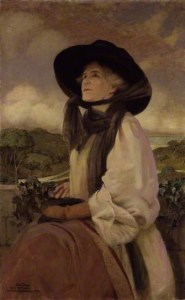
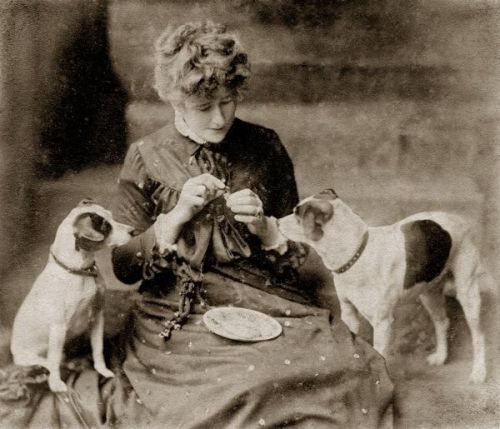
Ellen Terry: In the Frame

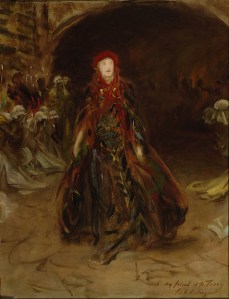
Ellen Terry OpheliaUpon the realization that Julia Margaret Cameron took many photos of Ellen Terry apart from “Sadness”, I had to do some investigating. Through this investigation, I came across an overwhelming amount of images of Terry created by many artists. I was shocked at how many depictions of Terry there actually are. Thinking  back to our discussion of Julia Margaret Cameron’s “Sadness” I found it interesting to keep in mind Terry’s role as an actress. Many of the photos I came across depicted Terry in a specific acting role, the most popular being her role as Lady MacBeth.
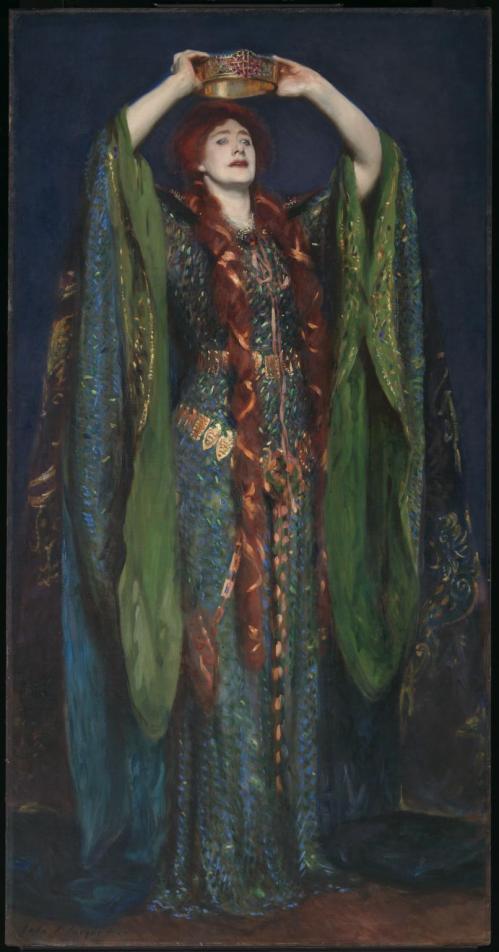
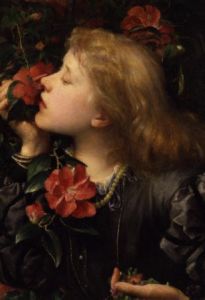
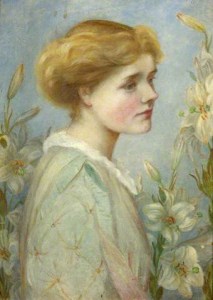
Rethinking my initial reaction, I suppose I shouldn’t have been surprised. Terry was, after all, from a well known acting family and a well known actress in her own right. I suppose what always surprises me is that the public notion of the “celebrity” was in existence at the time. Some of the photos I came across struck me as distinctly modern in their tendencies. I was also surprised at the range of mediums in which Terry was depicted. From painting to photography, it was fascinating to see how artists captured the image of the actress within a frame.

Ellen Terry as Lady Macbeth 1889 by John Singer Sargent 1856-1925

Ellen Terry Watts

Ellen Terry by her friend

(c) University of Bristol Theatre Collection; Supplied by The Public Catalogue Foundation

ELLEN TERRY AS LADY MACBETH, oil on canvas by John Singer Sargent at Smallhythe Place, Kent

(c) University of Bristol Theatre Collection; Supplied by The Public Catalogue Foundation

Ellen Terry by her son

Ellen Terry BBC

(c) University of Bristol Theatre Collection; Supplied by The Public Catalogue Foundation

ellen terry dogs

Posted by: msamblas1 | December 21, 2015

Review: Claudia Rankine’s “Citizen”

A while back, I had the pleasure of attending Claudia Rankine’s lecture at Hampshire College. Rankine read several passages from her book, Citizen: an American Lyric, providing personal background on the images and experiences that inspired her to write this book. Citizen explores themes of race and discrimination in the 21st century. It takes themes and issues that are usually discussed in a historical context and brings them into the modern era. It is this aspect of Citizen, I think, which accounts for why it has struck such a chord with so many readers.


One of the most fascinating things about Citizen is its use of the visual. Every section of the text is accompanied by an image, almost as if to say that for every idea expressed, there is a corresponding visual. For me, these images are a crucial part of what makes Citizen such an effective piece of literature. Going in to see Rankine herself, I was thus curious to see how she would get around the problem of having to read parts of her book without the visual accompaniment.


During the lecture, Rankine had a projector set up, where she displayed the images corresponding to the section of text that she was reading at the time. Before reading, she would always preface the passage with a brief anecdote about the image that was displayed. Personally, having this background information told to me helped me gain a deeper understanding of the images and the passages of the text that accompanied them. Whereas before, the images were a bit of an enigma to me, now I knew the history behind them, which seemed to reveal a whole new dimension of the book to me. Traditionally, I wouldn’t have thought that I would have wanted to have the mystery behind these photos revealed to me. Yet strangely, the fact that I had already read the book before while ignorant of the inspiration behind the photos, I found that this new reading of the text was an interesting companion to my previous reading, rather than serving to erase it.


Listening to Rankine read, I became aware of a serious flaw in illustrated texts: due to the limits of visual perception, we can only look at one thing at a time. We, the readers, have to choose what to pay attention to at any given time. The result is a disparity between text and image, and we experience each separately. Having the text read to me, however, freed up my eyes to look at the image. I could now experience both at once, which somehow felt more authentic. I now got the sense that the pictures truly accompanied the text, making me feel as though they were truly part of the same work of art.


This raised a great deal of questions for me in regards to how I approach books that have a visual component. I had never much thought of how limited our ability to process visual stimuli is. Incorporating auditory elements to the text, however, allows us to circumvent the shortcomings of the gaze, and experience multiple components of the book at once. I would now be curious, for instance, to see what the effect would be of listening to the audio version of Alice in Wonderland while looking at the illustrations the whole time. How would this change our perception of the book? I usually prefer to read a novel on my own, but the exposure to illustrated texts that I have received in this class, as well as my experience with Claudia Rankine’s reading, has opened my eyes to a great many possibilities when it comes to the various ways in which a book can be read.

Posted by: msamblas1 | December 21, 2015

Collage and Fantasy in “Mumbo Jumbo”

As a result of our discussions in class, I’ve become increasingly interested in novels that use images or visual language to supplement the text. One of my favorite examples of this (and the subject of this blog post) is Mumbo Jumbo by Ishmael Reed. Mumbo Jumbo is set in an alternate version of the United States in the 1920s. Like Through the Looking Glass, this world is a reflection of rather than a total deviation from our own world. The world of Mumbo Jumbo is one that is dominated by an organization known as The Wallflower Order, a secret society based on early Christian ideology (details later reveal that The Wallflower Order originally attempted to stamp out the polytheistic religions in Africa thousands of years ago). The ultimate goal of the Wallflower Order is to get rid of “Jes Grew”, a disease that is represented through jazz culture and African American influence. Mumbo Jumbo’s protagonist, Papa LaBas, embarks on a quest to save Jes Grew and destabilize the Wallflower Order. This semi-satiric struggle primarily serves as a parallel to the racial upheaval occurring in the 1970s, when the novel was written (Ishmael Reed has long been a leading Civil Rights activist). Throughout the novel, we are shown various images that accompany the text, attempting to “explain” it, even though at times they serve only to make us even more confused in a novel with an already convoluted and nearly impossible to follow plot.


From the beginning, this is a novel that is defined by the visual. Many scholars have commented on its cinematic quality, with the text even ending with a “freeze-frame”.  Beyond this, it also contains a number of images that disrupt the narrative. Some of these are historical photographs of Jazz-Age New York or New Orleans. Others are rough sketches that are difficult to identify. Perhaps the most interesting ones, however, are the ones that play with the novel’s sense of time, with some of them displaying images that hail back to events far before the 20th century, and others show us scenes of racial upheaval that would likely have taken place closer to the time of the novel’s actual publication. There is no explanation for these pictures, and Reed leaves his reader to piece together the meaning behind them. This is yet another element of this novel that seems to deliberately frustrate the reader’s expectations and ability to read and understand the text.


In class, we have discussed the effects of collage as a medium. Mumbo Jumbo uses the principles behind collage not just in how disparate images are woven into the text, but in how it incorporates various different mediums to create a sort of textual collage. As well as the traditional narrative, the novel is interspersed with stage directions, poetry, and transcriptions of historical documents, many of which do not seem to have much to do with the events that take place in the narrative itself.


This technique, as well as the visual nature of the novel, helps resist the reader’s expectations of how text and image are supposed to function. Throughout the course of the story, we are exposed to images, situations, and time periods that we consider to be familiar to us. When they are all woven together like this, however, it becomes something altogether alien to us. The idea behind this is as follows: we think that we are familiar with the history of this country, and of the racial discourse that has taken place for its entire lifespan. Yet when we are shown it as a whole, rather than in fragmented parts, then we are suddenly unable to identify it. The more visual information we are given, the less we understand what we are looking at. More than anything, Mumbo Jumbo sets out to prove that in order to comprehend something, we must first be made aware of how thoroughly unfamiliar with it we are.

« Newer Posts - Older Posts »

Categories