“You know how there’s that one pretty important rule in filmmaking, don’t show the camera in the shot? Know what doesn’t give a damn about that rule? Mirrors.”
This quote is from a fascinating video essay I recently watched on YouTube (cited below) that explains the plethora of techniques filmmakers use to execute the “impossible”; that is, to record mirror shots without showing the camera’s reflection. Some of these innovative techniques include superimposing and/or splicing shots in post, filming with blue and/or green screens (as utilized in CGI and VFX), and even using duplicated sets and casts to create the illusion of a mirror shot. With equal parts creative vision and technical competency, skilled filmmakers are able to successfully choreograph impressive shots that seem impossible to the untrained eye.
Whether the effect used is practical or visual, the overarching goal is to remedy the “problem” of the exposed camera, which threatens to break the fourth wall and ruin the viewer’s immersive experience. Generally, viewers do not want to be reminded that they’re watching a film by the film itself, nor do they want to see evidence of its production; it’s no fun to see a failed magic trick, after all. In low budget or rushed productions, you might spot the occasional reflection of a camera in the final cut. Here, the camera’s visible presence is considered accidental and indicative of the filmmakers’ inexperience or negligence. In other words, today’s industry standard is to keep the camera hidden, and any exceptions will likely harm the film’s quality.
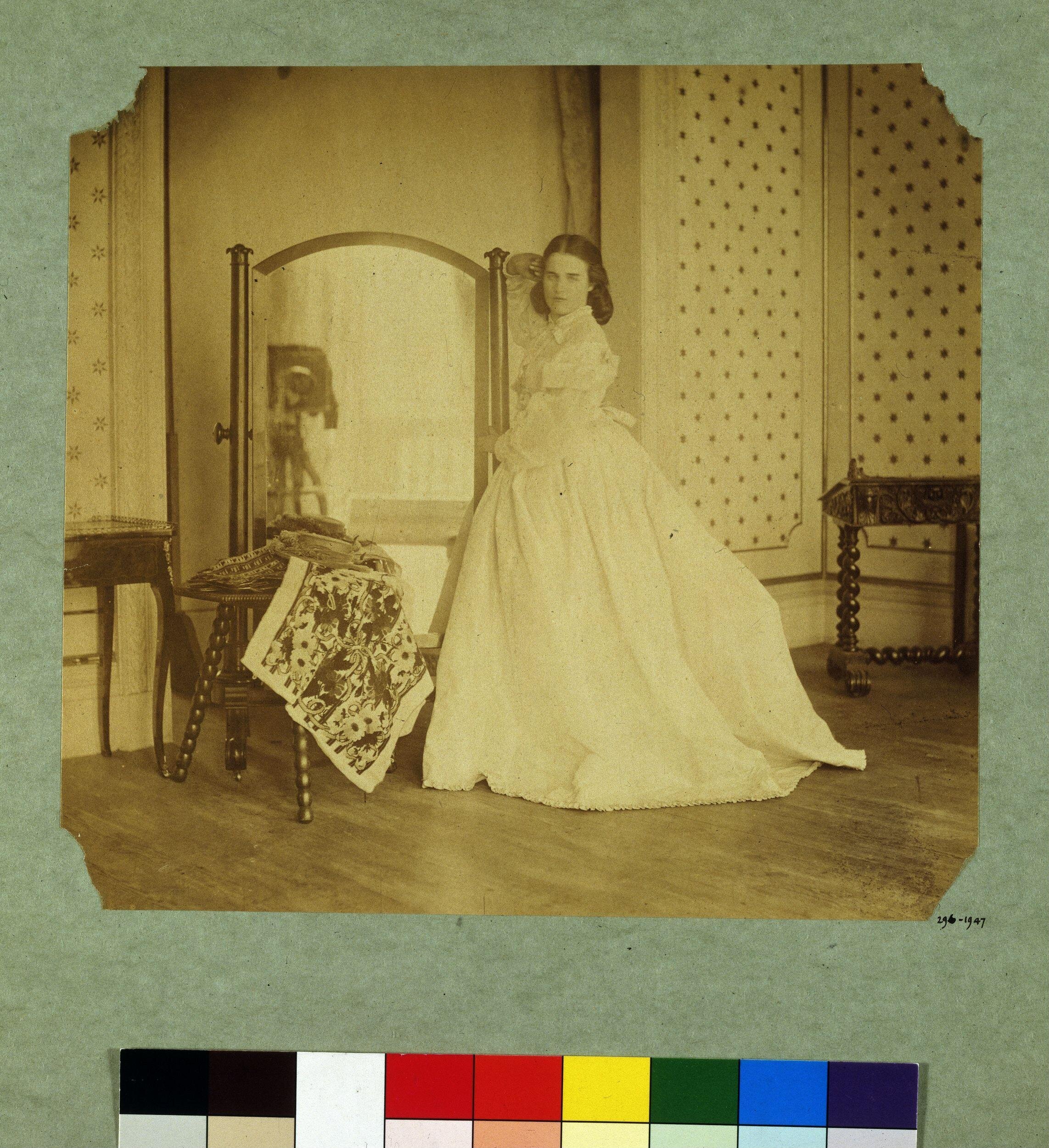
Figure 1. Clementina Maude, 5 Princes Gardens, photographed by Lady Clementina Hawarden (1822-65). Sepia photograph, mounted on green card. South Kensington, London, c. 1862-63.
This modern conception is precisely what makes this specific portrait by Victorian photographer Lady Clementina Hawarden (Figure 1) so intriguing to me. A pioneer of experimental photography, Hawarden often utilized mirrors as devices to “extend the space or to show two views of her subject… [so that] the viewer is left to ponder how much of the image is a construction and how much is a reality” (Close 185). Consistent with many of the other photographs in Hawarden’s portfolio, this portrait captures one of her adolescent daughters in what appears to be an intimate bedroom space. Any semblance of privacy, however, is interrupted by the camera’s reflection in the full-length mirror to the subject’s left. The camera’s invasive, voyeuristic presence within this personal feminine space is further augmented by the subject’s judgmental stare back into the camera lens, as if to ask “why are you looking at me?”
Considering Hawarden’s keen eye for composition, backgrounds, and props, it is reasonable to assume that this was a purposeful artistic decision rather than a mistake. As a result, an interesting phenomenon occurs where the viewer and the subject are acutely aware of the other’s presence as well as the process through which their viewing is made possible (i.e. through photography), effectively demystifying the immersive experience of visual media. But unlike in film, its deliberate employment here works to the photo’s advantage. In this experimental photograph, Hawarden successfully curates a scene layered with different forms of “looking” wherein an intrusive presence is rendered visible in an aesthetically compelling, thought-provoking way. Although photography and film are separate mediums, I feel that there is merit in examining how creators across history have honed and challenged the limits of their craft in technical/artistic ways.
Close, Susan. “Gender, Space and Photography: Reading the Interiors of Clementina Hawarden.” Design Principles & Practice: An International Journal, vol. 5, no. 1, Jan. 2011, pp. 181–89. EBSCOhost, https://doi.org/10.18848/1833-1874/CGP/v05i01/38004.
While I took this trip during the summer, and therefore before the start of this class, I’ve been able to link some of what I saw and noticed to ideas discussed in class. Over the summer, my family and I took a trip to England, beginning in London and making our way around the countryside, as well as some of the other cities. While we were there, I learned a lot about the royal family (my mom is a huge nerd for them, and so she also knew a lot of facts). I knew that Prince Harry and Megan Markle moved away from London to the States, but I didn’t know the extent of the drama in the family. First off, what was really interesting to me is the documentation of this family for over 1000 years. Their history, good and bad, has always been documented in some sort of way, and has always been given to the public eye. With the rise of visual media, from the invention of photography and now with mass distribution and viewing of digital media, it is very easy to access information about them. I also think it’s interesting how there have been so many different movies and tv shows based on their family at some point in time. They have become a spectacle now, since they don’t hold nearly as much political power. They are displayed now more for entertainment rather than any sort of government influence, and they feed into that. From what I’m aware of, the Queen never made any of her personal political opinions known. However, she made social appearances when needed, and kept up with society in other ways. I think it’s interesting how over the course of this family’s reign, they went from being the ones with the political power, to not having quite nearly as much, but are exposed to the public in a very new, intimate way. Social media, paparazzi, televised news, etc. all exploit and showcase the family in ways they both choose, and not, and use the issues between them as content. I’m not saying I support the royal family (I don’t know enough about them to have a formed opinion), but it’s interesting to see how the world uses their existence, and how their history is marked and shown in such a variety of ways. From what I know, Megan and Harry left the family partly because of the constant exposure and stress the media gave them, which can be understandable. I can’t imagine my life, and all my family’s lives, being open and expected to be publicized for everyone to consume as they wish.
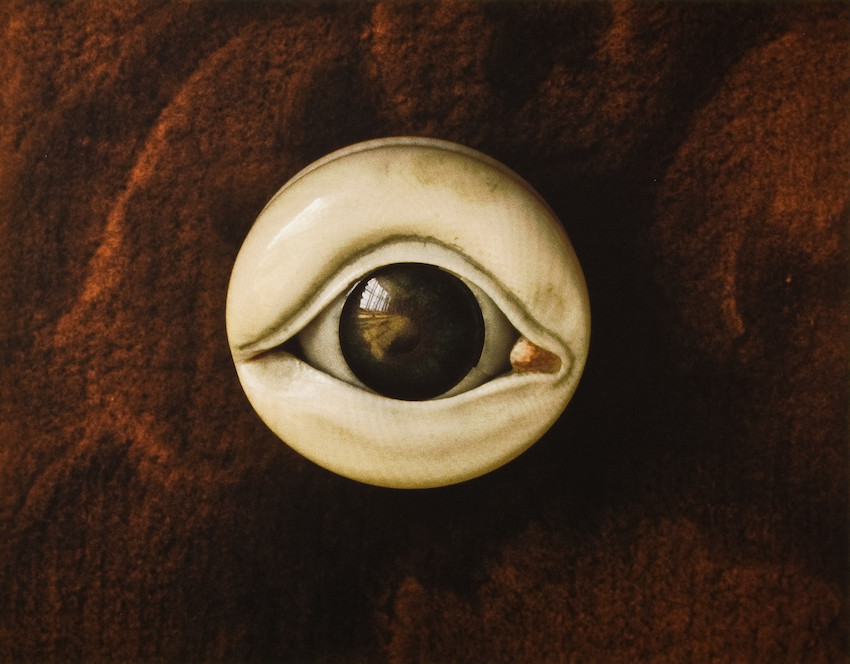
The Gothic, as a genre, thrives on ideas and images of power, ownership, wealth, body-doubles, death, life, etc., which all changed in the advent of photography’s invention. Notably, changing concepts of image-possession and power over one’s image have turned photography into a force of power, as we’ve discussed in our recent conversations about photojournalism. The power to capture the truth of something in its entirety exposes that subject to exceptional vulnerability at the production and dispersion of the image. The power to bias an image and place it out of context, and yet still portray this altered truth as explicitly truthful also disempowers a photographic subject. The power to place a subject in a new context, aestheticize it, and change how it is perceived and considered by an audience is perhaps the most insidious and frequent sort of power-exertion. The idea of a “subject” changes then, and works on many levels– a model, an individual over whom some governing body rules, a target; a thing “subject” to whatever the photographer chooses. Purcell plays with this idea here. The eye may, or it may not, necessarily, have belonged to Peter the Great, but that doesn’t matter. Purcell has power over this object in ways even a Russian Emperor did not. She has positioned it within the Gothic intentionally, using it’s disembodiment and a deep velvet background almost as a nod to the decaying opulence of Gothic settings. She has complete control over how it is portrayed, and seems to be intentionally manipulating it’s presentation to make it a frightening object. She can use it however she chooses for her artistic means. The idea of complete power over anything– life, death, pain, fear– is one, in Gothic media, which we are both encouraged to fear and are coaxed into identifying with. Complete control is, in a sick way, a giddying amount of power, and it is almost totally an imagined and fantastical sort of power in nearly every realm except for art-making. An artist and a photographer are the only individuals with that certainty over control. Honing an artistic skill is becoming more and more able to exactly execute the creation of an artist’s intention for their art. Photography, in particular, is more pervasively powerful as, unlike other forms of visual art, it captures an exact rendering of real living things, and yet the creative control and power still remain present. And for the target of this power to be, of all body parts, an eye, emphasizes the irony of how powerful a visual presentation is, and how transformative viewership can be. Much as the eye cannot see, its photographed double cannot see– and this one-way mirror is one which creates the potential for exceptional cruelty. I feel Purcell is commenting on this sort of latent power, and on the inherent Gothic nature of photography.
As somebody who has gone to different protests for different organizations with a camera by my side, I’ve long considered the ethics of photography that captures politically or violently charged moments. In the case of Willoughby Wallace Hooper, a member of the British state who profited off of both the starvation of the people of India, and the photographs he took of such conditions, such photography should be looked down upon. Here, the commodification of suffering is easy to separate from the potential of journalistic photography; capturing photographs of starving people (who, considering the circumstances, probably received no compensation for their likeness) and then selling them to the upper classes is just another act of exploitation. There is no excuse for such disregard for human life, especially considering the position of the photographer.
Since photography has been popularized, photographs and their reproductions have been used as calls to action and as evidence (whether against whatever state violence is being enacted against protesters, or against the protesters themselves). Today, in an era of hyper surveillance, the creation of evidence is concerning. In the current state of the world, many protesters have been doxxed, with calls to fire them from their jobs, to evict them from their housing, or to get them kicked out of school; and thanks to the popularity of cellphones, recording and finding people is incredibly easy.
Recently I attended a protest in which many people, both outsiders and fellow protesters, were taking photographs of the student protesters. Some of these photographs were shared on social media— though it’s a much different case than that of Hooper, it made me wonder why take the photos anyway? Is it a call to action to fellow students, or is it another chance for strangers to identify activists? To weigh the call to action against the possibility of identification can be a struggle, but it’s important to consider others’ safety over the social capital of a poorly lit photo.
Of course, there are times that the subjects of the photographs themselves call for them to be shared. In the case of Palestinians and the violence they’re facing at the moment, many journalists and civilians alike have asked for their photographs to be shared. When more traditional forms of media and journalism fail to share their stories, the use of social media can be very helpful in spreading the word. Palestinians, in the call for sharing their photos, videos, and stories, want to use photographs as a form of identification— rather than the disidentification that Hooper was doing.
It’s easy to separate wanting to capture the cause for the cause itself, or wanting to capture a cause for artistic or monetary reasons, but if one struggles with differentiating between them, they can ask a few questions. Am I taking advantage of a vulnerable group or vulnerable person? Am I receiving compensation for this? And if I am, are they? Who is the audience for my piece? Who do I aim to reach, and with what emotion (Disgust? Sympathy? Anger?). Am I posting this on Instagram for fellow student protesters to see, or am I submitting it to a show? Is the safety of my subject at risk?
At the beginning of October, my friends and I made the hour-and-a-half drive from South Hadley to Concord, Massachusetts to tour “Orchard House,” where Louisa May Alcott wrote and set Little Women (1865). The area is also home to Walden Pond, the residence of Ralph Waldo Emerson, and Sleepy Hollow Cemetery, where Alcott, Emerson, Thoreau, and Hawthorne are buried. Concord’s rich literary history draws an abundance of tourists, and businesses in the area often use the associated names to their advantage. On Walden Street, in the town center, there are three antique stores on the same block (“Most Creative Name” goes to Thoreauly Antiques!). My friends and I found ourselves wandering around the porcelain figurines, buckets of brooches, and gaudy lamps after learning that parking at Walden Pond was $30 for out-of-state residents (and we had two cars!). Against the back wall of Walden Street Antiques, I came across a large wooden box with a rather haphazard arrangement of black-and-white photographs. They varied in size and style, and none had a traditional frame, if any.
By this point, my friends were ready to move on to the next shop, but I knew that I wanted to spend some more time with this collection of photos. I grabbed one at random and took a picture with my phone, mildly aware of the bizarreness of taking a photo of a photo, of bridging a 200-year gap in image-capturing technology.
Then, I noticed a small case that, when opened, revealed a small picture of a young boy. The showy presentation of the photo interested me, so I snapped another picture and went on my way.
Both photos happened to be of young boys, the first in a relatively simple paper frame, the other much fancier, encased in red velvet and set in a delicate gold frame. I’m typically unphased by these antique store displays of long-gone strangers, but with Charles Dickens in mind (the current assigned reading being the 1852 novel Bleak House), I couldn’t help thinking of the idea of photography as a means of possession.
Despite being “the most photographically famous person in Britain outside the royal family,” Dickens had a strong disdain for being photographed (Cook). In 1856, he declined an invitation to sit for a portrait at the studio of John Mayall, citing his having “so much to do and such a disinclination to multiply [his] counterfeit presentments” (“Lot Essay”). Dickens feared that his image would give viewers a “false sense of possessing” him (Cook), and that the reproduction of his body in a consumable form would only be furthering such a lie. As a private person forced to bask in the inescapable spotlight of celebrity, Dickens mourned this loss of control and found the commodification of his face to be an invasion of privacy.
Many of Dickens’ portraits are daguerreotypes, which, as of 1839, was the first commercially available photographic style (Daniel). Because of the fragile, mirror-like quality of daguerreotypes, it was popular to store and display them in “special housing” (“What is a…”). The velvet-lined folding case I came across led me to believe the photograph inside was a daguerreotype until I noticed a sticker identifying it as a tintype. (The tintype was a photographic method that peaked during the 1860s and 1870s and greatly expanded the market of mass portraiture.) However, when I searched Google for an A.J. Pierce of Rockland, ME– the small print at the bottom of the photo in the paper frame– an online archive of pioneer American photographers tagged Pierce under “daguerreotypists” (“A.J. Pierce”). Although this photo’s only protection is a paper frame, the surface does have a reflective quality as well as a level of detail that are characteristic of the daguerreotype, so for the purposes of this analysis, I’ll be categorizing it as such.
Portraiture “had for centuries been the privilege of the few” but suddenly, with the introduction of the daguerreotype, it “was pressed as a democratic right by the new middle classes of Britain, France and America” (Tagg 37). By today’s standards, photography is not so much a right as an expectation. It would be odd if the new iPhone had no camera for taking photos of your friends, or the sunset, or latte art. In fact the newest have three lenses(four, if you count the front camera). Moreover, most of us likely don’t question the need for our likeness on our driver’s license or seeing ourselves in the security footage in the self-checkout at Target. In September of this year, I witnessed my Twitter feed eagerly await the release of Donald Trump’s mugshot. The practice of photography has become utterly entrenched in and essential to the emotional lives of individuals as well as the practical functioning of the state.
However, I believe there is value in the advice of art historian John Tagg to “question the naturalness of portraiture” (35). I am especially interested in centering this questioning on the re-commodification of these centuries-old photographs. Both photos being of young boys evince not only a parental desire to capture the literal image of their youth, but the desire of the “rising social classes” to make “their ascent visible to themselves and others” (Tagg 37).
Upon its introduction, photography was a “luxury:” not only a physical object– but a status– that could be bought, which it was by the parents of these boys, respectively (Tagg 37). At the time of their creation, the images were considered somewhat of a rarity because they required geographical access to a studio and the funds to pay a photographer. Additionally, such photos may be one of few– or the only– that were taken of these individuals as children. However, “the ‘cult’ value of the picture was effectively abolished when photographs became so common as to be unremarkable; when they were items of passing interest with no residual value, to be consumed and thrown away” (Tagg 56). Although this sentiment was pushed by pictorialists seeking to “distinguish their work aesthetically from that of commercial and amateur photographers” in the late-19th century, the “unremarkable” quality of photography as a practice and institution definitely permeates the feelings of the general public today (Tagg 56).
The portraits that I came across seem to have followed a circular path, orbiting back into the sphere of buying and selling. Notably, it is not the service of photography that is being purchased at Walden Street Antiques in Concord, but rather the physical photo alone. Furthermore, the 21st-century buyer (very likely) has no relation to either of these boys. I am left wondering what this buyer might gain from owning such an image. I assume the major audience is photography enthusiasts excited by the novelty of early image creation. But does that mean the subject of the photograph is unimportant to them? Is it possible to desire the photo for photography’s sake alone? While the subjects of any of these photos are (seemingly) not celebrities, does ownership of their image lead to a lie of false possession as Dickens feared? Moreover, does the act of possession matter? As in, if the photograph is only a “counterfeit [presentment],” is there any truth to be obtained from it (“Lot Essay”)? Paradoxically, Dickens believed the answer to be yes, since he considered the reproduction of his image to be an invasion of privacy. As for me– despite having so many debatable and ultimately unanswerable questions about the nature of possession and truth when it comes to photography, I still find myself wishing I had stayed a moment longer to buy the tintype in the plush case…
In the 19th century, heavily tattooed men could be found performing in dime museums and circus freak shows. This shifted, however, in the 1880s as tattooed ladies began to replace them. In order to explain their appearance, both tattooed men and ladies promoted themselves with false narratives of captivity and forced tattooing by indigenous people. Tattooed men were more likely to use narratives of being stranded on islands and tattooed by the islanders, since many came from sailor backgrounds. As more women took to the profession, they adapted commonly used captivity narratives in their self-promotion to thrill and entice audiences.
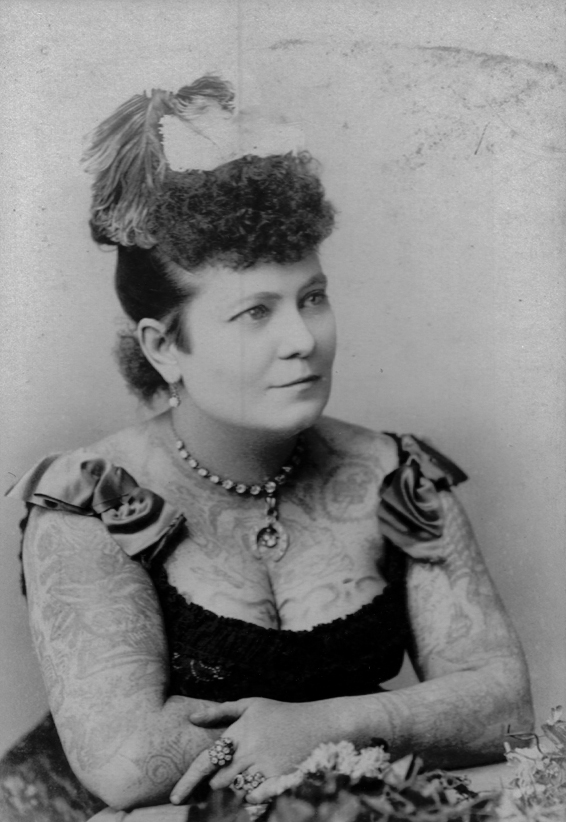
Nora Hildebrandt ca. 1880s. From Wikimedia Commons.
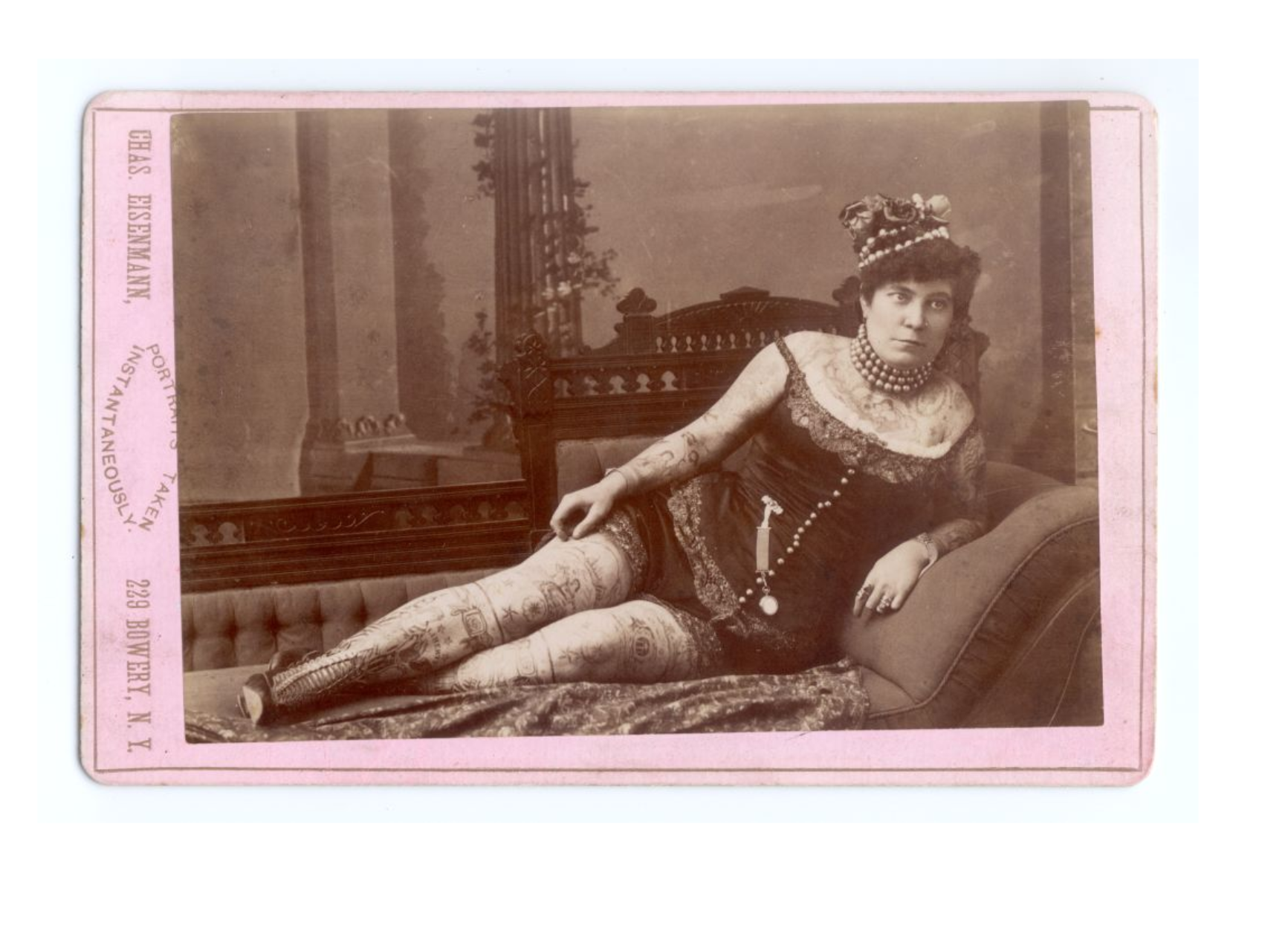
One such woman was Nora Hildebrandt, who, along with Irene Woodward, was one of the first tattooed ladies, debuting at Bunnell’s Museum in New York in 1882. Nora’s advertised backstory was that while traveling in the Wild West with her father, she was captured by the Lakota and Sitting Bull himself. Sitting Bull ordered her father, who had learned to tattoo as a sailor, to tattoo her whole body under threat of death. This he did for six hours a day for a full year, until he purposefully broke his needles. Her father was killed for this, but she lived on to be rescued by General George Crook. Blinded by the pain, she was found in a Denver hospital by a circus owner and sideshow manager, who paid to send her to New York, where she recovered her sight and began performing.
Carte de visite of Nora Hildebrandt reclining. From the Ronald G. Becker Collection of Charles Eisenmann Photographs at the Syracuse University Library, Special Collections.
In reality, Nora never lived in the West and her “father” was in fact her common-law husband Martin Hildebrandt, who was a well established New York tattoo artist at the time. Martin was the one to tattoo Nora but, besides that, all the facts of Nora’s origin story are false. Creating this false narrative shifted the responsibility for getting tattooed away from Nora, allowing her womanly purity and scandalous appeal to coexist. Like many sideshow acts, part of the draw for Nora’s audiences was that she occupied an intersection between what the Victorians saw as an “uncivilized other” and the body of a “civilized lady” close to home. Viewers could engage with their fear of violent Native Americans and satiate their fascination with the other without having to actually venture away from the safety of the circus tent. Nora’s claim that she was captured by Sitting Bull himself has the added effect of capitalizing on his fame at the time, having defeated the 7th Cavalry at the Battle of Little Bighorn a few years before in 1876. Her use of a captivity narrative in self-promotion both promises audiences access to recent history and Native American culture without substantially challenging the division between self/other or the associations between tattoos and a lack of civility.
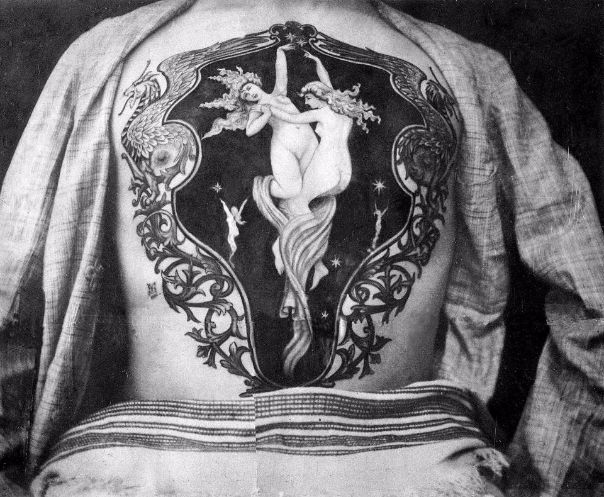
Working out of a London studio in 1884, Sutherland Macdonald was one of the first professional tattoo artists working in England. In 1902, he was interviewed for a Pearson’s magazine article, titled “A Tattoo Artist.” Looking back on this article reveals both some of the reasons Victorian got tattoos and a few of the perceptions of the art at the time.
A chest tattoo done by Sutherland Macdonald. From Canvas Tattoo.
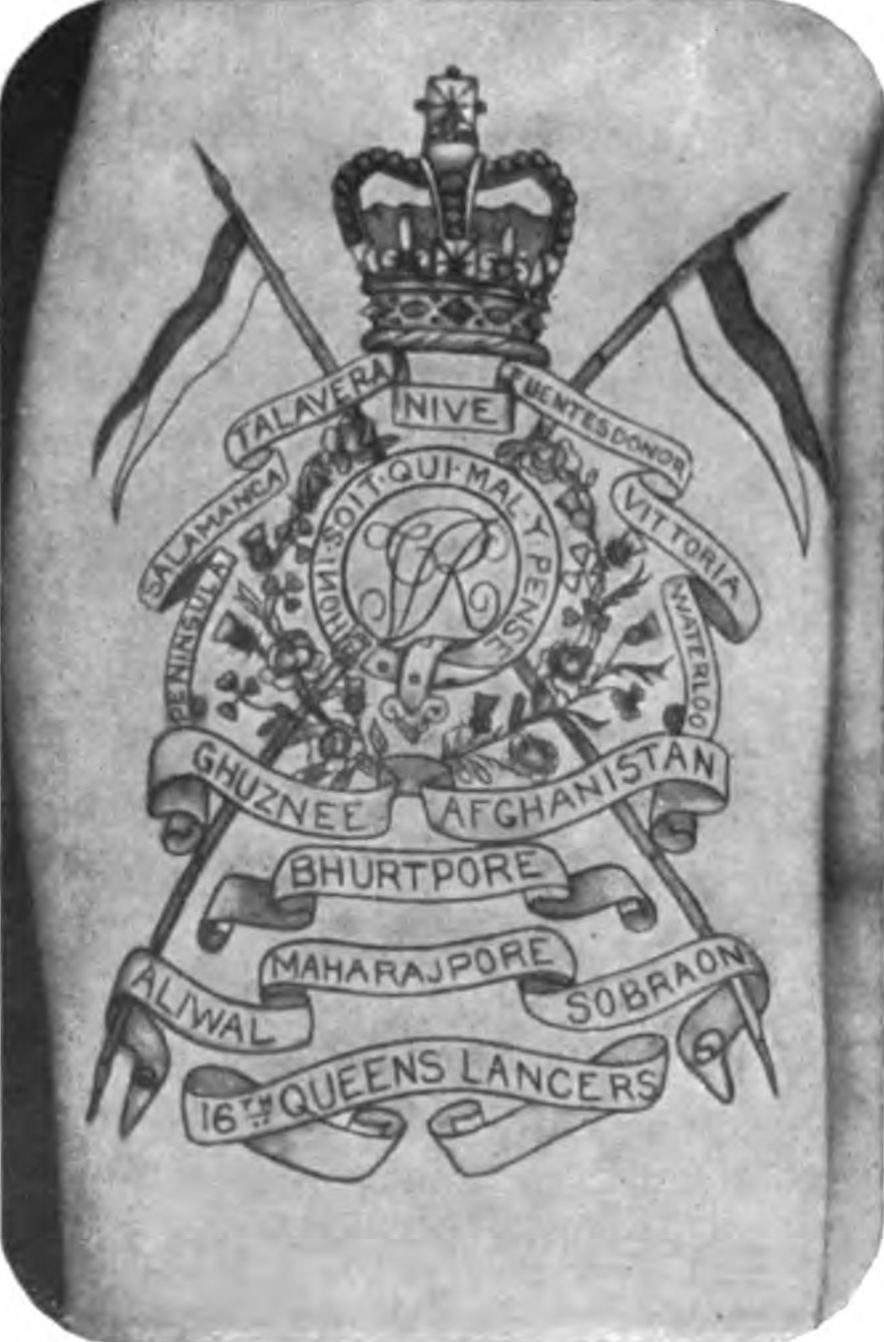
Macdonald primarily tattooed men, but not exclusively. In fact, he was known for being able to realistically tattoo blush on the face, and women went to him specifically for this early form of cosmetic tattooing. Military men and royalty both came to him for insignia and crests, serving as both status symbols and, for soldiers, as identifying marks in case of death. Macdonald tells the story of a client who survived the sinking of the SS Drummond Castle in 1896 and during this near-death experience had decided to have “some distinguishing tattoo mark placed upon him, so that in future he could be identified easily in case of an accident.” This man ultimately had his name and address tattooed by Macdonald. Tattooing as a means of identification was in the public eye at the time, as the Tichborne case (where a man claimed to be the missing heir of the Tichborne Baronetcy) had just been settled on the basis of the true heir being known to have distinguishing tattoos.
A regimental crest tattooed on an officer’s arm. From “A Tattoo Artist.“
Tattoos often had sentimental purposes as well. Researchers with the Digital Panopticon, a database of convict descriptions–including tattoos–from 1793 to 1925 in Britain and Australia, found that names and initials of loved ones and family were by far the most common tattoo. While it’s likely that Macdonald tattooed many initials, clients came to him in order to memorialize other things as well. One military officer with seven scars had each “tattooed with inscriptions giving the date and the place where each wound was received.”
An arm tattoo done by Sutherland Macdonald. From Canvas Tattoo.
Tattooed Victorians weren’t without a sense of humor, either. Macdonald describes another officer, who had socks tattooed onto both feet and after being bitten by a dog on one foot, returned to have the tattoo touched up in the style of darning stitches. This same man had almost his entire body tattooed, with the exception of his head, neck, and hands, and passed away before the article was written. Even during Macdonald’s lifetime, his art wasn’t preservable beyond the occasional picture because of its temporary canvas.
The author, Gambier Bolton, touches on this aspect of temporality as he “regret[s] that the results of [Macdonald’s] patience, and his wealth of minute detail, should all eventually be lost to the world.” Bolton stresses that Macdonald’s tattoos are “Art with a capital A,” arguing that they should be considered alongside the art displayed in museums. Macdonald himself stresses the distinction between “tattooIST” and “tattooER,” considering himself among the “professions” rather than the laborers like “bricklayers” and “plumbers.” Tattooing, when considered through this framework, becomes understood as a type of “civilized” high art and separated from preexisting indigenous tattoo practices. Bolton ends the article by saying that:
“[Tattooing] is dying out among most of the uncivilized races, as the missionaries of all creeds fight hard against the practice wherever it is met with. They appear to think that tattooing is in some way mixed up with heathenish rites and other forms of superstition. Amongst the civilized races, however, its popularity appears to be on the increase, and so long as an artist like Sutherland Macdonald can be found it will continue to flourish.”
Bolton gets at a tension in Victorian tattooing, which is that as indigenous cultural practices were being wiped out through colonization and understood as signs of uncivilized societies, tattooing became increasingly popular in England. This tension can also be seen in the captivity narratives Victorian tattooed ladies used to explain their appearance. In both cases, there is an attempt to create a separation between “civilized” and “uncivilized” types of tattooing.
The year is 2019. You’re sitting around idly at your customer service job, waiting for an incoming call to temporarily relieve you of your boredom. You’ve convinced yourself by the fifth hour that this is the longest, most mind numbing shift you’ve ever worked. After what feels like an eternity, the landline finally rings. You glance at the caller ID and raise an eyebrow when you see the name of your gossip-hungry manager. You answer the phone and are immediately met with an onslaught of nonsensical accusations against an old coworker, who will be referred to here as “E.” You weren’t particularly close, but you remember E fondly; he was a diligent worker, had the endearing habit of bragging about his young daughter with a lopsided grin, and even bought you coffee a number of times. The notion that an upstanding guy like him would ever commit such atrocities seemed blatantly implausible. You’re about to dismiss your manager’s outrageous claims until she piques your curiosity with a simple directive: look up his name.
You comply, skeptical as you type his full name into the Google search bar. Numerous results from popular people search websites flood in, but one particular result catches your eye: mugshots.com. You hesitate for a brief moment, a wave of dread washing over you. You click the link, enter E’s full name for a second time, and are unable to avert your gaze from the lifeless eyes that bore into you. You note his sloppy crew cut, patchy stubble, and gaunt features. The date above the photograph implies that it was taken over a decade ago, but E looks considerably older here than he does in your memory. The frontal-profile portrait on your screen is such a departure from what you know, what you’ve accepted as fact, that you can hardly believe its legitimacy. You scroll past the general information attached to E’s profile—his race, gender, hair and eye color, height, weight, birth date, and stated residence—and with a sharp intake of breath, read his charges and incarceration history:
Offense date: –/–/2007.
Offense 1: TORTURES ANIMAL W/ INTENT INFLI.
Offense 2: FALS.IMPRSN-NO 787.01.
Prison Sentence Length: 1Y 6M 0D.
You are appalled. How did you ever hold this insidious man in such high regard? Why, also, did it feel so wrong to so effortlessly unveil this ugly truth about his past? You harbor no sympathy for E, but wonder how he must feel to be constantly plagued by the knowledge that his reputation is irreversibly stained. While he could pay a premium to have his image taken down and his digital footprint audited (yes, even mugshots have become a commodity), the reality is that online information can never be fully erased. In spite of his supposed reformation, E’s name and face are permanently stigmatized with the mark of criminality… and it only took a modicum of digging to unearth that truth. Ultimately, you find yourself faced with an ethical conundrum: is it constitutional (or otherwise acceptable) to have one’s shame not only immortalized, but made publicly accessible through the institution of the photographic archive?
This has been my guiding question for our discussions about the emergence of institutional photography as a means to identify and document convicts. In the prison photograph, the subject’s body is stripped of its autonomy and becomes property of the state apparatus, establishing “another mode by which the state laid claim to the self and to the representation and disciplining of potentially unruly or ‘terrorist’ bodies” (Tagg 64). In Foucauldian terms, photography thus promoted “‘a surveillance that [made] it possible to qualify, to classify, and to punish’” transgressive bodies (qtd. in Lashmar 64). Significantly, the gradual accumulation of these mugshots culminates in a visual archive that articulates a distinct criminal “type.” Tagg elaborates on this idea in The Burden of Representation, claiming that it is through this practice of “filing” that the criminal body is “illuminated, focused, measured, numbered and named… [and] forced to yield to the minutest scrutiny of gestures and features” (Tagg 64). The mugshot, then, is the site where crime, spectacle, and punishment intersect.
These sentiments are echoed in the aforementioned experience with E. Intentionally or not, his mugshot was read for traditional signs of criminality (ex. physical unkemptness), and once this evidence was confirmed, E’s individuality was decentered and replaced by his criminal status. In other words, the viewer’s judgment of E’s character was completely compromised by the implications of a single evocative photograph. This blight on E’s public record is like a digital ball and chain, linking him both to his own shameful past and to other felons across the country. This cruel reality seems to reflect the natural progression and evolution of criminal photography from the 19th century to today.
Should this phenomenon be considered an extension of the criminal’s punishment, or should their privacy be respected? Should mugshots be deemed closed records, or should people have the right to access others’ shame? Please feel free to share your thoughts in the comments below!
Works Cited
Lashmar, Paul. “How to Humiliate and Shame: A Reporter’s Guide to the Power of the Mugshot.” Social Semiotics, vol. 24, no. 1, Feb. 2014, pp. 56–87. EBSCOhost, https://doi.org/10.1080/10350330.2013.827358.
Tagg, John. The Burden of Representation: Essays on Photography and History (Amherst, 1988). pp. 60-66.
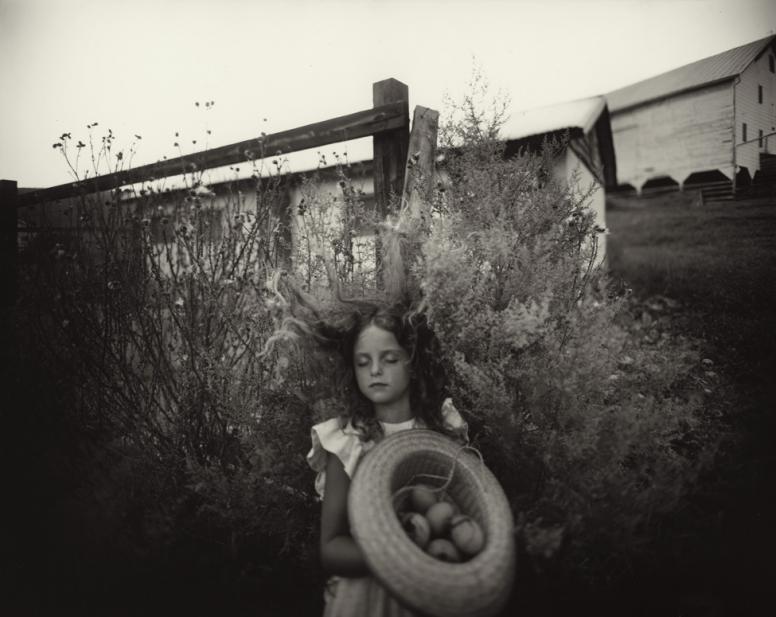
During our discussion in this week’s class and after looking at Julia Margaret Cameron’s work, I was reminded of this image titled “Yard Eggs” by Sally Mann in the Mount Holyoke Art Museum’s collection. Although this photograph isn’t currently on display, I was able to see it in Professor Young’s American Gothic class.
The subject of the photo is Mann’s daughter, who was a consistent subject in her mother’s work alongside her siblings and extended family. Connecting to the idea of intention and consent in photography, the intimacy of the photo feels off putting in that this young girl is used as a model by her mother who takes advantage of a daily and private moment for the sake of her own artistic vision. Of course, this is a minor example in comparison with the Carter and Hooper work we discussed in class, but it is interesting nonetheless.
In what I feel is a stronger connection to both the ideas of consensual intimacy and our class’s content in general, Julia Margaret Cameron’s work also reminded me very much of this photo, mainly through the amateur quality and the concept of an undeniably religiously framed work. From the young girl’s halo of hair, to her white dress, many of the symbols present in Mann’s photo signal a possible reference to purity in a traditionally Christian sense. Not only that, but the girl presents a hat full of eggs to the camera, as if to put an image of her own fertility on display to her own mother, who proves her own fertility indirectly by taking the photograph in the first place. Mann’s photo is reminiscent of Cameron’s consistent image of the “madonna” because of their cohesive intention in producing public religious art through representations of people they have coexisting private relationships with, despite the large gap of time between the two works(Mann’s photo was taken in 1991). In some ways, Cameron’s work feels much more sacred in its portrayal than this photo by Mann, despite her maternal relationship with the subject.
I chose to look through the “Collection & Connection: Responsive Portraiture” virtual exhibition on the Mount Holyoke Art Museum’s website. This is an exhibition created by students in Gina Siepel’s “Art Studio 220: Drawing II: The Human Figure and Other Natural Forms” class during the spring semester of 2020. During this time, classes were shut down due to the COVID-19 pandemic. Because of the shutdown, students were unable to be physically together for class, and also did not have direct access to the same art materials as they did while they were at school. Professor Siepel, while simultaneously being thrown into new unknown waters themselves, had to craft a home-friendly project for their students to complete.
Professor Siepel, with the help of the museum staff, crafted a project in which they selected various artworks and paintings in the museum’s collection and had each of the students choose one. Then, each student created their own two art pieces in response to the artwork they chose, using materials available to them wherever they were. There is a diversity in projects, and each student took their own creative spin on the artwork they chose. The emphasis was placed on how they emotionally and personally reacted to their chosen piece, and then how those reactions can spur creations of their own.
While looking through different projects, I was able to see a wide range of talents, opinions, and artistic methods. I was intrigued by the depths of the works, enjoying learning why and how they made what they did. I think this project really showcases the way in which perception is so personal, and how art spanning over many forms and time periods can impact people. One of my favorites was Piper Kilgore ‘23’s project, which was inspired by Edwin Child’s The Girl In White. For this student, the facial expressions and features of the main woman were the most key aspects of the piece. For their own work, that was the most important part as well. The student viewed the original model’s face to be portraying a feeling of mental escape or daydream. This model is wearing a fancy, luxurious white dress, and appears to be at a higher-class social event. Kilgore’s inspired piece also focused on those same emotions, but placed their woman in a very opposite setting. This woman is still in white clothing, but it is more simple, and she is reading a book. I think it is really interesting how both portraits have the same values and emphasis, but are interpreted in vastly different ways. The women themselves are very different from each other, despite both being in white and in a state of escapism. I feel like this truly shows how personal art can be, and how an idea can be interpreted in multiple ways.
Another piece that stood out to me was by Verity Boyer 23’, in which she based her artwork off of La Femme en jaune by Albert Besnard. The original piece is, from what I can tell, an older piece, and is of a woman in draped, traditional clothing in what appears to be her house. Boyer was mostly interested in how the environment around her shaped the woman, and what her relationship was to the environment. For her own drawing, she used the same artistic techniques to draw, what I assume is, herself at a table working on a computer, a depiction of the original piece behind her on a wall. Boyer took the original interest, how people view the woman and her role in the home, and turned it into a modern day interpretation. I think it is really interesting how Boyer kept the same emphasis, but made hers into a completely modern interpretation. Again, this shows how pieces can have the same bases and themes, but be brought to life in different ways.
Charlotte Anderson 23’ also took a similar approach, basing their art off of Charles Dana Gibson’s Portrait of a Woman. The original is of a woman, dressed in fancy, traditional Victorian clothing, playing with what appears to be a string. She looks playful, content, and relaxed. Anderson based their piece off of their brother, and drew him sitting in a chair while smiling. He is wearing headphones and modern-day clothing. Similar to Boyer’s piece, despite the main subjects being from very different time periods, and doing different activities, both are presenting the same emotions. They are connected through their shared expressions, and Anderson also used the same artistic techniques as the original.
All three of these pieces, as well as the others in the collection, highlight the nuance of art. They all took the original themes and ideas they felt from the art they chose, and reformulated it to fit their personal values. I think this is a collection that emphasizes the emotions art radiates, and encourages students to be creative in how they reimagined them. On the whole, it shows how ideas can be brought to life in unique, various ways. Also, at this time, classes have never really been taught in this way online. It shows how art can be made from many different materials, and despite having COVID-19 limitations, students were still able to be artistic and show what they felt through what they had at home. I encourage everyone to check it out if you can!





 Victorian Visual Culture