Keeping in mind that we discussed the limits of early photography in capturing a smile AND that it is that time of the semester when we can all use more smiles:
A little preview —
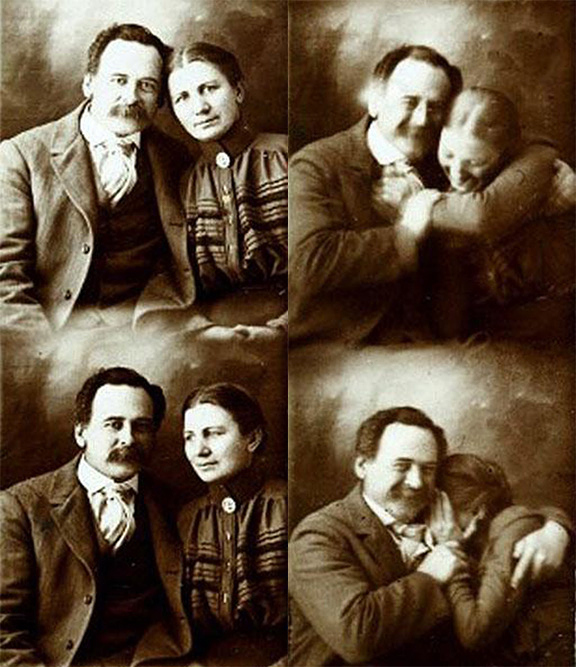
Keeping in mind that we discussed the limits of early photography in capturing a smile AND that it is that time of the semester when we can all use more smiles:
A little preview —
Posted in Uncategorized
Alli’s post about un/documentation recalled the discussions we had about documentation of criminals and, later, of Irish political prisoners towards the beginning of the semester. Today, she said, we have countless outlets via social media platforms through which to channel our voices: Facebook, Twitter, Instagram, Pinterest and the like. We are documenting ourselves. While I agree that a class-determined invisibility (also determined by celebrity status?) exists, I see a great threat posited by the documentary and archival functions of these platforms – a threat for everyone, regardless of personal and social identities.
 In September of this year, the FBI released a statement that its improved biometric analysis software was at “full operational capacity.” This system, in development for over eight years, is called Next Generation Identification (NGI) and will replace completely the FBI’s preexisting fingerprint identification database/program. NGI captures not only facial structure and fingerprints, but also tattoos, scars, bodily marks, and gait. Although the FBI has allegedly has the storage capacity for this data for years, NGI automates the process of documentation and retrieval. NGI does what the police officers and documentarians in Irish political prisons couldn’t do: streamline the archival and functional processes of documentation of criminals to actually be useful – or harmful, depending on how you view it.
According to the FBI’s press release, NGI has more advanced biometric recognition and capture capabilities than any identification system before. With a new feature called Rap Back, police and other surveilling authorities will “receive ongoing status notifications of any criminal history reported on individuals holding positions of trust.” Rap Back also monitors people under “investigation or supervision,” potentially encompassing a wide range of criminals, guilty or not.
On September 14, the FBI declared that its new digital archive holds over 52 million faces of criminals and civilians. Because of the recent Freedom of Information Act, the FBI is required to provide estimates of civilian faces, thought to be up to 4.3 million. These civilian photographs are taken from employer records as well as the aforementioned social media platforms. The FBI claims that those selected by the system are not identified as criminals, but as “investigative leads.” In other words (of the FBI), NGI will not incriminate innocent civilians. I don’t buy this. Consider how the biometric documentation of the body and physical/anatomical definition of the criminal begun by Lombroso and Bertillon continues in our societal fascination with the body today. Are misleading physiognomic analyses making a return to the FBI’s investigations? (Okay, maybe not that far, but the widespread and civilian analysis is frightening.)
To return Alli’s question about documentation and invisibility, I don’t think that any of us are wholly invisible with this new NGI software. Surveillance camera footage, selfies posted on Instagram, tagged photos on Facebook – we are, to quote journalist Natasha Lennard, “feed[ing]” the information system, increasing this software’s ability to recognize and inculcate us in crimes and other questionable activities. Whether we document ourselves, we are not invisible.
Makes me think twice about Instagramming the tattoo I want to get over break…
Sources
Posted in Uncategorized
While scrolling down my Facebook feed I came across yet another BuzzFeed article, but this one didn’t seem to be purely clickbait, it was a series of photographs by Ed James. As well as feeling an immediate kinship with him as he came from the UK to America I was also interested in his images. The 10 photograph series is called ‘Murder Weapons’ and each piece shows a replica of an unusual object that was used to murder someone, below are a couple which were most thought-provoking to me:
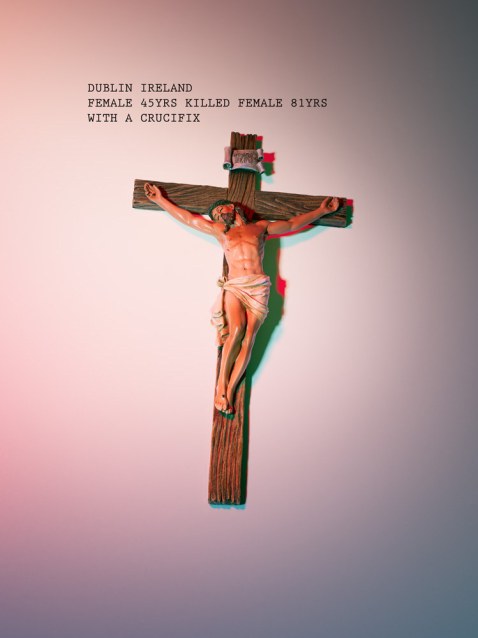
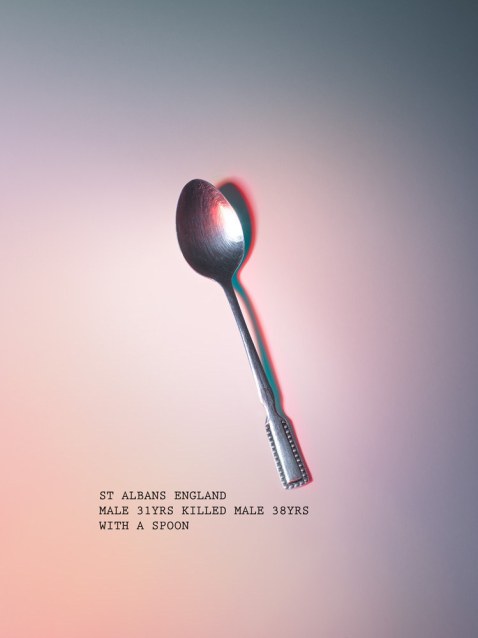
So how do these images relate to Victorian visual culture? Well honestly I did want to write about the James photographs before I thought of a link but reading some of his comments on his own work made me draw a parallel with the Sekula image of the ears we looked at in class (below)
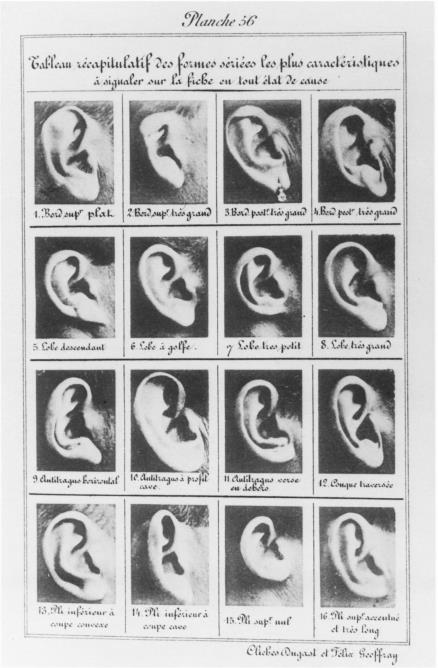
James said that he “wanted each object to be unusually lit and out of context to mirror the way the killers used them” and they certainly are out of context like the ears in Sekula’s analyses of anatomy. Both the James and the Sekula remove their subject from context and this choice has a startlingly similar effect to me even though one is decidedly artistic in purpose and the other intended to be practical. These images all are kind of eerie (Sekula pun intended) but somehow they are intriguing, forcing us to take their objects focus in a way we would not initially.
Ed James’ photographs also reminded me of the collection ‘No Seconds’ by the amazing photographer Henry Hargreaves which pictures the last meals of criminals who were sentenced to death. Below are a couple of examples:

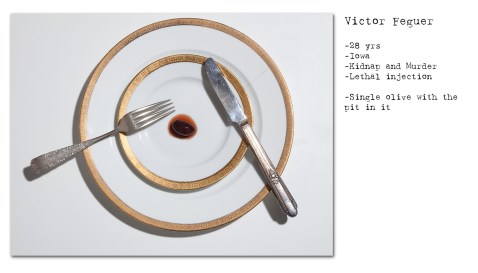
So what do you think is the effect of all these incongruous images? Do you like them, do you hate them? I’m interested to hear any responses!
Original BuzzFeed post:
http://www.buzzfeed.com/alanwhite/10-disturbing-pictures-of-objects-that-have-been-used-to-mur?bffb&utm_term=4ldqphz#3revnxk
The series on Ed James’ website:
Henry Hargreaves ‘No Seconds’:
http://henryhargreaves.com/no-seconds
Posted in Uncategorized
In her series “Hidden Mother,” Laura Larson presents an unusual, though to some degree unsurprising, collection of child photographic portraits. In the thirty-five or so tintype photographs (all dated to the nineteenth century, though there’s no information identifying them as British or American in origin), Larson has created a pattern of conflicting presentation; to quote her interpretation of the images she discovered, “The hidden mother speaks to the fragile balance a mother must maintain in raising a child—cultivating both attachment and autonomy.”
Not to invalidate Larson’s own perspective, but I think there’s more at work here than attachment and autonomy. Rather, I believe that the hidden mothers — women draped in cloth to hold still their tiny children, or cut awkwardly out of frame — represent the anxieties held in tension between the unavoidably public nature of photographic portraiture and the inherently private nature of the family.
We’ve talked in class about the changing rights of viewership in Victorian portraiture (and, recently, the phenomenon of “hidden mothers”): that the reproducibility of photography revolutionized the politics of image in that theoretically, anyone could acquire a photograph of another person. Furthermore, photography itself often took place outside the home, as studios sprung up across Britain and the world, disrupting the more traditional mode of traditional portraiture, in which artists would often work in the home of their subject/employer, and accordingly often depict their subjects at home. The portrait of the Lady Delmé is a great example in that it represents the family on their own land; similarly, we read of the sessions leading to Fra Panolf’s depiction of the last duchess in Robert Browning’s poem, conducted at the duchy and under the jealous eye of the duke.
Such interiority was not accessible to the audiences to whom portraiture was made available via photography. For most people, though of course not all, as Arthur Conan Doyle’s Prince of Bohemia illustrates, photography was something that took place outside the home, in a studio that could be disguised to resemble a personal interior space (a study, etc.). For the portraits of middle class men we’ve seen, this isn’t really a problem; men are supposed to exit the domestic space of the house and dominate exterior spaces. Recall Doré’s mono-gendered London streets, the ways in which the Contagious Diseases Act sought to remove women from the masculine public sphere and its corruptive influences.
This, I believe, is one element inhabiting the “Hidden Mother” series of tintypes, and the widespread phenomena of hidden or erased mothers. (Others, of course, include the desire towards individualist independence, as discussed in class.) Many of these images may have been produced in home, but it’s not a stretch to suggest that many were produced in more public spaces — on the street, in public photographic studios, or in a private space (the home) made less so by the invitation of a photographer inside, creating a display of interiority for anyone to see. Women adhering to the dictates of the “angel of the house” were meant to preserve and inhabit the home, and to avoid the corruptions of the male-inhabited public spaces. Perhaps the active hiding or removal of mothers from child photography was meant to uphold the image of the mother as much as it was the child.
More information on “Hidden Mother” is at the New Statesman, here. The series will be on exhibit at the Palmer Museum of Art (at Penn State) in the spring.
Posted in Uncategorized | Tags: children, photography, portraits, portraiture
In class, we have talked about Victorian post-mortem, or memento mori, photography briefly and also looked at photographs of hidden mothers. The mothers, who needed to be in the photograph to hold up their child or keep it still, were concealed under dark cloth, hidden off to the side with only an arm sticking out, or sometimes their faces were simply cut or scratched out. It was a very early form of “photoshopping” the mother out of the picture. Both memento mori and hidden mother photographs tie into another phenomenon in photography I discovered while browsing the internet: Headless photographs.
The headless photographs, much like the hidden mothers, are an early example of Victorians attempting to manipulate and edit photographs. Given that they did not have access to photo editing software such as photoshop back then, it is impressive the effects that they could make possible. To achieve the headless effect, multiple negatives were placed over on another and the images were combined until it looked as if the subject of the portrait was missing their head. Other forms of trick photography also existed, including dwarf, giant and a type where double exposure was used to make it look like there was two of the same person.
These photographs also tie into memento mori photographs as they are another way Victorians demonstrated their fascination with death. The post-mortem photographs not only served as a reminder of the death of a loved one, but also as a reminder of their own eventual death. Victorians recognized death was always around the corner and instead of hide from it in fear, they seemed to embrace it and even poke fun at it, as seen in the headless photographs. Death was normal for Victorians and they might as well have fun seeing how they would look if they had been decapitated, without having to suffer the actual decapitation.
Posted in Uncategorized | Tags: photography
Whilst prowling about the depths of Tumblr this weekend, I found a fascinating photo set of Victorian portraits of female couples. This photo set has no real context, it only had the caption “Lesbians (1850 – 1930).” I personally am hesitant to label any of these relationships as “lesbian” relationships, purely for the fact that I do not know if any of these women actually identified as lesbians. Presently it is a common overgeneralization to identify any two women in a relationship as lesbians, even if neither of them actually retain that identity. This blanket labeling promotes the erasure of a whole spectrum of identities that I do not wish to perpetuate.
Anyways, these portraits got me really excited because researching the historical representation of queer stuff is something I love; ‘queer stuff’ meaning anything outside heteronormativity.
Because these photographs had no real context or historical background I decided to do some digging and was not disappointed.

Pictured left to right: Alice Mitchell, 19, and Freda Ward, 17 (her lover).
This first image shows two young women, Alice Mitchell and Freda Ward. These two women had been in a relationship and Alice had proposed marriage to Freda three times through letter correspondence and Freda had agreed. However Freda was forbidden by her family to see Alice due to the social stigmas placed on homosexuality. In January of 1892, Alice came upon Freda on the street and suddenly without warning, “grabbed Miss Ward by the neck… drew a bright razor from out the folds of her dress… and drew it across her throat.” Alice had slit Freda’s throat and killed her. Alice was arrested the same day and was was later convicted of murder and sent to an Tennessee State Asylum at Bolivar , Tennessee. Newspapers report that while there she was dressed most fashionably in pink sailor dresses and had multiple relationships with men. She later died in the same asylum at age 25 from either tuberculosis or suicide. There are conflicting accounts of her death in books and newspaper articles.
Additionally, the fact that Alice, a primarily masculine presenting individual, was found guilty of murder, perpetuated the association of violence and moral deviance with same sex relationships. These types of women were labeled as deviants and mentally imbalanced, prompting institutionalization and many attempts at corrective therapeutic treatment were introduced during this time period.
I couldn’t find any other such exciting and dramatic stories in the remaining photographs but they’re all intriguing to look at.

Matilda Hays (standing) with Charlotte Cushman, 1858
Matilda Hays and Charlotte Cushman were supposed to have a “lesbian affair in Europe” where they often dressed alike and lived together in a “female marriage” for ten years. During this time Matilda often was referred to as Max or Mathew. Not only did their relationship defy societal norms, but Hay’s defiance against gender normatively was exhibited through her outward presentation of self and her use of a traditionally masculine name. Hay’s also was a journalist and a novelist who wished to use her writing to improve the condition of women.
The last few images:


There were a few more photographs in the original blog post linked above, but these seemed closest to the Victorian era.
Images of Alice: Gender, Deviancy, and a Love Murder in Memphis. Lisa J. Lindquist, Journal of the History of Sexuality, Vol. 6, No. 1 (Jul., 1995), pp. 30-61. Published by: University of Texas Press Article Stable URL: http://www.jstor.org/stable/3704437
MOST SHOCKING CRIME; A MEMPHIS SOCIETY GIRL CUTS A FORMER FRIEND’S THROAT. ALICE MITCHELL, DAUGHTER OF A WEALTHY RETIRED MERCHANT, JUMPS FROM A CARRIAGE, SEIZES FREDA WARD, AND KILLS HER.” Editorial. The New York Times 26 Jan. 1892: n. pag. Web. 15 Nov. 2014. <http://query.nytimes.com/mem/archive-free/pdf?_r=1&res=9E0CE3D91738E233A25755C2A9679C94639ED7CF>.
“She Loves Men Too.” Editorial. The San Francisco Call 23 June 1895: 2.News about Chronicling America RSS. Web. 15 Nov. 2014. <http://chroniclingamerica.loc.gov/lccn/sn85066387/1895-06-23/ed-1/seq-2/>.
“Matilda Hays.” Wikipedia. Wikimedia Foundation, n.d. Web. 15 Nov. 2014. <http://en.wikipedia.org/wiki/Matilda_Hays#Charlotte_Saunders_Cushman>.
Posted in Uncategorized | Tags: dating, lesbians, murder, photography, queer, relationships, victorian, women
In our next class, we will begin looking at Lewis Carroll’s Alice’s Adventures in Wonderland and Through the Looking Glass.
A quick overview of Carroll, or really, Charles Lutwidge Dodgson. He was known for being a mathematician at Oxford, his extensive friendships with young girls, and his creation of Alice’s Adventures in Wonderland. This work was based off his relationship with the Liddell sisters, Lorina, Alice, and Edith and the numerous boating trips they took. Alice is credited with prompting Dodgson to write the Adventures of Alice, though there is speculation if Alice Liddell is the Alice we know in Wonderland.

Dodgson, C. (1859) The Beggar-Maid.
The nature of Dodgson’s relationship with Liddell is highly controversial and many critics question his intents with the relationship. Described as a shy man he was also very interested in photography as this was a blossoming art form in this time. Dodgson preferred entertaining young girls, writing once that “I am fond of children (except boys),” which heavily influenced his artistic work. As questionable as a modern day reader may interpret this relationship, within the Victorian era, the idealization of beauty and virginal purity, was best exemplified in these same young girls that Dodgson acquainted himself with.
Portraiture of young girls, semi nude, or nude, apparently was not necessarily regarded as an inappropriate action as it is now. I found an article from the Smithsonian Magazine that defends and justifies this portraiture
Of the approximately 3,000 photographs Dodgson made in his life, just over half are of children—30 of whom are depicted nude or semi-nude. Some of his portraits—even those in which the model is clothed—might shock 2010 sensibilities, but by Victorian standards they were…well, rather conventional. Photographs of nude children sometimes appeared on postcards or birthday cards, and nude portraits—skillfully done—were praised as art studies, as they were in the work of Dodgson’s contemporary Julia Margaret Cameron. Victorians saw childhood as a state of grace; even nude photographs of children were considered pictures of innocence itself.”
Untitled nude photograph by Dodgson

Dodgson
This tendency to align young girls figures with a pure or virginal quality, relates to the heavy emphasis on religion during this time. Dodgson as a devout Anglican could then interpret his work to be a spiritual and devout display of figures. To his credit, Dodgson likewise took great care with these photographs, ensuring there was parental consent and if he “found she had a modest shrinking (however slight, and however easily overcome) from being taken nude, [he] should feel it was a solemn duty owed to God to drop the request altogether.”
This quote from Dodgson does indicate his level of care and respect for his subjects and does not lend itself to a deviant interpretation. Likewise, he made efforts to ensure the privacy of these photos in order to not embarrass the girls and only shared them with the families and after his death all were destroyed.
I find this relationship of the photographer and his subjects to be incredibly interesting especially in contrast to todays culture and the nature of photography in present day. The idea of the nude figure can be interpreted in many different ways, however the notion of a nude child instantly has connotations of sexual deviance and pedophilia.

Dodgson
I was left wondering how does Victorian child photography and the depiction of the female body, tie into todays culture of nude photography in regards to hacks of personal photos like most recently, Jennifer Lawrence. Additionally this can be contrasted with those who share their own images such as Kim Kardashian’s most recent photo shoot with Paper Magazine.
Carroll, Lewis, John Tenniel, Martin Gardner, and Lewis Carroll. “Introduction To The Annotated Alice.” The Annotated Alice: Alice’s Adventures in Wonderland & Through the Looking-glass. New York: Norton, 2000. XV-XX. Print.
Wolf, Jenny. “Lewis Carroll’s Shifting Reputation.” Smithsonian. SMITHSONIAN MAGAZINE, Apr. 2010. Web. 14 Nov. 2014.
Images found here: http://babydraw.ru/2008/04/09/charles_dodgson.html
Posted in Uncategorized | Tags: Alice in Wonderland, Alice Liddell, Charles Dodgson, children, Children Photography, Lewis Carroll, photography
A lot of our recent material in class – last week’s Cullwick and Mumby and the discussions of Thompson’s street life photography from several weeks before – is notable because is delves into the “less important” and thus less documented lives of the lower classes; we study this material because it offers some insight into how these other classes lived, worked, and loved. And we – or at least I – assume that this is a dead phenomena that no longer happens. But as I was reading the recent blog post on Humans of New York it got me thinking; is it really? Isn’t that why movements like HoNY are so popular; because they delve into the “less important” lives around us and reveal their charm?
Loss of information in the modern era is an idea that seems both ridiculous and entirely too probable. With so many ways of documenting information – media, the internet, photography, word of mouth, recordings, everything – the idea that something could go undocumented is almost laughable. But what does it really mean to be “undocumented”? Sure, almost every single possible action, lifestyle, social class, what have you of the current age has been recorded in some way, but can we really consider them ‘documented’ if no one pays attention? The lifestyles of the rich and famous and/or the sick and twisted are what make the news; the general public is still in many ways just as unrecognized as they were in the Victorian Era, at least by large media.
But then we consider the internet and the social networks, like Facebook, Twitter, Tumblr, Pintrest, Reddit, etc. Places created for people to document their lives and their interests in as little or as much detail as they want; places that have been hubs of news the big media doesn’t pay attention to, or story lines they refuse to publish; places where the ‘undocumented’ voice is finding a foothold.
I just think it’s interesting to think about. We have this notion that ignorance of the lower classes and their lives is something exclusive to much earlier times when really I think it’s persisted up until the modern day. But now, with the explosion of communication-focused websites, are we actually moving to erase some of that ignorance?
Posted in uncatergorized
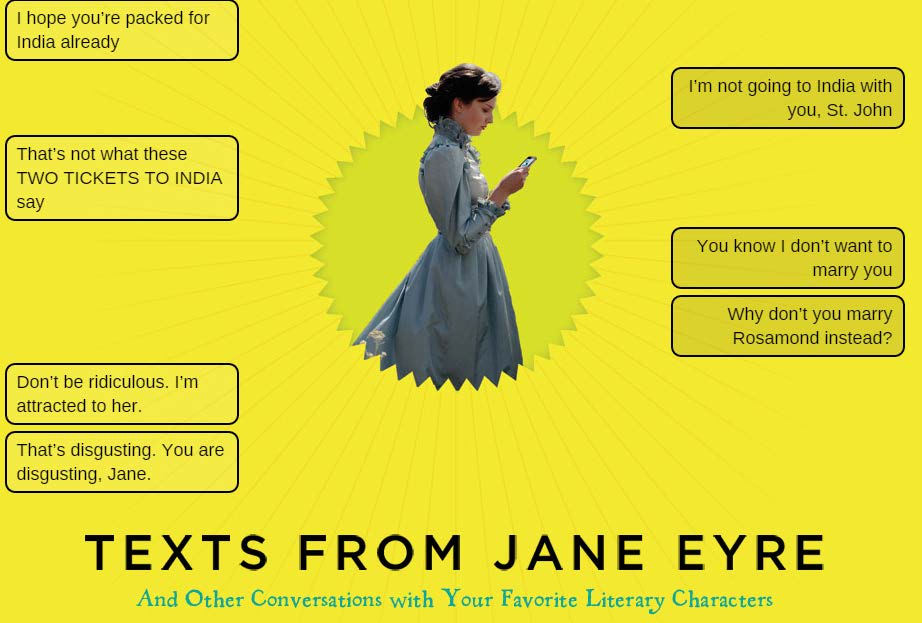
Mallory Ortberg is a writer and comedian based in San Francisco. She co-founded the website, The Toast, and has written for New York Magazine, Gawker, The Hairpin and The Atlantic. She is a hilarious force to be reckoned with and she has just published a book that is the physical manifestation of all of my wildest dreams. It is literally all I’ve ever needed in life and I’m no longer anxious about graduating and going out into the “real world,” which multivitamin I should be taking, global warming, or neoliberalism. Now I have Texts From Jane Eyre: And Other Conversations with your Favorite Literary Characters and everything is going to be OK.
Ortberg was inspired when she saw a comment on a “Classic Trash” review of Gone With the Wind in which a user noted that life in her small, southern town was still basically like Gone With the Wind except that now they had cell phones. In a Q&A on the Texts From Jane Eyre website, Ortberg says: “. . .the idea of Scarlett O’Hara—who is so selfish and sneaky and prone to lying and manipulation—with a cell phone was so vivid to me I came up with the idea on the spot.”
The brilliant book contains imagined text conversations between our favorite literary characters and authors — Medea, Hamlet, Don Quixote, Sherlock Holmes, Emily Dickinson, Daisy Miller, Virginia Woolf, and, of course, the characters of Harry Potter, to name a few. Given that our class often involves making connections between Victorian visual culture and modern phenomena (like funeral selfies, contemporary advertising, and poverty tourism), I couldn’t NOT share this awesome, anachronistic, insanely creative collection with you all.
I’ve included an excerpt of the book — a conversation between Odysseus and Circe — available on textsfromjaneeyre.com: TextsFromJaneEyre-Excerpt
EDIT:
I just found this very important, very (perhaps more) relevant post by Ortberg on The Toast, Women Having A Terrible Time at Parties in Western Art History: http://the-toast.net/2014/10/28/women-terrible-time-parties-western-art-history
Some examples:

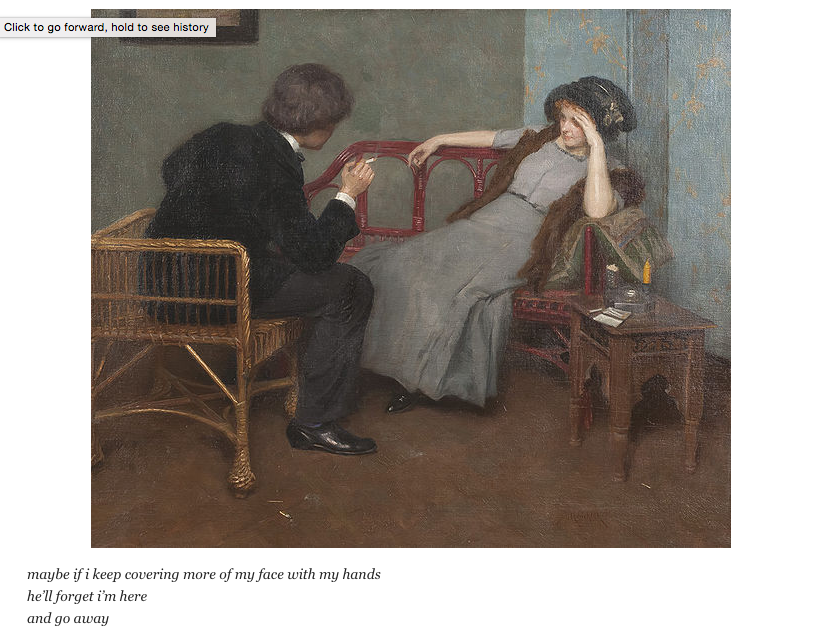
In an interview with The Guardian, Ortberg explains how the idea came to her: “I saw an image online and thought how interesting it is that many painting throughout Western art history are called The Conversation or Two People Flirting or The Couple. You’re clearly meant to see this as a pleasant interaction, but the look on the woman’s face is so clearly, “Someone, please, for the love of God, get me out of here. I wish I were dead.” I don’t want to make sweeping generalisations, but I love the idea that basically for 600 years of Western European art, male artists were thinking, ‘That’s the look women always have on their face when you talk to them. That’s not boredom, that’s just their listening face.’”
Take a break from studying and enjoy these hilarious texts and photos!
Sources:
http://www.textsfromjaneeyre.com
http://www.theguardian.com/books/2014/nov/03/mallory-ortberg-the-toast-interview
Women Having A Terrible Time At Parties In Western Art History
Posted in Uncategorized
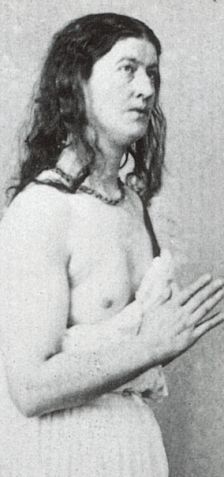
During our discussion last class about Arthur Munby and Hannah Cullwick’s relationship, we concluded that we couldn’t make very validated assumptions about the nature of their private pictures. Hannah’s portraits, however, raise interesting concepts about the intentions of a subject in front of the camera.
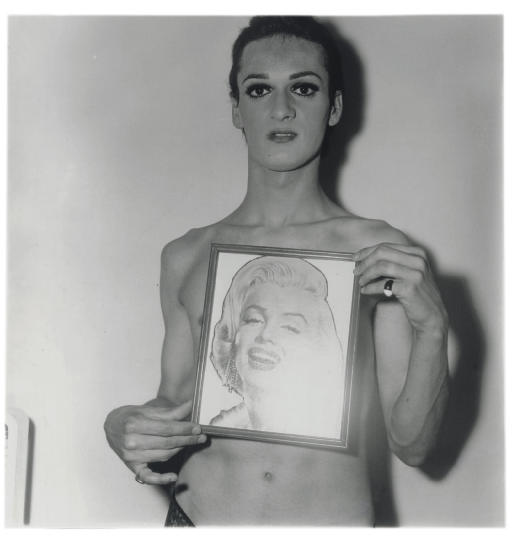
The images remind me of the photographer Diane Arbus’ ideas about self- expression and perception, something I mentioned briefly in class. Arbus took photos of marginalized groups or people whose attempts at normalcy were surreal, awkward, unsightly, or somehow unfamiliar to the image’s viewer. Transgender people, insane asylum patients, nudists, and families were her some of her subjects. Through the act of taking photographs, Arbus discovered a so-called “gap between intention and effect” of the people in her pictures; how people want others to perceive them, she concluded, is often very different than how they actually appear. Arbus’ pictures aren’t evil-intentioned in their open unpleasantness and disfiguration, though they can certainly be a little unforgiving. Her biography on Lens Culture reads: “Arbus believed that a camera could be “a little bit cold, a little bit harsh,” but its scrutiny revealed the truth; the difference between what people wanted others to see and what they really did see – the flaws (“About Diane Arbus”). I’ve attached some of her work below; a serious old woman looks like a caricature of herself, a little boy poses with a toy grenade, and a transgender person poses with an image of Marilyn Monroe.
So what is Munby and Cullwick’s “gap”? Is there one? Did their pictures come out in a way that met Hannah’s expectations about her own appearance and identity? It’s hard to directly apply Arbus’ theory to Cullwick’s portraits, in which she appears in costume, already intentionally unlike herself. But whether or not the pictures revealed something unexpected for Hannah, whether she was satisfied and gained pleasure from them, remains ambivalent.
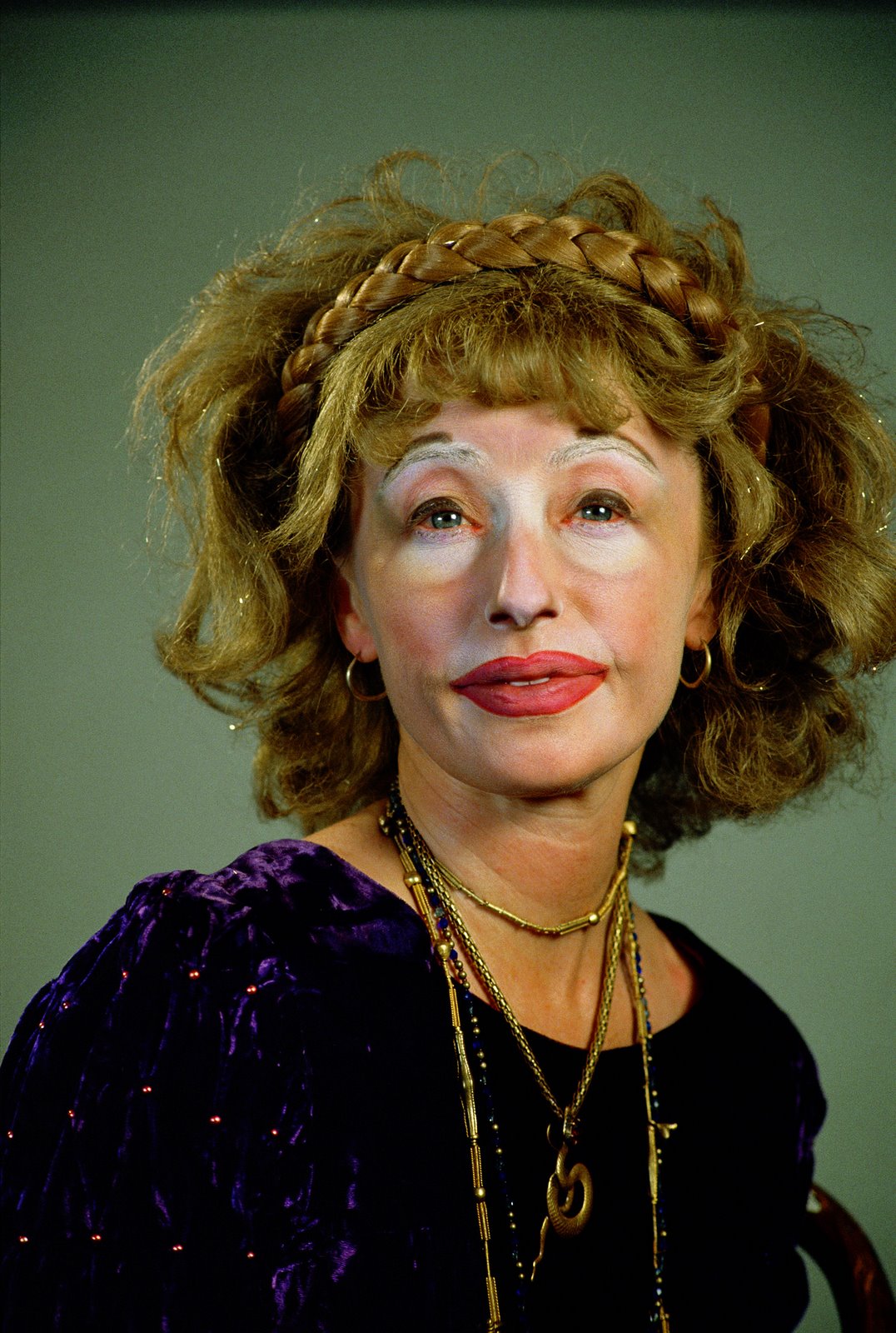
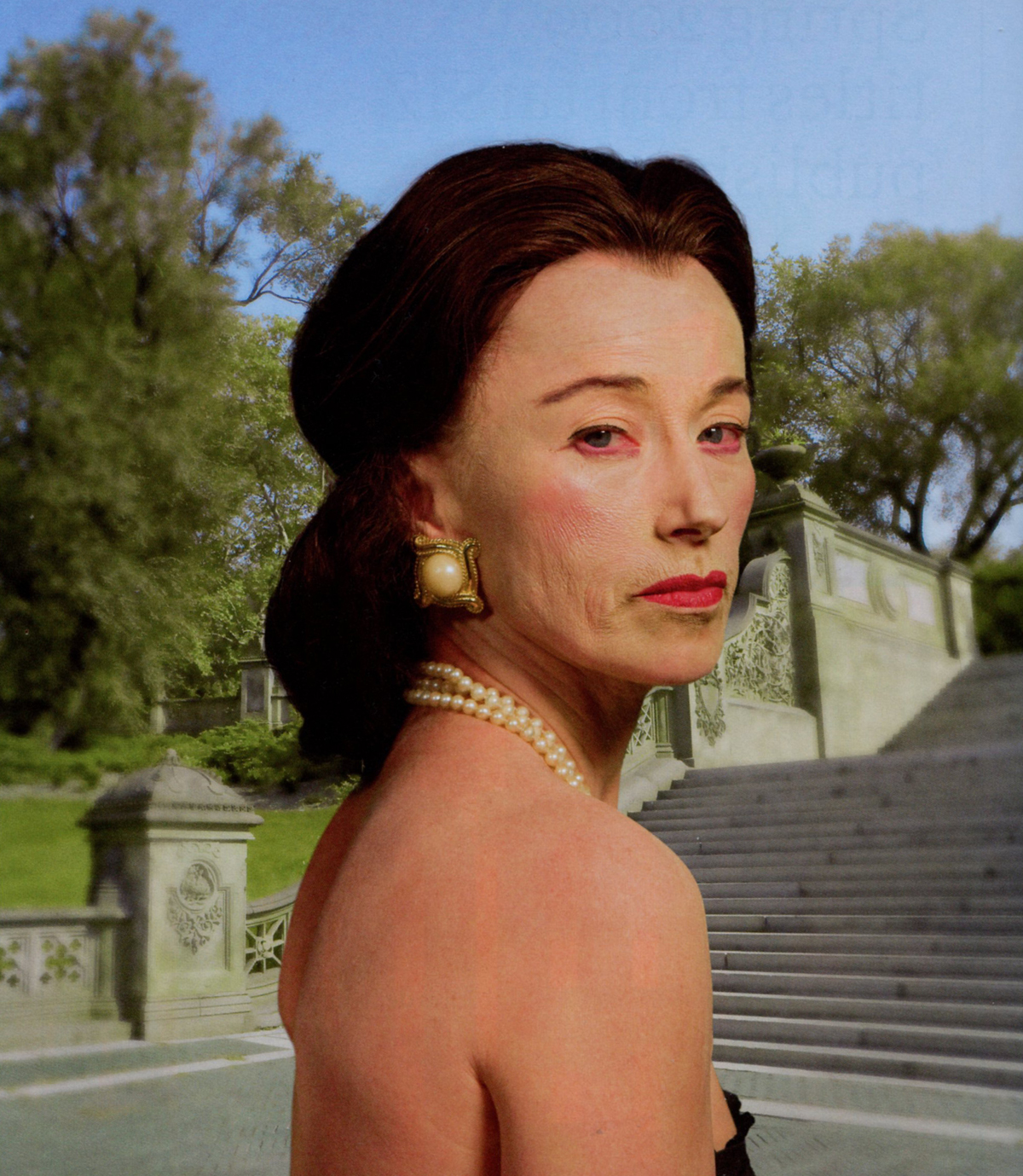
In her book Pleasures Taken, Carol Mavor ponders over the meaning of the photos: “I am led to ask…whether the photographs are expressions of Munby’s own fantasies about a working-class woman, not unlike a painting of Jane Burden by Dante Gabriel Rossetti? Or are they Hannah’s own self portraits that unexpectedly prefigure the work of current feminist photographers and performance artists like Cindy Sherman and Eleanor Antin?” (Mavor 80)
Another student has already written about Cindy Sherman on this blog in a discussion about Hannah Cullwick’s portraits (here), but her work is worth noting here—her self-portraits sometimes produce a similar effect to Arbus’ in catching the particular oddities of someone. The Cullwick portraits lack the black humor of some of Sherman’s work, though. They contain a kind of seriousness, both on Cullwick’s part and also Munby’s, that we viewers might never be able to truly comprehend.
Diane Arbus’ Photographs:

Cindy Sherman’s Self Portraits:
Hannah Cullwick:
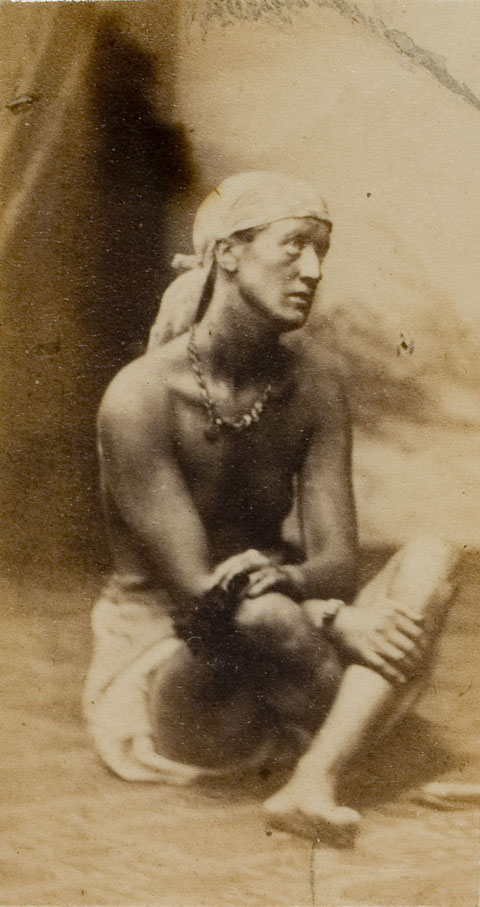
Works Cited
“About Diane Arbus.” Lens Culture. Web. 9 Nov. 2014. <https://www.lensculture.com/darbus>.
Arbus, Diane. Mrs. T. Charlton Henry in her Chestnut Hill home, Philadelphia, PA. 1965. Gelatin silver print. The Metropolitan Museum of Art. Web. 9 November 2014.
Arbus, Diane. Child with a toy hand grenade in Central Park, N.Y.C. 1965. Gelatin silver print. The Metropolitan Museum of Art. Web. 9 November 2014.
Arbus, Diane. Transvestite With a Picture of Marilyn Monroe. 1967. Gelatin silver print. Christie’s. Web. 9 November 2014.
Hannah Cullwick as Slave. Victorian Contexts. Web. 9 November 2014.
Hannah Cullwick as Magdalene. The London Evening Standard. Web. 9 November 2014.
Mavor, Carol. Pleasures Taken: Performances of Sexuality and Loss in Victorian Photographs. Durham: Duke University Press, 1995. Print.
Sherman, Cindy. Untitled #359. 2000. Chromogenic color print. Collection Metro Pictures. The Lonely One. Web. 9 November 2014.
Sherman, Cindy. Untitled #465. 2008, Chromogenic color print. Whitney Museum of American Art. Web. 9 November 2014.
Posted in Uncategorized


 Victorian Visual Culture