Posted by: emilyobedilio | November 9, 2014

Women Looking Sideways

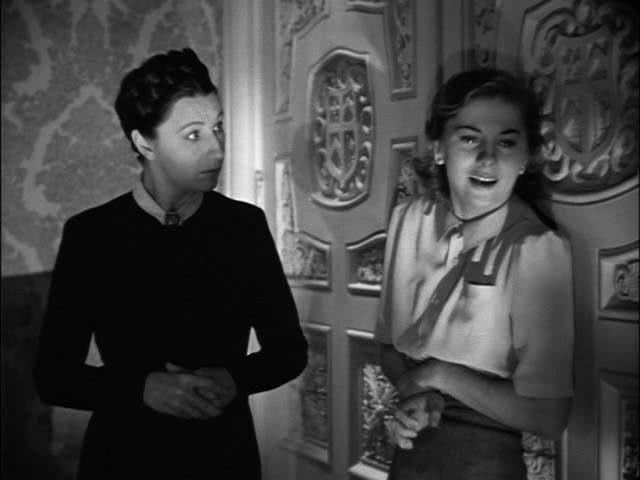
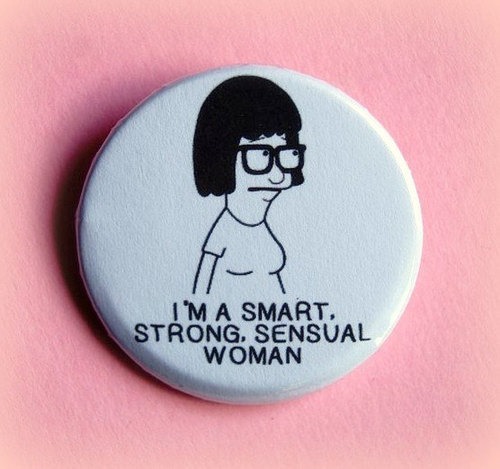
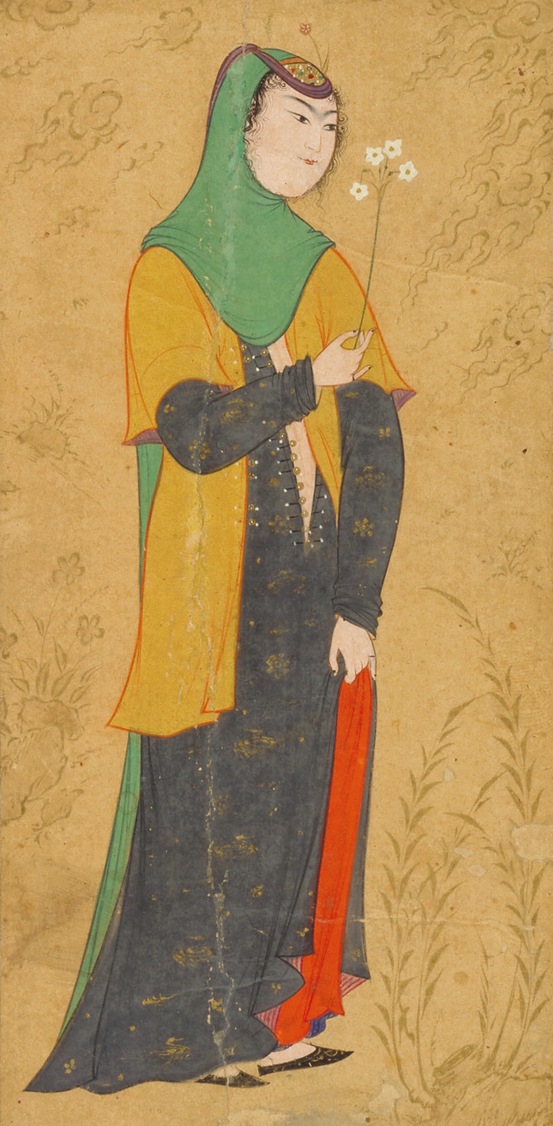
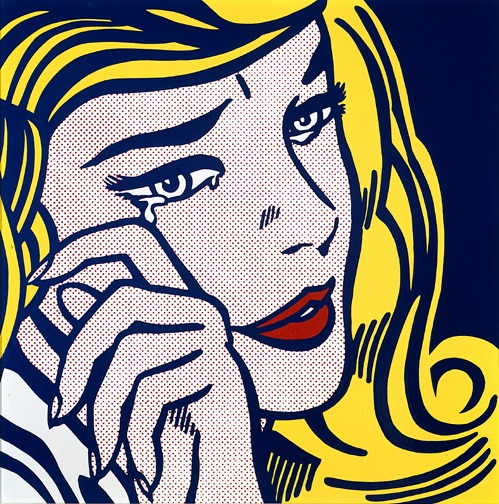
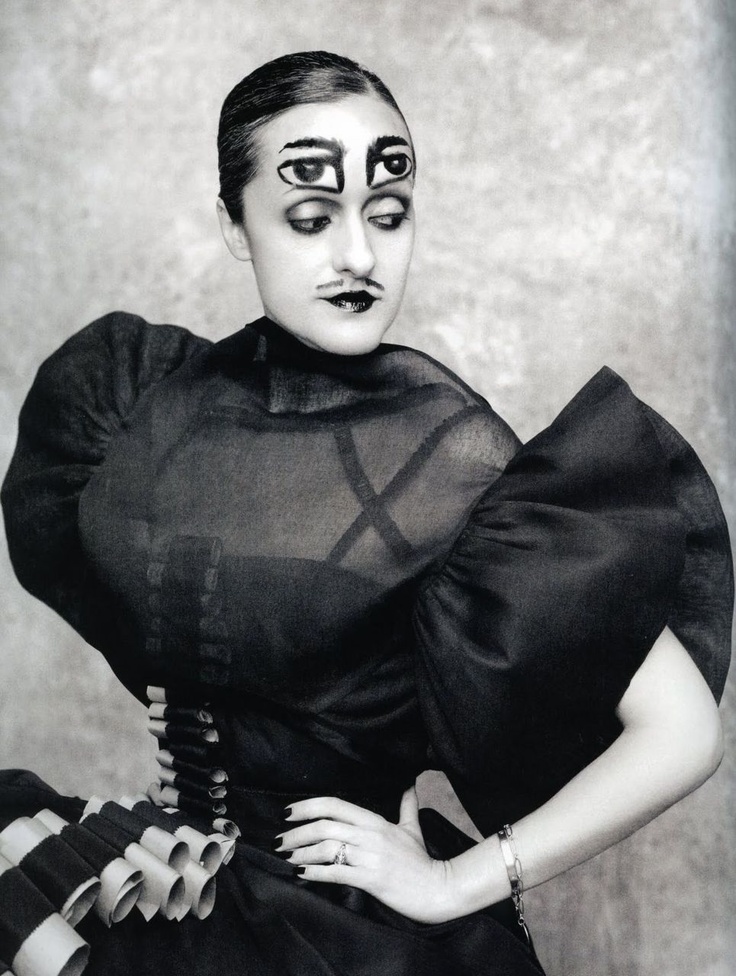
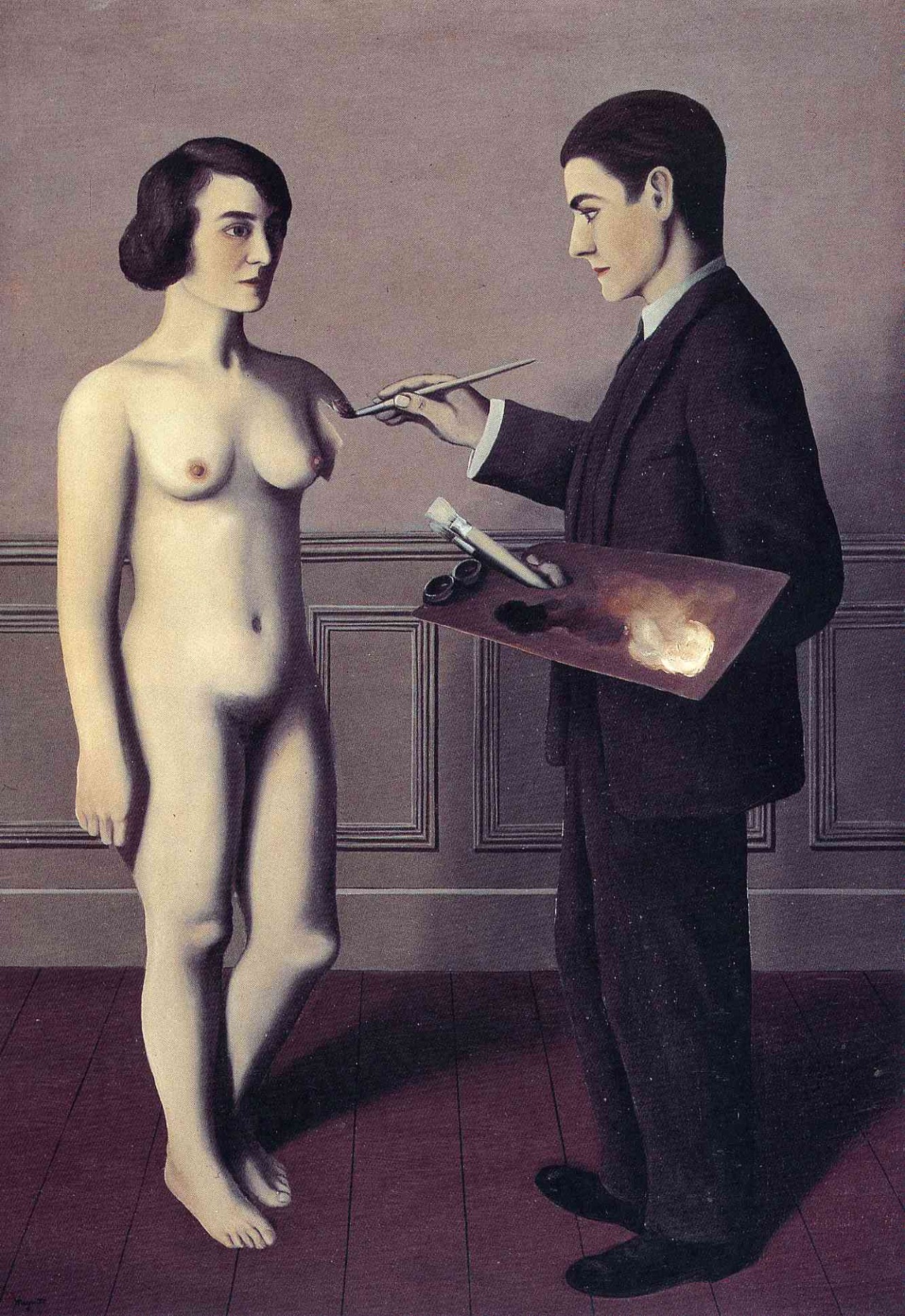
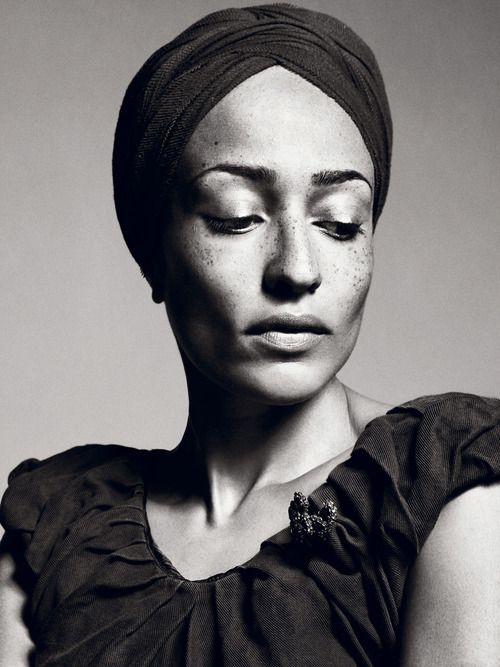
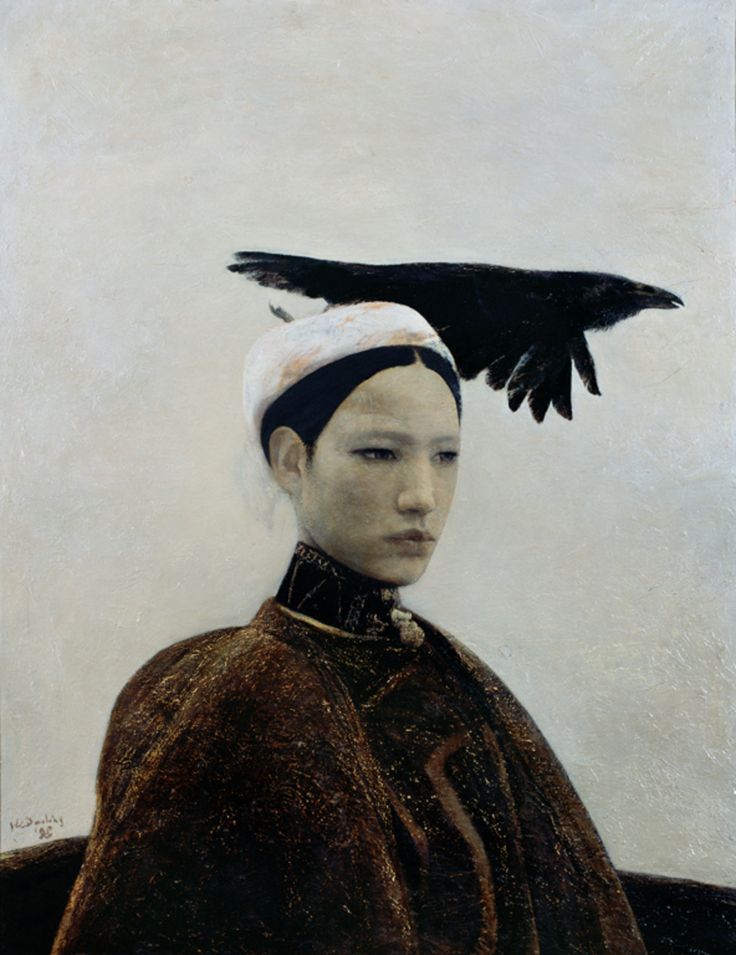
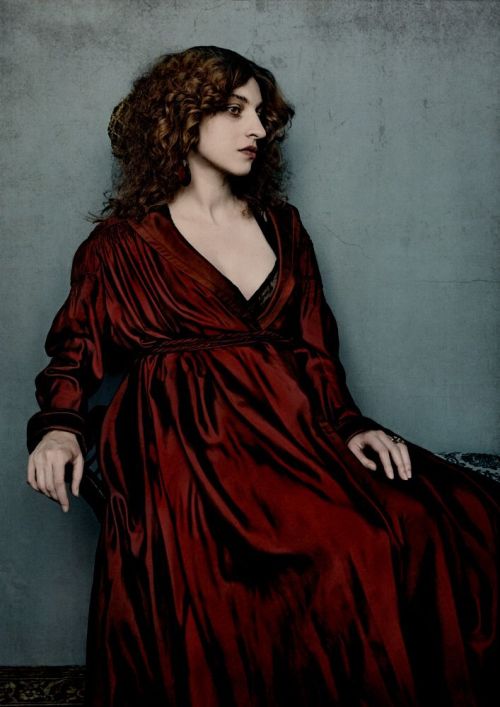
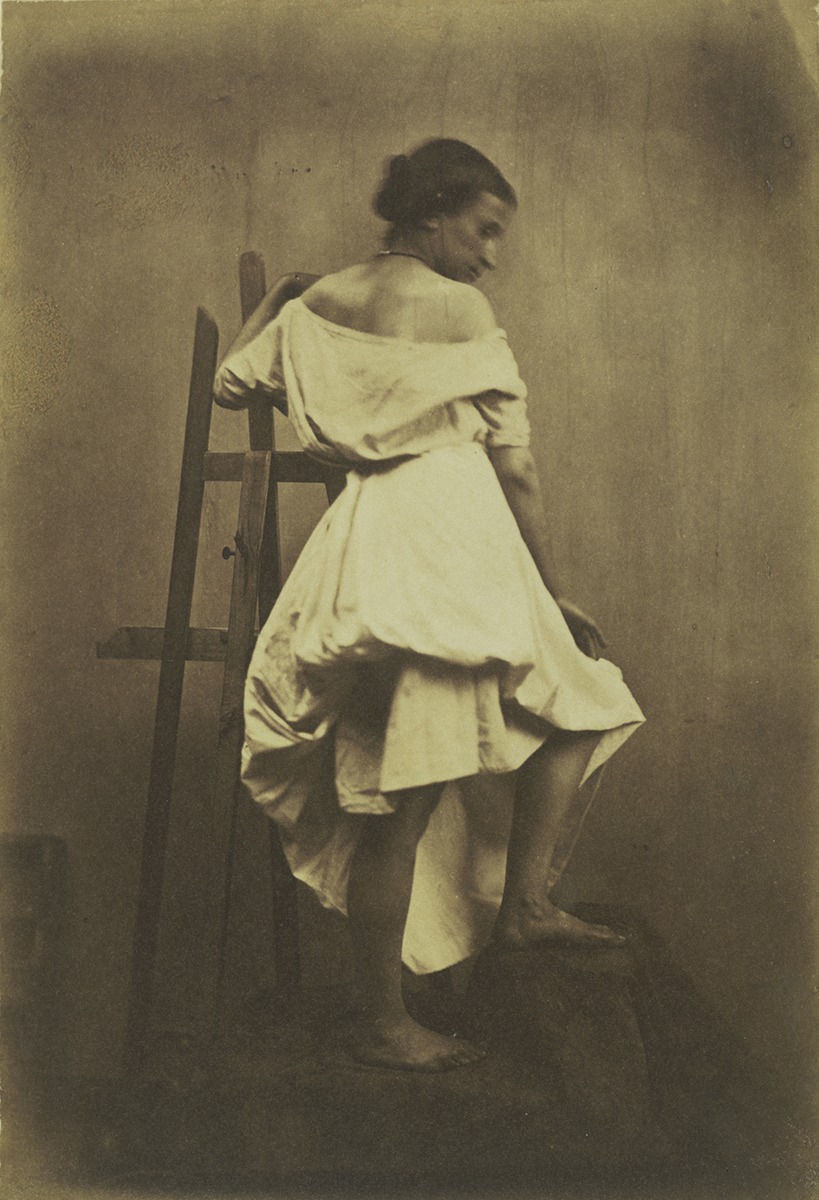
Two weeks ago, our class visited the Mount Holyoke College Art Museum to beef up our image-reading skills. We discussed one set of photographs that happened to consist of various women looking to the right of the camera. We joked that it should be a mini-exhibition called “Women Looking Sideways.” And friends, I have made that exhibition.

Admittedly, it’s on Tumblr, which is not a museum…or is it?

*insert meta moment here*

Whatever it is, you can find it here: http://womenlookingsideways.tumblr.com/

First, some highlights.
tumblr_mteeheVvDd1r1io1co1_1280

rebecca1

tumblr_nck6k8OAEj1qh9izdo1_500

tumblr_nazpj7wryp1qic67vo1_1280

tumblr_nbfte7cxMG1tgdkrco1_500

tumblr_ne8n2tDmJK1u2yav8o1_1280

tumblr_nbamain9Lb1tgdkrco1_1280

tumblr_neaczegVID1u2yav8o1_500

tumblr_neduldorMG1u2yav8o1_1280

tumblr_nedunqQ9rJ1u2yav8o1_1280

tumblr_ne8n1hhwxM1u2yav8o1_1280

On to my methods, if you can call them that.

I only post images of women looking to the right.  At first, this filtering felt restrictive, but not anymore. Without it, the page would lose what little uniformity it has. I don’t discriminate based on time period, medium, or location of origin. In the end, the only thing these women have in common is that they’re looking sideways, to the right, at something offscreen, unspecified.

It’s an odd thing to do – making and maintaining this tumblr, I mean. It’s such an arbitrary set of rules that govern what makes it to the page and what doesn’t. There is obviously a bit of satire in this. “Women Looking Sideways” sounds like an exhibit a fancy gallery would put together, or a fetish, maybe, a kink of sorts – “I prefer my women looking sideways.”

Forgive me. I’m a wee bit sick and a wee bit delirious. At a minimum, I’d like to suggest there’s a heavy dose of absurd thinking and whimsy that has gone into this page. And yet I find myself taking it seriously. Each instant of a subject looking sideways is motivated by something unique. In some images, it seems to be an act of defiance – in other images, it seems submissive – in other images, we feel that we have caught the figures before us in the middle of a conversation or other ordinary part of their life. In some images, we can’t see the eyes of the subjects at all. At first, I tried to decide what exactly it might mean to look sideways, but each case is so unique, I hesitate to make a blanket statement.

At any rate, I’ve tried to make the page a bit solemn, insofar as I can make anything solemn – there are many great works of art on display that I’d like to treat with a little respect – but not too much respect. I include celebrities, characters from my favorite movies and TV shows – the eyes looking sideways at the top of the page are the flawless Michelle Obama’s.

I hope you enjoy my lazy attempt at satirical scrapbooking/comical curating. And Tumblr users, you are of course welcome to follow the page. I plan to update it regularly-ish.
Posted by: ferge22j | November 7, 2014

The Pearl: Victorian Pornography and Sexual Deviance

We waffled around whether it’s fair to assign the term “pornography” to the diaries and images that make up the idiosyncratic legacy of Arthur Munby and Hannah Cullwick. Certainly, they wrote, drew, and photographed for at least partly for erotic purposes, but their works’ aestheticism and lack of sexual explicitness strays from the OED’s definition of pornography: “printed or visual material containing the explicit description or display of sexual organs or activity, intended to stimulate erotic rather than aesthetic or emotional feelings.” And then there’s the uncomfortable issue we returned to again and again: Cullwick and Munby created for themselves alone and never intended their works for public consumption (and certainly not for the scrutiny of postmodern academia).

Some (who aren’t too well-versed in Victorian sexual culture) might protest that we can’t assign modern definitions of pornography to the Victorian era. They couldn’t look at piano legs without putting a skirt on them – surely anything vaguely scintillating was tantamount to pornography for the Victorians. Consider the comments on Youtube postings of Victorian moving pictures – women on bicycles, a couple sharing a tame kiss – “This was pornography to them,” the populace insists.

The populace might be surprised to learn that many of the acts portrayed in the most widely-distributed Victorian pornography are not only shocking but abhorrent and illegal to the 21st-century audience. Take The Pearl, the Victorian pornographic magazine which was received the most scholarly attention (thanks in part to its public-domain status allowing publishers to issue several extensively illustrated versions since the 1960s). Among the hundred-odd stories the magazine published over its two-year run, a very sparse handful don’t contain some combination of the following: incest, group sex, questionable consent, pedophilia, flogging (mostly unwanted), homosexuality, and cross-class or cross-race relations. The authors describe every act with the same patently purple prose and a dizzying array of euphemisms, several thousand without counting repeats (Potter 91). A random sampling: “mossy grotto,” “Mr. Priapus,” “curly parsley bed”, “milk of human kindness” (Lazenby).

Pornography, as “obscene material,” was in fact illegal in 19th-century England, and The Pearl was eventually shut down by the police (leading the publisher to create two spin-off series, The Oyster and The Boudoir) (Potter 90). The inherent depravity of pornography to Victorian mores may have been what led Victorian pornography to be so unrelentingly deviant; “If you’re going to sin—and if that sin will lead to sickness, debility, and madness—you may as well go all out, right?” (Gagnon 1)

I think there’s something similar going on in the works of Cullwick and Munby. Their cross-class relationship was sexual deviance in itself, so there was no reason not to “go all out”.

Potter, Rachel. “Obscene Modernism and the Trade in Salacious Books.” Modernism/modernity 16.1 (2009): 87-104.

Gagnon, Jilly. “The Pearl: Victorian Porn at Its Finest.” The Toast 10 Apr. 2014.

Lazenby, William. The Pearl, A Magazine of Facetiae and Voluptuous Reading. Grove Publishers.

Posted by: amartinmhc | November 2, 2014

Laura Swanson and the Anti-Self-Portrait

The Center for Art and Thought often has online exhibits and dialogues by brilliant artists, and on a recent visit to the site, I found the work of Laura Swanson. Her work is a thought-provoking engagement with the conventions of portraiture, the negotiation of the gaze and the body, and more recent genres of photography such as the selfie. We will look at a few of her photographs when we discuss women’s experimental photography in the coming weeks.

From her artist statement:

“Much of her work questions the dominant cultural bias toward the sameness, size, and symmetry of things, especially people. Swanson often references the seemingly theatrical spectacle of her short statured body situated next to her six-foot-tall husband. Compelled to remove their bodies from objectification, she anthropomorphizes ready-made objects and deconstructs conventional portraiture to simultaneously create an image of solidarity and to examine the desire to look at physical difference. The safe-guarding of individual agency is asserted in a series of self-portraits, where she conceals her identity, and with fantastical dwelling spaces, which provide refuge to read critical theory in pursuit of intellectual liberation.”

HIDDEN Exhibit on CA+T

About Laura Swanson

http://www.lauraswanson.com

Posted by: bellabook1 | October 30, 2014

The Fresh Scent of Nineteenth-Century Racism?

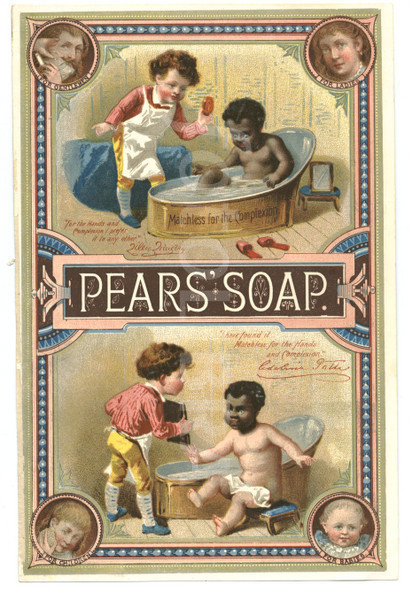
In class a few weeks ago, we discussed this image: Victorian PearsÃÂÃâÂÃâ Soap advertisement circa 1890

In this image, dark skin is clearly equated with dirt and whiteness symbolizes the power of the soap.  Pears: Buffer Away Your Race.   This white-washing of the racial ‘other’ has clear connotations for notions of culture and respectability.

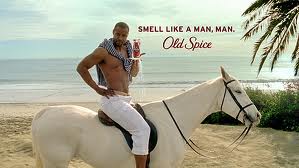
Even though we are no longer living in the nineteenth-century and ostensibly live in a (hopefully) somewhat more self-aware and less overtly  racist world, this image reminds of me of the Old Spice Commercials that were popular a few years back.

download

“The Man Your Man Could Smell Like”

Granted, this commercial is largely different from the image we dissected in our discussion: The African-American man is given a voice and he is the only person in the commercial.  This voice and the settings he is placed in, however, feels white-washed. He is on a boat, he is riding a horse while wearing extremely white pants.  He is saying that he is the man whom the women’s men could smell like.

Could this be a modern day combination of “thing culture” and the idea of products “uplifting” its user to a level of whiteness?

Of course, this man: handsome, articulate, wealthy, could obviously be all of these things.  What is problematic with this representation is that it is assumed that this is a fantasy.    And this fantasy is directed at ostensibly white women who are dating white men. You can make this leap because of the reference to the power of scent.  Their men won’t look like this man but could purchase the ability to smell like him.

Not only is this a racially-charged commercial as his body and its scent become a space of white-culture, it is also gendered.  “Don’t smell like a woman” “Smell like me: a REAL man.”  This “real” man is definitely hunky, and affluent but because of his race, which goes unremarked upon, and the exotic locations of the commercials he becomes an almost hybrid and is set up as an unattainable ideal of masculinity.

The fetishizing power of Old Spice is present, but is who is it being directed to? Who is being uplifted?  Is White-Culture present here? Is this something radically different from the advertisement that was originally published in the early 19th-Century?

Or have we not come as far as we may hope?

Posted by: Hyeonjin | October 28, 2014

Sherlock Holmes in the Form of Music

We’re all very aware of the personality of Sir Arthur Conan Doyle’s beloved detective: sharp, witty, eccentric, sociopathic tendencies… the list goes on. We see these portrayals quite clearly in media, particularly in recent adaptations such as Guy Ritchie’s films starring Robert Downey Jr or BBC’s series starring Benedict Cumberbatch.

I was listening to the Sherlock Holmes soundtrack by Hans Zimmer yesterday, and it never occurred to me until then that the composers for these adaptions in particular did a very good job at conveying Sherlock’s personality within the music. I would even argue that this helped portray Sherlock Holmes with more success.

For example, the ever popular ‘Discombobulate’ by Hans Zimmer from the first Sherlock Holmes film from 2009.

It starts off slow. One could even argue that it sounds lazy. It’s as though Zimmer wants to display a mind that’s uneasy due to being at rest but then jumps at the moment of intrigue. It’s unpredictable, zany, with the melody shifting from one instrument to another. Eccentric becomes a key component to the soundtrack as Zimmer uses dissonances, sharp dynamics, and instruments in unusual ways (for example, a broken piano…). Yet there is a cleanness to it that makes it easy to follow, making the listener more curious and intrigued.

‘I Never Woke Up in Handcuffs Before’ is another great example (as well as a super entertaining title and scene) of the eccentricity of Sherlock. It’s jarring yet makes the listener quite alert to the distinct rhythms and instruments that are being used (you could say an organized mess).

Jumping to BBC Sherlock, David Arnold and Michael Price seem to incorporate the eccentricity of Sherlock into the music. You hear this particular track quite often when Sherlock is off to do something ridiculous. Take ‘The Game is On’ for example:

Again, sharp dynamics, dissonances, and unusual combinations of instruments lead to a complexity that seems to depict Sherlock unbelievably well. You can literally hear his mind at work as it jumps from place to place yet still maintains an intelligence and sharpness that’s not too abstract.

To match the modernness of BBC Sherlock, I find tracks like ‘Mind Palace and Solution’ rather appropriate, which add quite a bit of synths. However, I also find that this really helps to further add to an unearthly quality to Sherlock’s mind (which one could argue, is a bit unearthly). There’s an intensity to it that appears starting midway towards the end that incorporates what’s happening on-screen, but also goes quite well with the portrayal of Sherlock.

Both Robert Downey Jr and Benedict Cumberbatch did a great job portraying Sherlock Holmes, but I feel that the music truly helped further that eccentricity and sharpness. Without the music, we lose that quality of the media that truly brings us into these characters’ realities and perceptions. And in the case of these soundtracks, we get a taste of Sherlock Holmes in the form of music.

Sources: YouTube

Posted by: smartyy638 | October 26, 2014

Sex & Marketing: Then and Now

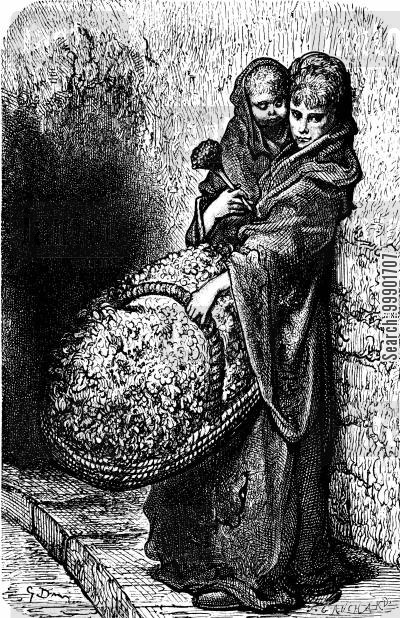
In class last week, we touched upon the concept of sexual tourism in relation to Doré’s image of the young, flower girl—

Flower Seller Girl with Baby

Doré’s picture of the flower girl, likely influenced by the Parisian stereotype of “loose women”, is a brief snapshot into the sex trade market that existed in Victorian London and continues to exist within Europe today. The flower girl is young and beautiful, balancing both a child and a seemingly impossibly full basket of flowers. She wears heavy, dark clothing but is situated in a lighter background and holds a basket of white flowers. It is interesting to us today that Doré depicts her as a tourist sight in “Doré’s London” however, during the Victorian period it was not uncommon to engage with prostitutes and other types of sex workers. It was often thought to be a societal valve in preserving the sanctity of marriage. In an article by Lee Bryant on “Crime and the Sex Trade,” she writes, “Prostitution certainly flourished during the Victorian period of rigid sexual morality. Victorian prostitution was connected with a double standard of morality, which was much more permissive for men than for women.”

Working women were often seen as both a threat to good, middle class men and a safety measure in preserving marriage, or rather, an outlet for their sexual frustrations.

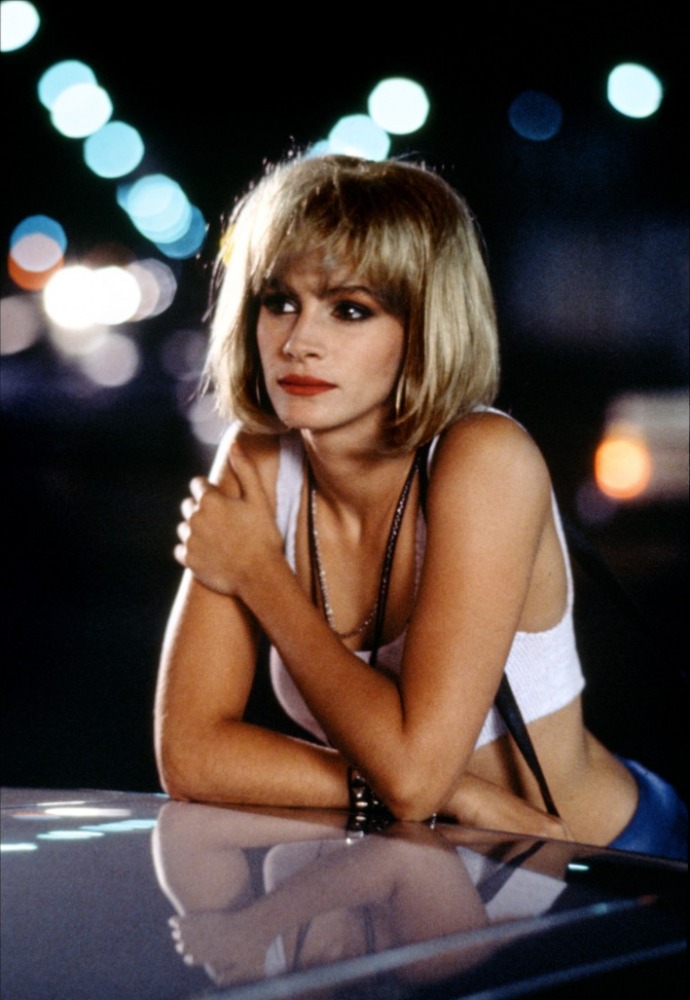
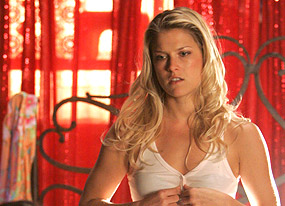
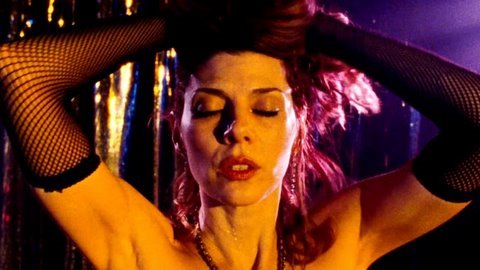
I would like to briefly link the idea of the “working woman” and prostitution to a contemporary media portrayal of sex & the working woman as a marketing tool, whether in regards to tourism, the film industry, or consumer culture.

“Pretty Woman” (1990) Julia Roberts
pretty-woman-1990-19-g

citation: http://i.dailymail.co.uk/i/pix/2012/10/27/article-2223998-15B69DF3000005DC-913_634x830.jpg
“Striptease” (1996) Demi Moore

MV5BMjAyNTcyNzY1OF5BMl5BanBnXkFtZTcwNDM2MjAyMQ@@._V1_SX640_SY720_

citation: http://ia.media-imdb.com/images/M/MV5BMjAyNTcyNzY1OF5BMl5BanBnXkFtZTcwNDM2MjAyMQ@@._V1_SX640_SY720_.jpg

Heroes (2006) TV Series, Ali Larter

285.heroes.larter.101006

citation: http://www.eonline.com/eol_images/Articles/20061010/285.heroes.larter.101006.jpg

The Wrestler (2008) Marisa Tomei

hqdefault

citation: http://i.ytimg.com/vi/puUUn1N-rJw/hqdefault.jpg

http://www.historylearningsite.co.uk/crime_sex_trade.htm –> “Crime and Sex Trade” Bryant Lee

Posted by: SJ | October 24, 2014

Review: Portraits of Courage, October 20-24

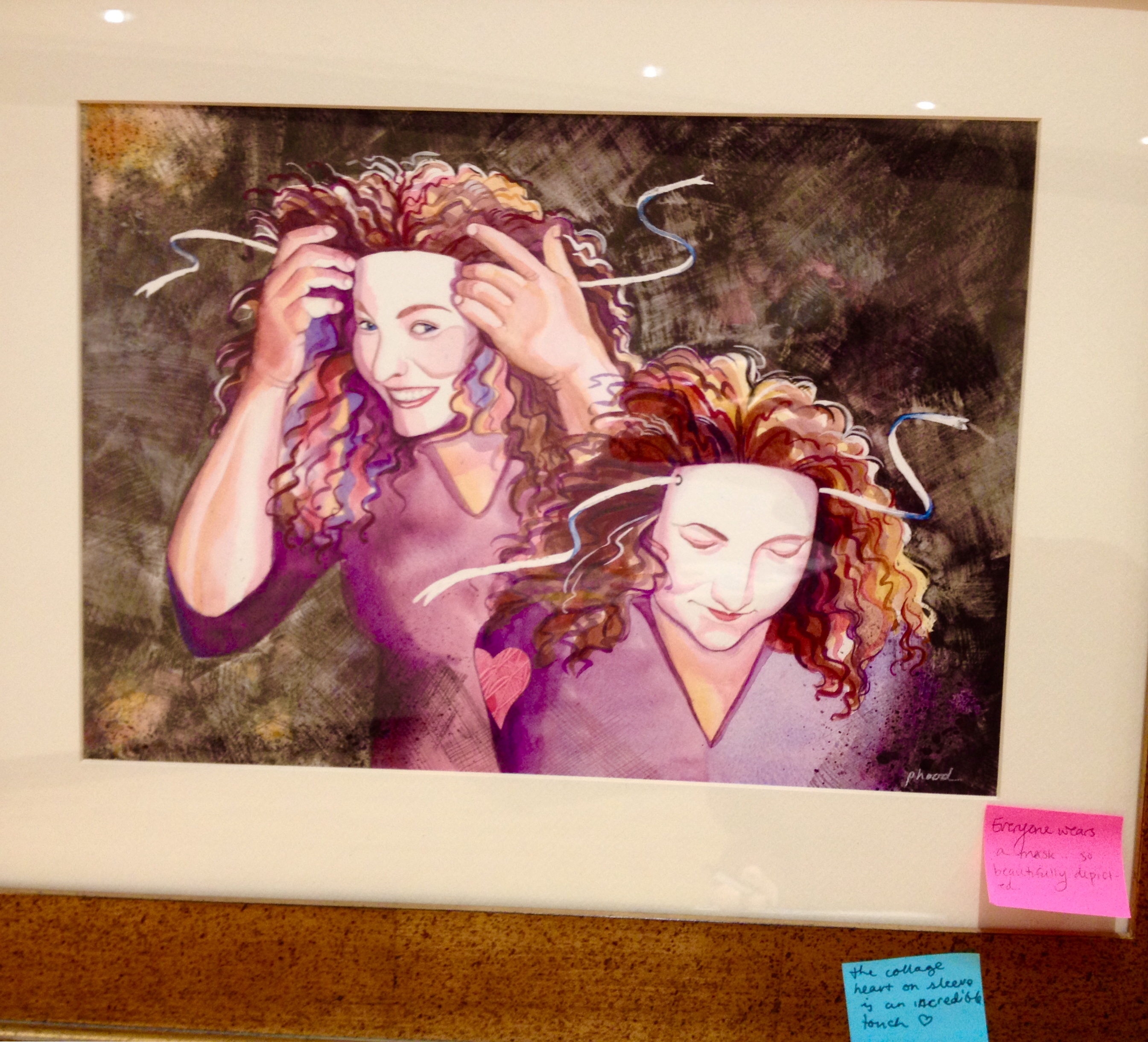
People are constantly looking for themselves in art. I am a studio art minor, and this semester I’ve made several self-portraits in an effort to explore and understand my ideas about my gender, sexuality, and mental health. These portraits felt deeply personal and exposed, but part of what gave me the courage to create them was that I am the artist and I have the power to create myself through portraiture. I cannot image having someone else create these portraits of me, especially if their topic dealt with a much rawer and more painful subject. Therefore I am in awe at the strength of the people in Penny Hood‘s Portraits of Courage who gave shared their images, stories, and selves with not just the audience viewing the portraits, but the artist creating them. Hood’s paintings are incredibly aware of how art (and portraiture in particular) can objectify and use the human body, and her work in this exhibit engages and challenges that artistic problem through her artistic process and the structure of the exhibit.

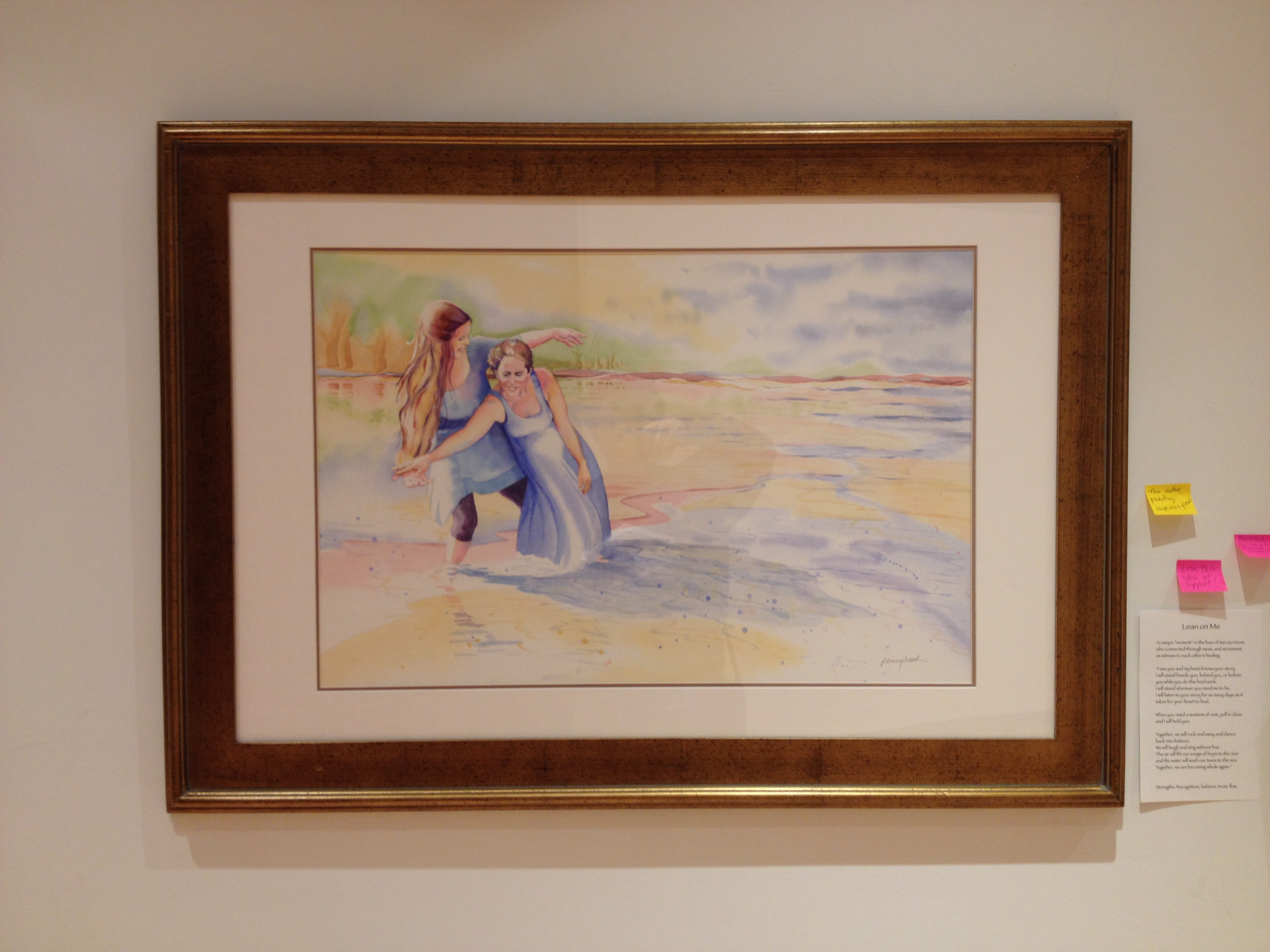
Today is regrettably the last day to go see Portraits of Couragewhich is hanging in the lobby of the MHC art museum, just outside Gamble Auditorium. If anyone has a free minute today, I highly encourage them to go spend a few moments with Hood’s powerful and touching artwork. The exhibit is also available online, but the in-person experience of viewing these portraits is remarkable and suggests some really fascinating ways of thinking about the healing process and creating a community of support and healing. Penny Hood is a therapist and an artist, and sought to consider “how survivors move through Trauma” by interviewing sexual assault survivors and painting their portraits. She uses a wide variety of materials, such as printmaking, collage, photography, and a great deal of watercolors.

Upon walking into the lobby where the show hangs, you encounter a table full of brochures and flyers before you see the actual art. There’s information from Penny Hood herself regarding the show, but the MHC Counseling and Health Services, as well as student-led groups, have provided support and networking information about preventing, discussing, and healing from sexual assault and sexual violence. Although the art in this exhibit focuses on the experiences of specific individuals, the set up and exhibit as a whole focuses our attention and empathy towards the survivors around us. My favorite part was a basket full of post-it note pads, with an accompanying handwritten note from Hood: “Put a post-it on a painting — I will photograph your feedback for the subjects.” People left the kindest and most heartfelt notes on each of the 12 portraits. Some examples were

  • “I can FEEL his armor!”
  • “vulnerable”
  • “love this idea of support!”
  • “everyone wears a mask”

Rather than take away from the portraits themselves, I feel as though the visitors’ notes evoked our understanding of the subjects’ personhood and how they may look for healing by participating in this project to begin with.

In her artist’s statement, Hood describes how she engaged with the portrait’s subjects, who “are given the option of telling their story, and can choose to have their image remain anonymous.” Her interviews with participants centered on the question: “Where did you find the strength, and how might we depict that?” I think that this was a very sensitive and intelligent way of engaging with the objectification inherent in portraiture and sexual violence. Though Hood ultimately created the physical work of art, the stories and figures belong to the portraits’ subjects, because they could control how they were portrayed.

FullSizeRender IMG_2575

Posted by: Sam Stone | October 19, 2014

Humans of New York

As I was looking at John Thomson’s photographs of Victorian street life, I couldn’t help connecting these photographs with the ones I had seen numerous times on a photoblog popularized by its Facebook page that always seemed to be popping up on my news feed. The page is called Humans of New York and I’m sure most people have heard of it in some way since it started back in 2010. That, or they’ve heard of one of its many spin-offs. I’m pretty sure there’s even a Humans of Mount Holyoke page on Facebook now.

Brandon Stanton is the guy who started the blog. In his senior year of college at the University of Georgia, a $3,000 bet that Barack Obama would win the presidential election in 2008 led to a job trading bonds on the Chicago Board of Trade. When things started to go wrong and he lost his job, he decided to move to New York City and take pictures of strangers on the street. What originally began as a project cataloging the inhabitants of New York City turned into something much more when he started to interview the people he photographed.

What made me make the connection between John Thomson’s photographs and Brandon Stanton’s blog was not just the fact that both of them took photographs of people on the city streets. It was more that they both had stories to go along with the photographs that they took. Instead of just looking at a photograph and wondering who the people are, we are given further insight into their lives and what happened before the photograph was taken.

While the Humans of New York stories and interviews may not directly relate to the person being photographed, they usually make you stop and really think about what the person has to say or what they’re going through. Most of the time the captions are vague, just a sneak peek into a stranger’s life. But oftentimes these snippets reveal a lot about the person’s character and guides you further in trying to explain what is happening within the photograph. They give you enough information to be intriguing, yet leave much of the story to your imagination which is what I think really makes them popular. It is really fascinating to me that even spanning centuries and countries, there are still similarities in these two photographer’s works despite how different they truly are.

Here are a few interesting Humans of New York photographs that I found while browsing the website.

“So do you do a different color every day?”
“No, I used to go through different stages. But then I found that I was happiest when I was green, so I’ve been green for 15 years.”

“After this I go to work at a pizza shop. My wife and I were college professors in Bangladesh. I taught accounting. But one dollar in America becomes eighty dollars when we send it back home.”

“If everyone in the room believes the same thing, I get worried.”

And my personal favorite:

“Put me on the internet! Even on The Google!”

Sources:

All information and photographs found here: http://www.humansofnewyork.com/

Posted by: jordanelassonde | October 16, 2014

Street Life Photography

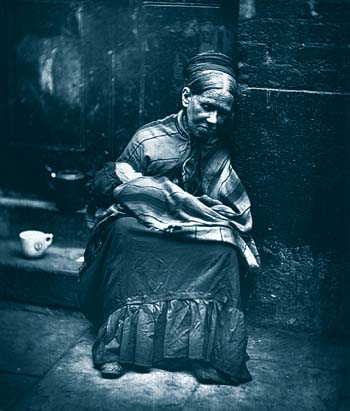
During our discussion about “The Crawlers,” I mentioned that I was reminded of a photo I took while I was in Peru about a man in a doorway. I thought I would share that photo and expand on some of my thoughts.

thomsoncrawlers

Thompson’s “The Crawlers”

Disclaimer: There is no intentionality in my photo other than I was taking pictures whenever I saw that specific shade of blue. I might have had a fleeting thought about framing the man in the doorway but in all honesty, I really wanted a picture of the blue door.

IMG_0608

My photo taken in Cusco, Peru (if I remember correctly).

We had a brief discussion in class about the door frame of  “The Crawlers” image. Perhaps I am reading into this one image, and images like it, more than I should, but I can’t seem to shake the liminality of a photo taken on a doorstep. In fact, when I was first learning the word liminal, a doorstep or a threshold was used as an example of a liminal space. But what does it mean that these people occupy and are pictured in this liminality?

I find the importance of the liminal space in the spaces around it, the spaces that create the liminality. In the case of doorways, there are two spaces, each side of the door. For these street life photographs, there is specifically the street and whatever space is behind the door. Again, perhaps I am reading into this doorway more significance than actually exists. I have no way of knowing that the man in my photograph is sitting in a doorway for any reason other than he needed a place to sit. However, Thompson staged “The Crawlers” and while he might have chosen a random doorway, he stages it such that there is meaning. We spoke in class of Scotty as a deterioration of the domestic woman. Her position in the liminal space between the street and a domestic sphere, implied by the domestic objects on the stoop, strengthens that reading.

I don’t think that my picture can have such a reading of liminal space. However, I do find it interesting that there is such a use of the liminal space of doorways in photography. I can’t even suppose what that means.

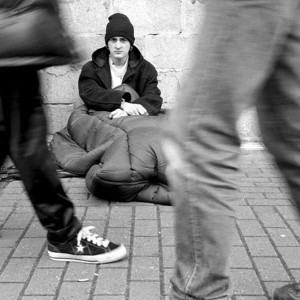
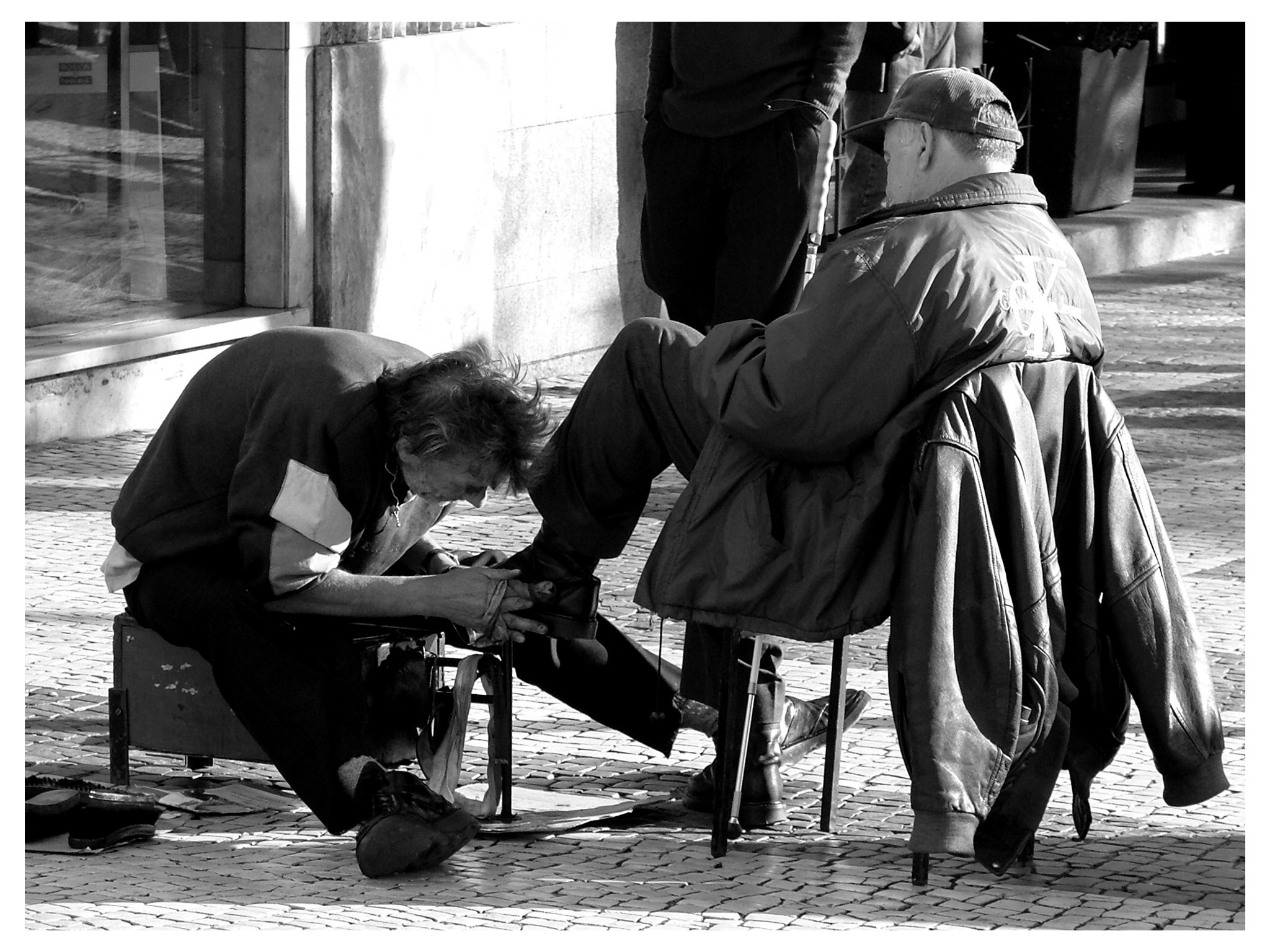
Side note: I did a Google Image search for “Street Life” and “Street People.” The similarity between Thomson’s street life images and more modern street life images is striking. Here are two that caught my eye.

homeless-300x300

We mentioned the perspective of “The Crawlers.” This image reminded me of that.

People_on_the_street_II

Posted by: Alli C. | October 15, 2014

75 Century Defining Photographs

Recently, while scrolling aimlessly through my Facebook newsfeed, a picture caught my eye. A friend had shared an article and the cover photo was three beautiful, slender, fashionable women posing in front of a historic building while a homeless man, in his socks, sat on the steps. The title was “These 75 Iconic Photos Will Define the 21st Century So Far. Everyone Needs to See This.

Although not usually one to bow to the “everyone needs to see this” card, I clicked. The pictures were interesting, for sure – sometimes touching, sometimes simply to see what can be vaguely considered “defining”. But when I got maybe about 10 pictures in, I stopped. The picture was of a U.S Marine watching the statue of Saddam Hussein fall in Iraq. I don’t find the picture itself particularly striking – I stopped because it made me remember a previous class I took, called Propaganda and War. We looked specifically at the situation surrounding this statue’s fall, and what it represented – and what it was held up to represent. To make a long story short, the picture is at best deceptive – the crowd in the background was the entire population of the square, not a small section of a mob; the striking visual story of the citizens of a country pulling their leader from power is in fact an out of lens U.S tank; the anger that spurred the decision to tear down the monument was actually a decision by U.S. military leadership (with maybe some citizen unrest) that took almost an entire day to build enough momentum to actually remove the statue. This is an “iconic” photograph and, like so much else about the invasion into Iraq, it’s a very carefully crafted fabrication.

It made me think, though, as I kept scrolling. Every image I encountered I had to stop and wonder, Who took that? And what did they do after?

Did the person behind the camera of the very next picture – a child separated from her family during a fight – help the solider who held her find her family?

How did the photographer of the tsunami waves stick around to take photos of the aftermath? Did they help clean up, distribute food, rebuild?

Was the camera man or women who took the “heart-wrenching” picture of the mother and child at an emergency feeding center there only to document? Or did they put down their equipment and lend a hand?

And what about the photographer who snapped “An indigenous woman holds her child while trying to resist the advance of Amazonas state policemen in Manaus who have been sent to evict natives”? Did the advancing lines part around them? Or were they pushed back by the policemen as well?

The 75 images collected all have a story to tell. Sometimes, certainly, the most powerful thing a person with a camera can do is document what they see and make sure the world knows what’s happening. But when the only thing that person does is document, what does that do to the person or thing being documented? In my opinion, rather than make it more sympathetic, it removes the problem. A well captured photograph can bring about an explosion of sympathy and knowledge for its subject; a well captured collection of photographs threatens to become a storyline. A storyline is entertainment; a storyline builds a world for other photographers to keep building on. A storyline is something that develops a life of its own, until any documenting that happens may as well be posed for all that it represents reality.

I’m not saying photography can’t do wonderful things; I’m not saying photography hasn’t done amazing things. But I do think we always need to keep in mind Who took this? And why? because photography, for all that it perfectly captures the image in front of it, can just as easily be made deceptive as the written word.

« Newer Posts - Older Posts »

Categories