“It is not a large world … There is much good in it; there are many good and true people in it; it has its appointed place. But the evil of it is, that it is a world wrapped up in too much jeweler’s cotton and fine wool, and cannot hear the rushing of the larger worlds, and cannot see them as they circle round the sun.” (Dickens, 20)
not a large world: music for Dickens’s “Bleak House”
Posted in Uncategorized | Tags: Bleak House, Chancery Court, charles dickens, music, playlist
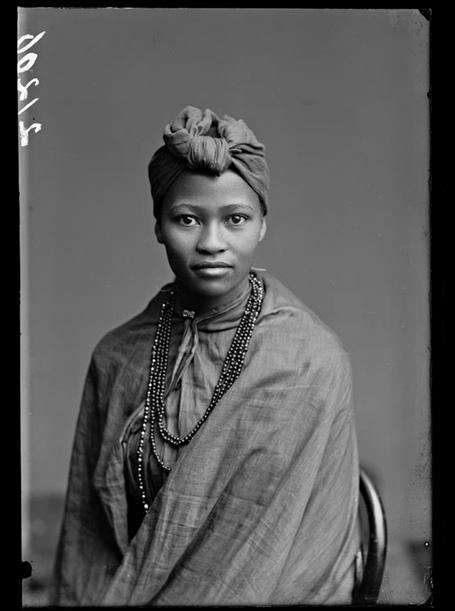
Black Chronicles II: Exhibit of photographic portraits of black people in Victorian Britain
Here is a link to an article about a new exhibit in London titled “Black Chronicles II.” It brings together a series of Victorian photographs, most from the late 19th century, all of which have black people as their subjects — images of a South African choir, various cartes de visite, a portrait of Sara Forbes Bonetta taken by Julia Margaret Cameron, and colonial photographs of “friendly Zulus,” to name just a few. If you click on the link at the top of the article (“Hidden Histories”), you can see more examples of the photographs.
Posted in Uncategorized | Tags: photography, portraiture, race
The Many Faces of Dorian Gray
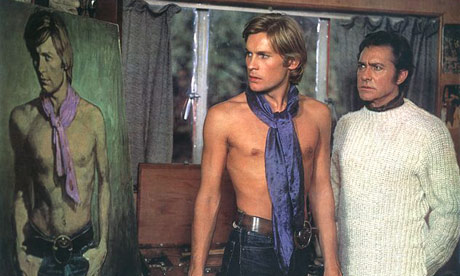
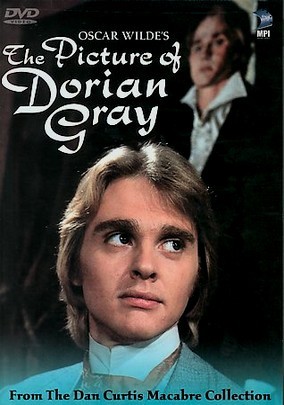
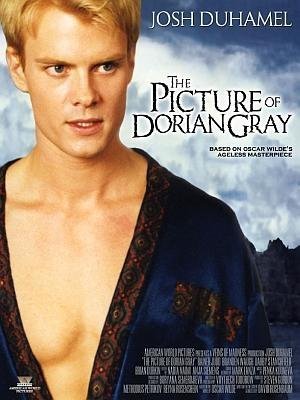
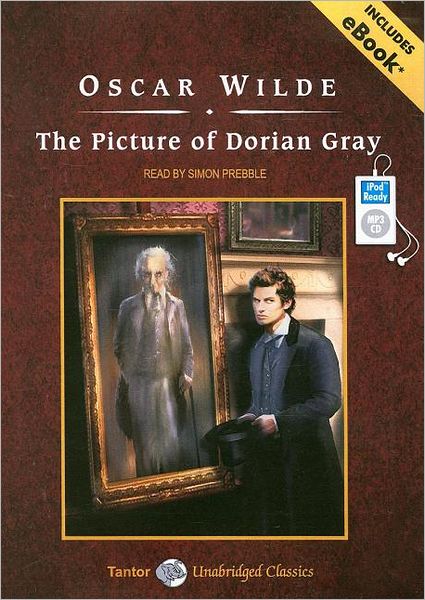
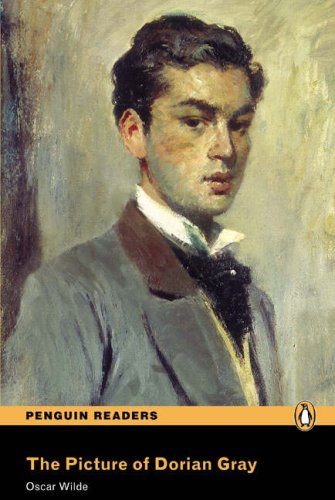
I wanted to take a look at some of the interpretations of Dorian Gray presented in different media, specifically book covers, comic book covers, and actors from movie interpretations. As someone meant to represent the epitome of beauty, youth, and ‘purity’ of the soul as seen in physical form, it is interesting to note the differences and similarities of these varied interpretations. From actors to illustrations, each of these portraits adds a unique element to the discussion of Gray’s aesthetically pleasing figure. These are obviously not the only interpretations- there are sure to be countless actors from varied plays and smaller budget films, etc. I also found a great site that lists a ton of more comic books in which Dorian Gray makes appearances than are listed here. Here are some of the faces of Dorian Gray:
Hurd Hatfield in the 1945 film adaptation The Picture of Dorian Gray (source).
Helmut Berger in the 1970 film adaptation The Secret of Dorian Gray (source).
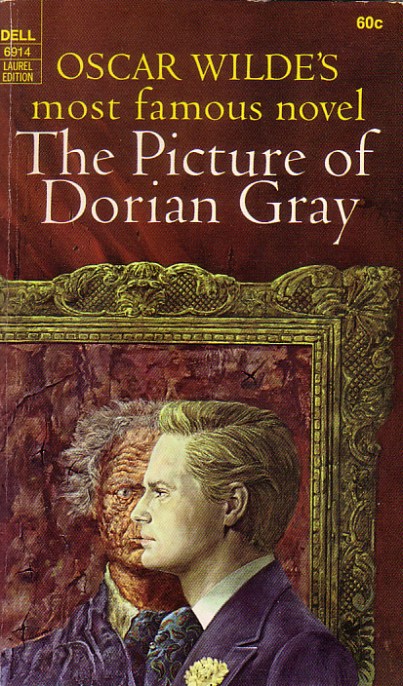
Dell Laurel Print Edition 1973
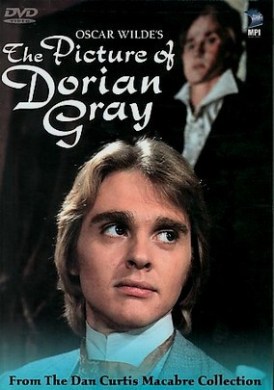
Charles Aidman in the 1973 movie adaptation The Picture of Dorian Gray (source).
Dover Thrift Print Edition 1993
Barnes and Noble Classics Print Edition 2003
Josh Duhamel in the 2004 film adaptation The Picture of Dorian Gray (if you can believe it). I personally couldn’t so here’s the trailer.
Marvel’s 2008 Comic Book cover of Part One of The Picture of Dorian Gray (source).
Tantor Media Print Edition 2008
Penguin Print Edition 2008
World Library Print Edition 2009
Ben Barnes in the 2009 film adaptation Dorian Gray (source).
IDW Publishing’s 2012 Comic Book Cover (source).
In seeing all these interpretations together, we must ask ourselves, How would we characterize ideals of beauty from the late 19th century? Do these ideals define or present any social issues of the time? Can this ideal of beauty be seen as having evolved over time? Is our understanding of what we consider sublime during the late 19th century something we can ever fully understand or appreciate, being influenced by images and ideals of our own time? And all this, of course, with a grain of salt: what is the value, if any, in categorizing and cataloging ideals of beauty,(limiting and excluding as they are) if only to understand how these ideals negatively impact any and all those who fall outside these narrow margins (however narrowly one defines them)?

Posted in Uncategorized | Tags: Aesthetics, Beauty, Likeness, portraits, The Picture of Dorian Gray
Italy vs. Britain: Women’s Literary Rights
This semester I took an Italian Children’s Literature course, which has been an interesting juxtaposition to this class because Italy was only unified politically and geographically in 1861 . Even afterwards the central government/monarchy was shaky at best (you could say it still is). With this major political difference in mind and the fact that Catholicism permeated the homes of Italy, it’s been interesting to see the difference between the representation/freedom of women in Italy vs. Britain. This is particularly apparent in female authorship and the production of novels and journals. While Victorian England had acclaimed female authors such as the Bronte sisters and Elizabeth Gaskell, Italy lacked the same widespread readership and celebrity status around literary works/figures because until 1871, 80% of the population was illiterate! Therefore the readership was a minority and very elite. As literacy rates increased due to educational policies so did the role of female writers and readership. However, literary material was dominated by etiquette books and domestic novels (there are exceptions such as Anna Maria Mozzini’s literature on emancipation rather than virtue/marriage).
I thought I would share with you an excerpt from one of the class readings: For class we read an excerpt from Anna Caesar’s Proper Behaviour: Women, the novel and conduct books in 19th century Italy. Caesar argues that “what the proliferation of writings manifested was the widening gap between cultural constructions of femininity and women’s lives (29)”. Comportment books and journals for women were part of an important political agenda to domesticate women and provide a moral framework that women would then disperse in their homes. Women, though excluded from politics, were given the important task of forming Italy/unifying it through moral standards. Just like in Victorian England, Italy grappled with the double-image of womanhood. Italian women were supposed to be passive and segregated to the domestic sphere. Italian female writers struggled with the paradox of being submissive and writing-which was considered a public and scandalous activity—yet many of them were very successful. Still the ideology that “writing was an act of self-assertion at a time when self-effacement was considered proper behavior” continued to haunt the conscience of female writers of the 19th century (33).
Posted in Uncategorized | Tags: Britain, Etiquette books, Italy, literacy, women
Diane Arbus: exploring the truth claim of photography
One of the interesting problems that surfaced during the shift from portraiture to photography is the nature of photography’s claim to be a scientific representation of absolute truth. As John Tagg writes in The Burden of Representation, “The value and fascination of such mechanically produced portraits seemed to lie in their unprecedented accuracy. The mechanisation of production guaranteed not only their cheapness and ready availability, but also, so it seemed, their authenticity. When the technology of the camera first became available, there was a great deal of concern about the accuracy of a photographic representation. Because we are pre-programmed to accept a photograph as “truth” and due to new technologies such as facebook, this concern is still relevant today.
Diane Arbus, a 1960’s photographer, explores the truth-claim of photography and the ability of the camera to reveal what she described as the “gap between intention and effect”.
An excellent example is her photograph, “Child with Toy Hand Grenade”. When viewed in tandem with her contact sheet, it is clear that Arbus chose to represent the boy as crazy even though he appears to be a completely normal child in all the other photos.
http://www.onewonderfulthing.com/2012/02/artists.html
Posted in Uncategorized | Tags: Arbus
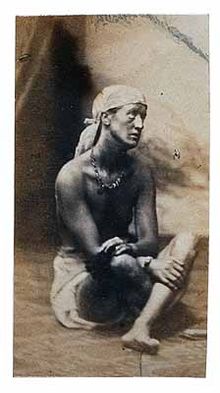
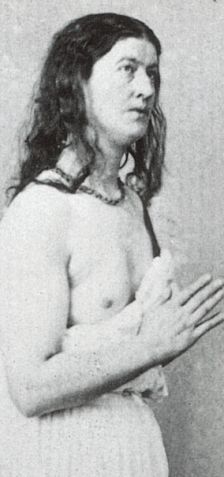
Comparing photographs of Hannah Cullwick with those of Cindy Sherman
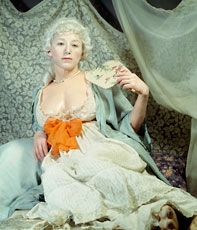
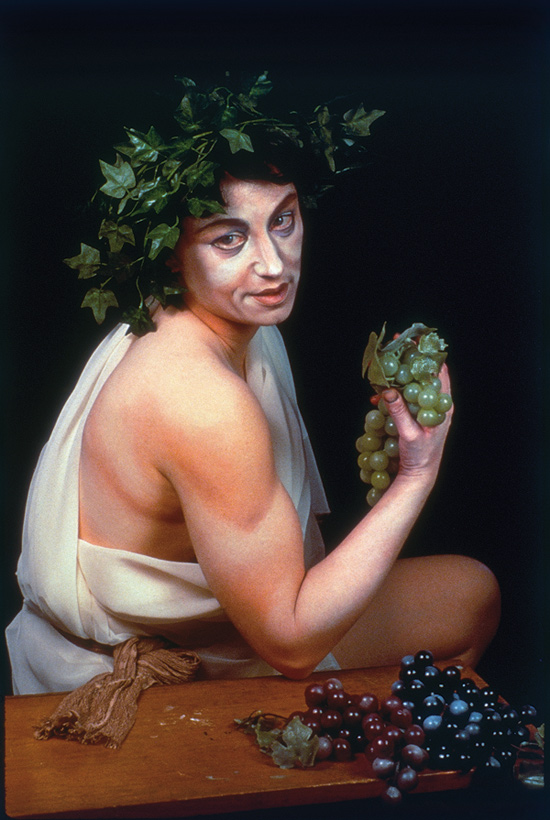
In class we discussed the interesting dynamic in the Cullwick-Munby relationship. Although I appreciate Carol Mavor’s attempt to argue that Hannah had agency, I find her comparison of the photographs of Hannah to those of modern feminist photographers such as Antin and Sherman to be a problematic one. Although we have Hannah’s diaries, it is difficult for us to uncover her true feelings because she wrote her diaries for Munby to read. I agree that it is possible that Hannah enjoyed dressing up as different characters, but I do not think that Hannah was attempting to interrogate types in a mocking way as Sherman does in her images. Perhaps this difference can be attributed to the intended audience of the photographs. Hannah’s images were intended to be seen by only Munby and herself, and Sherman’s photographs were aimed to a much wider audience.
Figure 1. Untitled #224, 1990
http://www.saatchi-gallery.co.uk/aipe/cindy_sherman.htm
Figure 2. Cindy Sherman Untitled #193, 1989
http://www.sfmoma.org/exhib_events/exhibitions/448
Figure 3. Hannah Cullwick as slave
http://www.clas.ufl.edu/users/agibson10/
Figure 4. Hannah Cullwick as Magdalene
http://peopleus.blogspot.com/2011_10_01_archive.html
Mavor, Carole. Pleasures Taken. Durham: Duke University Press, 1995.
Posted in Uncategorized | Tags: Hannah Cullwick, Mavor, munby
Comparing Mugshots of Fenians with Andy Warhol’s “13 Most Wanted Men”
Posted in Uncategorized | Tags: fenians
The Fox Sisters and American Spiritualsim
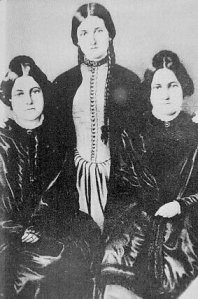
These lovely ladies are the Fox sisters, Leah, Maggie, and Katherine. Together they represent the beginning of the American Spiritualism movement. In 1848 while living in Hydesville, New York the girls reported hearing strange knocking sounds in their room during the night. Eventually, the knocking began to be heard throughout the house at which time Katherine (age 12) would challenge or communicate with the “spirits” by repeating the number of knocks. Neighbors were invited to the home to witness this phenomena and a system of asking the spirit’s questions was developed. The Fox Sisters career as mediums was born.
When Katherine and Maggie were sent to stay with relatives in Rochester, the mysterious knocking spirits followed them. The girls soon became celebrities, popular with members of high society and greatly sought after by those seeking a chance to communicate with the spirit world. The sisters parlayed their local fame into a career, touring music halls and even travelling overseas. They were embraced by celebrities including P.T. Barnum, Horace Greeley, and James Fenimore Cooper.
However, the Fox sisters were questioned and many attempts were made to expose them as skeptics. These attempts to discredit them often involved older men performing hands on physical examinations of the girls bodies to look for evidence of abnormal bone formations. A possible explanation often included that the girls were snapping their toe bones to produce the rapping sounds.

In 1888, Maggie Fox denounced Spiritualism, confessing that everything had been a sham. She would then recant her denouncement but it was too late, the damage had been done.
Posted in Uncategorized
Secret Cross-Dressers and Bruce
In trying to research more about “Richard Bruce” the female cross-dresser that Munby mentions in his writing (Unfortunately, I couldn’t come up with anything) I stumbled upon this pop article about Bruce Jenner, husband of the Kardashian matriarch who has a fetish for cross-dressing. Apparently, his previous marriages resulted in the fact that his wives had a difficult time accepting this fetish.
Perhaps the fascination with Munby and Cullwick is the fact that cross-dressing and the passing between gender, racial and class boundaries continues to be a misunderstood and complicated. I know that I thought it was fantastic to see an example of how fluid sexuality was in the Victorian period regardless of this era being categorized as a time of sexual repression and control. Isn’t this what we learn in history and are excellent starting points for research? That if something, such as Victorian female sexuality, is considered as highly controlled, then it must mean that there were actually many representations of “untamable” and “wild”, “undomesticated” sexuality. The issue with Munby and Cullwick of course is the fact that this was a private archive and relationship. Yet how many examples of these types of fluid or dominant-submissive relationships that struggled with multiple performances of gender, race and class do we have today that are actually public and widely disseminated?
Posted in Uncategorized | Tags: cross dressing, munby, munby and cullwick, passing, Sexuality
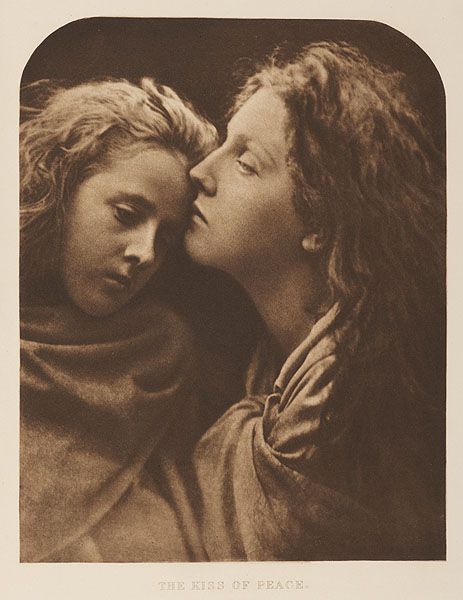
The Kiss of Peace
‘Kiss of Peace’-Cameron
Farewell of Saints Peter and Paul, showing the Apostles giving each other the holy kiss before their martyrdom. (Alonzo Rodriguez, 16th century, Museo Regionale di Messina).
Cameron’s ‘Turtle Doves’
I am currently working on my final paper. One of the pictures that I am analyzing is Julia Cameron’s ” Turtle Doves.” At first glance, the first thing that probably comes to mind is that it is a sensual picture. The two girls in the photo are embracing each other, and their lips are together in what seems to be an open-mouth kiss. Is it erotic? I argue that it its not quite, but rather it is representing devoted love. It seems as if Cameron is not only looking towards biblical scriptures for inspiration to create her ‘Madonna and Child’ photographs. It seems as if she is also getting inspiration to create her “kiss of peace.” The kiss of Peace” is common in the bible.
I Peter 5:14 states: Greet one another with a kiss of love”
The kisses in these images are not meant to be taken as sexual kisses. Instead, they are meant to represent what they did in a biblical sense.
Posted in Uncategorized