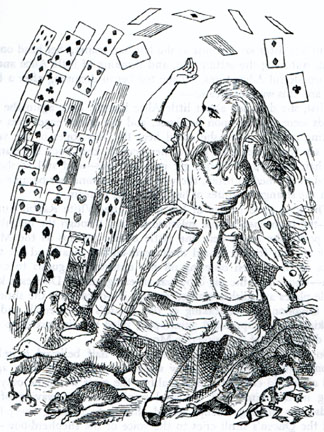
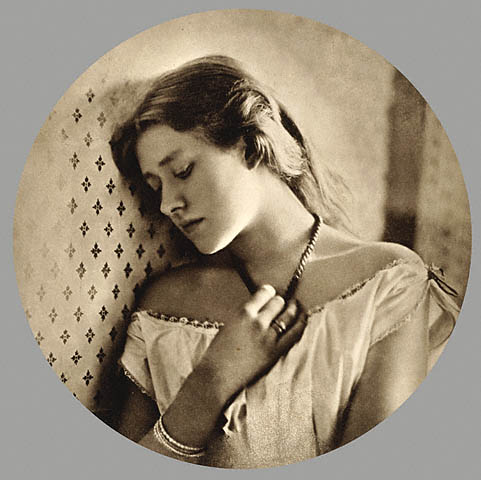
Posted by: chloecivin | December 8, 2011

Tattoos, as mentioned in Professor Martin’s Fenians in the Frame, were the most reliable forms of identifying wanted people/prisoners.  Seamen, and working men, also were generally heavily tattooed as well.  I learned, through a quick google search, that the first tattoo machine was invented during the Victorian Era, and supposedly little alterations have occurred.  Tattoos, especially during the Victorian Era, were quite popular.

Tattoos were also pretty prevalent amongst royalty, but were kept incognito….

Posted by: chloecivin | December 8, 2011

Alice in Wonderland/Cinderella/The Little Mermaid

Stories like Alice in Wonderland, Cinderella, and The Little Mermaid were all written for children and adults.  For American culture to find the stories acceptable, the plot essentially had to be tailored, or made “pretty”.  Messages had to be simple, uncomplicated, and served with a side of cute.  More importantly though was that everyone was to be rewarded in the end.  Take Grimms’ Cinderella as a prime example.

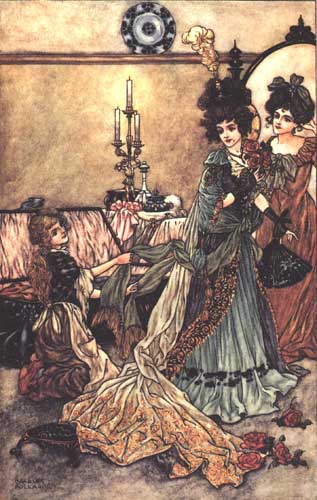
Disney's Step Sisters

In the text the evil step-sisters are fair- faced, beautiful, yet attain evil black hearts. Perhaps the concept of being beautiful outwardly but evil inwardly, is too difficult for our culture to understand conceptually.  In the film, Disney instead presents the step-sisters as buffoons and very homely.

More Accurate Image of Step Sisters

To adhere to American cultural expectations, Disney, and other mega film industries followed this recipe in making children’s films.  As Nathalie mentioned earlier in her post, my initial perception of Alice in Wonderland was very similar, if not the same as Disney’s famous adaptation.

Another example that came to mind was Hans Christian Andersen’s The Little Mermaid.

Disney's Little Mermaid

This story is in fact a bit anti-feminist in the sense that a young girl is willing to alter herself entirely to attract a mate.  This alteration includes her ability to speak, which in the film is not nearly as noticeable.  The prince rejects the mermaid,

Grimm, Anderson, and Carroll are very much misrepresented in popular culture.  In their original forms they present the complexity of childhood subjectivity.  The dark side, the intellectual side, and the function of anxiety are represented.  The moral in most of these stories has fairness and justice winning in the end, but not without terrible struggles.  In the American versions, the complexity of childhood subjectivity is reduced and simplified.  The dark side of our experience has either been erased or prettied up.  In the end of Cinderella for example, the evil step sisters had their eyes poked out by the birds that represent Cinderella’s dead mother.  This is considered fair punishment for their evil deeds.  Disney does not go near this sort of resolution, he has Cinderella forgive her buffoonish step sisters, as if they were never taken seriously.  This whitewashing does a disservice to the depth of our experience.

Posted by: chloecivin | December 7, 2011

Oxford University’s influence on Dodgson a.k.a Lewis Carroll

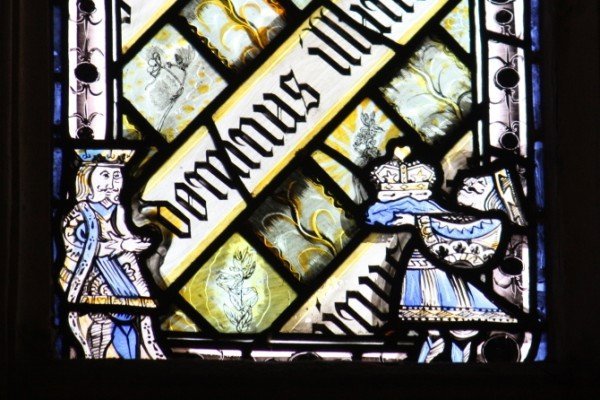
Charles Dodgson, widely known by his pen name Lewis Carroll, was very much inspired by Oxford University, where he attended college. He later became in mathematics at Oxford’s  Christ Church College Much is to be said involving the influences the college had on Dodgson during and after his tenure there.  It is apparent, from the stained glass window dedicated to Dodgson, that the college prized their notable alumnus…

Stained Glass Window at Christ Church College
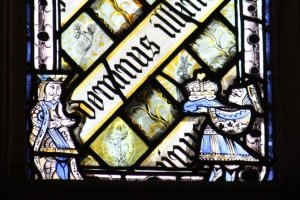
Stained Glass Window at Christ Church College

Today the college’s library holds some of the rarest, most beautiful editions of Dodgson’s Alice in Wonderland.  

Apparently one summer afternoon Dodgson was asked by a restless young girl to tell a zany story, which later developed into the famous Alice in Wonderland.  This young girl was in fact the daughter of the dean of Christ Church College.  I found an interesting article quoting Alice Liddell reflecting on this very special day.

“The beginning of Alice was told to me one summer afternoon, when the sun was so hot we landed in the meadows down the river, deserting the boat to take refuge in the only bit of shade to be found, which was under a newly made hayrick.  Here from all three of us, my sisters and myself, came the old petition, ‘Tell us a story’ and Mr. Dodgson began it.  Sometimes to tease us, Mr. Dodgson would stop and say suddenly, ‘That’s all till next time.’ ‘Oh’, we would cry, ‘it’s not bedtime already!’ and he would go on.  Another time the story would begin in the boat and Mr. Dodgson would pretend to fall asleep in the middle, to our great dismay.”

Clearly Alice Liddell served as Dodgson’s muse, as he wrote a story inspired by her.  His initial introduction to Alice was through her father, Dean Liddell, who apparently did not share as much affection towards Dodgson as his daughter had.  In fact, Alice’s parents did much to dissuade interactions amongst the two.

Several years ago, on a trip with my mother, I visited Christ Church College and learned a great deal about its influence on Dodgson.  Supposedly many edifices and people surrounding the school inspired characters found in the story.  The guide for the tour suggested that the infamous tardy white rabbit was in fact Dean Liddell.  In addition he showed us the gardens where Dodgson may have thought of the rabbit holes. The River Thames was also quite inspirational to Dodgson, which is where he orated the story for the first time. The tour itself was indeed quite magical, clearly showing the power the book had on all of its readers.

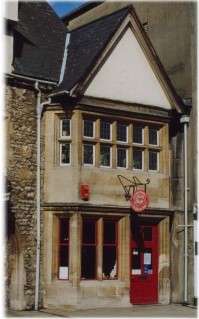
Old Sheep Shop a.k.a Alice's Sweet Shop

The fondest memory I have while being at Christ Church was visiting The Old Sheep Shop where Alice Liddell purchased sweets. Now the store is entirely devoted to Alice for her fans across the world.

Sources: http://www.aliceinwonderlandshop.co.uk/

http://www.alice-in-wonderland.net/alice5.html

Posted by: caitlinmonahan | December 6, 2011

Photography During the American Civil War

I came across this gruesome yet fascinating article by Christopher Benfey in The New York Review about Reed Bontecou, a surgeon-photographer during the Civil War. This article is relevant to our discussion of prison photography as well as photography in general as it gives a glimpse at what early photography was being used for in the United States. It is also a very sobering article about the realities of war. Warning! The images in the article are quite graphic.

http://www.nybooks.com/blogs/nyrblog/2011/nov/28/someone-elses-children/

The first set of three images is just like the Irish prison photography we looked at earlier in the semester. The same uncertainty about how exactly to use the new medium of photography is evident in these images just as it was in the Irish political prisoners’ images. The one on the right is seen from head to toe in a profile pose unbefitting the image’s purpose as identification and not a decoration.

The third image is also immensely fascinating as it appears upon first glance to be a very beautiful photograph of a young man in a sensual pose, set in an oval frame with soft vignette edges.  It reminds me a lot of the Julia Margaret Cameron’s photograph of Ellen Terry. What the photo actual depicts is a young man having his leg removed due to gangrene, making the facial expression and the body language of the young man as well as the photographer’s choices even more interesting.

The Civil War was unlike any previous war, greatly due to the rapidly advancing technology. Weaponry was becoming increasingly deadly and destructive and as a result injuries and surgeries were numerous. In addition to this, the introduction of photography allowed the documentation of said destruction and the rendering of the people affected by war and devastation to be captured forever.

Posted by: caitlinmonahan | December 6, 2011

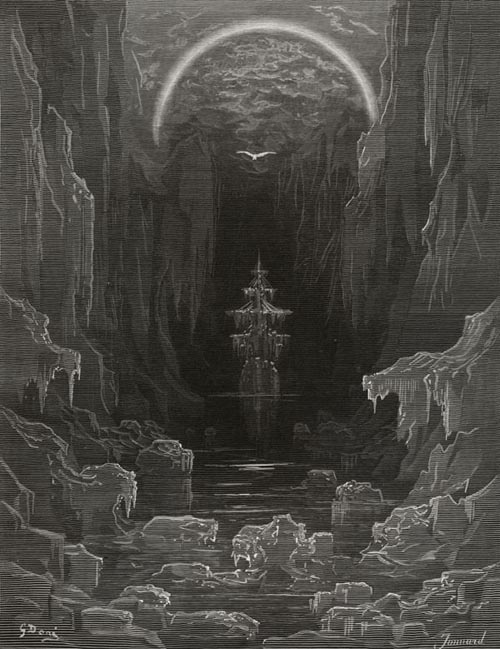
Gustave Doré’s “The Rime of the Ancient Mariner”

In my English 231 class on British Romanticism we have been reading poems by Samuel Taylor Coleridge such as The Rime of the Ancient Mariner from 1798, a gothic poem about a ghost ship and its captain.  I greatly enjoyed reading this poem and found it very enchanting and interesting, and was even more intrigued when I noticed the illustration that was offered along with the text.  The illustration was by Gustave Doré, the same illustrator of the book we looked at in class, Doré’s London. The illustration, as well as the poem, really stood out in my mind and I found myself examining the poem and illustration as we have been examining photography in class.

 Image

It is a hauntingly beautiful image of the ghost ship surrounded by ice, a quite different scene than the street images I had previously associated with Doré.  This illustration is beautiful for several reasons: its symmetry and even distribution of black and white as well as its ethereal qualities.  In the poem, the crew of the Mariner’s ship drops dead after he hastily kills an Albatross, causing angelic spirits to come temporarily bring them back to life.  I believe this image foreshadows the coming of the spirits, as the ice seems to be alive and moving, and the Albatross still soars in the sky.

This image conjures up ideas of religion, as well.  There is a defined halo in the sky above the ship; just like pictures we have seen of people with halos above their heads to signify godliness.  Here is symbolizes that the cursed ship is in fact protected by holy spirits.

Upon further research, I found an entire collection of Doré illustrations that accompany the Rime.  This one in particular reminded me of the London images we discussed in class:

 Image

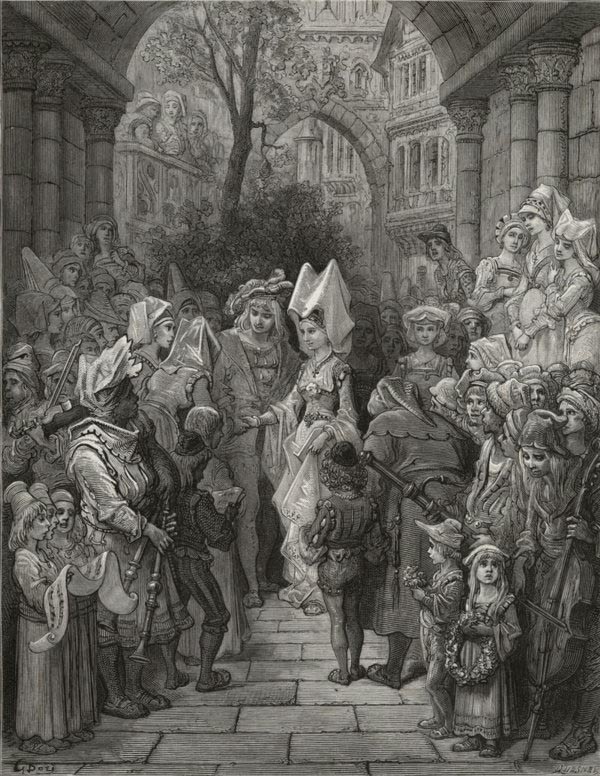
It depicts the happy, bustling wedding scene from which the Mariner abducts the wedding-guest so that he may tell him his story.  It is quite a lot like the image of Ludgate Hill in that Doré also chooses to create the illusion of people on top of people on top of people with little to no space between, and seeming to go on forever.  I believe Gustave Doré chose to use this same aesthetic as seen in the busy London streets to depict the jubilance and abundance of life that existed at the wedding which the Mariner interrupted in contrast to the vast emptiness of the ocean, especially when the crew was gone and only the Mariner remained.

Posted by: nathalieoates | December 6, 2011

Alice in Wonderland: Fairytale or Nightmare?

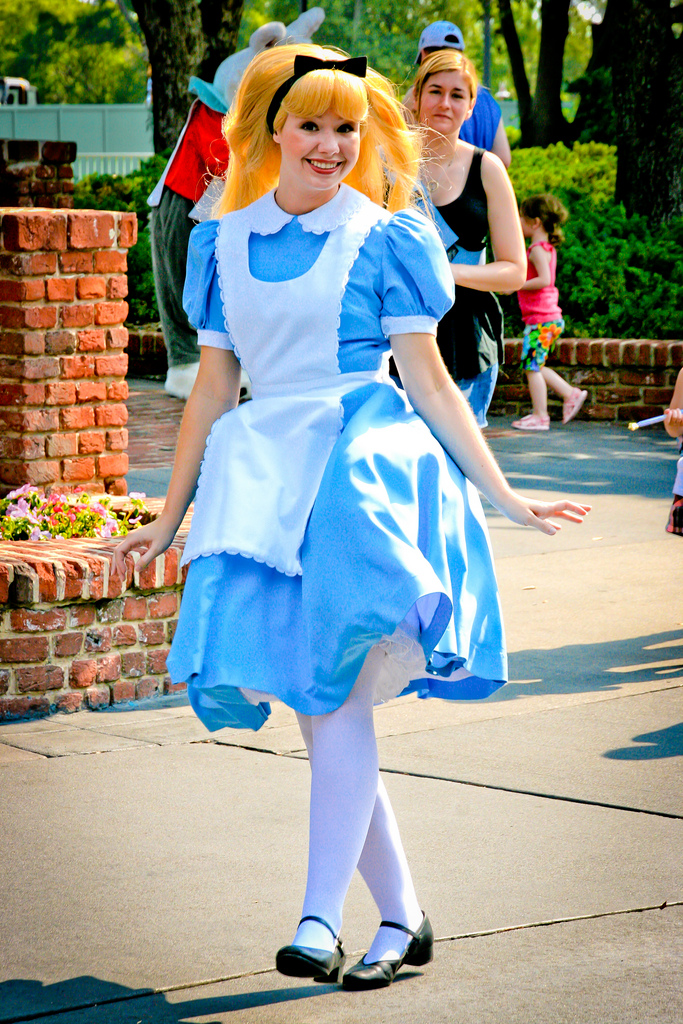
One of the most rewarding aspects of reading Lewis Carroll’s Alice in Wonderland for the first time was the fact that it was the original story, not illustrations or new connotations I have been exposed to for most of my life. I thought it was very refreshing to see a story portraying characters in different ways. It is also interesting that the one picture Lewis Carroll provided the illustrator with now dictates why Disney’s version held onto her classic skirt and apron outfit and long hair tucked behind a headband.

I opened the book thinking it would be a splendid tea party, but actually realized it was kind of scary. With each chapter, Alice seemed to approach a new hardship, instead of live a fairytale. This was not all fun and games. I was chronically nervous and slightly frightened when each new character was introduced. When Alice found the bottle labeled, “DRINK ME,” and was totally into consuming it, I was semi-paniced. Hopefully there would still be a happy ending?

This got me thinking: What do these connotations say about the original story? Society in general? Why isn’t it more popular for Alice’s story to be darker? Why wasn’t that sterotype preserved more? Perhaps that’s why Tim Burton made his new film – justice.

Before I read Alice, this is how I pictured her:

Image

Or possibly this:

Image

My dreams are not completely shattered, but it was interesting comparing what many children imagine Alice to be to Lewis Carroll’s original Alice. 

Posted by: millyc13 | December 4, 2011

Atrocious or Artistic?

The Victorian author Lewis Carroll (1832-1898), after his stories of Alice in Wonderland, is most famous for his photographs of nude, young girls. Although they caused little controversy at the time of their creation, many contemporary viewers find them hard to swallow. Similarly, the photography of Bill Henson (1955-  ) is viewed as unpalatable by many. Henson is like a modern day Lewis Carroll, famous (or infamous) for his images of children.  There is much debate over his nudes, with some claiming that they are not “artistic” but “pornographic”. Because of this, in 2008 his images for an exhibit in Sydney, Australia were seized by police just before opening night. These images, which included photographs of twelve- and thirteen-year-old girls, were considered indecent.

What is your stance on Carroll’s images? Henson’s? (Especially in light of the reading “Dream-Rushes” by Carol Mavor.) Why do they make many of us so uncomfortable?

 ——-

More information on and images from Bill Henson’s controversial exhibit in 2008:

http://www.news.com.au/gallery-0-1111120174216?page=1

Posted by: millyc13 | December 4, 2011

Julia Margaret Cameron and Joyce Tenneson

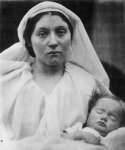
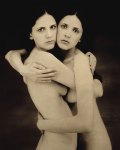
In the summer of 2009, I had the pleasure of seeing some original photographs taken by Julia Margaret Cameron (1815-1879) at the Portland Museum of Art in Maine. These moving and mysterious images are hard to shake from your mind, especially once you have seen them in person. What made them all the more exciting was their paring with contemporary photographer Joyce Tenneson (1945-   ).  Both photographers are interested in ethereal light and the subjects of women, children, and motherhood. The similarities in style and subject are quite striking:


What do you find similar? What seems different?

——-

For more images by Tenneson, her portfolio can be found here:

http://www.tenneson.com/content/portfolios

And more information on the exhibit “Kindred Spirits” can be found here:

http://www.portlandmuseum.org/Content/3693.shtml

Posted by: neroli36 | December 3, 2011

Alice as a Marketing Strategy

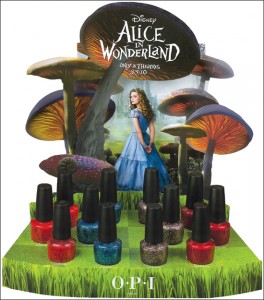
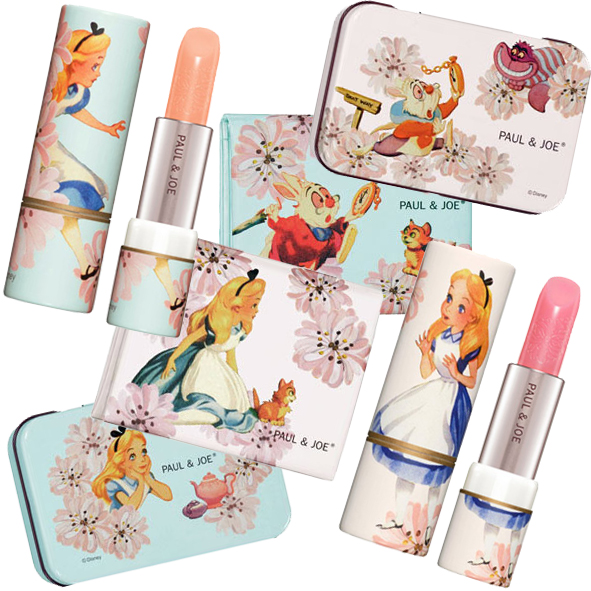
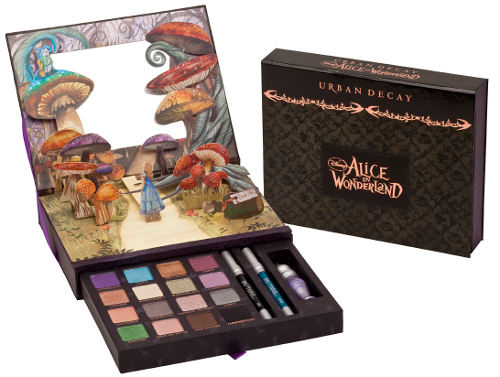
During the hype surrounding the 2010 Tim Burton film adaptation of Alice’s Adventures in Wonderland, many companies seized the opportunity to re-package already existing products or to release limited edition Alice in Wonderland themed items. I’d like to focus on 3 such endeavors–all by makeup companies targeting young to middle aged women. OPI, Urban Decay, and Paul & Joe all used the iconic Alice image in order to sell their products.

According to this quote from a WWD article on the Alice themed makeup: “Everybody wants to be somebody. If they like an actor or actress, they can associate a nail lacquer with their character, and it gets them closer,” Suzi Weiss-Fleischmann, OPI executive vice president and creative director said. “These collaborations draw the consumer more and more to a movie and a [nail lacquer] color.”

While the use of a popular trend or fad to appeal to large fan bases is nothing new in the world of marketing, what interests me is why these makeup companies decided to use the image of a little girl from a children’s story to sell beauty products (associated with sexuality) to adult women. If we take the aforementioned quote at face value–I’d like to ask what do modern women see (or read) in Alice that makes them want to be closer to the character? What does Alice embody that makes women connect with her and want to buy products stamped with her image?

Is it a nostalgia for childhood? Is it because consumers are simply huge fans of Alice in Wonderland? Perhaps it’s the cutesy, vintage-y aesthetic? Maybe women just want to attain that innocent, doe-eyed childish look?

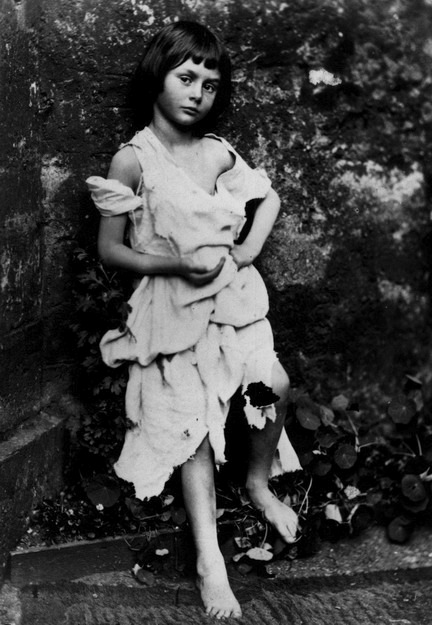
As much as I love Alice in Wonderland and the many permutations her image has taken since John Tenniel’s illustrations and the Disney animation that made her an icon, at a second glance these products make me vaguely uncomfortable. Perhaps it’s because they remind me of Lewis Carroll’s photographs of the young girls he had relationships with. These pictures have been perceived as  Lolita-esque, making some viewers uncomfortable about the voyeuristic, possibly inappropriate, possibly sexually predatory situation that may have occurred during the creation of the photos. Carol Mavor’s analysis of sexuality in Victorian photographs in her book, Pleasures Taken, has made me wary of what at first seem to be innocent pictures. (Below is Alice Liddell posed as a beggar girl, shot by Lewis Carroll)

Perhaps I’m reading too far into the packaging on these beauty products. It should be keep in mind that the targeted audience is undeniably different and very far removed from the original Victorian recipients of the Alice in Wonderland story. After all, Tim Burton’s adaptation is based on fanfiction about a much older Alice, which greatly changes the dynamics of the narrative.

Another quote from the same WWD article: “Burton is dark and edgy, yet everything he does is really beautiful at the same time,” said Wende Zomnir, Urban Decay’s creative director and co-founder. “I felt it was a perfect match for Urban Decay to do a palette based on his vision.” 

Posted by: neroli36 | December 2, 2011

Alice, Diagnosed

One of my favorite aspects of Alice’s Adventures in Wonderland is the many different ways it can be interpreted. Some people view it as a coming of age story while others might see it as the story of a mentally ill (definitely amnesiac, possibly schizophrenic), drug-addled lunatic who can’t tell the difference between reality and fantasy.

Phoebe in Wonderland (2008) is a movie adaptation of Alice in Wonderland starring Elle Fanning as a young girl learning to deal with Tourette’s syndrome (a neuropsychiatric disorder that is characterized by physical or vocal ‘tics’ such facial movements or outbursts of obscene words). The adults around her do not know how to help her with her behavioral issues, and her mother is uncomfortable and frightened of burdening/labeling her daughter with the stigma of a mental illness. Phoebe eventually works through things with much imagination and participation a school production of Alice in Wonderland.

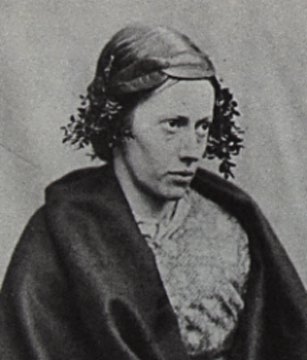
I think this movie is very interesting because it combines bits from both ends of the spectrum of interpretation (navigating childhood, struggling with a mental disorder). In particular it reminded me of our discussion in class the other day about photographs of women in asylums and ‘Ophelia types’–women suffering from melancholia or depression. These photographs were meant to show how mental and psychiatric illnesses were written upon the body. We viewed a selection of photographs by Julia Margaret Cameron and Dr. Hugh Welch Diamond of which two in particular stuck with me. This first one is by Dr. Diamond–he photographed women in asylums, often dressing them as Ophelia to represent their illness.

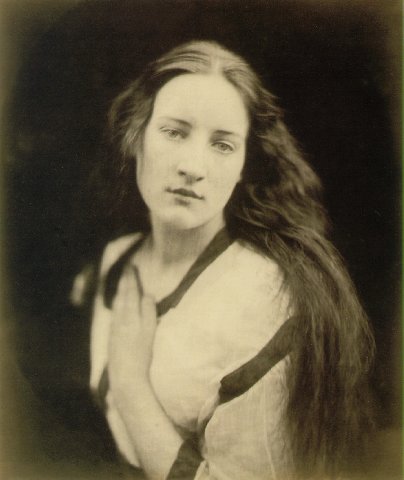
This second photograph is by Julia Cameron of her maid. It is titled ‘The Echo’, referring to the tragic greek myth about a nymph who was cursed to only be able to repeat what others said.


In both these images, the women represented are presented as sufferers of melancholia, which manifests itself through their physical appearance, especially in their wild hair and strange dress. During the Victorian era, a woman’s unbound hair could signify sexuality gone astray or madness. So I find it interesting that John Tenniel chose to illustrate Alice with long, wild hair, which is very reminiscent of many of Julia Margaret Cameron’s women. Granted, unbound hair in children was probably more of a symbol of innocence. But I think it’s important to note that Lewis Carroll was not very happy with John Tenniel’s final portrayal of Alice–Lewis Carroll felt that the drawings should have been more childlike and innocent and less womanly.

« Newer Posts - Older Posts »

Categories