Posted by: neroli36 | December 2, 2011

Inspired by Alice #2

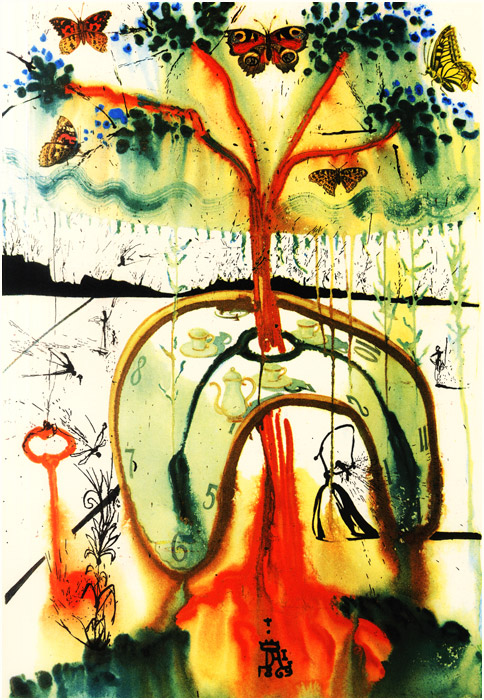
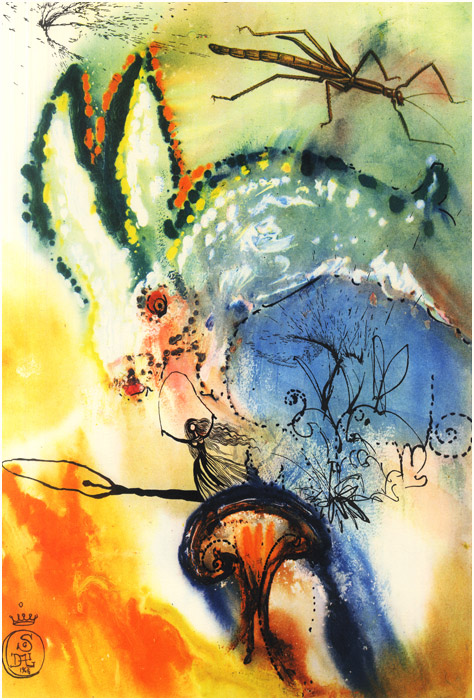
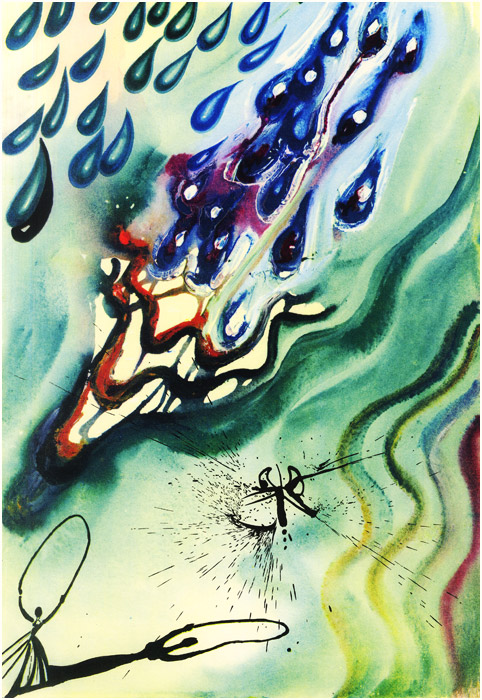
In 1969, Salvador Dali created 12 heliogravures and 1 etching depicting different scenes from Alice’s Adventures in Wonderland. These images were then published as a book with the original Alice in Wonderland text. I’ve posted my three favorites from the collection below. You can view the rest of the pictures via this link.

Down the Rabbit Hole:

The Pool of Tears:

Mad Tea Party (in which you can see Dali’s iconic melted clock):

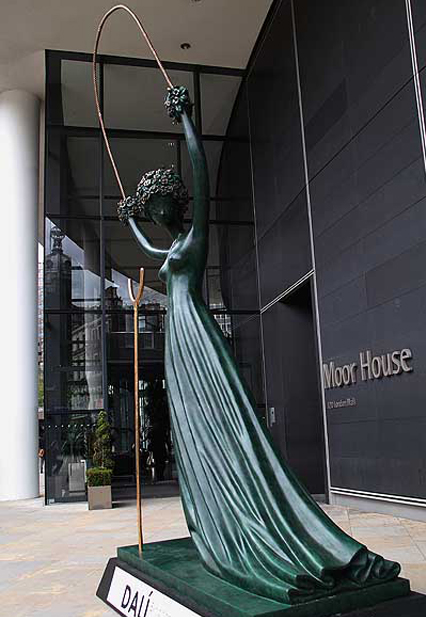
Dali also created a bronze sculpture of Alice in 1977, about 5 meters high titled “Alice in Wonderland”. It is similar to his earlier illustrations of Alice as a girl with a jump rope over her head in mid-jump, but the sculpture has roses in place of hair and hands. It is currently on display in London.

Posted by: neroli36 | December 1, 2011

Inspired by Alice #1

What do these pictures have to do with Lewis Carroll’s beloved children’s book, Alice in Wonderland?

As many of you know, Alice’s Adventures in Wonderland have been, and continue to be very influential and a source of inspiration for many literary and artistic projects. One of my favorite things about Alice in Wonderland is the many ways it can be interpreted and I am constantly surprised when I discover references to it in unexpected places.

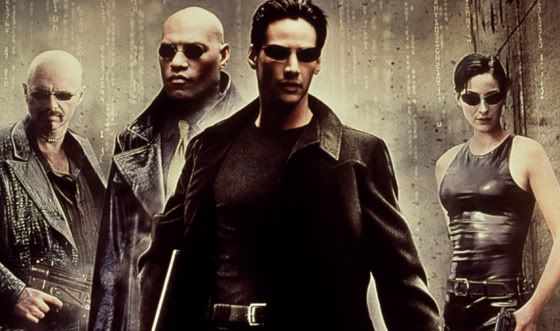
One of these surprise references was in the 1999 movie, The Matrix. Directors of the movie, Andy and Larry Wachowski use inspiration from Alice in Wonderland throughout the trilogy. The most obvious references are at the beginning when the protagonist, Neo, is told to “follow the white rabbit” which will lead him to Morpheus, his eventual mentor. Morpheus offers him a blue pill, which will erase his memory and return him a life of normalcy, or the red pill which will allow him to discover to truth: “you stay in Wonderland, and I show you how deep the rabbit hole goes”. Neo takes the red pill and enters the Matrix through a mirror like Alice when she climbs through the looking glass. Themes of dreaming, waking, questioning reality and questioning identity are central to the plots of both Alice in Wonderland and The Matrix. Here is a clip of Morpheus offering Neo the pills.

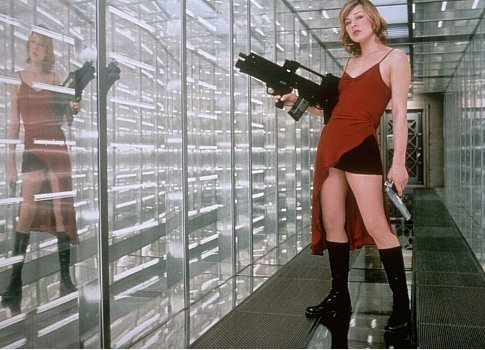
Resident Evil is another science-fiction-y movie that takes cues from Alice in Wonderland. The heroine’s name is Alice and she must enter the Hive, a genetic research facility (much like going down the rabbit hole) in order to defeat an artificial intelligence system called the Red Queen. You can see Alice meeting the Red Queen in the first 30 seconds of this clip (it gets rather gruesome after that):

Posted by: wmellin | November 29, 2011

Photo-shopping vs. Staging: what’s the difference?

We’ve been talking over the course of the semester about the staging and construction of photographs. I just read an article in the New York Times about the photo-shopping and editing of photos (of celebrities in particular). Here’s a link to the story: http://www.nytimes.com/2011/11/29/technology/software-to-rate-how-drastically-photos-are-retouched.html?src=me&ref=general. It’s interesting to think about changing the scene presented in the frame before the photo has been taken versus after the fact. I feel as if I’m not seeing the “true” image if it has been altered, yet a similar argument can be made for staged photographs from the Victorian period. For example, how does updating the photo of George Clooney by darkening his eyebrows compare to Julia Margaret Cameron’s portrait of Thomas Carlyle, where the light shines on his face in a particular way and looks possibly chemically altered? The “truth” conveyed somewhat depends on comparing a final image to its original. In the second half of the 19th Century photographers had to be creative with their technology to get their desired effect; now photographers – more so editors in the context of the New York Times article – actually have the technology to achieve the perfect image after it’s been taken.

What do readers think about editing, enhancing, or even supplementing images before as opposed to after the photographic moment? Do the different technological approaches alter the integrity of the image in the same or different ways?

Posted by: wmellin | November 29, 2011

The invisible hands behind The Invisible Hand

Towards the end of his chapter “The Great Exhibition of Things,” Thomas Richards relates the transformation of the commodity as bland in 1776 to the commodity as spectacle in 1851. He grounds this discussion with Adam Smith’s Wealth of Nations: “’the market price of every particular commodity is…continually gravitating towards the natural price’ (162)…Clearly Smith believes himself to be describing the workings of the commodity in essentially neutral terms” (67). Richards writes of Smith’s “Invisible Hand” – the mysterious arrival of a market at the intersection point of the downward sloping demand and upward sloping supply curves to create an equilibrium price and quantity for a given good or service.

In this chapter Richards highlights the juxtaposition between the work that goes into supplying the objects displayed at the Great Exhibition and the leisure spent enjoying said presentation. Twenty-five pages earlier he describes this dichotomy, “Though the manufactured objects displayed were often bright and new, Mayhew cannot ignore ‘the sunken eyes and other characteristics of semi-starvation’ that he sees on every face [of streetsellers]” (42). Now, street vendors were not necessarily the ones crafting the objects housed in “The Chrystal Palace,” but the conditions and treatment of factory workers in Industrial Great Britain is no secret. The workers who made the commodities that guided The Invisible Hand to the free market’s equilibrium were themselves invisible hands, intermediate labor inputs who created final, finished and polished objects yet were unseen in the goods’ ultimate display.

The Invisible Hand is a fascinating metonymical phrase because it captures the labor involved in a free market yet simultaneously negates its presence in the final stage, or the acting out of what constitutes the market: buying and selling.

Posted by: neroli36 | November 28, 2011

Victorian Literature in Webcomics

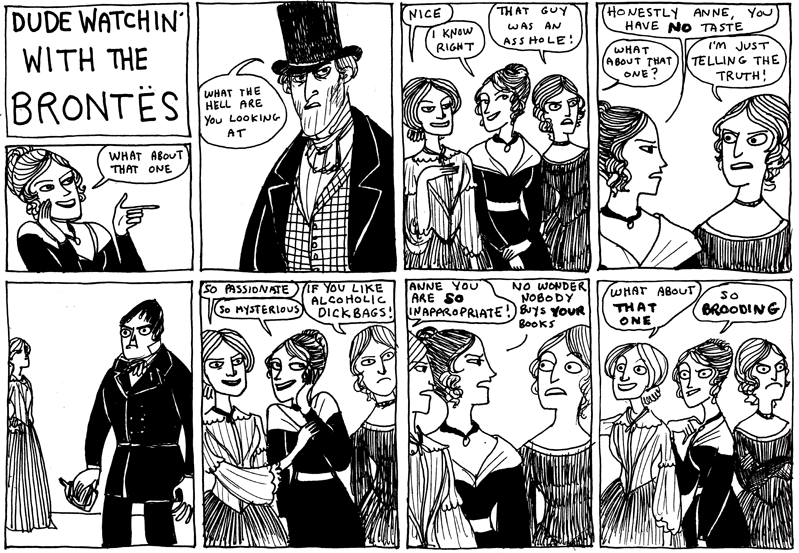
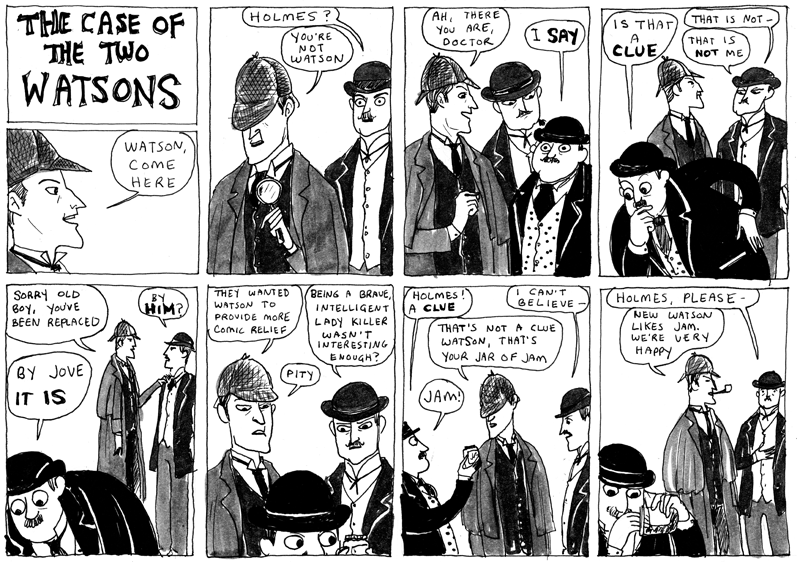
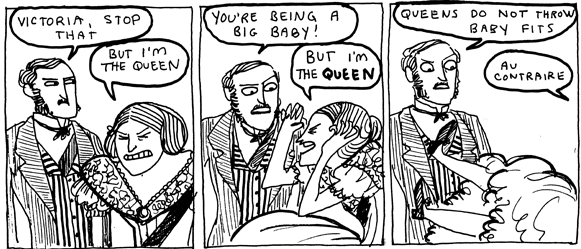
Although this is not 100% related to Victorian literature and visual culture, what I am about to introduce does involve some Victorian literature and is definitely visual. Hark! a vagrant is one of my favorite webcomics. If you enjoy this kind of humor and have some time on your hands, I recommend checking it out! As you will see in the 3 examples I’ve posted below, the author, Kate Beaton, frequently makes fun of literary characters and historical figures.

Titled Dude Watchin’ with the Brontes. This comic makes fun of Anne Bronte (the slightly less popular author out of the Bronte sisters) and her taste in men.

In the Case of Two Watsons, Beaton makes fun of the more modern version of Watson as a bumbling sidekick instead of the original intelligent, curious doctor and Holmes’ confidant.

Happy Victoria Day discusses some of the more intimate aspects of Victoria and Albert’s relationship. You can follow the link to view the sex jokes.

Hope you enjoyed the comics!

Posted by: neroli36 | November 28, 2011

The First Ikea

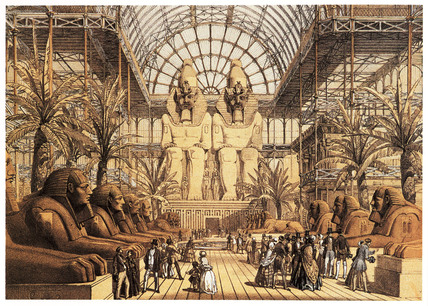
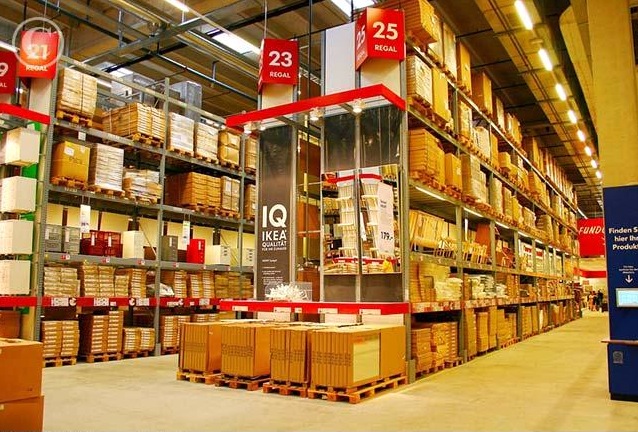
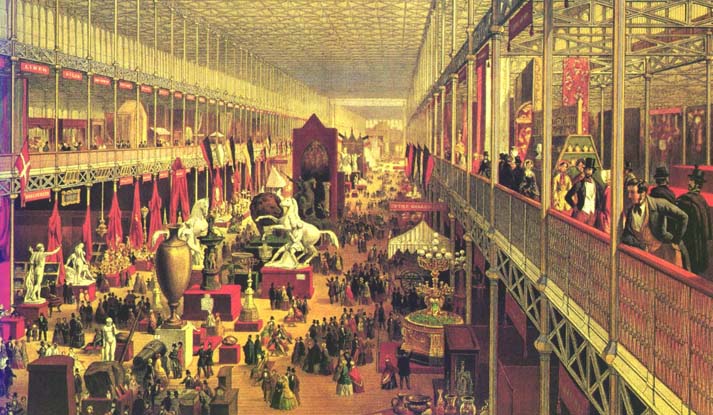
We were discussing the Crystal Palace a few weeks ago in class. The Crystal Palace was home to the Great Exhibition of 1851, which was meant to display the latest technology and fashionable objects from all over the world.
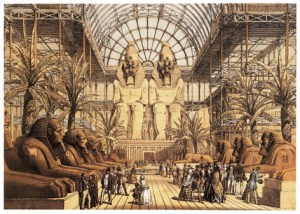
The article we read by Thomas Richards, “The Great Exhibition of Things” combined with our class discussion made me think of Ikea, which is similar to the Crystal Palace in many ways: the gigantic size of the typical Ikea warehouse is comparable to the 990,000 square feet that made up the Crystal Palace. The way Ikea forces you to walk through the entire store is very much like the traffic flow in the Crystal Palace. The fact that both spaces are so full of material objects that it’s impossible for visitors to really ‘see’ everything.

One of the purposes of the Great Exhibition was that it was meant to inform an aesthetic, especially of the middle class. It told the middle class what kinds of things they needed to buy in order to lead a middle class lifestyle and what a middle class life should look like. Likewise, Ikea’s room displays do the same. Who wouldn’t want a room that looked this nice and modern?

The Great Exhibition created a new sense of need and desire with Victorian consumers. As Richards noted, “the exhibition created modern merchandising, which was both a way of talking about commodities and increasingly, a way of looking at them” (39). However, the items showcased in the Great Exhibition were not for sale. Consumers had to go elsewhere to buy them. Similarly, customers at Ikea walking through the room displays must go down to the warehouse area with the item code in order to purchase it.
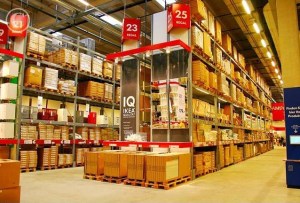
Thus you can see how the Great Exhibition was the precursor to our modern day stores, like Ikea. I’d like to end this post with one last image and quote that I think give an accurate portrayal of the contents of the Crystal Palace:
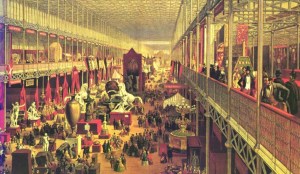
“The aisle itself, father than they eye can reach, is studded with works of art; statues in marble, in bronze, in plaster, in zinc; here is a gigantic Amazon on horseback, there is a raging lion…Busts, Casts, Medallions, and smaller Bronzes abound; with elegant Clocks, Chandeliers, Cabinets, &etc” (Richards, 27). I think most people who have been to Ikea have similar memories or feelings about the space–at least, I definitely do: a billion different bookshelves next to a billion different lamps near a hundred kinds of organizers, etc. It’s an overwhelming place.
Posted by: stephblakeman | November 15, 2011

Robert Crumb: The Modern Mundy

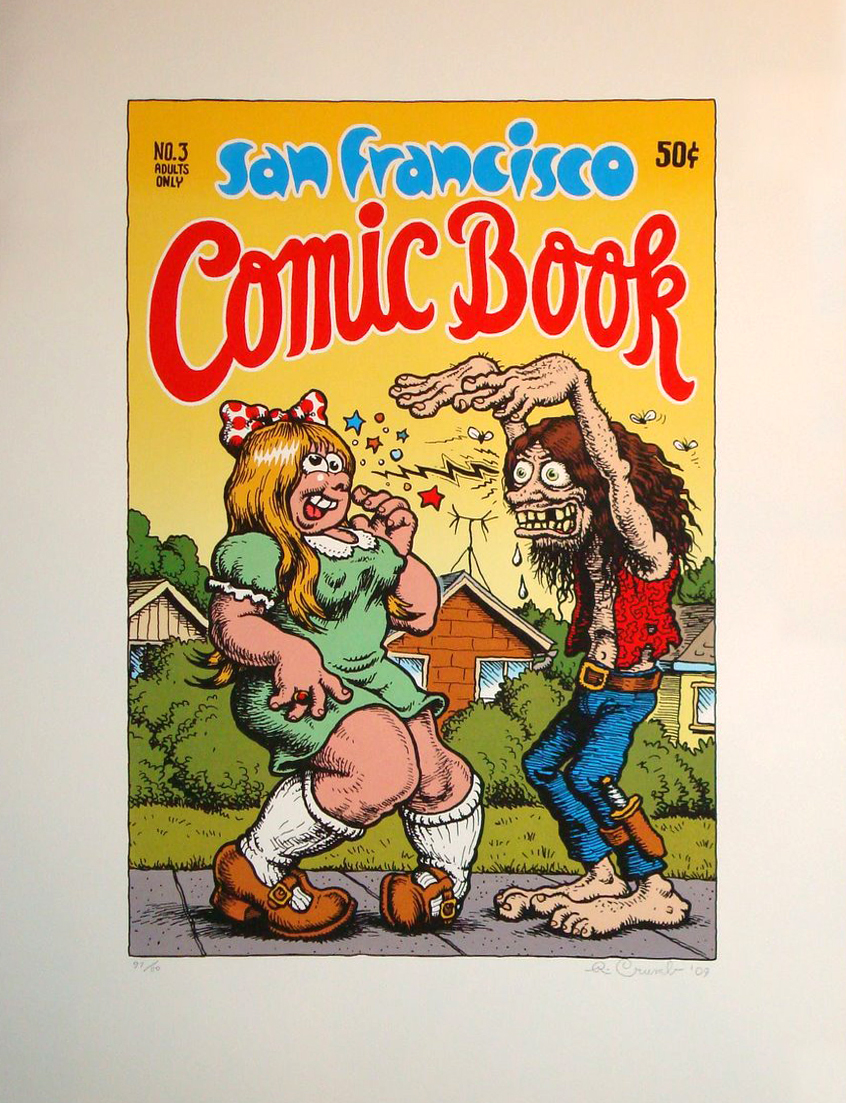
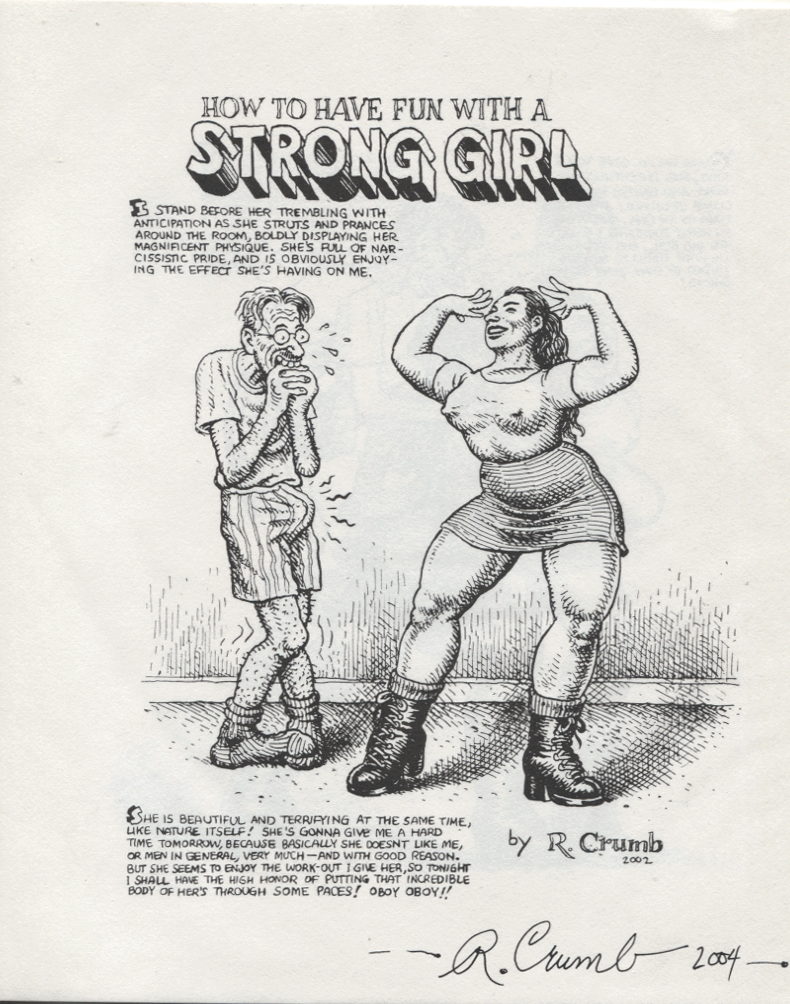
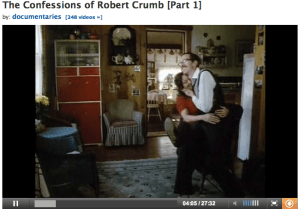
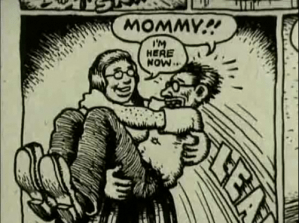
Recently, I watched a documentary about the cartoonist Robert Crumb, called The Confessions of Robert Crumb. Some background: Robert Crumb is a self-described “underground cartoonist.” He made his start in the 1960s, and was part of the counterculture movement in San Francisco. He is known for his often irreverent, always obscene comic strips.  Many of his cartoons portray Crumb next to large, Amazonian women, for whom he professes his lust, desire, and love throughout his work. He says, “See, I’m attracted to the big strong women. The physically superior type; powerful all-American brat girl.”

There are many obvious similarities between the artistry of Mundy and Crumb.  Much like Mundy, Crumb was taken with the strong, atypical female form. Both obsess over women whom they categorize based on their class (“Brat” and “Laborer”). Lastly, and most striking to me, both men portray their own masculine forms as slight, effeminate figures next to Amazonian, fetishized representations of women.

Both Mundy and Crumb involve their wife in the infantilism fetish they so yearned for. Crumbs wife, like Cullwick, “also lifted him in her brawny arms, cradled him on her ample lap and “nursed” him like a child” (McClintock, 137).

Crumb was not interested in the masculinization of the female form, per se.  His women retain their womanly figures, and their breasts and behinds are exaggerated. Unlike Mundy, who was interested “not because of any deliberate masquerade on their part, but because their labour masculinized their bodies” (96), for Crumb it is the woman’s own, hyperbolized form that renders her masculine in relation to his frail, delicate body.  Her sexual virility renders her sexually superior to Crumb, and therefore masculinized through his eyes.

Two men, assigning their (would it be 0ld-fashinoned to call them perverted?) sexual fantasies onto the bodies of women…  McClintock does a fascinating job of breaking down the societal taboos that so enchanted Mundy, thus presenting us an imagination of Victorian life, that behind their class and racialized disguises was an overt sexualization of the working class.  Mundy couldn’t help himself.

Posted by: oliviajane16 | November 15, 2011

Modern Soap Advertisements and More!

I was watching something on Hulu the other day and I thought one of their advertisements was ridiculously appropriate given our conversation last class about the functionality of soap versus soap as a commodity. Here’s the ad:


My personal favorite is the bacon and eggs soap. On a more serious note, I think it’s really interesting that Ivory is still using descriptors such as “pure” and “simple” to market their product. We talked a little bit already about the implications of marketing something as providing purity and the racial undertones that “purity” carries, and while in this context that may not be the case anymore it is still an interesting and somewhat loaded word choice. Also, simplicity draws on the idea of how a woman’s role within the home began to shift towards perfection and maintenance of status without revealing the labor behind said maintenance. Soap to begin with is not a very complex idea and yet it’s so effective to market it as simple because it eliminates labor that you never even realized you could (or needed to) eliminate. It’s not until after the new gadget comes along that you realize all the ways in which your life needs “simplifying”.

On another note, this is an older advertisement from a couple of years ago that I think just illustrates marketing at its finest and how every detail of an ad is chosen to illicit a specific response. Also, all those camera angles really do make her seem dynamic.


Posted by: Rachel Czwartacky | November 13, 2011

Darwin Cartoons

I started looking at Playing with Pictures this weekend. It’s a fabulous book and the collage images are all striking–some beautiful, some clever, some creative, some just odd. But I think the image I loved most was not one of the photocollage pages, it was a little satirical cartoon on page 29, taken from Punch magazine on different ways to fly, or “Suggestions for Aerial Navigation.” Amongst a host of other purposefully ridiculous suggestions for human flight, one method takes a jab at Charles Darwin and the theory of evolution, depicting a man standing on a rooftop flapping until he gradually develops wings and birdlike features (the copy reads “This plan requires much Patience and Self-Denial”).

I thought this cartoon was fantastic. Siegel says in her introductory essay that Darwin occasionally featured into women’s photocollages (often with people’s photos pasted onto monkey bodies, often in family trees) so that they could show they were aware of current trends, including the scientific ones. So in that way usage of Darwin is like later uses of fans and croquet–a useful visual metaphor and a chance to poke fun at something in vogue.

But what I love most about this image, I think, has nothing to do with photocollage: it is the way in which it is very much like a modern political cartoon. Sometimes old-fashioned humor can seem just that–old-fashioned, and the jokes don’t really work in the same way ours do now. Similar to the way in which we viewed the advertisements in class the other day as too bulky with images and especially copy, our sensibilities regarding humor have also changed. This cartoon, though, I thought felt modern. It was smart, it wasn’t text heavy and it didn’t smack you with the joke. It didn’t go overboard with symbolism, the way the simianized Fenians did, and there were no labels on relevant parts of the image to make sure you got the joke (think “imitations” in the Matchless Metal Polish advertisement).

Posted by: wmellin | November 11, 2011

Re: The Lost Text of Doré

Olivia, thanks so much for finding and writing about the text for Doré’s images. In my limited viewing of the text (like Rachel I’ll peruse it more thoroughly later), it does not really change my mind about Doré’s images. For example, one of my favorite images is “Over London – By Rail,” number 116 in our book and about 120 on the Tufts site (http://hdl.handle.net/10427/15303). The text reads, “the massing of the poor…is at the root of all evils which afflict most of the great cities of Europe.” This statement is certainly true, but in this print I see people at work doing chores of the home and living in close quarters, not utter destruction as intense as “the root of all evils.” The extended caption pinpoints a theme in the image, but not one that I could not have picked out on my own.

The themes that stand out to me are neither mentioned in the text nor are they based in the actions the image depicts. Rather, they are embedded in the staging of the action. While a focus on the subjects alone provides insight about their lives, it neglects the fact that the images’ composition tells a story as well. Doré builds this image with intense that reminds me of Renaissance art and architecture: it is ordered and structured. The Roman arcade bridge that the train crosses in the background ironically suggests that the fascination during the Renaissance with geometry and structure has become the hyper-focus on the factory during the Industrial age. The train is moving forward while puffing smoke into the scene, hinting that the English have replaced the Romans in the tradition of innovation, empire, and “progress.” Further, the arch in the foreground of the print invokes a cathedral, with the thoroughfare as the nave, the chimneys forming a colonnade, and the bridge as the crossing. The viewer of course cannot see beyond the crossing to the apse, one of the most sacred parts of a cathedral.

This metaphor is rather odd, and probably is not mentioned in the text because the scene’s resemblance to a cathedral could be either circumstance or an observation Doré chose to develop. Olivia makes an excellent point that Doré’s illustrations only give the viewer “one side of the story,” for this image in particular that is not necessarily the case. The cathedral-like composition is an artistic element in the image, not a factual one. It could not really be included in the accompanying narrative because it is an opinion about the image, not a fact. Smith and Thomson drop their opinions here and there in their narratives, but they are a little easier to pick out because the viewer can try to ground them in the fixed images in the photograph.

I do not think that adding text to Doré makes it more comparable with Thomson because with or without supplemental narrative, the former images are sketches while the latter are photographs. Both mediums can tell their own stories without words, but Doré’s work more so than that of Thomson because he can elaborate on the objects he chooses beyond staging alone. In a way, the images are almost more “accurate” without an accompanying text because the highlighting of one element in an image automatically deemphasizes others. The word “accurate,” of course, is both charged and relative: Doré’s “Over London – By Rail” could be a perfectly accurate expression of the story he wanted to tell with this image, but said story and that of reality may not be (and probably are not) the same.

« Newer Posts - Older Posts »

Categories