Posted by: deeyamirch | September 18, 2011

Charles Dickens’ Home

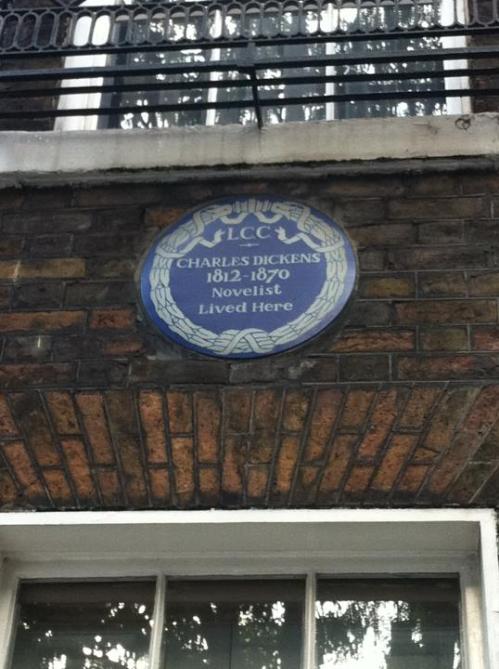
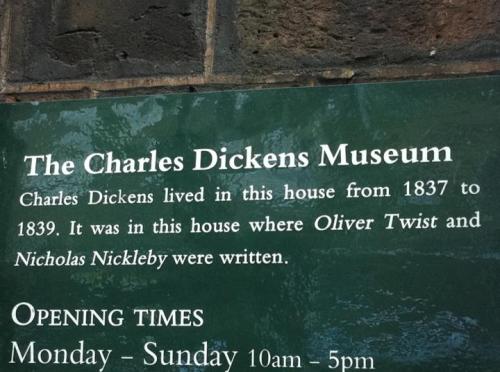
While I was at home this summer, I went to the Charles Dickens museum. This is where he lived from 1837-1839, and where Oliver Twist and Nicholas Nickleby were written. The blue plaque scheme was created in 1866 in order to commemorate “the link between notable figures of the past and the buildings in which they lived and worked.”

I also found it interesting that many of the areas described by Dickens still exist in London today, such as Temple Bar and Lincoln’s Inn, both in close proximity to his home.
 

Posted by: ellenlarson | January 12, 2011

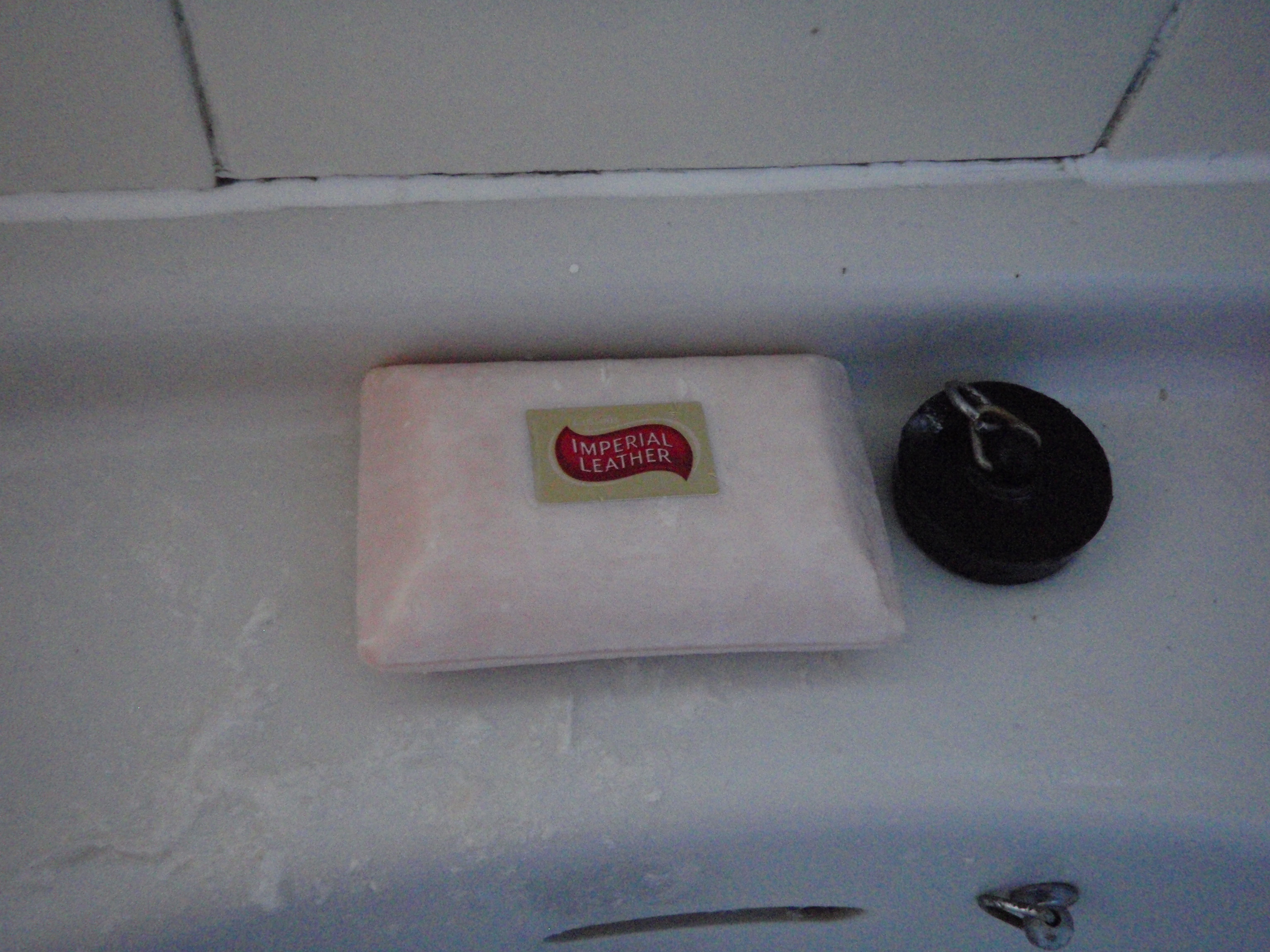
Imperial Leather Soap

I’ve gone to England for J-term and what should I find on the bathroom sink but this?


Posted by: anniebutts | December 21, 2010

In the spirit of Christmas…

Who can forget Charles Dickens’ “A Christmas Carol?”

Here are a few good lines from the story:


“And it was a very uncommon kind of torch, for once or twice when there were angry words between some dinner-carriers who had jostled each other, he shed a few drops of water on them from it, and their good humour was restored directly. For they said, it was a shame to quarrel upon Christmas Day. And so it was! God love it, so it was!”


“External heat and cold had little influence on Scrooge. No warmth could warm, no wintry weather chill him. No wind that blew was bitterer than he, no falling snow was more intent upon its purpose, no pelting rain less open to entreaty.”


“I will honour Christmas in my heart, and try to keep it all the year. I will live in the Past, the Present, and the Future. The Spirits of all Three shall strive within me. I will not shut out the lessons that they teach. Oh, tell me I may sponge away the writing on this stone!”


Happy holidays and safe travels everyone!


Posted by: siobhananderson | December 17, 2010

Depictions of Victorian Children and the Pre-Raphaelites

As I’ve been working on my final, I’ve started to notice a strange pattern across many photographs of Victorian children: there are very few little boys and many little girls, or genderless figures. Many theories crossed my mind as to why this might be so, and I began to think a little bit about the Pre-Raphaelite painters we talked about earlier this semester. The Pre-Raphaelite Brotherhood founded in 1848 in London was established by three young and rather zealous painters: William Holman Hunt, Gabriel Dante Rosetti and John Millais. The purpose of this Brotherhood was to establish a new movement of painting that would extend back to the time of ancient Italian painters, those who came before Raphael. The Brotherhood represented a rejection of classicism and mechanism in the Victorian Era: the paintings produced in this movement sought to discover truth and beauty through nature, in the way the artist saw them; they refused to simply copy what other artists has perceived and created before them. In this way, famous literary women and young girls became the muses of many Pre-Raphaelites for what they represented; beauty, grace and often tragedy. There were very few truly utterly tragic and beautiful male heros in Pre-Raphaelite depictions, save for perhaps that of Christ.

This trend allowed me to see collections of photographs of Victorian children in a new light. Perhaps just as the Pre-Raphaelites preferred to depict women for their mystery, and ultimately tragedy, so did Victorian photographers such as Julia Margaret Cameron and Charles Dodgson.

I’ve included a photograph by Cameron and a painting by Arthur Hughes. Both show women, (Hughes is actually an adaptation of the character of Ophelia from Shakespeare’s Hamlet) in a rather mysterious or slightly troubling way…both women are turning away slightly from the gaze of the onlooker. Interestingly enough, they were both produced in the same year.

Gardner's Daughter, Julia Margaret Cameron, 1865


Ophelia, Arthur Hughes, 1865

Posted by: labbott12 | December 13, 2010

John La Farge and John Thomson

Over Thanksgiving break, I visited the Yale University Art Gallery with my parents and was able to view an exhibit on John La Farge’s paintings he did during his travels in the South Seas. I made the connection to Thomson’s Victorian Street Life in that La Farge accompanied many of his paintings of Samoans with notes on the subject. This double documentation of image and notation is what I focused a lot of my midterm paper on, and so the correlation caught my attention.

It is easy to view an image and take what you will from it, however, in instances of documentation, this ethnographic notation that La Farge and Thomson both add to their images is crucial in giving the viewer a specific goal in observing their work. The textual documentation reveals much of what the image leaves unsaid.

The marrying of word and image is an ongoing project. We are experiencing it right now as we sift through our research for our final projects. The two illuminate each other and produce meaning together constantly.

Posted by: anniebutts | December 13, 2010

Tenniel vs. Carroll

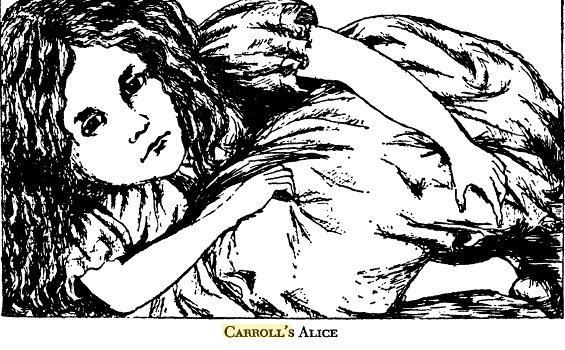
As I was doing research for my final paper, I came across an interesting article about the illustrations in Alice’s Adventures in Wonderland. Pictured in the article are both Tenniel’s illustration (which we saw in our version of the story) and Carroll’s depiction of Alice.

Below, you can see the differences between the two.

This semester I’m taking a drawing class, and it’s been really interesting to see how everyone in the class has a different interpretation on the same object or assignment. This made me start thinking about the disparities that could be present between the writer and the illustrator. They will likely have different perspectives on how a particular scene should be portrayed, and since both aspects (text and pictures) are very important to a story like this one, it creates a potential problem for the reader. Which is more reliable: text or picture? writer or illustrator?


Posted by: emmadamato | December 10, 2010

I plan on making the only truly successful Dorian Gray movie…

staring the real life Dorian Gray

you’re welcome

Posted by: sabinabw | December 8, 2010

Ownership, yet again!

As we have talked about in class about the ownership of a painting/photo/piece of art, it’s seen again here in Oscar Wilde’s The Picture of Dorian Gray.  Basil will not exhibit Dorian’s portrait, as he says

“every portrait that is painted with feeling is a portrait of the artist, not of the sitter.  The sitter is merely the accident, the occasion.  It is not he who is revealed by the painter; it is rather the painter who, on the coloured canvas reveals himself.  The reason I will not exhibit this picture is that I am afraid that I have shown in it the secret of my own soul” (9).

So according to Basil, the subject is not the owner of the painting because the painter reveals himself through the subject – the subject is another means of communication, as the portrait itself is.  Further on, Basil states that he has put his soul into the painting, and he can’t bear to exhibit it, because he doesn’t want to expose himself to the world.  It’s safe to say that Basil sees himself in the painting, so in a sense it is his painting, but later on he explicitly states that the painting is Dorian’s.  Ok, so who’s is it really? Dorian really doesn’t want it because it reminds him of his youth, even though he is still young, and for Basil, it’s his best work and he can’t be around it.  Who really owns the portrait?!  Seems like this question of ownership will always be asked and never really answered.

Posted by: Laurel | December 8, 2010

The Girlfriends of Dorian Gray

Not really an analysis of the novel itself, but an interesting related tid-bit: We have an old family friend who also happens to be the author of some really insane sci-fi/fantasy books. Gregory Frost published a collection of short stories called Attack of the Jazz Giants, and in that collection is the story, “The Girlfriends of Dorian Gray.” It’s a fairly lengthy story, so I’ll try to sum it up…

Our main character is a gourmand who uses his girlfriends as “vessels” for his meals. Upon giving them a ring with a spell cast upon it, every bite he eats, every pound he would gain, goes instead to the woman sitting across the table. Eventually, each woman realizes that their immense weight gain has something to do with this relationship and leaves. He is perfectly content as long as he can find a new vessel. Eventually, this man meets a woman whose cooking is so out of this world that he is nearly willing to forgo his use of her as a vessel. I won’t spoil the ending in case anyone is interested in looking into the story, but knowing the ending of the Wilde novel, you might be able to guess the outcome.

Seriously, it’s a great story. My ten-line recap doesn’t do it justice. I found a reading of the story on a podcast. Greg was not the reader; I’m not exactly sure where it came from but here is the link, just in case you’re interested: The Girlfriends of Dorian Gray (Just enter the three-letter code, and you should be taken right to it)

Posted by: marycib | December 8, 2010

The Reversal of True Beauty

It is a great concept that a portrait would depict the true representation of not only a person’s appearance but also their character.  Lord Henry’s narcissistic speech about how “…beauty is a form of genius…You have only a few years in which to live really, perfectly, and fully”, prompts Dorian’s preoccupation to remain forever beautiful (Page 24-5). Dorian’s desire to never grow old and ugly is fueled only by shallow and materialistic thoughts, especially after Lord Henry tells Dorian that he has a wonderful personality, which often trumps beauty as a desirable characteristic. Dorian does not consider the consequences of bartering his soul so that his portrait would represent the progression of his aging. It is also interesting to note that even though Dorian seems to care only about true beauty, he loves Sibyl Vane for her artistic talent as an actress. Lord Henry even presents the question to Dorian about what else he could want from a woman except beauty. Dorian proclaims to Sibyl that, “I loved you because you were marvellous, because you had genius and intellect, because you realized the dreams of great poets and gave shape and substance to the shadows of art…You are shallow and stupid…What are you now? A third-rate actress with a pretty face” (Page 88). While Dorian cares about nothing more than to maintain his beauty, he shuns Sibyl because she has lost the one characteristic that Dorian found attractive.


« Newer Posts - Older Posts »

Categories