I’ve noticed in the book that Wilde has made many illusions to Shakespeare, the most notible being the role Sibyl plays before she dies-of Ophelia. I have included a still from the recent film but I can’t find pictures of her from the other ones. If Sibyl is meant to be a contemporary Ophelia then her brother James Vane represents Laertes. However, James’ problem is that unlike the original Laertes he does’t have someone to guide him as he plots his revenge. If some ways Hamlet is a game of chess as everyone’s plotting their moves. However, for James it’s like the world is a jigsaw puzzle as an outsider he has no idea whats really going on which is why he fails to avenge his sister’s death and ultimately dies accidently through his confusion. It’s also interesting that if Sibyl is Ophelia, her death to some extent redeems her in Dorian’s eyes because its almost as though she reclaimed her lost art. As we know Ophelia was a big theme during the victorian period especially in art. Dorian loved Sibyl because of the beautiful way in which she acted. When she lost her skills he was angry. However, the fact that she dies because of his behaviour soothes his vanity even though we know unlike the real Ophelia she would have died a painful death.
“Every portrait that is painted with feeling is a portrait of the artist, not of the sitter.” (From The Picture of Dorian Gray)
“Illusion is the first of all pleasures.”
“No great artist ever sees things as they are. If he did, he would cease to be an artist.”
“With freedom, books, flowers, and the moon, who could not be happy?”
“I don’t want to be at the mercy of my emotions. I want to use them, to enjoy them, and to dominate them.” (from The Picture of Dorian Gray)
“An idea that is not dangerous is unworthy of being called an idea at all.”
“Behind every exquisite thing that existed, there was something tragic.” (from The Picture of Dorian Gray)
“Anyone who lives within their means suffers from a lack of imagination.”
I love quotes, and I think these are pretty good indicators of what Oscar Wilde was like and what he valued. Wilde loved art and beauty, and was considered “different” in Victorian times. He dressed flamboyantly and drew attention to himself, often controversially. There’s a very short bio on Wilde at the beginning of Dorian Gray, but I think it’s worth reading more on him if you get the chance…here are a few good biographies I found:
As the previous post pointed out, Oscar Wilde’s witticisms were what made him famous in Victorian culture. However, beyond his cutting wit in both stories and plays is an overlooked aspect of Wilde’s writing: his poetry, essays, journalism, lectures and letters.
My favorite poem of his is “The Ballad of Reading Gaol” written after Wilde served two years of hard labor after being convicted of “gross indecency.” It is absolutely heartbreaking.
I also have a soft spot for “The Ballad of Reading Gaol” because it was the first of Wilde’s works that I ever read. Which brings me to the true purpose of this post: to introduce you to one of my favorite bands, which sparked my interest in Wilde.
The Virgin Prunes were an 80’s avant-garde/experimental Irish punk/rock band. Their song “Theme For Thought” includes the first three stanzas of Wilde’s “Reading Gaol.”
From explosion to implosion the Virgin Prunes lasted about seven years, it was one hell of a mental and surreal journey. Wilde was always there with us, our touchstone, the aesthetic godfather to the bastard sons of Dorian, Ziggy and Johnny Rotten. (source)
The lead singer, Gavin Friday, later had a solo career, and his debut album was titled “Each Man Kills the Thing He Loves” – a line taken from, again, Wilde’s “Ballad of Reading Gaol.” Friday also put stanzas seven – nine of the poem to music.
The next time I turned to Wilde, things were different, I was older, in my late 20′s and working on my debut solo album ….I was looking for something real, trying to articulate the inarticulations of my past musical adventures. Once again Wilde opened a few doors for me. It wasn’t in his plays, short stories, or witty one-liners, but in the two monuments of his tragedy – “De Profundis” and “The Ballad of Reading Gaol” – both products of his imprisonment. Here I found the real Wilde. No pretence! No art! Just Oscar. All his life Wilde tried to escape reality and ended up being beaten over the head with it. The mad paradox of Wilde’s tragic end is that it achieved his greatest ambition… He always wanted his life to resemble a work of art. (source)
Gavin Friday explained his fascination with Wilde:
`I believe that Oscar Wilde is as relevant today as he was one hundred years ago, whereas rock and roll culture is made up of hair-brained Americans. He was this wonderful aesthetic who let beauty exist. The whole Narcissus thing in Dorian Gray got my head flying, but it wasn’t just the sexuality like Each Man Kills… those words sum up any relationship, you have two people who decide they love each other, they’re taking something away from each other. We go around chipping bits off each other, every day.’ (source)
On a personal note: I never would have thought that an 80’s Irish punk band would lead me to a Victorian author who would, essentially, inspire me to become the English major that I am today.
I loved reading this book. It was a real pleasure. But, regretfully, I have developed a bit of a crush on Lord Henry. I am only telling everyone because it’s the last blog post and so I don’t say it in class and get chastised. I know he’s a horrible man, especially when it comes to women and I might be showing far too many of my cards to tell you how I was very attracted to his character. I am not sure if I really would want to be his wife, but I would defiantly want to be him- a genre of crushing all on its own.
Because I can’t make tee shirts of everything he said I figured I would share some of my favorites here.
“Nothing can cure the soul but the senses, just as nothing can cure the senses but the soul” 23
“Sin is the only real colour-element left in modern life” 31
“I can stand brute force, but brute reason is quite unbearable. There is something unfair about its use. It is hitting below the intellect.” 42
“Nowadays most people die of a sort of creeping common sense, and discover when it is too late that the only things one never regrets are ones mistakes” 43
“the only way a woman can reform a man is by boring him so completely that he loses all possible interest in life” 100
“It often happens that the real tragedies of life occur in such an inartistic manner that they hurt us by their crude violence, their absolute incoherence, their absurd want of meaning, their entire lack of style” 101
“nothing makes one so vain as being told that one is a sinner. Conscience makes egotists of us all” 103
There are many more things that he said that I admire, but I’m feeling too like him to post all of them.
You’re all invited to the wedding, a bit of a June-December romance…
I found this New York Times article on “Analyzing Literature by Words and Numbers” quite intriguing. It’s the second article in a series on how “The Liberal Arts Meet the Data Revolution,” and I thought I would post it since it discusses Victorian literature a bit.
“Victorians were enamored of the new science of statistics, so it seems fitting that these pioneering data hounds are now the subject of an unusual experiment in statistical analysis. The titles of every British book published in English in and around the 19th century — 1,681,161, to be exact — are being electronically scoured for key words and phrases that might offer fresh insight into the minds of the Victorians.
This research, which has only recently become possible, thanks to a new generation of powerful digital tools and databases, represents one of the many ways that technology is transforming the study of literature, philosophy and other humanistic fields that haven’t necessarily embraced large-scale quantitative analysis.”
The ways powerful new technology can enhance the study of humanities in different ways “has generated exhilaration and also anxiety,” according the first article of the series. I haven’t entirely formulated my views on this topic, as it’s one that seems to come up over and over again in different forms, given the endless stream of information the age we live in throws at us. I am curious to hear your thoughts on it, regardless.
A few people have discussed film adaptations of Lewis Carroll’s Alice in Wonderland, but I want to take a moment to look at Disney’s 1951 animated movie. I’m sure many of us grew up with this Disney film, despite the fact that it lacks the catchy songs of the later Disney animations (mostly the “Princess” movies…)
However, when Tim Burton directed his horrendous live-action film (which Alice reviewed so well) I began to re-visit my sentimental attachment to the 1951 animated Alice. Although the Disney drawings of Alice lack the classic charm of the original John Tenniel drawings, I adore the cuteness of Disney’s Alice that has become iconic. (And I can’t help but think the Carroll would approve of her innocent, unblemished attractiveness!)
Last Christmas at my local museum (The Brandywine River Museum in Chadds Ford, PA) there was an exhibit called Alice in Pictureland: Illustrations of Lewis Carroll’s Classic Tales.
This exhibition includes work by John Tenniel, the first illustrator of Carroll’s Alice stories, as well as by subsequent noteworthy artist-interpreters, including Arthur Rackham, Peter Newell, Jessie Willcox Smith, and Barry Moser. The exhibition features over 40 objects, including original art, proofs, prints, and first edition books. (source)
It was truly amazing to see the original works of Tenniel, as well as modern artistic interpretations of Alice. My favorite modern interpretation was by photographer Abelardo Morell who took the Tenniel illustrations and staged/photographed them, combining illustration and photography is a truly beautiful way. I have to insist that everyone look at his images here.
Finally, I leave you with a stunning remix by a genius guy on youtube that samples tiny pieces of the Disney 1951 Alice and creates one beautiful song. (I also have to recommend his other remixes, especially “Upular.” Check out his work here!)
So when I was a kid, I have to admit that Alice in Wonderland frightened me slightly. I guess what I was afraid of was the Queen, who was always in such an awful mood and if you crossed her, well, you wouldn’t be all that happy or lucky either.
This past summer on my plane ride to Poland the airlines played Tim Burton’s Alice in Wonderland and let’s just say, that’s exactly how I imagined the story to be when I was a kid. It’s creepy, full of fear, and the uncertainty of what’s going to happen or not happen. For those of you who haven’t seen it, there’s a trailer posted below, along with an article criticizing Burton for remaking children’s stories into movies for adult because they are too scary for children to watch.
I was reading an article in The New York Times Arts section on the lack of good applications for the Apple iPad. I don’t have one, but as a Mac enthusiast, I’ve been curious about the iPad. I suppose I should clarify and say that “good applications” here means the lack of creativity that companies, specifically those that publish books and magazines, are not taking advantage of the iPad’s features. Read the article here:
With so much going for them, why, eight months after the iPad’s release, are the designs of so many magazine and book apps so boring?
While reading this article (seemingly unrelated to Victorian Visual Culture) I was surprised to see that one of the few book to iPad conversions was a version of Alice in Wonderland. The author praises this interactive story available in an app called “Alice for the iPad.” (The full version is $8.99, with a “Lite” version for free.)
Here are some screenshots of the gorgeous illustrations:
This slideshow requires JavaScript.
I love how Lewis Carroll’s story has been re-imagined in such a gorgeous way for this technology based society.
When Alice declares that she is not going to drink the potion “in a hurry” because “she had read several nice little stories about children who had got burnt , and eaten up by wild beasts, and other unpleasant things,” she is referring to, as the Annotated Alice notes, “the traditional fairy tales [that are] filled with episodes of horror and usually contain a pious moral” (17). Alice connects these fairy tales to her story again in “The Rabbit Sends in a Little Bill” chapter.
‘It was much pleasanter at home,’ thought poor Alice, ‘when one wasn’t always growing larger and smaller, and being ordered about by mice and rabbits. I almost wish I hadn’t gone down the rabbit hole-and yet-and yet- it’s rather curious, you know, this sort of life! I do wonder what can have happened to me! When I used to read fairy tales , I fancied that kind of thing never happened, and now here I am in the middle of one? ‘(39)
However, when Alice declares she is in the “middle” of a “fairy tale” her definition of “fairy tale” is much different than the “traditional…episodes of horror” she had referred to earlier (17). Her statement seems to reflect a shift in the role of children and children’s literature in Victorian England. Unlike the “traditional” fairy tales that were about teaching children a lesson through horrific events (like in the original Red Riding Hood where both the grandmother and Red Riding Hood are eaten by the wolf) Alice in Wonderland seems to depict a different definition of “the child” and “childhood.” Instead of learning a lesson, Alice is always “growing larger and smaller,” indicating that her story is more about navigating through childhood and the ascension to adulthood, rather than learning how to act like an adult when one is still a child (39).
A friend of mine (who I met last year while abroad and who is now on exchange here at Mount Holyoke) was one of a pair of models for a sculpture of Alice moving through the looking glass. It’s located in Guildford in Surrey near a house Lewis Carroll once rented. The sculpture was made by artist Jeanne Argent using her daughter as the primary model and my friend stood in as the second because as young girls neither of them could sit still for very long.
I thought about this while reading Alice in Wonderland and Through the Looking Glass and looking at the illustrations by Tenniel. The annotation tells that the illustrations were not modelled on Alice Liddell, perhaps on Mary Hilton Badcock, or maybe sprung from the vision of the artist. I thought it was worth thinking about the use of a model for such an iconic character. Though she was not such at the time Tenniel was drawing her, Alice has seen many interpretations and this sculpture is just one that my friend was involved in.
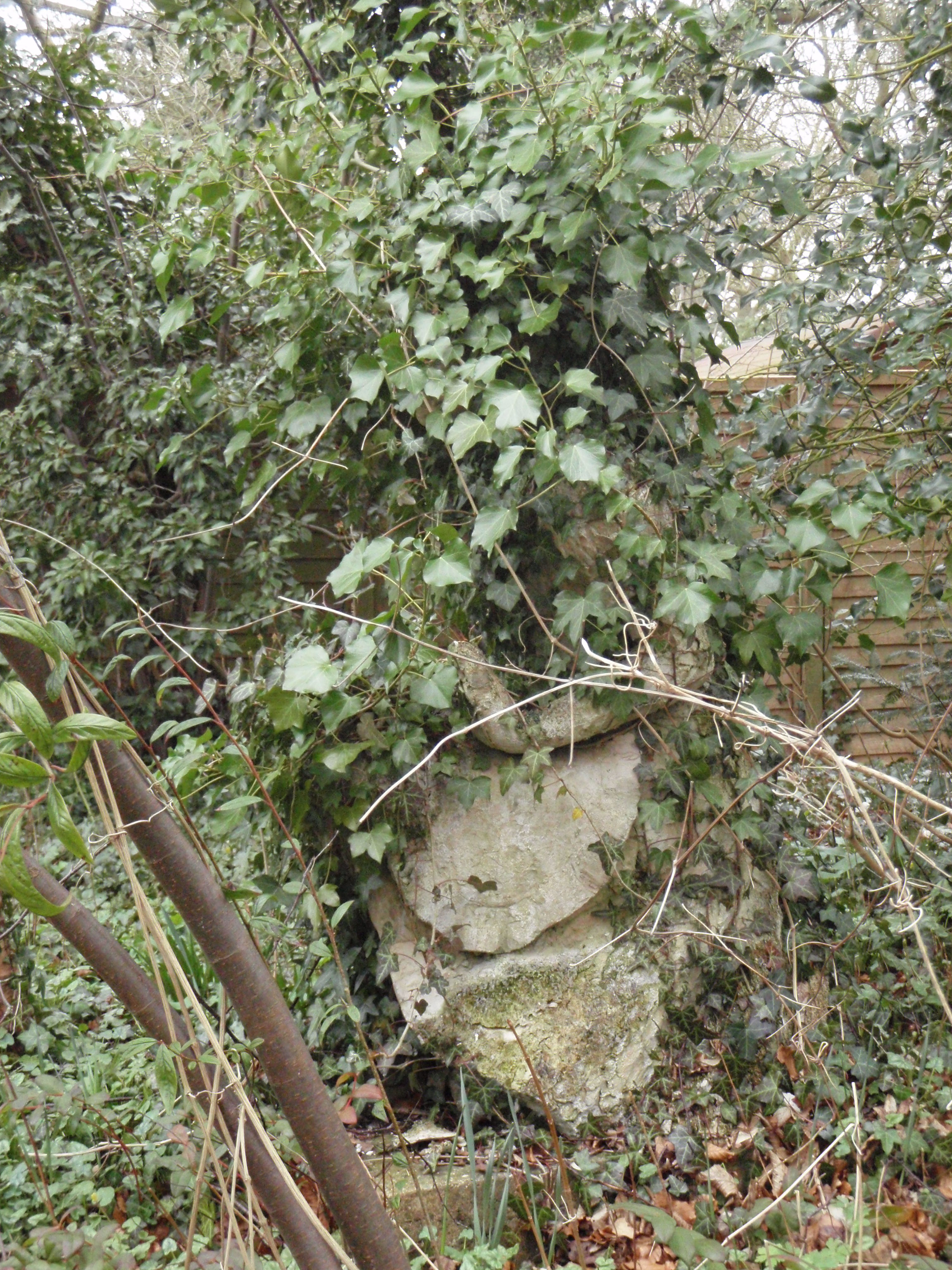
Located in my friend’s garden is another version of the sculpture. It’s overgrown with vines (which I think adds some charm to it) but the left arm is just visible in the picture.




 Victorian Visual Culture