Posted by: sabinabw | November 16, 2010

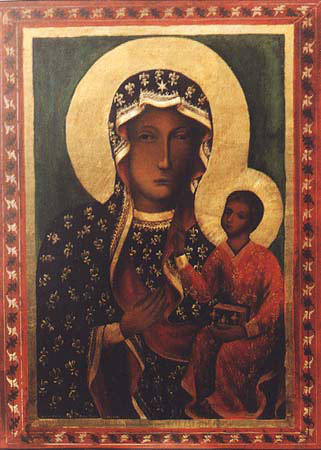
Black Madonna of Częstochowa

While reading about the Madonna’s that Cameron photographed, I thought of the holiest of images I was taught about from my upbringing: The Black Madonna of Częstochowa. I am the first generation born here in the States, and my parents have always made it a point to teach me about Poland – it’s culture, it’s history, it’s religion.  The Black Madonna is the most important religious image in the country, as well as the national symbol and protector of the country.

I have seen the Black Madonna during my visits to Poland, and it’s quite a site to see; especially the church it is portrayed in.  She is known as the Madonna who bled.  Legend has it that while robbers were looting a church where the painting was held, a robber slashed her face twice with a knife, and the painting started to bleed – the robber then mysteriously died in agony right on the spot.  Earlier experts have tried to restore the slashes, but without avail the painting stays slashed.

Every year Polish Catholics pilgrimage to Częstochowa, to honor and pray to the Lady. The trip is an exhausting one, and people have been known to stand on the side of the road, handing out provisions to those partaking in the pilgrimage, as many of them are incapable of providing for themselves.

To this day, it amazes me that a painting can move someone so spiritually to pilgrimage, and for others to help those on their journey.  The power of a painting, and its history is astonishing.
Posted by: ellis22s | November 15, 2010

Lewis Carroll and markings of womanhood

Through reading Mavor’s piece on Carroll what I found interesting was Carroll’s friendship with young middle class girls. Additionally, the photographof Alice Liddell is interesting as it is a glamorous depiction of her as a child beggar. I feel this contrasts starkingly to Carroll’s image of a real working class girl in which their is no sense of fun or embellishment. Despite the questions that his photographs arouse you could argue that Carroll’s work is quite modern in that he’s constructing this fantasy world via photography. Moreover, its almost as though he trying to reconstruct this idealization of childhood which is why he limited his contact with middle class children as he was all too aware that their childhood was limited.

Posted by: melissayang | November 12, 2010

short film on cullwick and munby

Kim Wood directed a short film called On My KneesInspired by the secret diaries of Victorian fetishist and ‘maid-of-all-work’ Hannah Cullwick.” It stars Melora Creager (lead of my favorite historically-inspired cello goth-rock band, Rasputina), who also wrote the score.

There’s a two minute clip on the website here: http://kimwood.org/film

(Sorry the embed code doesn’t seem to want to work here)

I can’t seem to find the full 13 minutes of this film anywhere, and I’d be curious to see it. Does anyone have any idea where I might be able to find this?

Posted by: jmacd32 | November 10, 2010

The “masculine” working-class woman

While reading the chapter “’Massa’ and Maids” in McClintock’s Imperial Leather I was reminded of the political cartoons we looked at in an earlier class. I was specifically reminded of the images of Britannia protecting Hibernia from the stereotyped Irishman in the “Irishman in Victorian Caricature” article. When McClintock described “Munby’s earliest class and gender identity” as taking shape “around two women,” one a “working-class woman” who was described as “powerful and commanding” and the other as a “physically delicate” woman from the upper class, I immediately associated the “commanding” working-class woman with the images of Britannia we discussed in class (79). During class many of us noticed how Britannia was represented in a masculine manner. Similarly, the readings for today, as some of the other posts have pointed out, highlight the way working-class women could be perceived as masculine or outside the conventions of the female gender. The image of the masculine Britannia from “Irishman in Victorian Caricature” makes me think about how the Victorian working-class woman is connected to imperialism. McClintock notes how many British males, like Munby, would associate their first ideas of gender and, therefore, womanhood with their nurses who often took care of them from the moment they were born. The depiction of Britannia as masculine then makes me think of how she may be connected to a British male view of the protective female who takes care of people much like their nurses may have done for them. I’m not sure this makes sense, but its what popped into my head when I was reading the section about Munby and his nurse.

Posted by: anniebutts | November 10, 2010

The Female Athlete

While reading Barry Reay’s piece on “Feminizing Men,” I was struck by the part about the female acrobat. Describing child gymnast Nathalie Foucart:

“Munby also saw her at the Alahambra, in male clothing, and with a figure ‘that was of a boy’. She dazzled him with her acrobatics on a trapeze. Familiar themes emerge: gender ambiguity in forms and actions; strength (‘muscular power which would have been wonderful in a man’); bodily contortion, recorded by Munby in sketches of these ‘most unnatural’ positions…Like actresses, female acrobats ‘defeminized’ themselves on the public stage.”

Last semester, I took a class with Laurie Priest called “Women in Sport”. We studied many influential female athletes and discussed in depth the role of the media in the portrayal of strong women. If you go to Google right now and type in “female athletes”, two of the first pages that appear are “The 15 Sexiest Female Athletes” and “Hottest Female Athletes.” In an arena that is predominately masculine, something must be done to compensate for the lack of femininity in female athletes. The media exploits the woman’s body in order to appeal to the masses…these women are not appreciated for their talents, but for their “sexiness”. But something interesting happens when the feminine ideal is not present in the female athlete….

Take, for example, Babe Didrikson:

“That she was female, androgynous to the point of boyish-looking as a youth, coarsely spoken and physically brash made her fame and popularity all the more unique. In the years immediately following the Olympics, there was a double-edged reciprocity between Didrikson and the press. Her “deficient femininity” and “disturbing masculinity” sparked constant fears of lesbianism, or worse yet, the existence of a “third sex” in women’s sports. Babe played a fascinating role in all of this. She revelled in the (early) persona of the boyish, brazen, unbeatable renegade, but cringed at the innuendos of abnormality. She was the consummate tomboy–beating boys at their own games. In fact, “boyishness” was tolerable and even engaging; “mannishness,” on the other hand, insinuated a confirmed condition out of which she would not grow. The latter charge was the greater of the two insults and confirmed her abnormality. One Associated Press release comforted the reader that “she is not a freakish looking character . . . (but) a normal, healthy, boyish looking girl” (4). Babe was keenly aware of how these portrayals cast her outside of the female gender. Poisonous stories flowed from journalists’ pens, likening her to Amazonian creatures. These renditions were so vitriolic that they evoked mother’s warnings that they would “not let their daughters grow up to be like Babe Didrikson.”

oah.org/pubs/magazine/sport/cayleff.html

This brings up some compelling questions about boyishness vs. mannishness, uniqueness vs. freakishness, and this notion of a “third sex”. Just something to think about…


Posted by: fulto20e | November 10, 2010

Obituary for Geoffrey Crawley – Photographic Scientist

I was browsing the New York Times website when I came across an article from a few days ago on the death of Geoffrey Crawley — the man who in the 1980’s proved that the photographs of the Cottingley faeries was a hoax.

I know we briefly discussed this hoax before, as it is relevant to how photographs were used to display the “truth”. Also, Arthur Conan Doyle firmly believed that the images were real.

If anyone should have known better, it was he: a trained physician, he had created the single most rational figure in Western literature and was a skilled amateur photographer.

But Mr. Conan Doyle was also an ardent spiritualist, an interest amplified by his son’s death in World War I. Recruited by Mr. Gardner, Mr. Conan Doyle soon became an impassioned champion of the photos.

He later wrote a book, “The Coming of the Fairies,” defending the images.

I also find it interesting that he was a photographic scientist, and applied to photographs (art) a scientific mind:

In a telephone interview on Thursday, Colin Harding, curator of photographic technology at the National Media Museum in Bradford, England, discussed Mr. Crawley’s role in the debunking of the Cottingley fairies case: “He took a scientific and analytical approach that was objective to something that had been previously subjective and so full of emotion,” he said.

His writings about the hoax, though rigorously scientific, display great tenderness toward the two country girls whose idle boast of seeing magical creatures captivated a nation convulsed by war and modernity.

Mr. Crawley passed away October 29 at the age of 83.

(SOURCE)

Posted by: phane20c | November 10, 2010

Interesting Reading

The reading from Imperial Leather was dense but superbly fascinating. I find it interesting how the peculiarities of Munby and Cullwick seem to fit so perfectly into and illustrate so complexly, many of the aspects of the Victorian era. Not only did Munby’s needs and Cullwicks needs satisfy eachother’s like puzzle pieces, their oddities also illustrate the Victorian anxieties and disparities such as paid work versus unpaid work, the empire versus the domestic, male versus female, dominance versus subservience, clean versus dirty, the visible versus the invisible, as well as issues of class and race. Munby was fascinated not just with working class women’s work; what made it pleasurable was its stark contrast to the leisured ladies of the era. He was also enthralled by thinking he had masculine dominance over the life of Mary Cullwick. On the other hand, Cullwick played around with the ambiguous roles of gender, class, and race. She owned her own sexuality and was deeply committed to showing the value of her work in the home (remember her slave band) while so many middle class women of the day worked hard just to hide their labor. There is so much to be said about Munby and Cullwick and how what they did ties in with aspects of the Victorian era! What I have said is the very tip of the iceberg.

I also found the origin of the cult of domesticity interesting. It appears this cult sprang up from the need to define the middle class and from the Victorian need to rationalize and naturalize roles to different ‘types’ and ‘races.’ McClintock states, “The cult of domesticity was crucial in helping to fashion the identity of a large class of people.” The Victorian need to classify and rationalize everything seems on the verge of obsession. It leaves me wondering why the need for such meticulous documentation, rationalization and demarcation of boundaries? McClintock gives a nice answer and says that the rationality in the nineteenth century was a “single-minded dedication to the principles of capital accumulation for commercial expansion.”  I suppose this reasoning makes a lot of sense since during the Victorian era Britain was becoming capitalistic and white men were defining the norms. Imperialism helped rationalize the domestic sphere into a ‘natural’ place for women.

I also found a cool website called “Women’s History Then & Now: A Feminist Overview of the Past Two Centuries.” It compares contemporary issues of domesticity and sexuality with those of the Victorian era. It’s light reading.

http://www.cwrl.utexas.edu/~ulrich/femhist/domesticity.shtml

Posted by: kellyannem | November 10, 2010

The Pre-Raphaelites

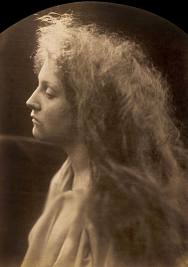
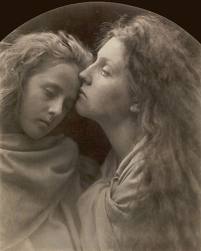
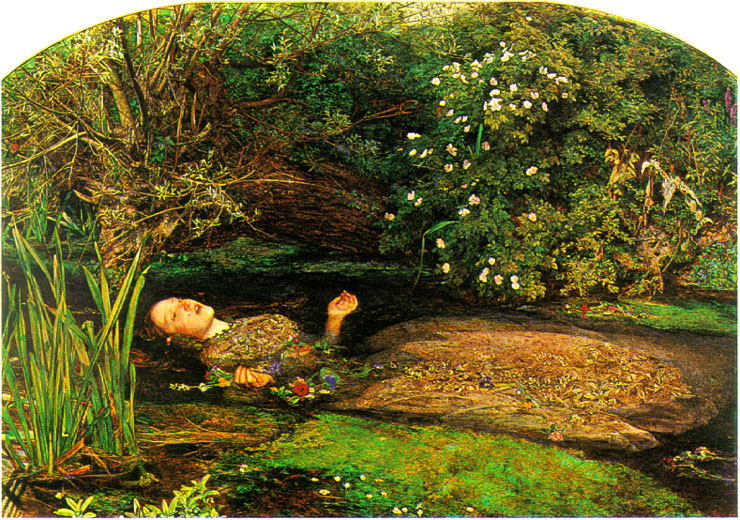
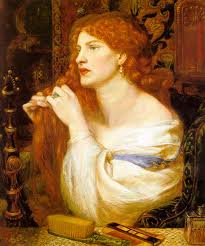
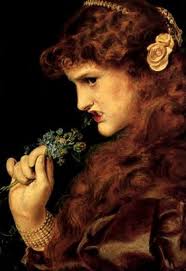
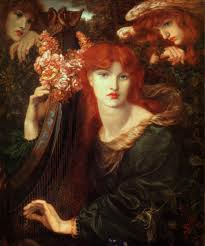
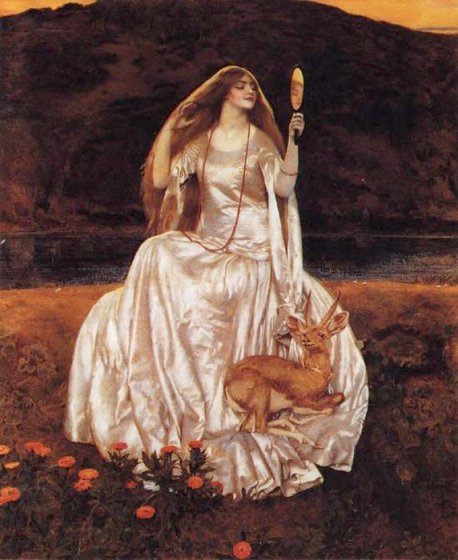
In Pleasures Taken: Performances of Sexuality and Loss in Victorian Photographs, Carol Mavor quotes Elisabeth G. Gitter from her essay “The Power of Women’s Hair in the Victorian Imagination.” Gitter writes that hair is “a sexual exhibition” and that “the more abundant the hair, the more potent the sexual invitation implied by its display … the luxuriance of the hair is an index of vigorous sexuality, even of wantonness” (109).  After reading this, I immediately thought of the following two photographs by Julia Margaret Cameron.

The Angel at the Tomb, Julia Margaret Cameron

The Kiss of Peace, Julia Margaret Cameron

The flowing hair in both of these images is so striking! It immediately captures the eye as it fills the frame. In the top image, it almost forms a halo as the light is caught in its tendrils.

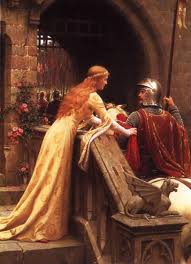
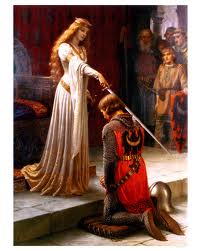
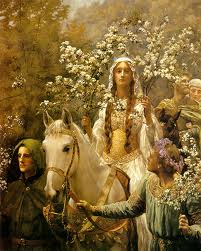
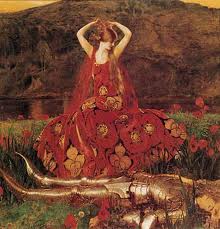
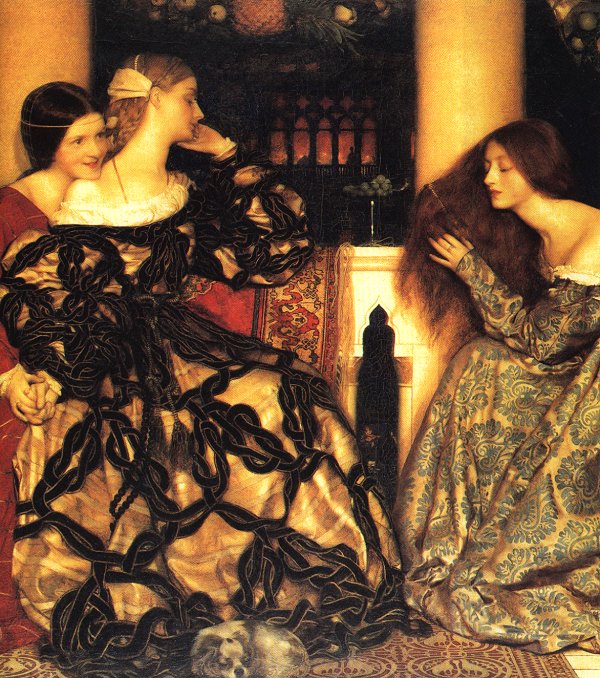
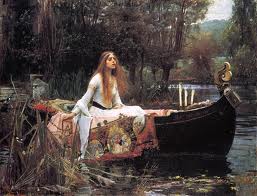
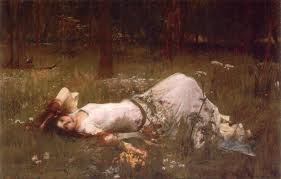
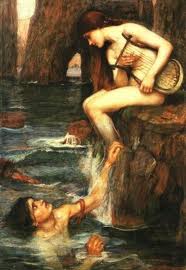
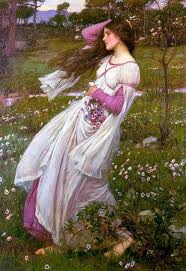
Both of these images reminded me of paintings by the Pre-Raphaelites, a group of British artists, poets, and critics formed in 1848. Many of their paintings depict Arthurian legends, characters from Shakespeare, and other characters (mostly female) from mythology and folklore (consequently, some have the same title).

I’ve added some of my favorites below… notice the copious amounts of abundant locks!

God Speed (c. 1900), Edmund Blair Leighton

The Accolade (1901), Edmund Blair Leighton

Ophelia (1850), John Millais

Queen Guinevere's Maying, John Collier

La Belle Dame sans Merci, Frank Cadogan Cowper

Venetian Ladies Listening to the Serenade, Frank Cadogan Cowper

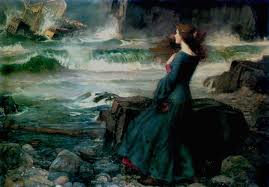
The Lady of Shalott, John William Waterhouse

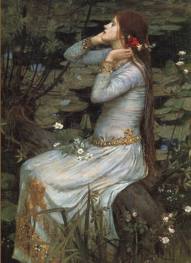
Ophelia (1889), John William Waterhouse

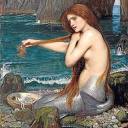
The Siren, John William Waterhouse

Windflowers, John William Waterhouse

Miranda in Shakespeare's The Tempest, John William Waterhouse

Ophelia, John William Waterhouse

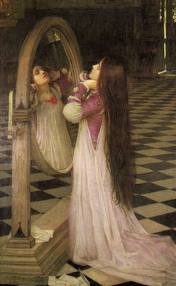
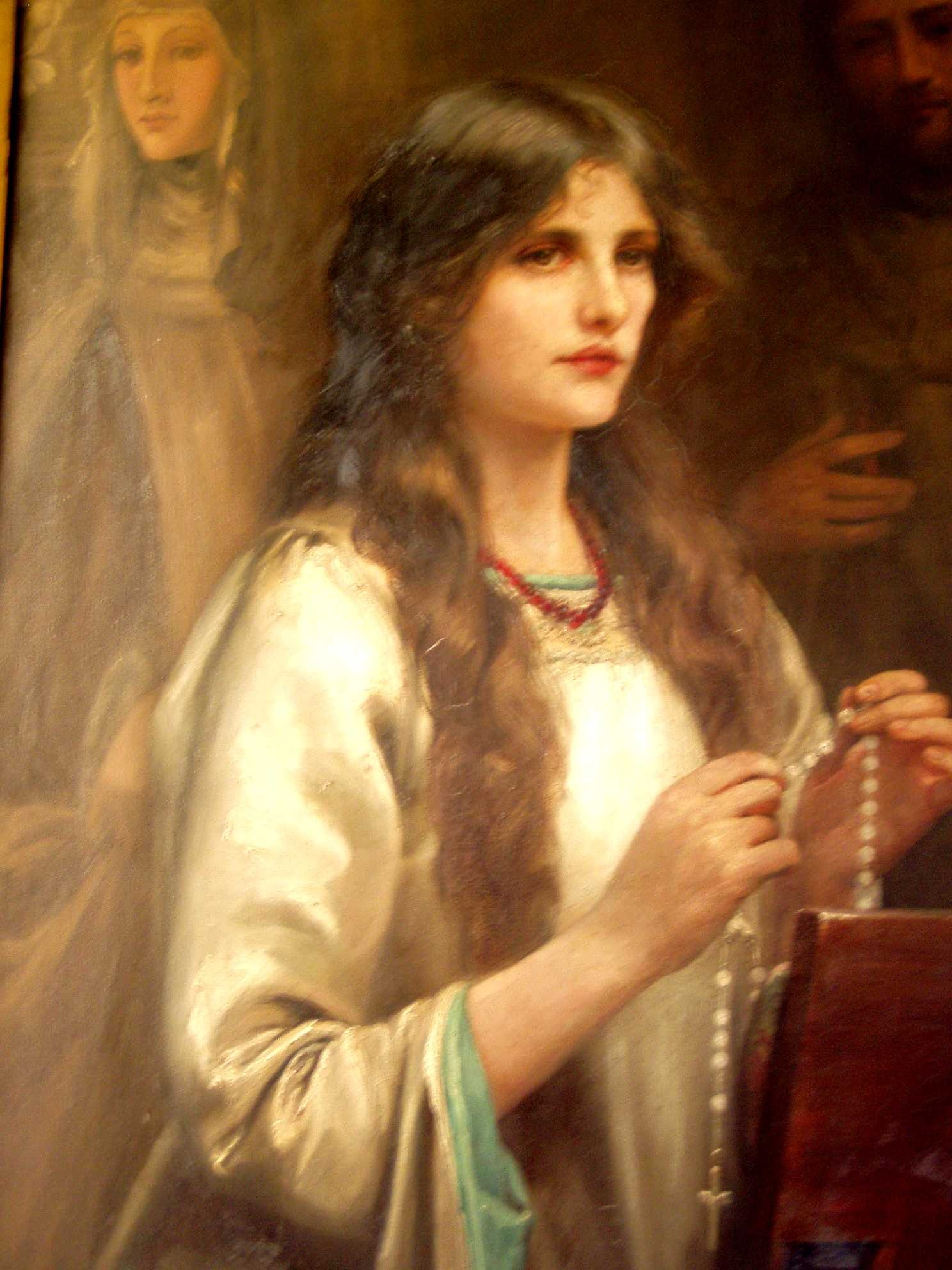
Here are some more, but I don’t know the artist. I am adding them because I think that they are beautiful and different than the previous images in that they often depict women in a room, or with a personal object such as a looking glass, rosary, or flowers.

Finally, a mermaid, to illustrate Gitter’s point that “the combing and displaying of hair, as suggested by the legends of alluring mermaids who sit on rocks singing and combing their beautiful hair … thus constitute a sexual invitation” (Mavor 109).

All of these paintings were produced during the Victorian Age, yet look nothing like anything we’ve seen. Even though they capture the essence of another era, the Victorian fascination with hair is clearly evident.

(I hope this wasn’t too overwhelming!!! I think these paintings are so sumptuous and had a little trouble editing!)

Posted by: siobhananderson | November 10, 2010

Masks of Masculinity: Beauty and Munby’s Working Class Women

After reading Reay’s interpretation of Munby’s documents and McClintock and Pollack’s theories, and after our discussion last week about advertisement and beauty ideals and depictions of women in the Victorian era I began to wonder if the idea of “beauty” or “femininity” itself was at a crossroads of sorts during this time. Munby seems to be the voice of masculine desire and fetishism in his drawings and poetry concerning the figure and form of the working-class woman. At the same time that he fetishes however, he also continually returns to the established notion of Victorian beauty: the pale hands and face, the rosy lips, the white teeth. An interesting thing to note is that Munby in fact almost seems to use the idea of “femininity” interchangeably with “beauty”. Was femininity beauty? Is femininity beauty? Though many of the women are cloaked in dirt or callouses, Munby always seems to find a pearl of femininity (beauty?) tucked away in some part of their appearance. For example as he examines and describes the nature of  a trouser-wearing clay covered girl he moves on to say that though clearly bearing a masculine appearance she was “not unfeminine” and had hands “though broad and thick were delicate looking…”

It seems as though Munbys clear sexual and intellectual curiosities concerning these women had as much to do with their resemblance to men as it did their questioning of common beauty ideals and ultimately how these ideals relate to Victorian femininity.

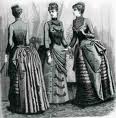
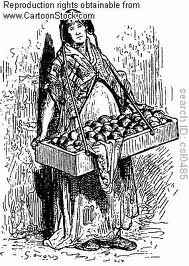
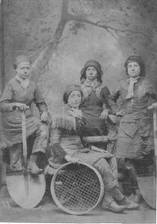
I’ve attached some pictures that contrast working Victorian women and more upper class women. One can clearly see where themes of beauty seem to stem from delicacy and purity and where dirt and power become totems of a new sort of animalistic and masochistic fetishism on the part of Victorian society.


Posted by: sabinabw | November 10, 2010

Just a little bit of randomness

I don’t exactly know how I came across this site, but the first entry about the grandma dressing up as a wood nymph made me laugh, so I thought I’d share.  It’s called the Top 10 Creepy Aspects of Victorian Life.

http://listverse.com/2009/08/29/top-10-creepy-aspects-of-victorian-life/

As we learned in class, photographs were staged, so it wasn’t surprising to read about number 2 on the list…however it was definitely a surprise to read that the families would pose with the dead.  I’m all for having a momento of a loved one who passed, but isn’t that a bit morbid to pose with a corpse?  Also, it would creep me out every time I looked at the photo, knowing that in that photo the person I love was no longer present; it was just their body there, their presence was already gone.

« Newer Posts - Older Posts »

Categories