Posted by: emmadamato | November 10, 2010

mermaids

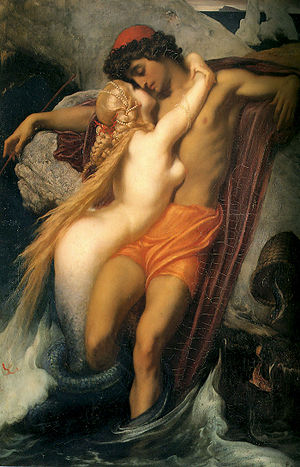
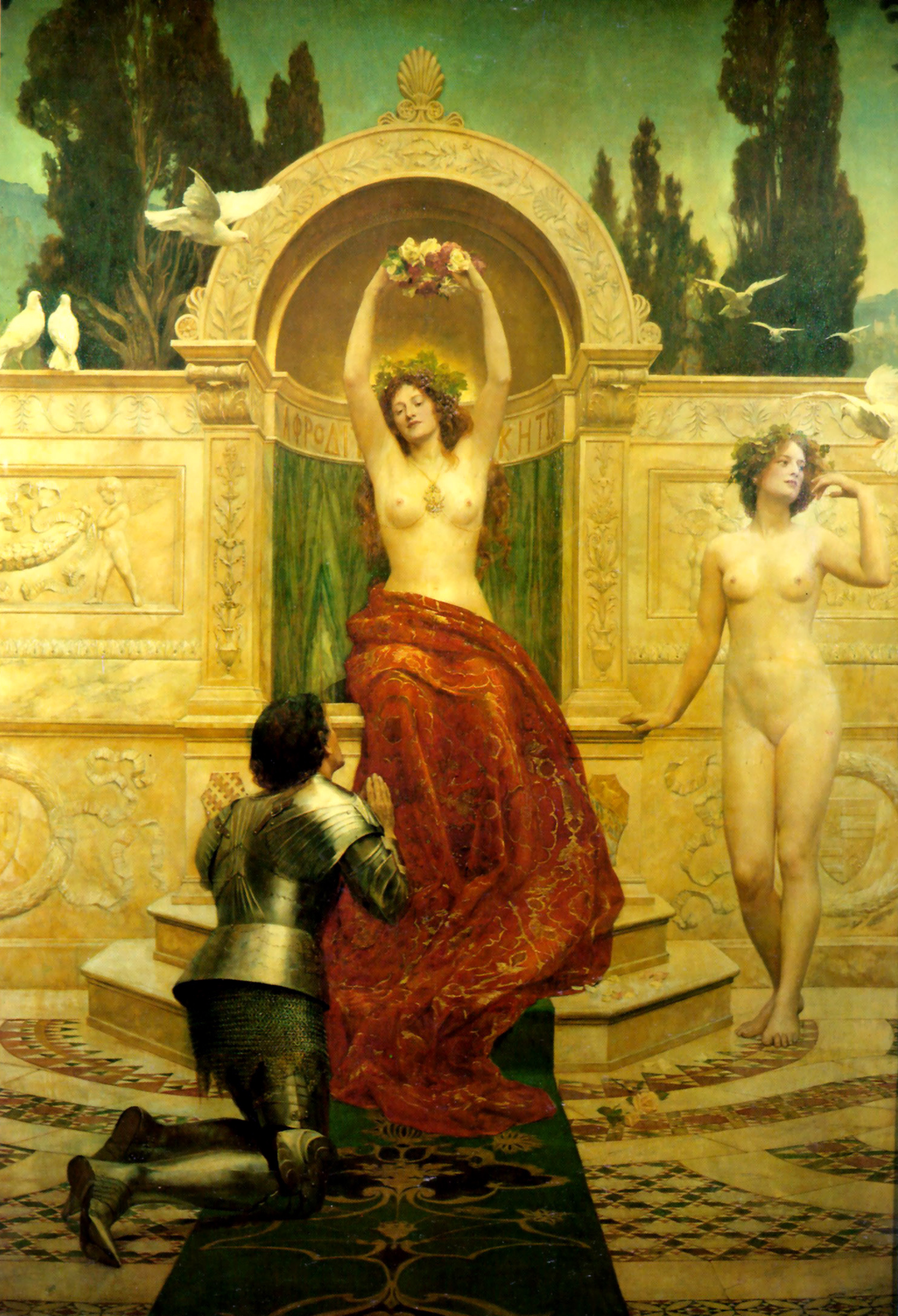
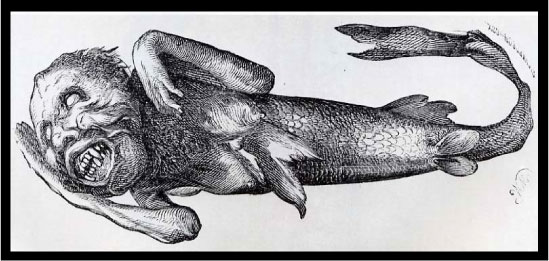
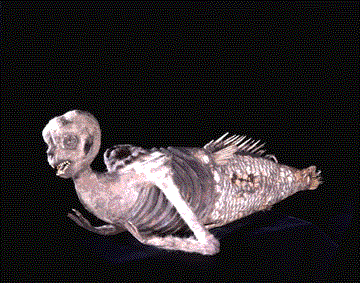
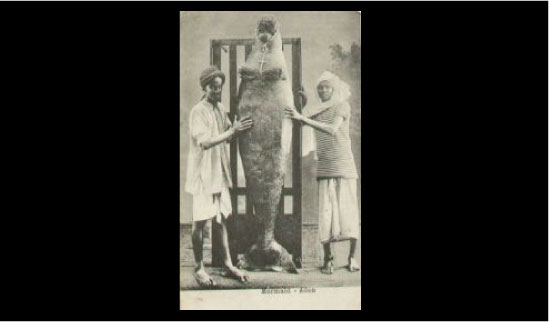
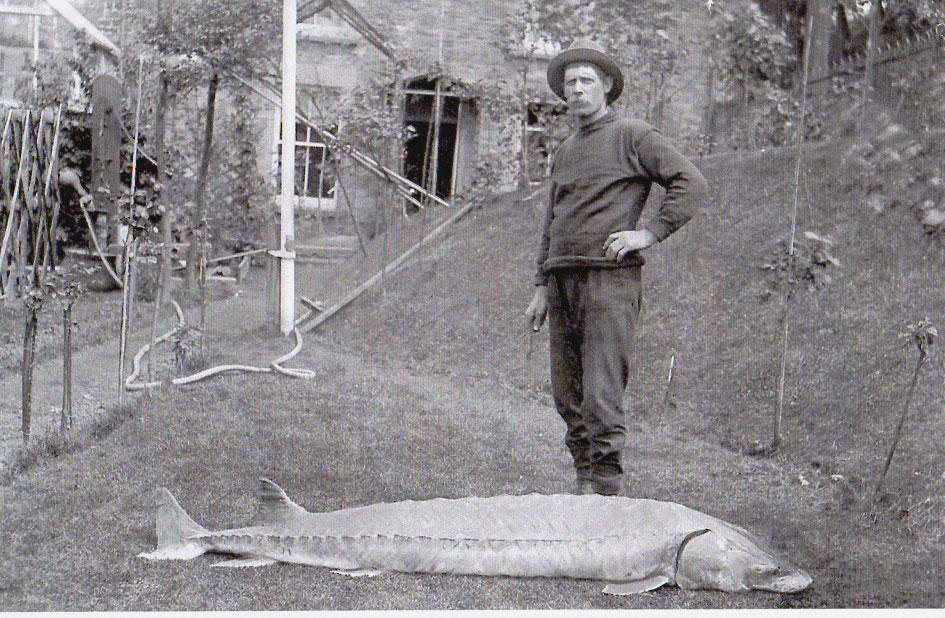
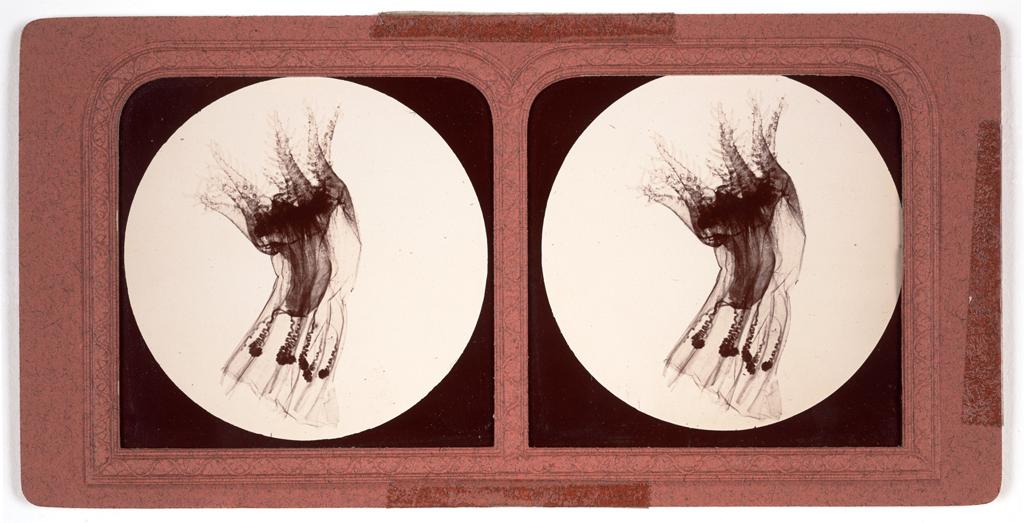
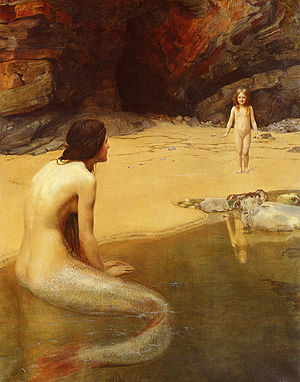
My parents convinced me to talk to mermaids every time we went to the beach when I was little so they always seem a little magical to me. After finding them again within McClintock’s text I decided to do some research about the images that might have been available to Victorian viewers of mermaids. Some of the images that I found were terrifying, all were lustful. The photographs that I found were the most frightening. I also came across a lot of “mermaid mummies” that were displayed in oddity museums and traveling freak shows. The paintings were fair more romantic, although, all of the ones I found seem to have danger looming.

This last image is my favorite, it is supposedly mermaids hands- very fitting for our reading

All of these images/objects were produced during the Victorian era

Posted by: marycib | November 10, 2010

Munby’s Fetish

It is interesting to note that it was not just lower class women that fascinated Arthur Munby, but also the differences between lower and upper class women. The obvious distinction between a lower and upper class woman was in her appearance, specifically in her clothing and physique. Munby wanted to observe “…the women who did the filthiest, most sordid and most menial work: the scullery maids and milkwomen, the maids-of-all-work, the farm- and fisherwomen, the Wigan pit-brow women, the mudlarks, the prostitutes and the dustwomen” (McClintock 83). As McClintock observes, Munby’s fascination with the distinct contrast between the two classes was piqued by the variation in the roles of the two most important women in his life- his mother and his nurse. Munby wished to explore “…as spectacle- the visible contrast of female classes” (McClintock 84). One technique Munby employed to discern the differences between the two classes of women was the scrutiny of their hands because “hands were ‘infinitely suggestive’…because they visibly expressed the overdeterminations of sex, money, and work” (McClintock 99). If a woman’s hands were smooth and not calloused, it was apparent that her family could afford to hire individuals to perform manual labor and various household tasks. In contrast, if a woman’s hands were red or rough, it would be a sign that she was from the working-class. Munby was not intrigued by the women who attempted to be part of a class to which they did not belong; he was only interested in the distinctions between the upper and lower class women. In particular, Munby wished to study the lower class working women of Victorian England because these women were so altered by the work they had to perform. By taking on labor roles and having to provide for their families, these women took on a masculine physical appearance.


Posted by: Laurel | November 10, 2010

Power where I didn’t expect it…

I found this week’s readings to be some of the most fascinating of the semester. When I first read the McClintock chapter on Cullwick and Munby, I felt really hopeless for Hannah Cullwick. I couldn’t imagine how she could really be benefitting from her relationship with Munby. Then McClintock mentioned that even after the two were married, Cullwick retained her last name and kept her own finances. She was able to work outside of the home during the day, then participate in whatever types of role-playing and fetishes Munby had in mind.

Additionally, the “Disordering Bodies” reading cites Munby as running into women who dressed as men in order to work better jobs or earn more money. “Richard Bruce” was a woman who played the part of a man in order to work jobs that were not ordinarily within the female sphere—she was a dockworker and a miner, and she told Munby that she planned to find work as a piano player (again/still dressed as a man).

In another of my courses, we discussed that during this time period, at least in America, women were trying to break out of their traditional roles and build lives for themselves independent of those of their husbands. It’s interesting that in Britain during this era, women were finding ways to break the mold, even if they may have to appear to be subservient or dress as someone they are not. Prior to these readings, it had never occurred to me that someone in Cullwick’s position could be thought of as having power, and I never would have thought that women during this time would have thought to forego their gender identities in order to make the life they wanted.

Posted by: emmadamato | November 8, 2010

new advertising techniques, everyone should look at this

http://jezebel.com/5677811/advertising-that-will-make-you-want-to-shut-your-legs

i don’t know what to make of it- but i know i feel uncomfortable

Posted by: akhtikian | November 7, 2010

A Relevant Exhibit

I came across this exhibit at the National Gallery of Art in Washington DC called “The Pre-Raphaelite Lens: British Photography and Painting, 1848–1875.”  I wanted to share it with you as it is relevant to our entire course but especially looking forward to our upcoming discussions about Julia Margaret Cameron and Lewis Carroll. I am posting two links, one is the official exhibit description and the other is a review of the exhibit from artdaily.org which I found more interesting.

http://www.nga.gov/exhibitions/preraphaeliteinfo.shtm#picturing

http://artdaily.org/section/news/index.asp?int_sec=2&int_new=42199&b=British%20Photography%20and%20Painting

Posted by: melissayang | November 5, 2010

steampunk exhibit

Since the topic came up briefly in the blog a while back, I thought this might be of interest — apparently there’s a temporary exhibit on steampunk running through May 2011 at the Charles River Museum in Waltham, MA. According to the website,

The Charles River Museum of Industry & Innovation is the first museum in the country to feature an exhibit solely dedicated to the steampunk movement.  Steampunk, Form & Function offers an informational and interactive look into the world of steampunk and all that it encompasses including, fashion, literature, entertainment and much more.   On display visitors will find modern Victorian clocks, a spinning wheel that generates power, GPS and iPods devices with gears and gages, and a computerized carriage.  They can play a game of interactive pinball and use Victorian computer stations to discover the origins of this technological Victorian world.

It’s just $3 for student admission, and looks like it could be fun!

Posted by: fulto20e | November 3, 2010

Exactitudes & Composite Process

While re-reading Sekula’s “The Body and the Archive” for my midterm paper, I was reminded of a website I had found a couple years ago that seems to be inspired by the work of Francis Galton.

Sekula describes Galton’s interest in attempting to document the “true physiognomy of a race” and his development of the composite — photographing a variety of people from within a group in order to identify the common physical traits.

The website Exactitudes take the composite and applies it to social groups rather than racial groups. For example, the image set of “Casual Queers” shows that this social group shares a similar haircut and clothing style. Each man sports closely cropped hair, a button-up plaid shirt that they tuck in to belted jeans. What should be noted is that these social groups are not racially diverse — perhaps because certain social groups often occur primarily  within one racial group.

Photographer Ari Versluis and profiler Ellie Uyttenbroek have worked together since October 1994. Inspired by a shared interest in the striking dress codes of various social groups, they have systematically documented numerous identities over the last 16 years.

They call their series Exactitudes: a contraction of exact and attitude. By registering their subjects in an identical framework, with similar poses and a strictly observed dress code, Versluis and Uyttenbroek provide an almost scientific, anthropological record of people’s attempts to distinguish themselves from others by assuming a group identity. The apparent contradiction between individuality and uniformity is, however, taken to such extremes in their arresting objective-looking photographic viewpoint and stylistic analysis that the artistic aspect clearly dominates the purely documentary element.

It’s a fascinating website, so check it out — and maybe identify which group you belong in!

(Source)

Sekula, Allan. “The Body and the Archive.” October 39 (1986): 3-64.
Posted by: marycib | November 3, 2010

Unique Nature of Photocollages

At the beginning of the semester, the class discussed whether or not a photograph of a person was an improved likeness in contrast to a portrait of a person. It would seem that a photograph is more realistic, because in a portrait a person’s flaws do not have to be drawn into the portrait, thereby creating the possibility of a less accurate representation. With the development of photocollage, the distortion of reality returned, but this time in a creative fashion. “If photography in the mid-nineteenth century was generally understood to represent accuracy, fidelity to nature, and representational stability, photocollage undermined these values to the point of caricature” (Siegel 32).  While the images of individuals in photocollages are photographs, the settings or backgrounds are not realistic. Not only did some photocollages incorporate real-life settings, but also “The new medium of photocollage was wonderfully suited for compositions of the surreal and fantastic; indeed, the chance to combine photographic portraits with painted settings inspired dreamlike and often-bizarre results” (Siegel 28). Photocollages allowed for a more imaginative take on photographs, a drastic change from simply presenting the seemingly stiff photograph.


Posted by: kellyannem | October 31, 2010

Photos as “padding”

In reading Playing with Pictures: The Art of Victorian Photocollage, I came across the following quote:

The demand for photographs is not limited to relations or friends. It is scarcely limited to acquaintances. Any one who has ever seen you, or has seen anybody that has seen you, or knows anyone that says he has seen a person who thought he has seen you, considers himself entitled to ask you for your photograph… The claimant does not care about you or your likeness in the least. But he or she has got a photograph book, and, as it must be filled, you are invited to act as padding to that volume. (20)

I actually laughed when I read this because it reminded me so much of online social networking today. Everyone is so anxious to have hundreds of friends on facebook that it is no longer restricted to “relations or friends.” Acquaintances and even people you meet once consider themselves “entitled” to send you a friend request. But they are no more interested in being your friend than “claimants” in this passage cared about the people whose likenesses they were asking for. Just as photos then were “padding” for photo albums, “friends” today are padding for social networking sites.

Posted by: lbrooksd | October 31, 2010

Modern Day Collaging

I’m getting really into this collage book, and it’s making me think about collage as a modern art medium.  I have a friend who posts a lot of collages on her art blog, among other things:

http://braindeadflow.blogspot.com/

looking at her stuff got me thinking, so I searched for more collage blogs:

http://acollageaday.blogspot.com/

It’s definitely interesting to think about how we perceive collages today – while in Victorian times collages were intrinsically tied to gender and aristocracy, in this era neither of those categories seem to apply.  For example, the second link is a blog by a man and art/artists in general are more tied to poverty than to wealth in this day and age.


« Newer Posts - Older Posts »

Categories