Posted by: annegab | November 10, 2012

Street Photography towards Style

I was particularly struck by Ryan’s Picturing the Empire Photography and the Visualization of the British Empire and the issue that Thomson had in documenting the natives on his travels. Reading about Thomson’s difficulty in getting consent was because the camera was seen, as taking a picture of someone’s soul: powerful indeed, particularly in a social reform context. But the power of the camera is its ability allow the viewer to “see without being seen” as Ryan writes: “This concern with securing photographs without the knowledge of the subjects being photographed is perhaps an appropriate metaphor for the ambition of regimes of colonial representation: to see without being see” (pg. 144). I immediately thought about the question “How do you legitimize yourself as a street photographer–do you ask the person, ‘may I take your picture?’ Or do you stealthily observe and take pictures without asking?

 As we talked in class it is interesting to compare Thomson and Doré, because Doré as an artist using a very different medium, was able to recreate spaces that Thomson would not have been able to capture at the time. We know from Thomson that he interacted with his subject abroad and in London because due to the technology he had to have cooperation. I don’t know how Doré worked. Was he able to sit down in the middle of a street and sketch? Or maybe he went into buildings and observed from above? What about the fact that London was so populated that he probably couldn’t see much anyway?

 As always I’m amazed how these questions around consent and “who is viewing whom and for what purpose?” continue to be pertinent today. The street photography that we have studied in Thomson evolved to include much more than documenting the poor.

The term is now mostly associated with; you guessed it, fashion photography. I particularly have in mind Bill Cunningham and Scott Schuman, both photographers in New York City with very different styles at approaching their subjects.

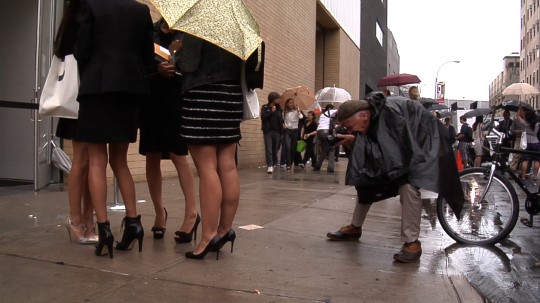
Cunningham doesn’t appear to interact with his objects as much as Schuman does. Through interviews and his pictures he doesn’t necessarily ask permission to take a picture. He’s more like the paparazzi, quietly observing, except for one important factor—that everybody wants to have their picture taken by Bill. Even Anna Wintour mentions in the documentary film that if Bill doesn’t take your picture then you know what you are wearing is not sensational.Image
 

Meanwhile, Scott interacts with his subjects, asks if he can take their picture and stages them the way he wants–looking directly in at the camera. He is consciously creating a conversation between subject and viewer whereas Bill is more likely to take people in action; crossing the street with their backs to us, walking by as they go on their daily commute. Image


Street Fashion Photography also brings a host of different issues concerning the representation and objectification of bodies. With Bill Cunningham, there is more often a sense of voyeurism. With Scott Schumann, there is more often a sense of scrutiny on both the subject and viewer. But the question still remains how would you legitimize yourself as a photographer? Because these photographers then can change these images to fulfill their vision.


Credits:

Pictures of Bill: http://reno-rambler.blogspot.com/2011/09/sunday-morning-music-velvet.html

Pictures of the Sartorialist: http://www.thesartorialist.com/photos/on-the-street-just-off-broadway-new-york-2/
Posted by: cialci | November 10, 2012

Victorian Remedies

I had read a novel years ago set in the Victorian age and one thing that struck me was a line that had a female character claiming to have taken small drops of arsenic to keep her complexion pale.  I think I was only about twelve when I read this book, and I was intrigued.  Being a rather impressionable child, I was lucky that my parents did not keep arsenic in the house. Having enjoyed our class discussion last week on product advertisements . . . which veered into a discussion about today’s impact of advertising on the consumer . . . I wanted to do a search online for information regarding some of the bizarre remedies sold for simple ailments, such as toothache, during Victorian times.  I learned that Bayer used heroin in its early formula for aspirin (“safe for children”) and cocaine, of course, was in almost everything.  It’s a wonder people managed to survive the cures sold to them.

http://www.dailymail.co.uk/news/article-2198086/Victorian-adverts-health-remedies-laden-cocaine-morphine-alcohol.html

Posted by: thedawsonrewatch | November 4, 2012

Henry Hering Photography

I wanted to share a link to this interesting article in the Daily Mail about institutionalized women and photography. While the article has a rather broad scope, briefly discussing the experiences of women institutionalized in the 1960s, it is notable for what it says about the treatment of women in the medical profession.

http://www.dailymail.co.uk/home/you/article-2141741/Sent-asylum-The-Victorian-women-locked-suffering-stress-post-natal-depression-anxiety.html

My maternal Grandmother was employed at a large Kirkbride style asylum in New York and at that time it wasn’t uncommon for women to be put away for non-specific woes such as hysteria, lunacy, or personality disorders. One recent example from popular culture is Chloe Sevigny’s character on “America Horror Story: Asylum” who as seemingly been institutionalized for liking sex too much. 

Posted by: cotem3sons | November 3, 2012

‘Victorian Consumer Culture’

Image

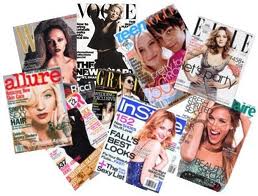
As I was reading this week’s Victorian Consumer Culture, I realized that today’s advertisements are not much different from yesterdays. There are many modern magazines that host a female audience, such as Women’s World, Glamour, Elle, Allure, Vogue, and many others. These magazines feature anywhere from recipes, to weight loss, to tips on organization. Inside the front cover, there is usually an advertisement for new perfume and it displays images of beautiful women. Depending on the magazine, you will find miracle cures, advice, and of course, many ads for the latest fashion styles and ‘must haves’. When it comes to magazine ‘consumer culture’, I don’t see much difference between then and now. Do you?

-Michelle

Posted by: victorianophelia | October 31, 2012

The question of existence and truth in composite photography

I am especially intrigued by the composite photos from the Sekula reading, mainly because I find the “existence” of the subject fascinating. With one of the first photos we looked at this year of the young criminal who was put to death the day after his photo was taken, I was struck by the fact that in the moment the photo was taken, it captured the life energy of the man and it will exist forever in print. However, at the same time, the man in the photo is no longer physically living. Even though I find it difficult to look at a photo and believe that its subject no longer exists, I find it even more disturbing to look at a photo and know that its subject does not and has never existed, but is a composite of many faces (on a slight tangent, I read somewhere that the people we see in our dreams – aside from the familiar faces of friends and relatives – are actually the composite faces of strangers we have encountered, of memories of people we met in passing, of people we do not know even exist after a fleeting glance: in the same way that I feel disturbed by the idea that the people in my dreams truly exist and are not figments of my imagination, I am startled and disturbed by the idea that the people in these Victorian composite photos [for e.g. by Galton and Hines] do not truly exist and are figments of the photographers imagination).

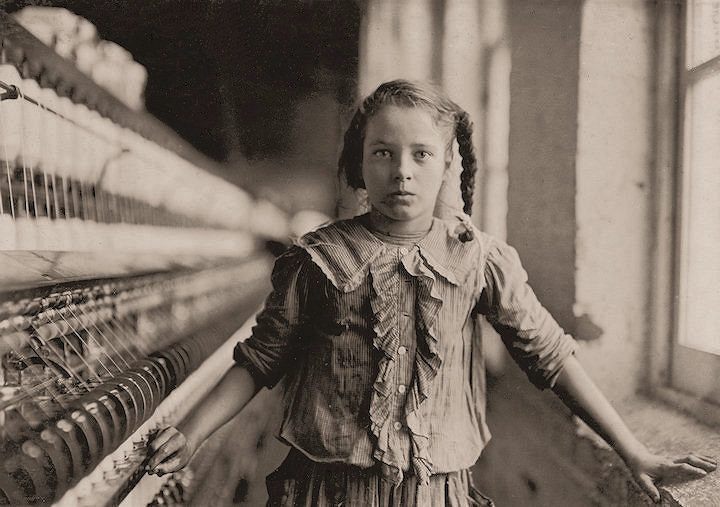
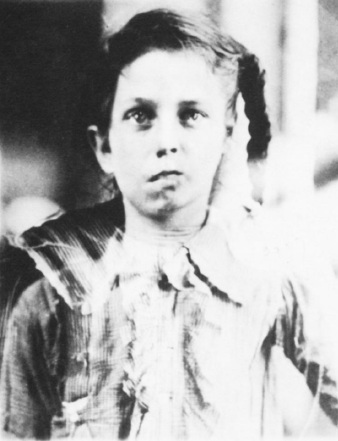
In this post I want to share an image I found by googling Hine’s composite photography. I stumbled upon a website (http://www.historyplace.com/unitedstates/childlabor/) that has several of his photos of child labor and actually found one of the original photos of a young girl who makes up at least a large part of one of the composite photos we saw in the Sekula article (p 53, “The Body and The Archive”). The thing I loved about finding these photos is that they are accompanied by Lewis Hine’s original captions:

“The Mill: One of the spinners in Whitnel Cotton Mill. She was 51 inches high. Has been in the mill one year. Sometimes works at night. Runs 4 sides – 48 cents a day. When asked how old she was, she hesitated, then said, “I don’t remember,” then added confidentially, “I’m not old enough to work, but do just the same.” Out of 50 employees, there were ten children about her size. Whitnel, North Carolina.”

The image from the Sekula article

I thought this was particularly interesting considering our recent discussions about the relationship between text and image. The original image is accompanied by the girl’s voice, and her manner of speaking, and I think this is a huge part of how we view the photo. She is said to “hesitate” and speak “confidentially,” and with the knowledge of her hours and pay and something so specific as her height (51 inches) I know that I become attached not only to the image of the girl but to her character. In first looking at the composite photographs I believed them to be of “real” people, and in the ones where there are many alongside each other I believed the composites featured to be related.

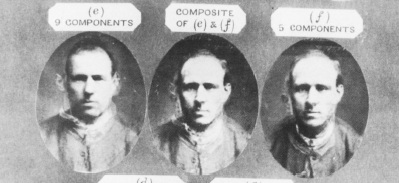
Another image from the Sekula article (p 49), and one that I originally believed to be of three brothers

The composite photos without an explanation through text do as they were meant – they create types – but they do not make up a real, or true, person. Without the text we are fooled by the photo, and the truth that this person in the image and the person they are trying to typify does not actually exist, is obscured.

On another side note, I was recently watching a music video for the song “Safe and Sound” by Capital Cities and noticed a lot of modern composites of the two band members faces (one has a large beard and the other is clean shaven, and yet they chose in this video to use lots of shots of their mingled faces in quick succession and it becomes difficult to tell which is which and if the images you’re seeing are actually even of one or the other)! Obviously today it is a lot easier and more common to do this, but since we had been looking at the victorian images in class I think I spotted this faster than I would have originally. I am sure there are plenty of examples, but since I was watching this video tonight and it triggered this post, I figured I should include it. Excuse the dancing girl and the llamas.

Posted by: thedawsonrewatch | October 30, 2012

Attempted Fenian Invasion of Canada!!

Image

This sign post appears in Sheldon Vermont, my home town. For years I drove by this sign and despite a brief period of time in the 90’s when it always made me giggle because I imagined Mr. Feeny from “Boy Meets World” attempting to invade Canada, I never thought much about it until now. 

As the image says, in 1866 and 1870 a large group of Fenians determined to liberate Canada from British control in an effort to establish a free Irish Republic. Various sources report the size of this group as between several hundred and 3,500! Considering that the population of Sheldon is currently hovering around 2,000 you can imagine what a sight this must have been in 1866!  

Alas, after getting only several miles over the border the group was turned back by U.S. and Canadian forces. Not to be deterred, the group tried again in 1870 but they were again unsuccessful. 

Posted by: cialci | October 29, 2012

Mental Illness and the Victorian Era

Having started my studies as a psychology major before switching to English, I took almost every required psych class, including Abnormal Psychology.  Of all my classes, this was probably my favorite. The professor was very knowledgeable about the treatment, or lack thereof, for mental illness in the past.  I have often thought about what people did in times past when they or a family member suffered from bi-polar (though it did not yet have a name) disorder or psychosis.  My professor was very knowledgeable about Bedlam, the hospital founded in England centuries ago, and she had us read some pretty harrowing accounts of the way patients were treated.  However, Bedlam was created long before the Victorian Age, and I was curious to see what advancements were made during that time.  I found this site: http://waywardvictorian.tumblr.com/post/815439932/mental-illness-during-the-victorian-era.  I cannot imagine a time when effective medication was not available and treatments were either ineffectual or brutal.  What a frightening experience that must have been for everyone involved. 

Posted by: grand22b | October 26, 2012

Victorian Photography

I find this video amusing. It is somewhat educational. The shop in the video has a large collection of Victorian photographs. When the guy comments on the childrens’ serious faces, I was reminded of the portraits because people were generally serious in the paintings as well.

Posted by: cialci | October 23, 2012

Walk a Half-Step in Her Shoes

When I get involved in a book or a film, my first question is always, “What about the clothes?”  I love period pieces; I am a lover of the BBC Masterpiece Theater melodramas, particularly those from the 1970s with such stars as Diana Rigg and Jeremy Brett. The stories are fascinating, the dialogue excellent, but for me, it is almost always about the clothing. I study every button and flounce.  I look at the tailoring to see if it is perfect. Hats, gloves, small bags, shoes . . . nothing escapes my scrutiny.  Several years ago, I read a fascinating article about how Victorian clothing for women was all about keeping them constrained. I knew about corsets and of course, long, almost unmanageable skirts with voluminous petticoats beneath, but one thing I was surprised to read is that women in these times wore shoes that were a size too small.  Of course, we assume they did this in order to appear to have tiny feet, but the article I read (I have not had any luck finding it again, but if I do, I will post it) was written by a feminist who posited that in fact, the shoes were too tight and too small in order to keep women from taking long, quick strides. Women were meant to take small, dainty steps, and the shoes forced them to do this. But she took it further. She supposed that the shoes were created by men for women for the purpose of keeping them close to home and under control. I had to think about this. At first, it sounded ridiculous.  But then I went into my closet and put on a pair of shoes that I cannot wear because they are so painful.  I kept them on my feet for an hour, just walking around the house, and I realized that there was no way I could keep them on, and certainly I could not wear them out of the house to run errands. Are shoes something that can be considered positively diabolical?  Look at the shoes some of our modern celebrities wear.  Lady Gaga teeters out on stage in 10-inch platforms shaped like claws.  Women wear gorgeous designer heels as high as 5 inches, knowing that they make our legs look better. It certainly does slow us down. And the top shoe designers are men. There are women who will wear anything for fashion; as we age, we become more sensible and realize that perhaps comfort is the way to go. But I never, until I read this article, considered ladies’ shoes a means of restricting their freedom.  Now when I watch a film about the Victorian era, I will have one more thing to watch for: how do the women walk?

Posted by: Chelsea | October 20, 2012

Who Doesn’t Love an Omnibus

A bustling market place: This, essentially, seems to sum up Victorian London. And, given that industrial capitalism redefined both time and space, and it is interesting to see how movement is used as a metaphor for commercial society by Thomson (Victorian London Street Life) and Dickens (Bleak House) alike. Thompson talks about streets crowded with salesmen and vendors of all kinds, and street people making their livings off of the scraps of industrial production. Dickens write of a young sweep name Jo, who is lost in “the crown flowing by him in two streams” and constantly prodded to move along. In fact, Jo evokes Thompson’s shoe blacks and board men, street dwellers who, in their struggle to find a place to earn their living, “become entangled in the wheels of carriages, and where cabs and omnibuses are ruthlessly driven against them.”

Indeed, I think the Omnibus is the perfect manifestation of the close association between physical movement and capitalist production. Brought to London in 1829 to cheaply transport large numbers of passengers, omnibuses were  significant in creating mass culture and mass transportation. For example, the omnibus facilitated linkages between different markets, improved economic efficiency, and provided new opportunities for recreation and travel. The intense competition between omnibus companies themselves was another manifestation of capitalism on the streets. Thompson notes how the drivers loved to “race against opposition”–and meant it both in a literal and figurative sense. Drivers from different companies would try to beat each other from point A to point B, hoping to prove the superiority of their company and thus to secure a greater share of the market.

A final way in which Omnibuses signified the commercialization of Victorian Society was that they became moving advertisements. Like every surface, from the walls of condemned houses to the bodies of day laborers, omnibuses were plastered with advertisements for miscellaneous products and services.

Dore’s image shows a number of these omnibuses carrying adverts for everything from Waterproofs (raincoats) to Grant & Co (Dore’s publisher, it seems!).

In a way, the Omnibus seems to epitomize life in Victorian England. I guess that’s why I adore them so much. If you’re ever in London, I recommend hopping aboard one at the London Transport Museum. Until then, you can read more here.

« Newer Posts - Older Posts »

Categories