Posted by: kamibrodie | December 19, 2011

The Annotator of Alice

I really enjoyed many of the annotations in The Annotated Alice.  Others were less than necessary, in my opinion.  But one sticks out in my mind as something I just can’t agree with.  In note 3, on page 62, he says, “Whoopi Goldberg was the Cheshire Cat in NBC’s undistinguished, boring television version of Alice in Wonderland that aired on February 28, 1999.”  This strikes a chord with me, not only because it seems totally out of place, but also because that is my favorite film adaptation of Alice.  It is neither boring nor undistinguished.  The cast is fantastic, and one of the things I love about it is how they make the characters in Wonderland resemble those in the real world.  As Gardiner mentions in his notes, many of the characters in the books are meant to allude to actual people.  While this is a little bit nit-picky, but it’s been bothering me since it was pointed out in class.

In this clip, Alice sings the Lobster Quadrille to a group of her parents’ friends, who all bear uncanny resemblances to characters in Wonderland.

Posted by: allisongran | December 19, 2011

Irish Fenians vs. Illegal Immigration

At the beginning of class, while looking at the images of Fenians I remembered being struck by how familiar they seemed. Then, sadly, while my friend was doing some research for another class I saw a propaganda caricature depicting Illegal Immigration in Arizona and the similarity struck me.

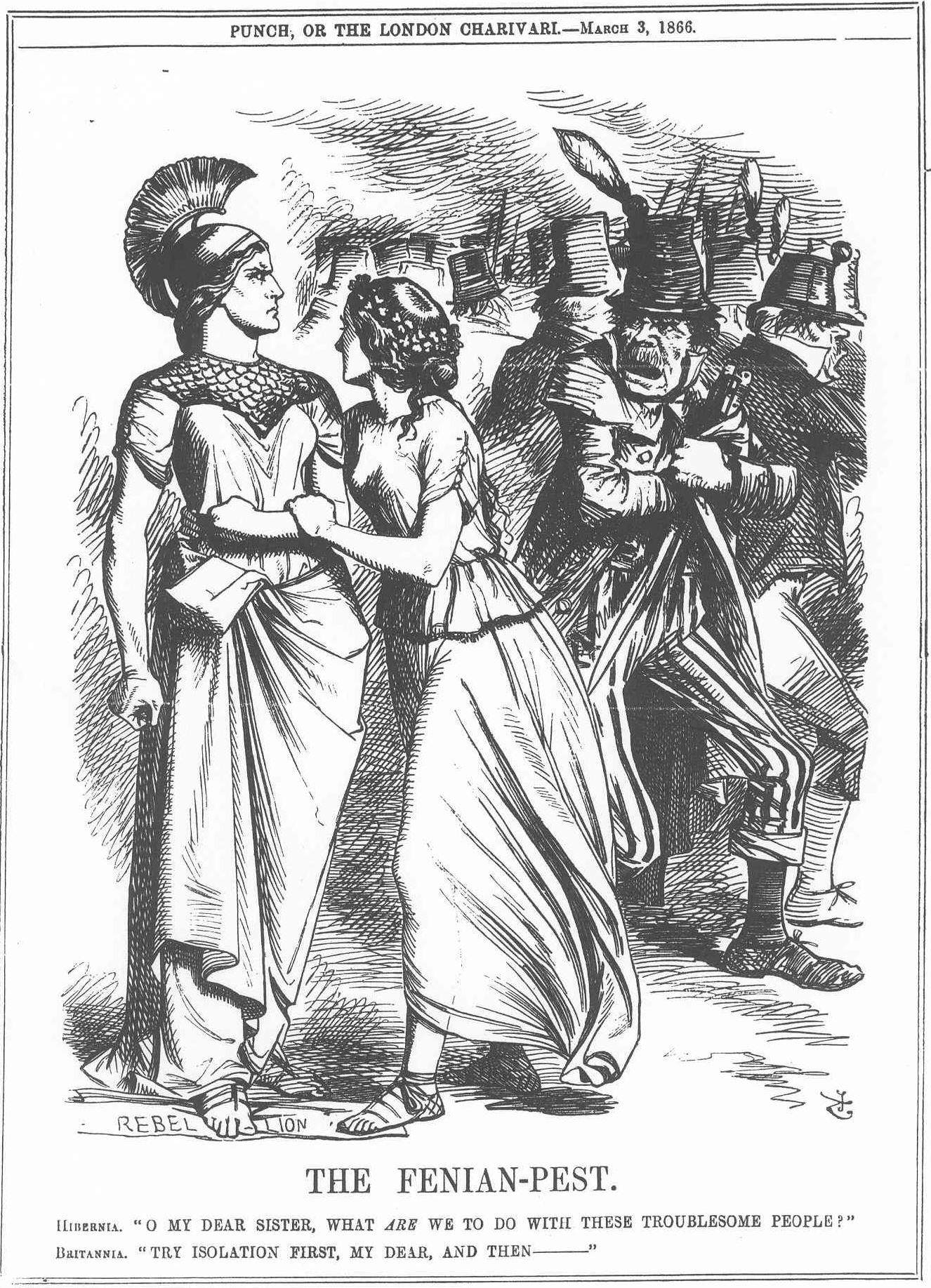
Here we have the image we all saw and discussed in class from a London Newspaper depicting the Irish ideal Hibernia clinging to her strong and protective sister Britannia (Britain) to shield her from the savage, primitive “Fenian Pest”.

The image shows an obvious attempt to portray the figures of Irish Fenianism as grotesque and brutal, giving the viewers the Central Figure of Britain as the sole protective force against this devastation.

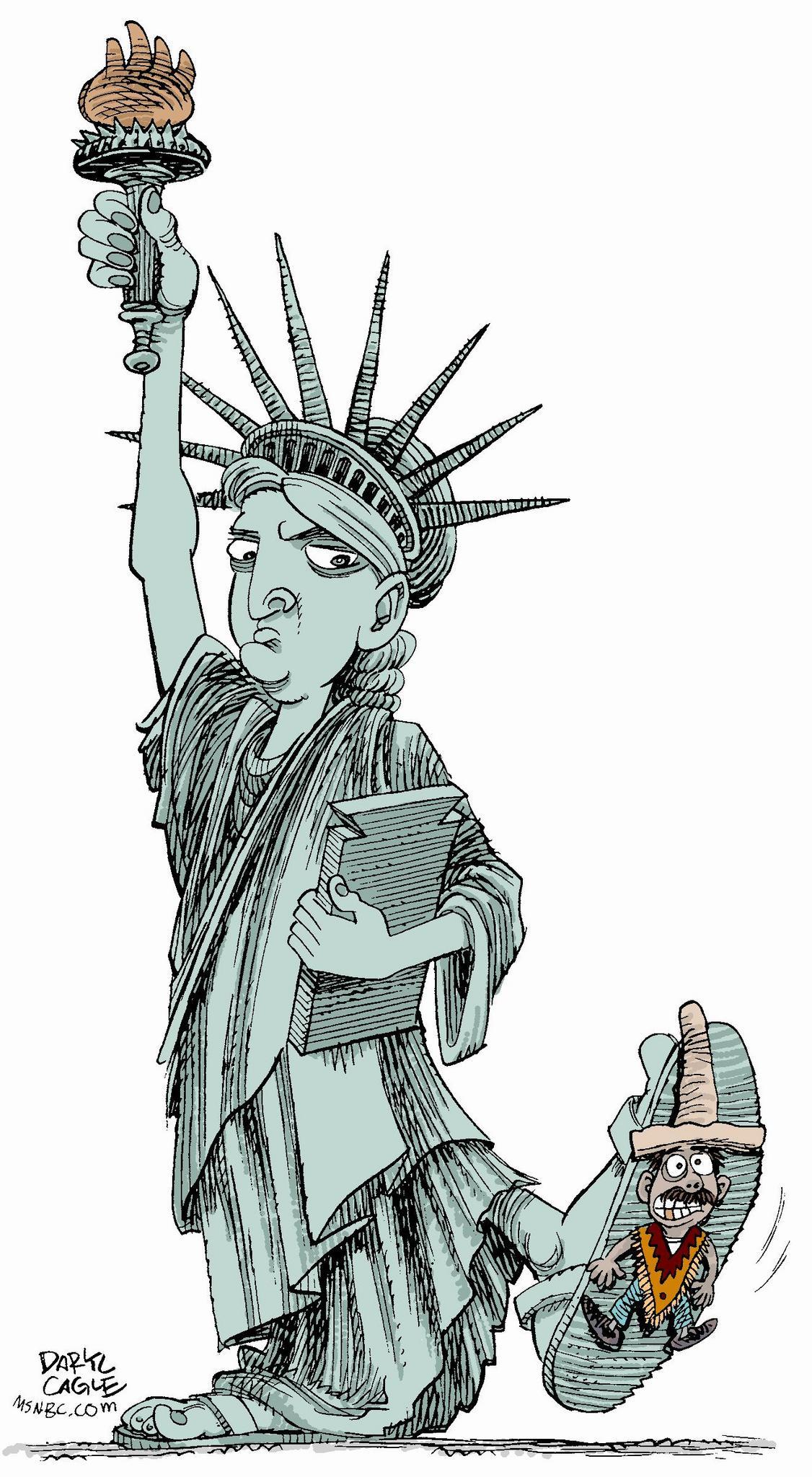
Interestingly, a similar idea is presented in the following propaganda image dealing with the issue of immigration. Here, viewers are given the figure of The Statue of Liberty (the personification of the United States) literally and figuratively stomping out the issue, stereotypically portrayed as a little mariachi, caballero style “mexican”.

Viewers see “America” presented as a strong and unyielding force undefeatable, a stark contrast from the following image where she appears to be all but overrun.

Here viewers are given the impression that “America” is falling and needs to be saved, that she will drown if not rescued from the “terror” of illegal immigration. I think it’s really interesting to look at the propaganda of these two periods and compare them.

Posted by: lizzyspain915 | December 19, 2011

1950s Advertisements

While working on my Victorian Visual Culture paper on advertising, I’ve come across a lot of very interesting and sometimes bizarre advertisements that have existed over time. Usually, I love to look at old advertisements, because as Lori Anne Loeb says in “Consuming Angels”, advertisements can be really great cultural commentary of a specific time in history. Older print ads, from the 1920’s and 1950’s, can be fascinating. It’s funny to see the novelty and excitement an advertisement expresses when promoting a product we are so used to using in our everyday lives (a washing machine! Ponds cold cream! Well, I don’t use Ponds, but it just seems so old-fashioned, it’s hard to think that there ever existed a time where Ponds was new and exciting). Anyway, in my research I also came across some extremely disturbing ads. I was looking at an article on businesspundit.com entitled “10 Most Sexist Print Ads from the 1950s” and found this:

The article supplied a quote underneath that said: “There’s a lot to be said for domestic violence. Sure, it ruins lives and tears families apart, but at least you can be certain your coffee is fresh! The mere suggestion today of an ad such as this would be enough to have you sacked from most major ad agencies. What were they thinking? The more you look at this ad, the sadder it gets”.


It’s true, this is an awful ad. But I can’t help but think about some of the advertisements we have access to today. While few to none are as blatantly violent as this one, it’s clear to me that the degradation of women in our advertisements today is still painfully prevalent.

This is still pretty provocative if you ask me:


Posted by: allisongran | December 19, 2011

Illustrations of Stories

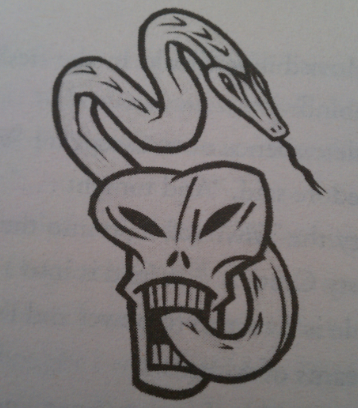
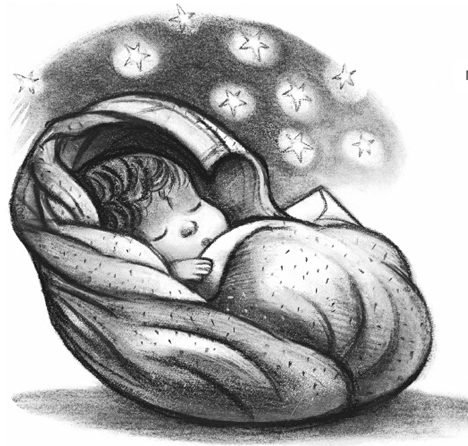
I’ve always been interested in the editing choice to include illustrations in books, particularly those deemed “young adult”, seemingly bridging the gap between children’s picture books and novels. And while looking at the images Tenniel provided for Alice in Wonderland, it made me think of what the most well known illustrated book there was today. And of course I came to Harry Potter. The books only include illustrations in the beginning of chapters, but they are very interesting from an influential aspect. While with Alice, the images were constant throughout the story, providing readers with an image to accompany the written story. With Harry Potter, on the other hand, the image is often obscure and a single object of apparent importance in the chapter, often leading readers to suspect or guess what will be coming up next.


These are some examples of the images from the Harry Potter series. They differ severely from the images shown in the Alice book focusing on one single characteristic and often the object is shown simply, and not really in the context of what is happening in the plot. I don’t really know whether or not this has anything to do with the age group the stories were directed at or any other factor, but I think it’s just interesting to look at the two different approaches to illustration.

Posted by: allisongran | December 19, 2011

Victorian Ideas of Time

One idea which I keep seeing appear in our readings and our discussions is the concept of time. It comes up in many different forms, whether it be a desire or hatred towards the preservation of time, the prolonging of time, the bending of time, or the freezing of time. It seems like there was almost a Victorian obsession with these idea.

For example, in Alice in Wonderland we are presented with a Conversation between Alice and The Mad Hatter in which “time” is moldable, and changeable, as a person in itself.

“Alice sighed wearily. ‘I think you might do something better with the time,’ she said, ‘than wasting it in asking riddles that have no answers.’

            ‘If you knew Time as well as I do,’ said the Hatter, ‘you wouldn’t talk about wasting it. It’s him.’

            ‘I don’t know what you mean,’ said Alice.

            ‘Of course you don’t!’ the Hatter said, tossing his head contemptuously. ‘I dare say you never even spoke to Time!’

            ‘Perhaps not,’ Alice cautiously replied; ‘but I know I have to beat time when I learn music.’

            ‘Ah! That accounts for it,’ said the Hatter. ‘He wo’n’t stand beating. Now, if you only kept on good terms with him, he’d do almost anything you liked with the clock. For instance, suppose it were nine o’clock in the morning, just time to begin lessons: you’d only have to whisper a hint to Time, and round goes the clock in a twinkling! Half-past one, time for dinner!’”(Carroll, pg 72)

The Hatter then goes on to say that time doesn’t work this way for him anymore, as they got into an argument and now the time is always 6 o’clock (tea time) for them. By personifying time, Carroll gave it the ability to reap either favors or revenge,  going along with the well known idea that time can be friendly or cruel. These obsessions with time strike me as really interesting. It makes me wonder if this subconscious wish to control time came up from the ever increasing speed of life as the Victorian Period saw it changing from the rural to the modern. 

Posted by: lizzyspain915 | December 19, 2011

Victorian Justin Bieber

A few weeks before Thanksgiving, I attended an art exhibit at the Amherst College Art Museum. While at this exhibit there was a bar of wine and mojito-like cocktails, and a large and very delicious platter of four different kinds of cheeses (!!!!!) , not to mention a scavenger hunt, I remember best a section of the museum to the right of the entrance, that features a number of portraits from the 1880’s depicting young children. There was one in particular of a little boy, maybe 11 or 12 years old. My friend Brian referred to him as “a Victorian era Justin Bieber!” Upon closer examination I saw that he was…besides his old fashioned dark boots, white collared shirt and brown vest, he did look a lot like Justin Bieber, right down to the baby-like face and shaggy blonde hair. Despite this funny discovery, I also felt a little bit sad, because I remembered our conversation at the beginning of the course about the need to document children photographically during this era in order to capture their memory, in case they died young, as so many did. I also thought about our discussion we had when reading Alice and examining the photograph in the book of Alice Liddell. I remember how shocked I was to see how…contemporary…the real Alice seemed. She looked like the little girl on my block who I babysit. As silly as it may sound, this image, paired with the Justin Bieber look alike over in Amherst, adds a very human element to the subjects that we’ve been studying.

Posted by: allisongran | December 19, 2011

Alice Inspired Hair


While reading Alice and looking at the images by Tenniel, I was really interested by the way he chose to illustrate her hair. I couldn’t help but find it to be remarkably suggestive of the styles shown to represent women’s madness, as we briefly discussed in class. It appears that there is a thin line being drawn between childhood and the untamable.

But this is not only limited to Alice. It seems that every female character has some sort of wild and exaggerated hairstyle.

This is not to say that the male characters aren’t exaggerated, they are just as much, but it is interesting to notice that there is so much emphasis placed on the use of hair when pertaining to women.

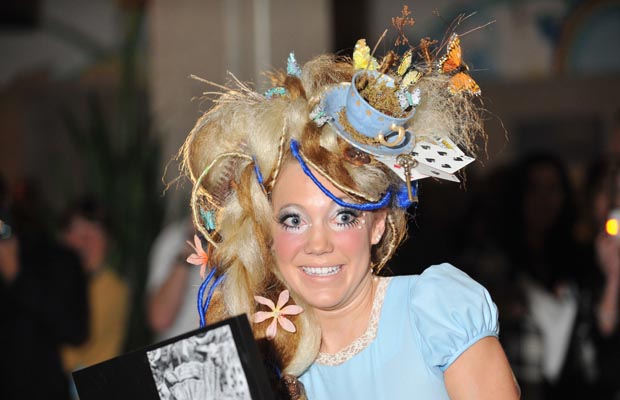
While I was looking around for some images on the internet, I came across an article written in The Vancouver Sun about an Annual Hair show from last year. They decided to have the shows theme be based on Alice in Wonderland. I think it’s interesting to look at how these hairstyles went from representing lunacy to representing fashion and something desirable (or at least fashionable).

These are two of the images from the “Blonde Events’ fourth Annual Fantasy Hair Show”


Posted by: allisongran | December 19, 2011

Images of Alice on Cigarette Cards

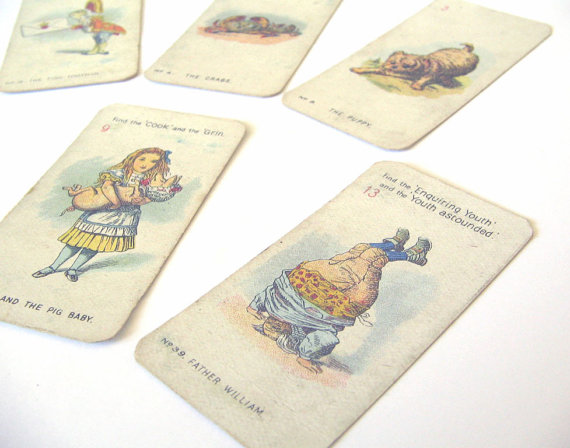
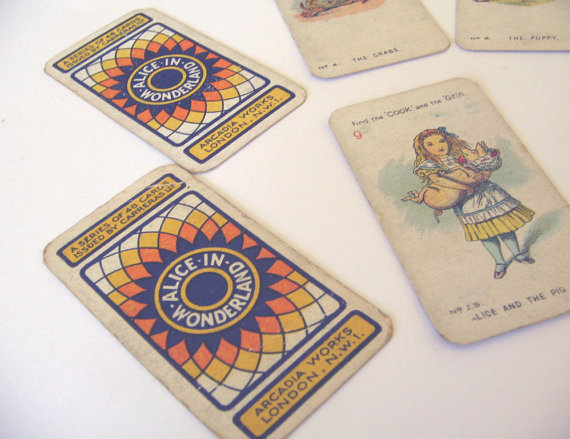
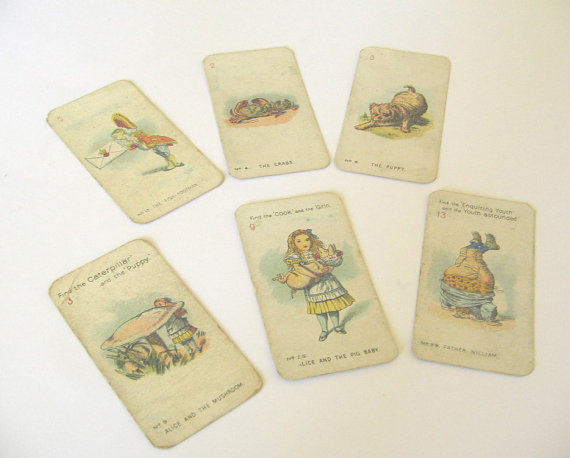
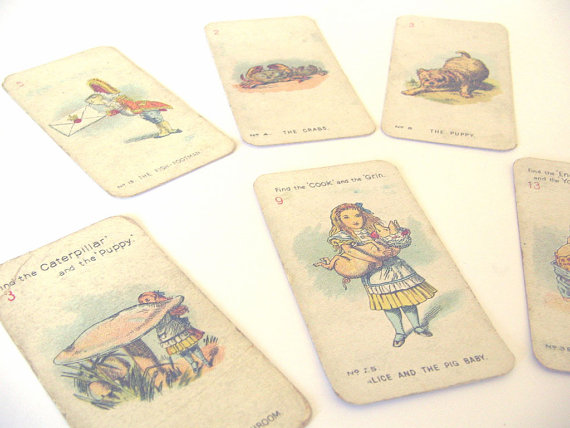
While looking around at various Images of Alice, I came upon a sale sight where someone had posted their collection of Alice and Wonderland Cigarette Cards from the 1930’s.

The cigarette company which had these was the British Tobacco Company Carreras which was established in London in the nineteenth century by a nobleman from Spain, Don José Carreras Ferrer. Apparently this was a company well known for it’s marketing strategies. Supposedly, J.M. Barrie (the author of Peter Pan for anyone whose not familiar) was a valued customer and when he wrote the novel My Lady Nicotine, in which the tobacco substance is referred to as “Arcadia Mixture”, Carreras realized that Barrie’s sole supply of tobacco was the Craven Mixture he sold at Wardour Street. Barrie confirmed that Arcadia Mixture and Craven Mixture were one and the same. Shortly afterwards, Carreras began using Barrie’s endorsement in his advertising, benefiting both parties.

I just find their marketing strategy to be interesting considering that even at that time Alice was designated as a children’s novel, so it makes me wonder why they would choose those characters for promotion, and why did they choose the images they did? For example, I can understand the reasoning behind the Caterpillar’s mushroom, but what was the reasoning behind the image of Alice holding the baby turned pig? Were they trying to appeal to children who would beg their parents to buy these particular cigarettes so that they could get the cards? Or were they trying to attract a younger audience who may have still been under the impression of Alice in Wonderland or similar stories?

Posted by: millyc13 | December 18, 2011

Alice in Japan

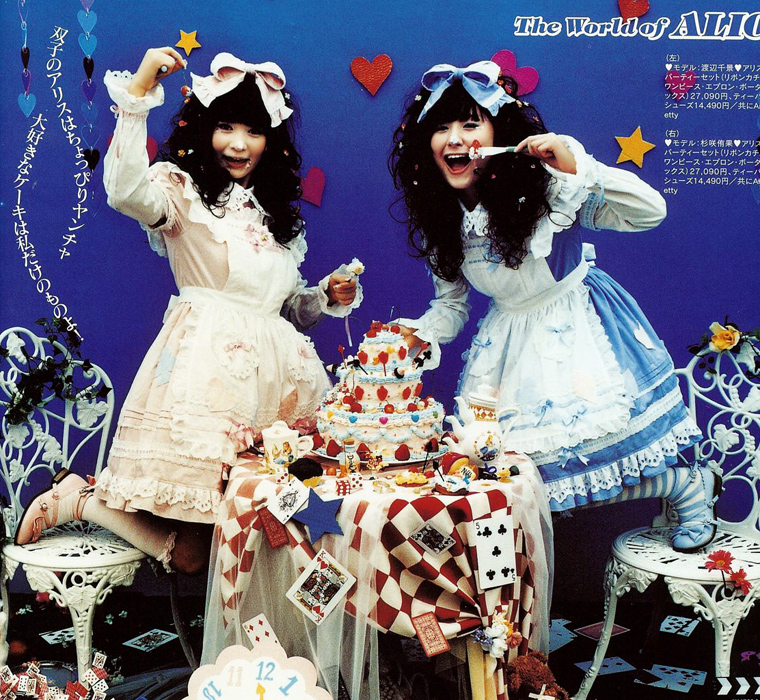
In Harajuku, Japan, one can see all kinds of high fashion in the streets. One of the many fashion crazes in Japan with teenagers and young women right now is called Lolita. This style is characterized by Victorian-era clothing (think petticoats, corsets, bonnetts, lace gloves and stockings) and often a head full of curls. The three main branches of Lolita are Gothic, Sweet, and Classic. The Sweet Lolita style evokes childlike innocence through the use of items associated with young girls: hair ribbons, stuffed animals, etc. It’s not suprising then that many followers of the Sweet Lolita persuasion cite Alice as their main style inspiration. The large hair bow is a favorite, and is called an Alice bow.

A classic example of an Alice-inspired Lolita style

More images and information on Alice Lolita can be found here.

Posted by: allisongran | December 18, 2011

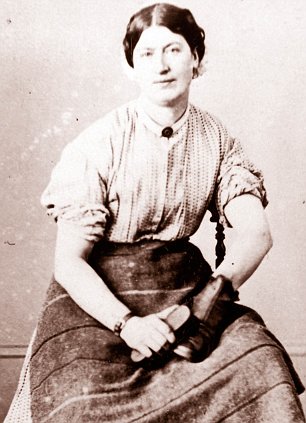
Last night, as I was getting ready to go to work, I ended up thinking about the discussion we had in class one day about the public vs. private sphere in today’s world relating directly to the idea of Hannah Cullwick and the issues she ran into while wearing her slave band.
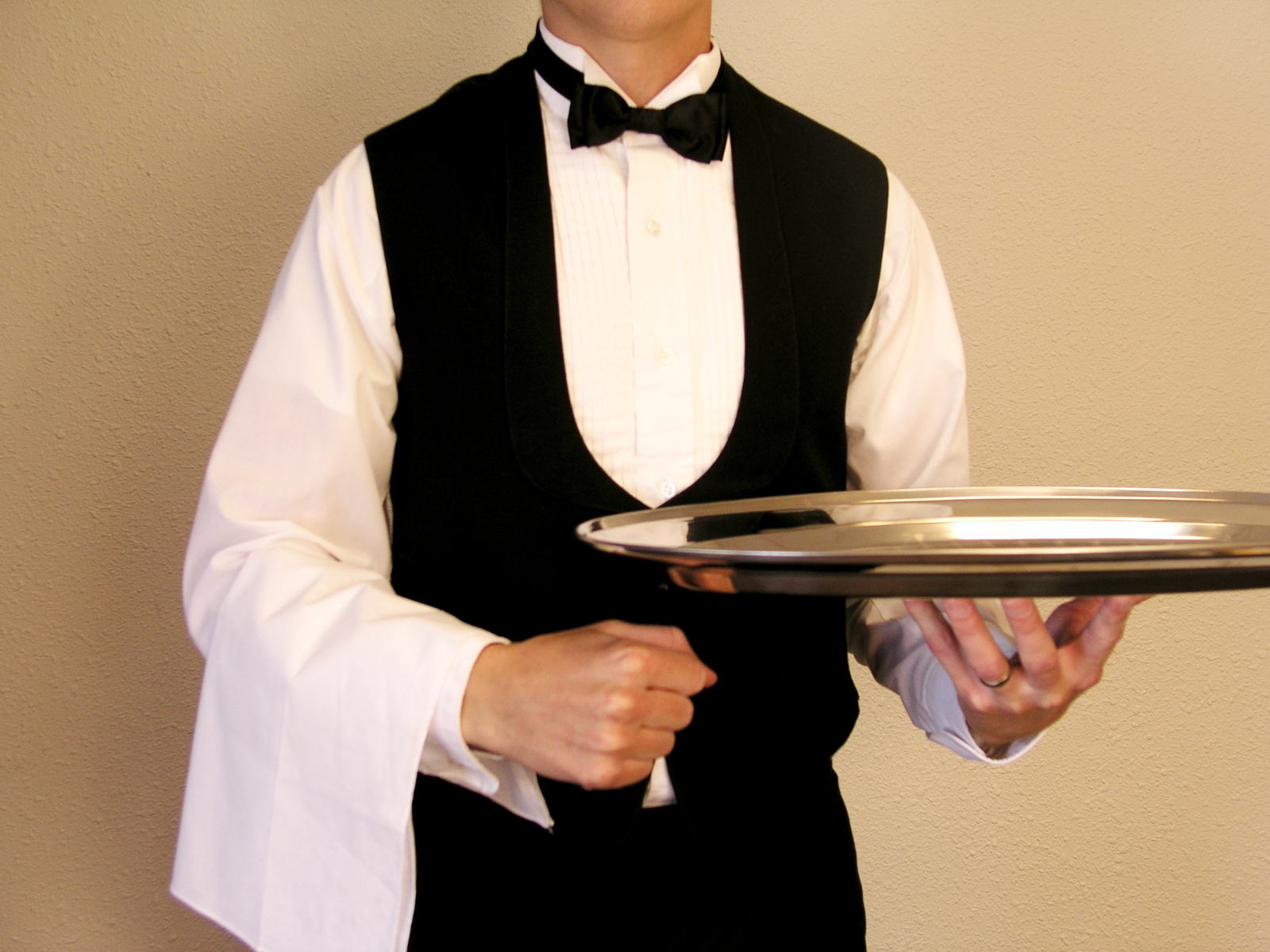
It made me think about rules still complied with in particular job settings today, particularly that of serving. I work as a waitress in what’s considered a “fine dining” establishment. I guess you could say it’s a modern upper-class place, being that it’s a set menu per person automatically without drinks. On average, a four-person check will be upwards of $400 if they don’t get after dinner drinks, which most do, and most of the guests are “regulars”. It undeniable that there is a set social group that comes in, whether anyone who works there wants to admit it or not. And because of this “fine dining setting” there is a very specific set of rules adhered to by all staff.
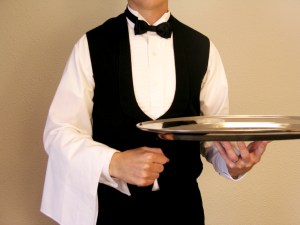
Dress Code:

Black button down shirt, black Slacks, black lace shoes

Hair in Pony Tail for Girls, combed back for guys

Makeup- foundation allowed, no other makeup to be worn

Clear chapstick only

Only 1 post earring allowed per ear

No other jewelry at all, wedding rings only exception

No nail polish of any color including clear

No perfume, non-fragrant deodorant only
Other General Rules:

No cell phones to be seen in dining room (obviously)

No conversation between servers on floor

Avoid conversation with guests if possible

Excuse yourself by answering I’m very sorry but I’m needed in the kitchen

Never answer personal questions about the chefs

I’m sorry, the chefs only talk to us about the food.

“Be friendly, but not familiar”


These are a few of the rules which are abided in the restaurant. There is to be no understanding of the staff as people. Our main goal is to provide “invisible” service, seen and heard only in connection with the dishes being presented. Drinks and bread are to be refilled automatically and without notice, as is all silverware and napkins. But the world of fine dining is kind of an entity all on it’s own, but I just think it’s really interesting to compare these two worlds, when so many people think that kind of thing ended.
« Newer Posts - Older Posts »

Categories